
Quick Answer
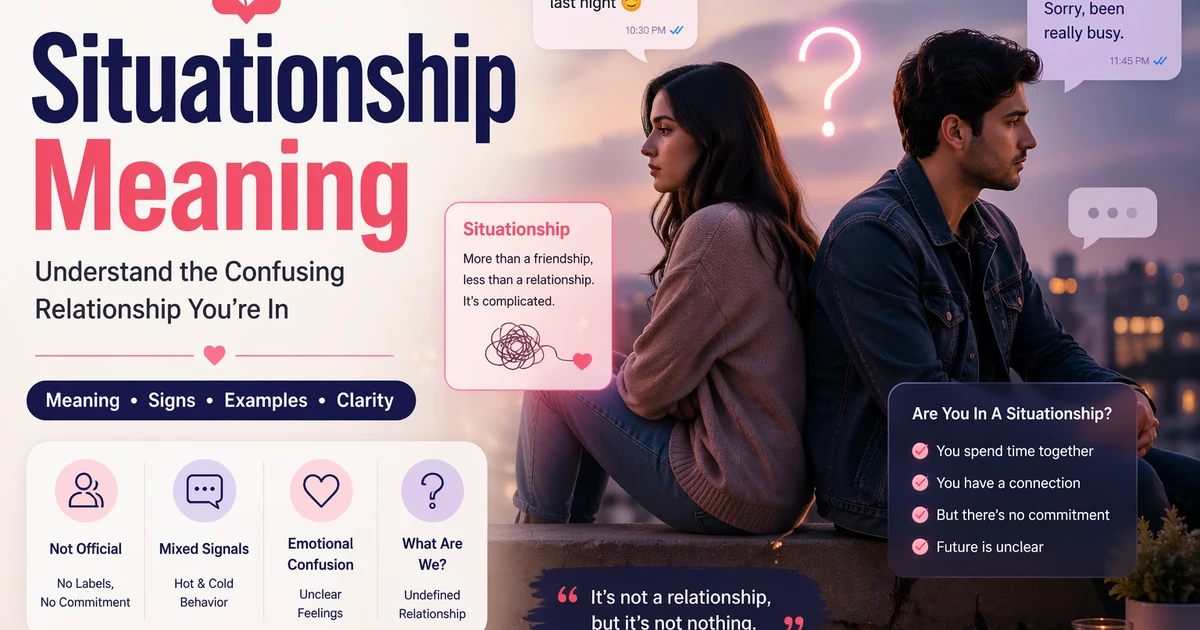
A situationship is a romantic or emotional connection without a clear label or commitment. It feels like a relationship, but there is no defined status, no agreed expectations, and no clear future.
People in a situationship talk, meet, and connect like a couple. But they avoid defining what they are. This creates confusion, mixed signals, and emotional imbalance over time.
Introduction
Dating today feels fast but unclear. People connect easily, spend time together, and build emotional bonds without always defining the relationship. This is where the term situationship becomes relevant. It describes a connection that feels real but lacks structure.
At the start, a situationship feels simple and stress free. There is no pressure to commit, and everything flows naturally. But as time passes, the lack of clarity becomes a problem. One person may expect more, while the other avoids commitment. This gap creates confusion and emotional tension.
Understanding situationship clearly helps you avoid staying stuck in something that does not match your expectations.
Situationship Meaning and Definition
A situationship is a romantic or emotional connection without a defined relationship status. It is more than friendship but less than a committed relationship. People act close but avoid labeling the connection.
There is no official full form of situationship. It is formed by combining situation and relationship. This shows it is a relationship based on circumstances, not commitment.
- No clear label or status
- Emotional or physical connection
- No fixed expectations
- No long term plans
- Often creates confusion
Dating Acronyms and Related Terms
Modern dating includes many short forms and slang terms. These help explain different types of connections quickly. Understanding them helps you compare situationship with other relationship types.
These terms are commonly used in texting, social media, and casual conversations. Knowing them gives you better clarity in modern dating language.
Dating Acronyms and Related Terms Table
| Term | Full Form | Meaning | Usage Context |
|---|---|---|---|
| FWB | Friends With Benefits | Physical relationship without commitment | Casual dating |
| NSA | No Strings Attached | No emotional or long term involvement | Hookups |
| DTR | Define The Relationship | Conversation to clarify relationship status | Serious discussion |
| LTR | Long Term Relationship | Committed and stable relationship | Serious dating |
| ONS | One Night Stand | One time physical interaction | Casual encounter |
| BAE | Before Anyone Else | Someone very important to you | Romantic slang |
| GF/BF | Girlfriend/Boyfriend | Official relationship partner | Committed relationship |
| Ex | Former Partner | Someone from a past relationship | Breakup context |
| Talking Stage | — | Early phase of getting to know someone | Pre relationship |
| Situationship | — | Undefined romantic connection | Modern dating |
| Ghosting | — | Suddenly cutting off communication | Negative behavior |
| Breadcrumbing | — | Giving small signals without commitment | Manipulation |
| Benching | — | Keeping someone as a backup option | Dating pattern |
| Love Bombing | — | Showing intense affection early | Emotional manipulation |
| Orbiting | — | Watching online without direct contact | Social media behavior |
Situationship Meaning in Simple Words
In simple words, a situationship is when you act like a couple but are not officially together. You talk, meet, and spend time together, but never clearly define the relationship.
This creates confusion because the connection feels real. But there is no commitment or clear direction. One person may want more while the other stays casual.
- Like a relationship but without commitment
- No clear future direction
- Mixed signals are common
- Can last for months
- Creates emotional uncertainty
Comparison Table
Situationship vs FWB vs Relationship vs NSA
| Feature | Situationship | FWB | Relationship | NSA |
|---|---|---|---|---|
| Emotional Connection | Medium | Low | High | Low |
| Commitment | No | No | Yes | No |
| Clarity | Low | High | High | High |
| Future Plans | No | No | Yes | No |
| Stability | Low | Medium | High | Low |
What Does Situationship Mean in Dating?
In dating, a situationship happens when two people connect but avoid defining the relationship. They may go on dates, talk daily, and act close, but avoid serious conversations.
This often happens when people want flexibility or fear commitment. It reflects modern dating habits where labels are avoided.
- Dating without a label
- Emotional or physical involvement
- Avoiding commitment
- No clear future plans
- Staying in a gray area
Situationship Examples
Situationships show up in everyday life. They usually feel normal at first, but confusion builds over time.
People often realize it later when expectations do not match.
- Talking daily but no relationship status
- Spending weekends together but no future talk
- Acting like a couple privately
- One person wants commitment
- Communication feels inconsistent
Situationship in a Sentence
The word situationship is used in casual conversations. It helps describe a complicated connection in a simple way.
It is often used when someone feels unsure about their relationship.
- I think I am in a situationship
- This feels like a situationship, not a relationship
- I do not want another situationship
- He keeps things like a situationship
- She left the situationship
Types of Situationships
Situationships are not all the same. Some involve emotions, some are physical, and some exist because of convenience. Understanding the type helps you see your situation clearly.
Each type has a different impact on your feelings and expectations.
Emotional Situationship
This type involves strong feelings but no commitment. You share personal thoughts and feel close, but avoid defining the relationship.
- Deep emotional connection
- Frequent communication
- Feels like a real relationship
- No clear label
- Hard to leave
Physical Situationship
This type is mostly about attraction and physical connection. Emotional bonding is limited.
- Mainly physical interaction
- Low emotional involvement
- Casual approach
- No future planning
- Easy to end
Convenience Situationship
This happens when both people stay together because it is easy. There is comfort, but no deeper intention.
- Based on routine
- No effort for commitment
- Happens due to availability
- Low emotional depth
- Ends when situation changes
One-Sided Situationship
One person is emotionally invested while the other is not. This creates imbalance and frustration.
- Unequal feelings
- One expects commitment
- Other avoids it
- Leads to confusion
- Emotionally draining
On-Off Situationship
This type goes through cycles. You connect, break, and reconnect again.
- Repeated break and reconnect
- No stability
- Emotional ups and downs
- Unpredictable pattern
- Hard to define
Situationship Rules and Boundaries
Situationships usually have no rules, but setting boundaries helps avoid confusion. Without boundaries, expectations become unclear.
Clear communication helps both people understand where they stand.
- Set personal limits early
- Be honest about expectations
- Avoid assuming exclusivity
- Communicate clearly
- Know when to step back
Signs You Are in a Situationship
Many people stay in situationships without realizing it. The signs become clear when patterns repeat.
Recognizing these signs helps you understand your situation.
- No clear relationship label
- Mixed signals
- Avoiding future talks
- Acting like a couple sometimes
- Lack of commitment
Situationship Red Flags You Should Not Ignore
Some situationships become unhealthy. Ignoring red flags can lead to emotional stress.
It is important to notice these early.
- One sided effort
- Lack of respect
- Emotional confusion
- No progress
- Inconsistent behavior
Situationship Benefits vs Risks
Situationships can feel easy but also risky. They offer freedom but lack stability.
Understanding both sides helps you decide what is right for you.
- Benefits
- No pressure
- Flexibility
- Easy connection
- Risks
- Confusion
- No security
- Emotional stress
Situationship vs Friends With Benefits
These terms are often confused, but they are different. Situationship includes emotional connection, while friends with benefits is mostly physical.
Knowing the difference helps avoid misunderstanding.
- Situationship involves emotions
- FWB is mainly physical
- Situationship feels deeper
- FWB stays casual
- Situationship is less defined
Situationship vs Relationship
A relationship has clarity and commitment. A situationship does not.
This difference affects expectations and stability.
- Relationship has commitment
- Situationship has no label
- Relationship has future plans
- Situationship is uncertain
- Relationship is stable
Situationship vs Talking Stage
The talking stage is the early phase of getting to know someone. A situationship happens later but remains undefined.
People often move into situationship without realizing it.
- Talking stage is early
- Situationship lasts longer
- Talking stage explores connection
- Situationship avoids definition
- Talking stage leads to decisions
Can a Situationship Turn Into a Relationship?
A situationship can turn into a relationship, but only if both people want the same thing. It requires clear communication and effort.
Without mutual intention, it usually stays the same.
- Needs honest conversation
- Requires mutual feelings
- Needs clear boundaries
- Both must agree
- Otherwise stays unclear
How to End a Situationship
Ending a situationship can be emotional because there is attachment without closure. But clarity helps both people move forward.
It is better to end confusion than stay stuck.
- Be honest and direct
- Avoid blame
- Set clear boundaries
- Stop mixed communication
- Focus on yourself
What You Should Do If You Are in a Situationship
Being in a situationship requires awareness. You need to decide if it matches what you want.
Clarity helps you avoid long term confusion.
- Ask yourself what you want
- Communicate openly
- Do not ignore red flags
- Set personal limits
- Be ready to walk away
Practical Usage
People use the word situationship in daily conversations. It helps describe a confusing connection quickly without long explanation.
It is common in texting, social media, and casual talks. The word often reflects emotional uncertainty.
- I think we are in a situationship
- This is not a relationship, just a situationship
- I do not want another situationship
- He treats this like a situationship
- She walked away from the situationship
How to Use Situationship
Use this word when describing an undefined romantic connection
- In dating conversations
- In texting or chats
- On social media
- In storytelling
- In casual discussion
Common Mistakes When Using Situationship
Avoid these mistakes when using the term
- Confusing it with a relationship
- Using it for all casual dating
- Ignoring emotional involvement
- Assuming clarity without discussion
- Overusing the term
Common Idioms Related to Situationship
Stuck in limbo
Meaning: Being in an uncertain situation with no clear outcome
Uses: Used when someone feels confused about their relationship
Example: I feel stuck in limbo with him
Mixed signals
Meaning: Receiving unclear or conflicting messages
Uses: Used when someone behaves inconsistently
Example: He keeps giving mixed signals
On and off
Meaning: Something that starts and stops repeatedly
Uses: Used for unstable relationships
Example: We have been on and off for months
Walking on eggshells
Meaning: Being careful to avoid conflict
Uses: Used when someone feels tense
Example: I feel like I am walking on eggshells around her
Stringing along
Meaning: Keeping someone interested without commitment
Uses: Used when someone is not serious
Example: He is just stringing her along
Left hanging
Meaning: Being ignored or without closure
Uses: Used when communication stops suddenly
Example: She left me hanging again
In the gray area
Meaning: A situation that is not clearly defined
Uses: Used for unclear relationships
Example: Our situation is in the gray area
At a crossroads
Meaning: Facing an important decision
Uses: Used when choosing what to do
Example: I am at a crossroads with this situationship
Up in the air
Meaning: Not decided yet
Uses: Used for uncertain outcomes
Example: Our future is still up in the air
Playing with fire
Meaning: Taking emotional risk
Uses: Used when something can go wrong
Example: Staying in this situationship is like playing with fire
Caught in the middle
Meaning: Being between two situations
Uses: Used when confused emotionally
Example: I feel caught in the middle
Testing the waters
Meaning: Trying something without commitment
Uses: Used for early stage connections
Example: We are just testing the waters
Breaking point
Meaning: The moment you cannot continue
Uses: Used for emotional limits
Example: I reached my breaking point
Heart on the line
Meaning: Risking your emotions
Uses: Used when feelings are involved
Example: I put my heart on the line
Going nowhere fast
Meaning: No progress despite effort
Uses: Used for stagnant relationships
Example: This situationship is going nowhere fast
Reading between the lines
Meaning: Understanding hidden meaning
Uses: Used when signals are unclear
Example: I keep reading between the lines
Keeping someone around
Meaning: Staying without commitment
Uses: Used when avoiding definition
Example: He is just keeping me around
Lost in the shuffle
Meaning: Being ignored or overlooked
Uses: Used when not prioritized
Example: I feel lost in the shuffle
On the fence
Meaning: Unable to decide
Uses: Used for confusion
Example: I am still on the fence
In hot water
Meaning: Being in trouble
Uses: Used when situation becomes stressful
Example: I got into hot water emotionally
Conclusion
Situationships are a common part of modern dating. They offer freedom but often lack clarity. This creates confusion, especially when feelings grow but commitment does not follow.
The key is knowing what you want. If a situationship fits your needs, it may work for some time. But if it creates stress or uncertainty, it is better to step back. Clear decisions lead to better relationships and peace of mind.
Situationship FAQs
What is a situationship
It is an undefined romantic connection without commitment
What does situationship mean
It means acting like a couple without being in a relationship
What is situationship vs FWB
Situationship includes emotions while FWB is physical
What are situationship examples
Talking daily without commitment is a common example
What are types of situationships
Emotional, physical, one sided, and convenience based
Can a situationship become a relationship
Yes if both people agree and communicate clearly
Why do people stay in situationships
Because of comfort or fear of commitment
Is a situationship healthy
It depends on expectations and communication
How do you end a situationship
By being honest and setting boundaries
Is situationship the same as casual dating
No it involves more confusion and emotional mix