
Quick Answer
A tramp stamp is a slang term for a tattoo placed on the lower back, usually just above the waistline. The phrase became popular in the late 1990s and early 2000s and was often used in a judgmental or insulting way toward women who had this tattoo placement.
Today, many people still recognize the term, but attitudes have changed. Lower back tattoos are now being reclaimed as a personal fashion choice and body art style rather than something shameful. The phrase can still sound offensive depending on the context, so it is important to understand both the tattoo meaning and the social history behind the term.
Introduction
The phrase tramp stamp has been widely searched online for years because people want to understand what it means, where it came from, and why it became such a recognizable part of tattoo culture. Some readers search the term after hearing it in movies, social media posts, comedy shows, or conversations. Others are considering a lower back tattoo themselves and want to know whether the term is still commonly used today.
In most cases, tramp stamp refers to a tattoo placed on the lower back. The tattoo itself can be any design, including butterflies, tribal art, flowers, wings, script lettering, or symmetrical patterns. The phrase became heavily associated with pop culture during the late 1990s and early 2000s when low rise jeans and cropped tops made lower back tattoos highly visible.
Today, opinions about the term are mixed. Some people still use it casually, while others see it as outdated or disrespectful because it carries sexist stereotypes. In this article, you will learn the meaning of tramp stamp, the history behind the phrase, popular tattoo styles, modern trends, and the common misunderstandings people still have about lower back tattoos.
What Does Tramp Stamp Mean?
A tramp stamp is a slang expression used to describe a tattoo located on the lower back. The phrase usually refers to tattoos centered just above the hips or waistband area.
The tattoo placement became extremely popular among women in the late 1990s and early 2000s. During that time, fashion trends often exposed the lower back, making these tattoos easy to notice. Celebrities, musicians, and reality television personalities helped make the style more mainstream.
Even though the tattoo placement itself is neutral, the phrase tramp stamp developed a negative tone. The word tramp historically has been used as an insult toward women, which is why many tattoo artists and tattoo enthusiasts dislike the phrase today.
Some people still use the term jokingly or casually, but others prefer more neutral phrases such as:
- Lower back tattoo
- Lumbar tattoo
- Lower spine tattoo
- Back waist tattoo
The meaning depends heavily on context. In casual conversation, many people immediately understand what area of the body the term describes. However, using the phrase directly about someone’s tattoo can sound rude or judgmental.
Tramp Stamp Meaning Table
| Term | Meaning | Tone | Example |
|---|---|---|---|
| Tramp stamp | Slang term for a lower back tattoo | Informal and sometimes offensive | She got a tramp stamp in college |
| Lower back tattoo | Neutral description of tattoo placement | Respectful and modern | He designs lower back tattoos professionally |
| Lumbar tattoo | Technical or artistic term for the same area | Neutral | The artist specializes in lumbar tattoo symmetry |
| Tribal lower back tattoo | Popular early 2000s tattoo style | Descriptive | Tribal designs were common tramp stamp choices |
The History Behind the Tramp Stamp Trend
Lower back tattoos existed long before the slang phrase became popular. However, the term tramp stamp gained major attention in the late 1990s and early 2000s.
Several cultural trends helped fuel the popularity:
- Low rise jeans exposed the lower back area
- Pop stars and celebrities showed visible tattoos
- Tattoo culture became more mainstream
- Tribal tattoo designs became fashionable
- Butterfly and symmetrical tattoos were highly popular
At the time, many people viewed lower back tattoos as trendy and attractive. Tattoo studios often promoted the placement because it allowed detailed symmetrical artwork across the body.
Comedy shows and pop culture later turned the phrase tramp stamp into a joke. Unfortunately, the humor often targeted women and linked the tattoo style to negative stereotypes. Over time, many people began seeing the phrase as sexist or outdated.
Today, younger tattoo enthusiasts are bringing lower back tattoos back into fashion without the negative stigma that once surrounded them.
Why Lower Back Tattoos Became So Popular
Lower back tattoos became popular for practical and visual reasons, not just fashion trends.
Symmetry Works Well in That Area
The lower back provides a naturally balanced canvas for tattoo artists. Many designs can stretch evenly across both sides of the body.
Popular symmetrical designs include:
- Butterfly wings
- Tribal curves
- Floral vines
- Angel wings
- Mandala patterns
Easy to Hide or Show
Many people liked that lower back tattoos could remain hidden at work or become visible with certain outfits. This flexibility appealed to people who wanted body art without constant visibility.
Lower Back Tattoos Age Differently
Compared with some body areas, the lower back often experiences less stretching and sun exposure. That can help tattoos maintain cleaner lines over time.
Of course, body changes, aging, and lifestyle factors still affect any tattoo.
Popular Tramp Stamp Tattoo Designs
Certain tattoo styles became strongly associated with lower back tattoos over the years.
| Design Style | Why It Became Popular | Common Look |
| Tribal tattoos | Bold symmetrical lines | Black curved patterns |
| Butterflies | Feminine and decorative appearance | Wings spread across the lower back |
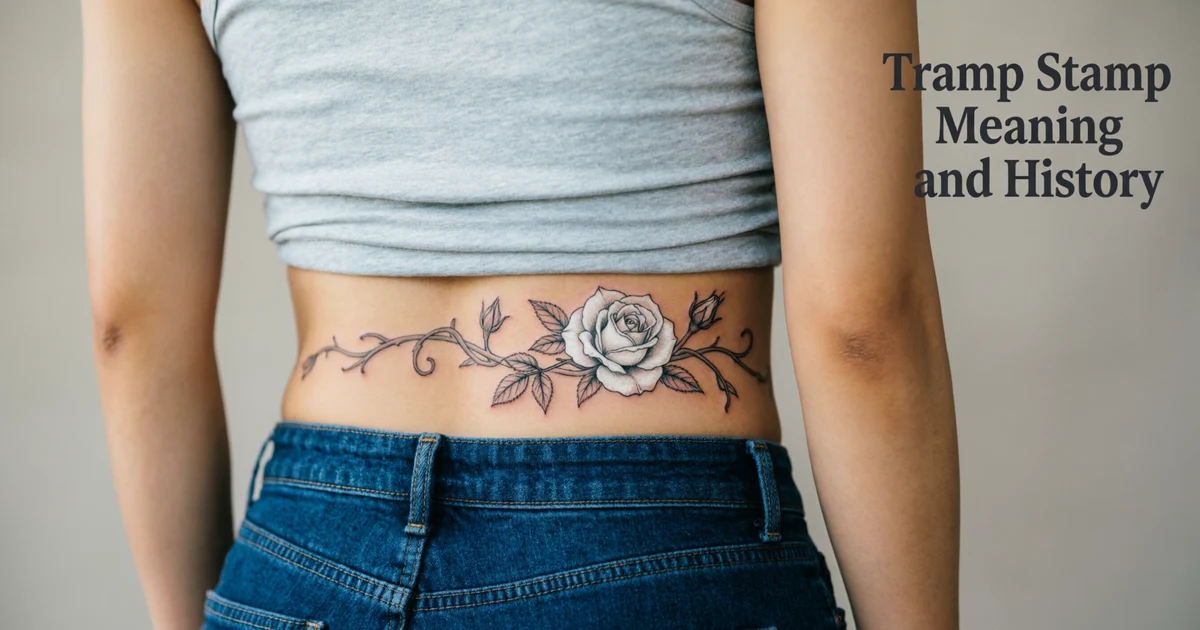
| Floral vines | Flowing shape matches the body | Roses or vines extending sideways |
| Angel wings | Balanced design placement | Wings centered along the spine |
| Script tattoos | Personal quotes or names | Cursive text across the waistline |
| Mandalas | Detailed symmetrical art | Circular decorative patterns |
Modern lower back tattoos now include minimalist art, fine line tattoos, geometric shapes, and custom designs that feel less connected to early 2000s stereotypes.
Is the Term Tramp Stamp Offensive?
For many people, yes. The term can sound insulting because it uses a negative label historically directed at women.
Not everyone reacts the same way, though. Some people use the phrase casually without intending harm. Others reclaim the term humorously or proudly. Still, many tattoo artists and clients prefer avoiding it entirely.
A safer and more respectful option is simply saying lower back tattoo.
Context matters a lot. Friends joking privately may view the phrase differently than someone using it publicly or directly toward a stranger.
Are Lower Back Tattoos Coming Back in Style?
Yes. Lower back tattoos have experienced a noticeable comeback in recent years.
Fashion trends often repeat, and early 2000s styles have returned in clothing, music, and beauty culture. Social media platforms have also helped revive interest in nostalgic tattoo placements.
Modern lower back tattoos often differ from older designs because artists now use:
- Fine line techniques
- Minimalist art
- Soft shading
- Personalized symbolism
- Smaller elegant patterns
Many younger adults now view lower back tattoos as vintage inspired rather than embarrassing.
Things to Consider Before Getting a Lower Back Tattoo
If you are thinking about getting a lower back tattoo, consider both practical and personal factors.
Pain Level
Pain varies from person to person, but the lower back can feel moderately painful because of nerve sensitivity near the spine and hips.
Healing Process
Tight clothing, waistbands, and sleeping positions may irritate a healing tattoo. Following proper aftercare instructions is important.
Design Placement
The lower back works best for horizontal or symmetrical designs. Tiny designs may look lost in the wider space.
Long Term Style
Tattoo trends change over time. Choose artwork that feels personally meaningful rather than simply fashionable.
Common Mistakes People Make About Tramp Stamps
Many misunderstandings still surround lower back tattoos.
Assuming the Tattoo Defines Personality
A tattoo placement does not determine someone’s behavior, values, or lifestyle. Much of the negative judgment came from outdated stereotypes.
Thinking Lower Back Tattoos Are Outdated Forever
Tattoo trends constantly change. Styles that once seemed old fashioned often return years later.
Using the Phrase Without Understanding the Tone
Some people use tramp stamp jokingly without realizing others may find it offensive. Neutral wording avoids unnecessary awkwardness.
Believing All Lower Back Tattoos Look the Same
Modern tattoo styles vary widely. Today’s lower back tattoos may look very different from early 2000s tribal designs.
Tramp Stamp vs Lower Back Tattoo
| Phrase | Tone | Best Situation to Use |
| Tramp stamp | Slang and potentially offensive | Informal discussion about pop culture |
| Lower back tattoo | Neutral and respectful | Everyday conversation |
| Lumbar tattoo | Artistic or professional | Tattoo consultations or design discussion |
Conclusion
The term tramp stamp refers to a lower back tattoo, but the phrase carries a complicated social history. While it became popular as slang during the early 2000s, many people now see it as outdated or disrespectful because of the stereotypes attached to it.
At the same time, lower back tattoos themselves remain a valid and popular form of body art. Modern tattoo styles, changing fashion trends, and more accepting attitudes have helped bring the placement back into style. Whether someone uses the phrase tramp stamp jokingly or avoids it completely, understanding the meaning and history behind the term helps create more respectful conversations about tattoos and personal expression.
FAQs About Tramp Stamp
What is considered a tramp stamp?
A tramp stamp usually refers to any tattoo placed on the lower back above the waistline.
Why is it called a tramp stamp?
The slang developed during the late 1990s and early 2000s and was tied to unfair stereotypes about women with visible lower back tattoos.
Is tramp stamp an offensive term?
Some people consider it offensive or sexist because of the negative meaning attached to the word tramp. Others use it casually or humorously.
Are lower back tattoos still popular?
Yes. Lower back tattoos have become popular again, especially with modern minimalist and fine line tattoo styles.
What tattoo designs are common for tramp stamps?
Popular designs include tribal patterns, butterflies, flowers, angel wings, script lettering, and mandalas.
Do lower back tattoos hurt?
Most people describe the pain as moderate. Areas close to the spine and hips may feel more sensitive.
Can men get lower back tattoos?
Yes. While the trend became more associated with women in pop culture, anyone can choose a lower back tattoo placement.
Should I avoid getting a lower back tattoo because of stereotypes?
Tattoo choices are personal. Modern attitudes toward body art are far more accepting than they were years ago.