
Quick Answer
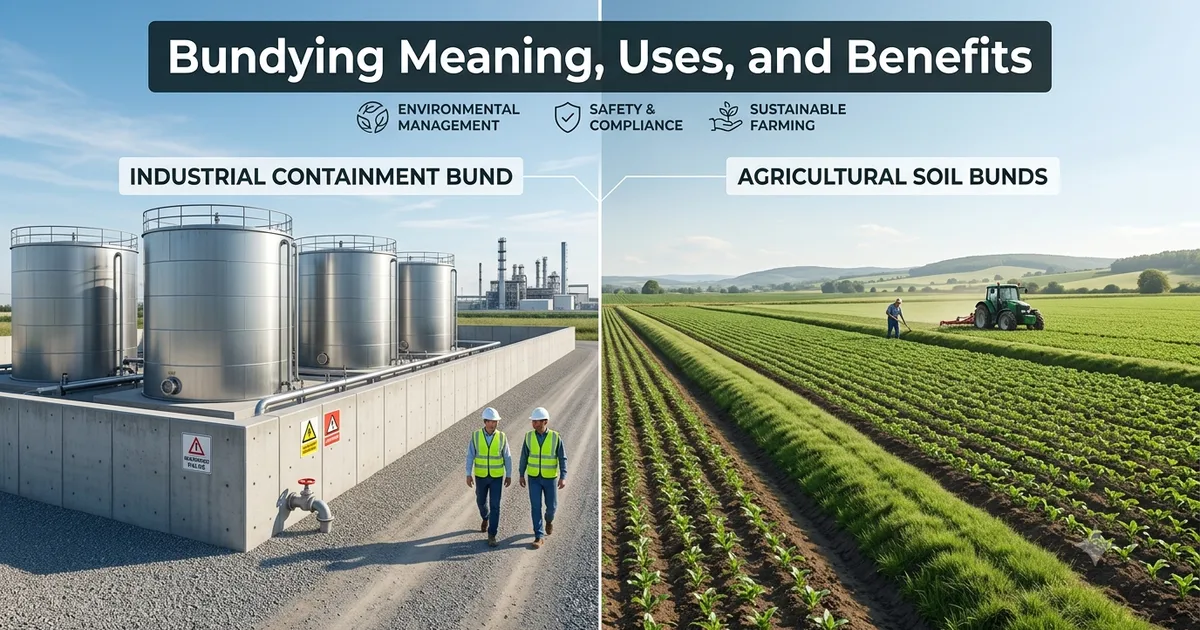
Bundying is a term most commonly associated with the creation of a protective barrier, wall, or embankment called a bund. A bund is built to contain liquids, control water flow, prevent flooding
or stop hazardous substances from spreading into the environment. The process of building, maintaining, or using these containment structures is often referred to as bundying.
Depending on the context, bundying may relate to:
- Environmental protection
- Industrial liquid containment
- Flood management
- Agricultural water conservation
- Construction and land management
People often search for bundying when they want to understand how bunds work, why they are used, and where they are commonly applied.
Introduction
The term bundying is not as widely recognized as many engineering or environmental management terms, yet it plays an important role in protecting land, water, property, and ecosystems.
Whether used in agriculture, construction, flood control, or industrial facilities, bundying refers to practices involving bunds, which are barriers designed to contain or redirect liquids.
Many people encounter this term while researching environmental safety, water management systems, fuel storage regulations, or agricultural land improvement projects. Since the word is used across several industries, its meaning can sometimes appear unclear to beginners.
Understanding bundying helps explain how organizations and landowners manage risks associated with water runoff, chemical spills, fuel storage, and soil erosion. In this guide, you will learn the meaning of bundying, how it works, common applications, practical examples, benefits, limitations, and mistakes people often make when discussing or implementing bund systems.
What Does Bundying Mean?
Bundying generally refers to the process of creating, using, maintaining, or managing a bund.
A bund is an artificial barrier made from soil, concrete, stone, metal, or other materials. Its primary purpose is to prevent liquids from spreading beyond a designated area.
The exact purpose depends on the situation:
- In agriculture, bunds help conserve water and reduce soil erosion.
- In industrial facilities, bunds contain fuels, oils, chemicals, or hazardous liquids.
- In flood management, bunds redirect or hold back water.
- In construction projects, bunds can control runoff and sediment movement.
Although the word bundying may not appear in every technical dictionary, it is commonly used informally to describe activities related to bund construction and containment management.
Bundying Meanings by Context
| Meaning | Where It Is Used | Simple Explanation | Example |
|---|---|---|---|
| Water containment | Agriculture | Holds water in fields | Irrigation bund around farmland |
| Flood protection | Civil engineering | Prevents flooding | Earth embankment near a river |
| Spill containment | Industrial sites | Stops hazardous liquids spreading | Fuel storage bund |
| Erosion control | Land management | Reduces soil loss | Bund built along slopes |
| Environmental protection | Industrial facilities | Protects nearby ecosystems | Chemical storage containment area |
How Bundying Works
Bundying works by creating a physical barrier around an area where liquid movement needs to be controlled.
The barrier serves several purposes:
- Contains liquids within a designated zone.
- Reduces environmental contamination.
- Prevents uncontrolled runoff.
- Improves water management.
- Protects nearby structures and land.
For example, if a storage tank holding fuel develops a leak, the surrounding bund can capture the liquid before it reaches drains, soil, or waterways. Similarly, in farming, bunds can help keep irrigation water where crops need it instead of allowing it to run off.
Common Types of Bunds Used in Bundying
Earth Bunds
Earth bunds are made from compacted soil. They are common in farming and flood control projects because they are relatively inexpensive and easy to construct.
Advantages include:
- Low cost
- Natural materials
- Suitable for large areas
Concrete Bunds
Concrete bunds provide strong containment for industrial facilities.
They are commonly used around:
- Fuel tanks
- Chemical storage areas
- Industrial processing plants
Advantages include:
- High durability
- Better leak resistance
- Long service life
Rock or Stone Bunds
These bunds use rocks and stones to slow water movement and reduce erosion.
They are often found in:
- Drainage systems
- Sloped land
- Environmental restoration projects
Metal Containment Bunds
Portable metal bunds are frequently used in industrial and construction settings where temporary containment is needed.
Practical Uses of Bundying
Bundying serves many practical purposes across different industries.
Agriculture
Farmers use bunds to:
- Retain irrigation water
- Improve moisture retention
- Reduce soil erosion
- Support crop growth
This is especially useful in areas where water conservation is important.
Industrial Safety
Industrial facilities use bunding systems around tanks and containers that store:
- Fuel
- Oil
- Chemicals
- Hazardous liquids
The goal is to reduce environmental risk if a spill occurs.
Flood Management
Communities often build bunds to help:
- Redirect floodwater
- Protect buildings
- Reduce flood damage
- Manage river overflow
Environmental Protection
Bundying can help prevent pollutants from entering:
- Rivers
- Lakes
- Groundwater systems
- Protected habitats
Examples of Bundying in Real Life
Example 1: Fuel Storage Facility
A company stores diesel fuel in large tanks. Each tank sits inside a concrete bund. If a tank leaks, the fuel remains inside the bund rather than spreading across the site.
Example 2: Agricultural Irrigation
A farmer creates soil bunds around crop fields. Water remains in the growing area longer, helping plants receive sufficient moisture.
Example 3: Flood Prevention Project
A local authority constructs an earthen bund near a river. During heavy rainfall, the bund helps prevent water from reaching nearby homes.
Example 4: Construction Site Runoff Control
A construction company uses temporary bunds to control muddy runoff and prevent sediment from entering nearby waterways.
Benefits of Bundying
Bundying offers several important advantages.
| Benefit | Why It Matters |
| Spill containment | Reduces environmental damage |
| Water conservation | Improves water efficiency |
| Flood protection | Helps safeguard property |
| Erosion control | Preserves soil quality |
| Regulatory compliance | Supports environmental standards |
| Risk reduction | Minimizes cleanup costs |
These benefits make bund systems valuable in both small and large projects.
Bundying vs General Containment
| Feature | Bundying | General Containment |
| Primary purpose | Liquid control | Various materials |
| Common materials | Soil, concrete, stone | Multiple containment systems |
| Environmental use | Very common | Depends on system |
| Flood management | Frequently used | Less specialized |
| Agricultural use | Common | Less common |
While bundying is a type of containment strategy, it specifically focuses on barriers that manage liquids and water movement.
Common Mistakes About Bundying
Many people misunderstand how bundying works.
Assuming Any Barrier Is a Bund
Not every wall or fence qualifies as a bund. A bund must be designed specifically to contain or redirect liquids.
Ignoring Maintenance
A damaged bund may fail when needed most. Regular inspection and repair are essential.
Underestimating Capacity Requirements
Industrial bunds must be large enough to contain potential spills. Poor sizing can reduce effectiveness.
Confusing Flood Bunds and Spill Bunds
Although both use similar concepts, they often have different designs and engineering requirements.
Assuming Bunds Eliminate All Risk
Bundying significantly reduces risk, but it does not guarantee complete protection in every situation.
Factors to Consider Before Building a Bund
Several factors influence bund design.
Site Conditions
Soil type, terrain, and drainage patterns affect performance.
Type of Liquid
Different liquids may require different containment approaches.
Weather Conditions
Heavy rainfall can impact bund effectiveness and capacity.
Regulatory Requirements
Industrial facilities often need to meet environmental standards and safety regulations.
Maintenance Planning
A bund should be inspected regularly to ensure it remains effective over time.
Related Terms and Phrases
People researching bundying may also encounter related terms:
| Term | Meaning | Best Use | Example |
| Bund | Containment barrier | Water or liquid control | Fuel tank bund |
| Embankment | Raised earth structure | Flood defense | River embankment |
| Levee | Flood protection barrier | River management | Levee system |
| Containment system | Spill control structure | Industrial safety | Chemical storage area |
| Erosion barrier | Soil protection structure | Land management | Slope stabilization |
Understanding these related terms helps clarify how bundying fits within broader environmental and engineering practices.
Conclusion
Bundying is the practice of creating or managing bunds that control, contain, or redirect liquids. It plays a critical role in agriculture, industrial safety, environmental protection, erosion control, and flood management.
Understanding how bunds work helps landowners, businesses, and project managers reduce risks and manage water or hazardous liquids more effectively. Whether used around fuel tanks or across agricultural fields, a well designed bund remains one of the most practical and effective containment solutions available.
FAQs
What is bundying?
Bundying generally refers to the construction, use, or management of bunds that contain liquids, control water flow, or prevent environmental contamination.
What is a bund used for?
A bund is used to contain liquids, prevent spills from spreading, reduce flooding, conserve water, and protect the environment.
Is bundying important for industrial sites?
Yes. Many industrial facilities use bunds around fuel tanks and chemical storage areas to reduce environmental risks and improve safety.
How does bundying help agriculture?
Bunds help retain water, reduce runoff, improve soil moisture, and support efficient irrigation practices.
What materials are used in bund construction?
Common materials include soil, concrete, stone, rock, and metal, depending on the project’s purpose.
Are bunds only used for flood control?
No. Bunds are also widely used for spill containment, erosion control, environmental protection, and water conservation.
Does bundying require maintenance?
Yes. Regular inspections help ensure the bund remains structurally sound and capable of performing its intended function.