
Quick Answer
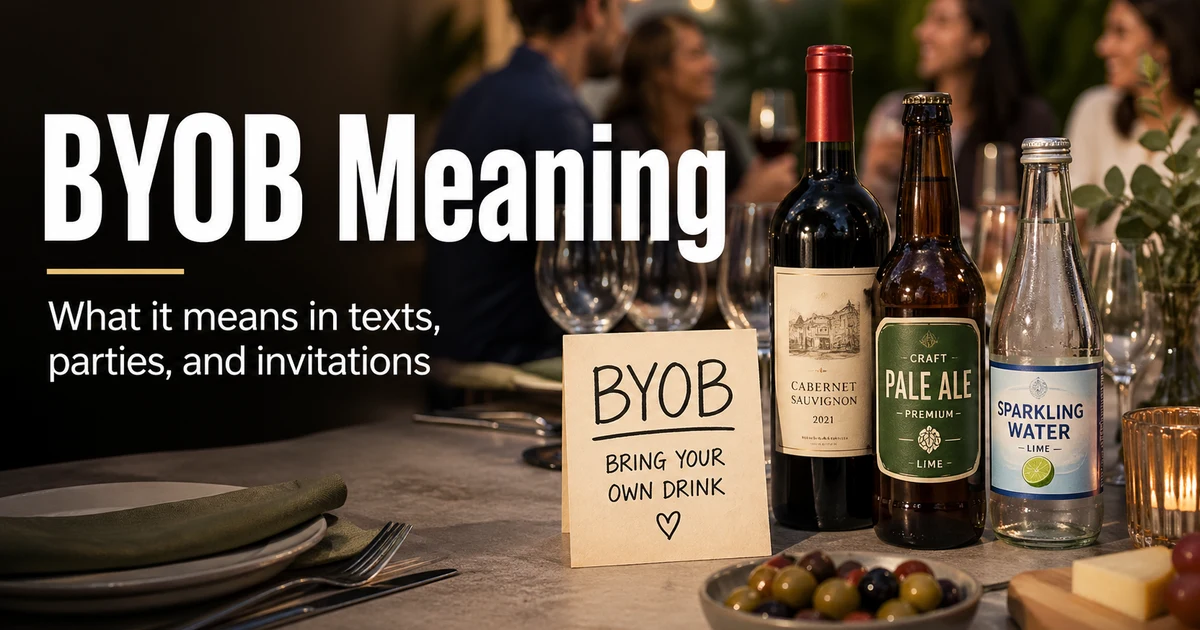
BYOB means “Bring Your Own Bottle” or “Bring Your Own Beverage.” People use it when guests need to bring their own drinks to a party, dinner, restaurant, picnic, or casual event. In many cases, it refers to alcohol, but it can also mean any drink.
Common BYOB meanings include:
• Bring Your Own Bottle
• Bring Your Own Beer
• Bring Your Own Booze
• Bring Your Own Beverage
So, if someone says “This party is BYOB,” they mean the host will not provide drinks for everyone. You should bring the drink you want to have.
Introduction to BYOB
BYOB is a short term you may see on party invitations, restaurant signs, group chats, and event posts. It looks simple, but it can confuse people because it has more than one full form. Most meanings are very close, but the context matters.
In daily use, BYOB tells people to bring their own drink. The host may provide food, space, music, or snacks, but drinks are not included. This helps guests prepare before they arrive and avoids awkward surprises.
The term feels casual. People use it more with friends, small parties, dinners, and relaxed events. You may also see it in restaurants that allow customers to bring their own bottle instead of buying drinks there.
BYOB is useful because it keeps planning simple. The host saves money, and guests bring whatever they prefer. Some people like wine, some like beer, and some prefer soft drinks. BYOB gives everyone that choice.
BYOB Meaning and Definition
BYOB most commonly means “Bring Your Own Bottle.” This is the meaning many people think of first, especially in restaurant or dinner settings. A bottle can mean wine, beer, liquor, or another drink depending on the event.
It can also mean “Bring Your Own Beer,” “Bring Your Own Booze,” or “Bring Your Own Beverage.” These meanings all point to the same basic idea. You need to bring your own drink because the host or venue will not provide it.
The safest general definition is this: BYOB means guests should bring their own drink to an event or place. That drink may contain alcohol, but it does not always have to. A family event or school related gathering may use BYOB to mean any beverage.
BYOB can mean:
• Bring Your Own Bottle
• Bring Your Own Beer
• Bring Your Own Booze
• Bring Your Own Beverage
In most social settings, the exact meaning becomes clear from the event. A house party may mean beer or alcohol. A picnic may mean soda, water, or juice. A restaurant may mean wine or another sealed bottle.
What Does BYOB Mean in Text
In text messages, BYOB usually means “bring your own drink.” People use it to keep plans short and clear. Instead of writing a long message about drinks, they just add BYOB at the end.
For example, someone may write, “Party at my place tonight. BYOB.” That means you can come, but you should bring your own drink. The host may not have enough drinks for everyone.
Text examples include:
• “Movie night at 8. BYOB.”
• “Food is covered, but BYOB.”
• “Small hangout tomorrow. Bring snacks and BYOB.”
• “The place allows BYOB, so bring wine if you want.”
BYOB in texting sounds informal. It works well with friends, family, and casual groups. It does not fit serious business messages unless the event itself is relaxed.
What Does BYOB Stand For
BYOB stands for different phrases, but they all share the same core idea. The most common full form is “Bring Your Own Bottle.” This one often appears in restaurant and dinner settings.
Other versions sound more casual. “Bring Your Own Beer” and “Bring Your Own Booze” usually point to alcohol. “Bring Your Own Beverage” sounds softer and can include non alcoholic drinks.
Common full forms are:
• Bring Your Own Bottle
• Bring Your Own Beer
• Bring Your Own Booze
• Bring Your Own Beverage
Less common meanings include:
• Build Your Own Burger
• Build Your Own Brand
• Bring Your Own Bag
• Bring Your Own Book
Most of the time, BYOB means something related to drinks. If a restaurant menu says BYOB near burgers, it may mean “Build Your Own Burger.” If a marketing course uses BYOB, it may mean “Build Your Own Brand.”
BYOB Meaning in Party Invitations
On a party invitation, BYOB means guests should bring their own drinks. The host may still provide food, snacks, music, or a place to gather. Drinks are the guest’s responsibility.
This is common for house parties, birthday dinners, game nights, and casual celebrations. It helps the host manage the cost and lets guests bring the drinks they enjoy most.
Clear BYOB invitation wording can include:
• “Food provided. Please BYOB.”
• “Join us for dinner and bring your favorite drink.”
• “Snacks and music are covered. BYOB.”
• “Casual party at our place. Bring your own beverage.”
The wording should sound friendly. A simple note works better than a strict instruction. Guests usually appreciate knowing what to bring before they arrive.
BYOB Meaning in Restaurants
In restaurants, BYOB means customers can bring their own bottle, often wine. Some restaurants do not sell alcohol, so they allow guests to bring a bottle with their meal.
Many BYOB restaurants have rules. Some charge a corkage fee. This fee covers opening the bottle, serving it, and providing glasses. Some restaurants also limit the number or type of bottles guests can bring.
Before going to a BYOB restaurant, check:
• Does the restaurant allow outside bottles
• What type of drinks can you bring
• Does it charge a corkage fee
• Does it limit bottle quantity
• Does staff need to open the bottle
BYOB restaurants can save money and make dinner feel more personal. Still, you should always check the policy first.
BYOB Meaning in Events and Gatherings
At events and gatherings, BYOB means attendees should bring their own drinks. The event organizer may provide other things, but drinks may not come with the event.
This works well for small gatherings because people have different tastes. One person may want soda. Another may prefer beer. Someone else may only drink water. BYOB makes it easier for everyone.
BYOB events may include:
• Birthday parties
• Barbecues
• Beach meetups
• Camping trips
• Game nights
• House dinners
• Private celebrations
The phrase keeps things simple, but the host should still give enough detail. If the event is family friendly, “Bring Your Own Beverage” may sound better than BYOB alone.
BYOB Meaning in Slang
In slang, BYOB usually means “bring your own drink,” often alcohol. Friends use it in casual speech, texts, and social media posts. It sounds relaxed and informal.
The slang meaning depends on the setting. If friends talk about a party, BYOB likely means beer, wine, or liquor. If a group plans a picnic, it may mean any drink you like.
Slang examples include:
• “The party is free, but BYOB.”
• “We have food sorted. BYOB though.”
• “It is a chill night, so BYOB.”
• “Come over after work. BYOB if you want drinks.”
This term works best in casual spaces. It may feel too informal for formal invitations unless you explain it clearly.
BYOB Meaning in Business
BYOB can mean something different in business, but this use is less common. In business contexts, BYOB may mean “Build Your Own Brand” or “Bring Your Own Business.” The meaning depends on the company, campaign, or event.
This can confuse people because most readers first think of drinks. If a business uses BYOB, it should write the full phrase at least once. That way, people do not misunderstand the message.
Business related meanings may include:
• Build Your Own Brand
• Bring Your Own Business
• Build Your Own Bundle
• Bring Your Own Beverage at office events
For normal search intent, BYOB meaning mostly connects with parties, drinks, and restaurants. The business meaning needs context to make sense.
BYOB Origin and History
BYOB became popular because it solved a simple social problem. Hosts wanted to invite people without buying drinks for everyone. Guests wanted to know what they should bring. BYOB gave both sides a quick answer.
The phrase spread through invitations, restaurant signs, casual speech, and later online messages. It stayed popular because it is short, practical, and easy to understand once you know the meaning.
People now use BYOB in many places:
• Private parties
• Restaurant policies
• Wedding related events
• Group chats
• Social media posts
• Outdoor gatherings
The term still keeps its original practical purpose. It tells people to plan their own drinks before they arrive.
BYOB Pronunciation
People usually pronounce BYOB by saying each letter separately. You say it as “B Y O B.” Most people do not say it like one word.
This makes it easy to understand in conversation. Someone may say, “It is a B Y O B party,” and the listener knows they need to bring a drink.
Simple pronunciation guide:
• B
• Y
• O
• B
Example sentence:
• “The dinner is B Y O B, so bring your favorite drink.”
The written form usually appears in capital letters. Lowercase byob can appear in casual texting, but BYOB looks clearer.
BYOB vs BYO
BYOB and BYO look similar, but they do not always mean the same thing. BYO means “Bring Your Own.” It is more general because it does not name the item.
BYOB usually refers to drinks. BYO can refer to food, tools, bags, laptops, books, or anything else people need to bring.
| Term | Full Form | Common Use | Meaning |
|---|---|---|---|
| BYOB | Bring Your Own Bottle or Beverage | Parties and restaurants | Bring your own drink |
| BYO | Bring Your Own | General events | Bring your own item |
| BYOB | Bring Your Own Beer or Booze | Casual parties | Bring your own alcohol |
| BYO food | Bring Your Own Food | Picnics or meetups | Bring your own meal |
BYOB feels more specific. BYO needs more explanation unless the item is already clear.
BYOB vs Bring Your Own Bottle
BYOB is the short form. “Bring Your Own Bottle” is the full phrase. Both can mean the same thing, but the full phrase feels clearer for people who do not know the acronym.
If you write to close friends, BYOB works fine. If you write a formal or mixed audience invitation, the full phrase can prevent confusion.
Simple differences:
• BYOB is shorter
• Bring Your Own Bottle is clearer
• BYOB suits texts and casual invites
• Full phrase suits formal invitations
• Both usually refer to drinks
When in doubt, write the full phrase first. Then you can use BYOB later in the same message.
BYOB vs Bring Your Own Beverage
“Bring Your Own Beverage” gives BYOB a wider meaning. It does not focus only on alcohol. It can include water, soda, juice, coffee, tea, or any drink someone likes.
This version works better for family friendly events. It also fits people who do not drink alcohol. It sounds polite and inclusive.
Use “Bring Your Own Beverage” when:
• The event includes families
• The event has mixed age groups
• Alcohol is not the focus
• You want a softer tone
• You want to avoid confusion
This phrase helps guests understand that any drink is fine, not just alcohol.
BYOB Meaning Comparison Table
BYOB can mean different things based on where you see it. The table below makes the meanings easier to compare.
| BYOB Meaning | Common Context | What It Means | Example |
|---|---|---|---|
| Bring Your Own Bottle | Restaurant or dinner | Bring a bottle, often wine | “This restaurant is BYOB.” |
| Bring Your Own Beer | Casual party | Bring your own beer | “Party tonight. BYOB.” |
| Bring Your Own Booze | Informal gathering | Bring your own alcohol | “Snacks are ready, but BYOB.” |
| Bring Your Own Beverage | Family event | Bring any drink | “Picnic tomorrow. BYOB.” |
| Build Your Own Burger | Restaurant menu | Choose your burger items | “Try our BYOB meal.” |
| Build Your Own Brand | Business or marketing | Create a personal brand | “Join our BYOB workshop.” |
| BYO | General use | Bring your own item | “BYO laptop.” |
The drink meaning is the most common. Other meanings need clear context.
Common BYOB Idioms and Related Phrases
BYOB often appears around parties, drinks, hosting, and social gatherings. These idioms and phrases can help you understand the language people use in the same context.
Some of these phrases sound casual. Use them in friendly conversation, captions, or informal writing. Avoid them in serious or formal content unless they fit the tone.
Bring Your Own Bottle
Meaning: Bring the drink you want to have at the event
Uses: People use this on invitations when the host does not provide drinks
Example: Dinner starts at seven, so bring your own bottle
Bring Your Own Beer
Meaning: Bring your own beer to the party or gathering
Uses: People say this when beer will not come from the host
Example: We have snacks ready, but bring your own beer
Bring Your Own Beverage
Meaning: Bring any drink you prefer
Uses: People use this for casual or family friendly events
Example: The picnic is tomorrow, so bring your own beverage
Bring Your Own Booze
Meaning: Bring your own alcoholic drink
Uses: People use this in very casual party talk
Example: The house party is free, but bring your own booze
Raise a Glass
Meaning: Celebrate or honor someone with a drink
Uses: People say this during parties, dinners, and speeches
Example: Let us raise a glass to the new couple
Drink Responsibly
Meaning: Drink alcohol in a safe and careful way
Uses: People use this as advice at parties or events
Example: Have fun tonight, but drink responsibly
On the House
Meaning: Free because the restaurant or host pays for it
Uses: People say this when food or drinks cost nothing for the guest
Example: The dessert came on the house
Bottoms Up
Meaning: Drink now or finish your drink
Uses: People say this in a playful way before drinking
Example: Bottoms up, everyone
Cheers to That
Meaning: I agree or I support that happy thought
Uses: People say this while celebrating or agreeing
Example: A relaxing weekend sounds perfect, cheers to that
Party Animal
Meaning: A person who loves parties and social events
Uses: People use this for someone full of party energy
Example: Jake turns into a party animal on weekends
Life of the Party
Meaning: A fun person who makes a gathering lively
Uses: People say this about someone who brings energy to a room
Example: Sara became the life of the party
Social Butterfly
Meaning: A person who enjoys meeting and talking to people
Uses: People use this for someone friendly and outgoing
Example: He is a social butterfly at every event
Break the Ice
Meaning: Make people feel relaxed at the start of a meeting or gathering
Uses: People say this when someone starts conversation in an easy way
Example: A simple joke helped break the ice
Paint the Town Red
Meaning: Go out and enjoy a lively night
Uses: People use this when talking about celebration or nightlife
Example: They went out to paint the town red
Have a Blast
Meaning: Have a very good time
Uses: People say this after or before a fun event
Example: We had a blast at the BYOB party
Let Your Hair Down
Meaning: Relax and enjoy yourself
Uses: People use this when someone stops acting too formal
Example: It is Friday, so let your hair down
Good Company
Meaning: Enjoyable people to spend time with
Uses: People use this when the people make the event better
Example: Simple food feels better with good company
Call It a Night
Meaning: End the evening and go home or rest
Uses: People say this when they feel ready to stop the event
Example: It is late, so let us call it a night
Drink Like a Fish
Meaning: Drink a lot of alcohol
Uses: People use this casually, often with humor or criticism
Example: He can drink like a fish at parties
Wet Your Whistle
Meaning: Have a drink
Uses: People use this in a light and old fashioned way
Example: Come inside and wet your whistle
Practical Usage of BYOB
BYOB works well when you want to keep a message short and clear. It tells people that drinks will not come from the host, restaurant, or event organizer. This helps everyone plan ahead.
You should add enough context when you use it. Close friends may understand “BYOB” alone, but larger groups may need more detail. Mention whether you mean alcohol, soft drinks, or any beverage.
Real life examples:
• “We are hosting a movie night at our place. Pizza is covered, but BYOB.”
• “The restaurant allows BYOB, so we can bring our own wine.”
• “Birthday dinner on Saturday. Food and cake are sorted. Please BYOB.”
• “We are meeting at the park at five. Bring snacks and BYOB.”
• “It is a small game night, so bring your own drink if you want.”
• “The venue does not serve alcohol, but it allows BYOB.”
These examples sound natural because they explain what the host provides and what guests should bring.
BYOB Invitation Wording Ideas
A good BYOB invitation should sound clear and polite. You do not need to over explain it, but guests should understand what they need to bring.
The wording depends on the event. A house party can sound casual. A dinner invitation may need a softer tone. A restaurant plan should mention the BYOB policy if guests need to prepare.
Useful wording ideas:
• “Food is on us. Please BYOB.”
• “Join us for dinner and bring your favorite drink.”
• “Snacks and music provided. BYOB.”
• “We would love to see you there. Bring your own beverage.”
• “The restaurant allows BYOB, so feel free to bring wine.”
• “Come hungry and bring your drink of choice.”
Friendly wording makes the request feel normal. It also avoids making guests feel pressured.
BYOB Party Rules and Etiquette
BYOB parties feel relaxed when everyone understands the basic rules. Guests should bring their own drinks and avoid expecting the host to provide extras.
Hosts should also make the plan clear before the party. If alcohol is allowed, say so. If you only mean soft drinks, say that too. Clear wording prevents confusion.
Helpful BYOB etiquette tips:
• Bring enough drink for yourself
• Ask the host if alcohol fits the event
• Do not expect others to share
• Respect the host’s home
• Follow age and local rules
• Drink responsibly
• Arrange safe travel if alcohol is involved
Good etiquette keeps the gathering easy for everyone.
BYOB Restaurant Rules
A BYOB restaurant can make dining more flexible, but every place has its own rules. You should not assume a restaurant allows outside bottles.
Some restaurants charge a corkage fee. Some only allow wine. Some may not allow opened bottles. A quick check before you go can save embarrassment.
Common BYOB restaurant rules include:
• Call ahead before bringing a bottle
• Ask about corkage fees
• Bring only allowed drink types
• Respect bottle limits
• Let staff open the bottle if required
• Do not bring drinks the restaurant already sells
• Follow local alcohol rules
A little planning makes the dining experience smoother.
How to Use BYOB Correctly
Use BYOB when guests need to bring their own drinks.
• Add BYOB clearly on casual invitations
• Explain whether you mean alcohol or any beverage
• Use it in texts, group chats, and event notes
• Check restaurant rules before planning a BYOB dinner
• Avoid BYOB in formal writing unless you explain it
Common Mistakes With BYOB
Most BYOB mistakes happen because people assume everyone understands the same meaning.
• Do not assume BYOB always means alcohol
• Do not use BYOB without event context
• Do not forget restaurant corkage fees
• Do not write BYOB on formal invitations without explanation
• Do not ignore age rules and local alcohol rules
Conclusion
BYOB is a simple acronym, but it can carry a few meanings. Most of the time, it means “Bring Your Own Bottle,” “Bring Your Own Beer,” “Bring Your Own Booze,” or “Bring Your Own Beverage.” In plain words, you need to bring your own drink.
The best way to use BYOB is to add a little context. Tell guests whether you mean alcohol or any beverage. This matters at family events, restaurants, and mixed gatherings. Clear wording keeps the mood easy and avoids confusion. So when you see BYOB on a text, invitation, or restaurant note, the message is simple. Bring your own drink and plan ahead.
BYOB Meaning FAQs
What does BYOB mean?
BYOB means “Bring Your Own Bottle,” “Bring Your Own Beer,” “Bring Your Own Booze,” or “Bring Your Own Beverage.”
What does BYOB stand for in texting?
In texting, BYOB usually means bring your own drink. Friends use it for parties, dinners, and casual meetups.
What does BYOB mean on an invitation?
On an invitation, BYOB means the host will not provide drinks for everyone. Guests should bring their own drink.
Does BYOB always mean alcohol?
No. BYOB often means alcohol, but it can also mean any drink. Context decides the meaning.
What does BYOB mean at a restaurant?
At a restaurant, BYOB means customers can bring their own bottle. The restaurant may charge a corkage fee.
What is the difference between BYOB and BYO?
BYOB usually refers to drinks. BYO means “Bring Your Own” and can refer to many items.
Is BYOB formal or informal?
BYOB sounds informal. It works best for casual invitations, parties, and relaxed restaurant plans.
Can BYOB mean bring your own beverage?
Yes. “Bring Your Own Beverage” is a common meaning, especially for family friendly or non alcoholic events.
What should guests bring to a BYOB party?
Guests should bring the drink they want to have. This can be alcohol or a non alcoholic drink based on the event.
How do you write BYOB on an invitation?
You can write “Food provided, please BYOB” or “Bring your own beverage.” Clear wording works best.
Is BYOB rude to put on an invitation?
No, it is not rude if you write it politely. It helps guests know what to expect.
What does BYOB mean in slang?
In slang, BYOB means bring your own drink, usually alcohol. People use it in casual party talk.
What does BYOB mean in business?
In business, BYOB can mean “Build Your Own Brand” or another phrase. The context should explain it clearly.
What is a corkage fee in BYOB restaurants?
A corkage fee is a charge for opening, serving, or providing glasses for your bottle at a restaurant.
Can BYOB mean build your own burger?
Yes, but this meaning usually appears on restaurant menus. In normal slang, BYOB usually means bring your own bottle or beverage.