
Quick Answer
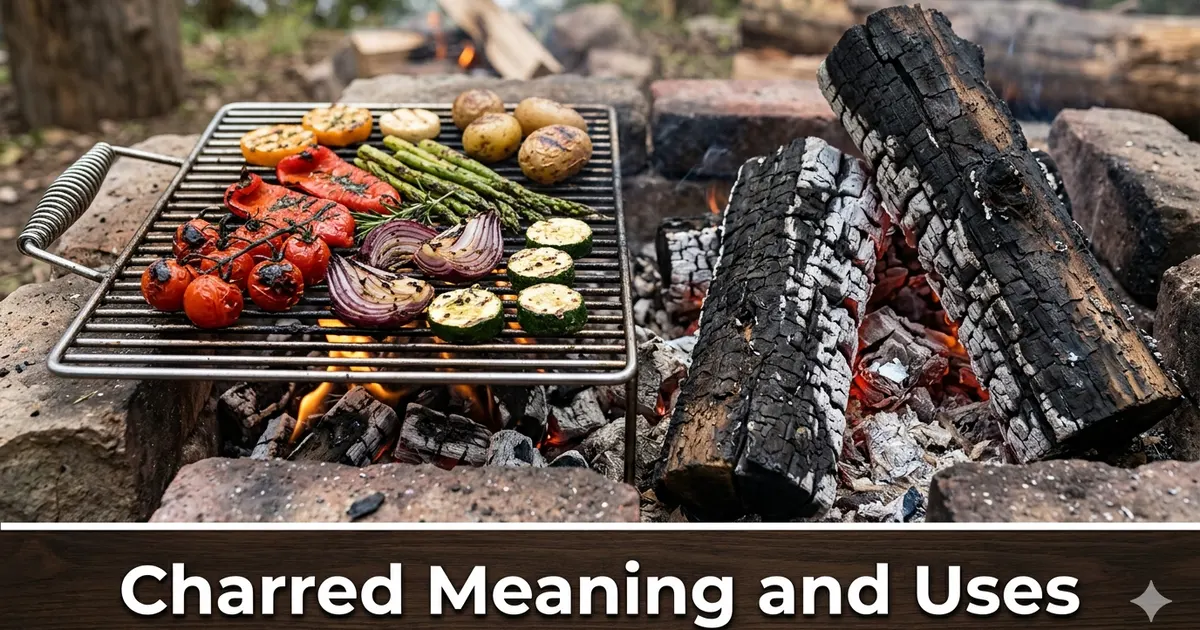
Charred means partially burned or blackened by heat, fire, or intense cooking. The word is commonly used to describe food, wood, buildings, or other materials that have been exposed to high temperatures and developed a dark, blackened surface.
In everyday use, charred can refer to:
- Food that has a smoky, blackened exterior from grilling or roasting
- Wood or objects partially burned by fire
- Materials damaged by heat but not completely turned to ash
- A visual description of something darkened by burning
For example, a charred steak may have a flavorful black crust, while a charred piece of wood shows signs of fire damage. The exact meaning depends on the context.
Introduction
Many people encounter the word charred when reading recipes, watching cooking shows, hearing news reports about fires, or describing damage caused by heat. While the term seems simple, its meaning changes slightly depending on how it is used.
In cooking, charred often has a positive meaning. Chefs intentionally char vegetables, meat, or bread to create smoky flavors and appealing textures. A lightly charred corn cob or charred burger can be considered delicious because the high heat creates complex flavors.
Outside the kitchen, the word usually carries a more serious meaning. News reports may describe charred remains after a fire, or someone may refer to a charred tree following a wildfire. In these situations, the term emphasizes damage caused by burning.
Understanding what charred means can help you interpret recipes, news articles, everyday conversations, and descriptive writing more accurately. This guide explains the definition, common uses, examples, related terms, and the difference between charred and similar words such as burnt and scorched.
What Does Charred Mean?
The word charred is the past tense and past participle form of the verb char.
At its core, charred means:
Burned until the surface becomes blackened, carbonized, or darkened by heat.
When something becomes charred, intense heat removes moisture and changes the material’s structure. The surface often turns black, brittle, or smoky in appearance.
A charred object is usually not completely destroyed. Instead, it has undergone partial burning that leaves visible signs of heat exposure.
Simple Definition
A charred item is:
- Blackened by fire or heat
- Partially burned
- Darkened through carbonization
- Often dry, brittle, or smoky looking
Example Sentences
- The firefighters found charred wood near the fireplace.
- She served charred vegetables alongside grilled chicken.
- The storm left several charred trees in the forest.
- The bread became slightly charred on the grill.
Charred Meaning in Different Contexts
The word can have slightly different meanings depending on where it appears.
| Context | Meaning | Example |
|---|---|---|
| Cooking | Intentionally blackened for flavor | Charred corn on the grill |
| Fire Damage | Burned and blackened by flames | Charred remains of a building |
| Nature | Trees or plants damaged by fire | Charred forest after a wildfire |
| Writing and Description | Used to create vivid imagery | Charred landscape under the summer sun |
| Manufacturing | Material altered by extreme heat | Charred wood used for decorative purposes |
Charred vs Burnt vs Scorched
People often confuse these terms because all involve heat damage.
| Term | Meaning | Severity | Example |
| Charred | Blackened by intense heat, often partially burned | Moderate to severe | Charred vegetables |
| Burnt | Damaged by excessive heat or fire | Moderate to complete | Burnt toast |
| Scorched | Surface lightly damaged or discolored by heat | Mild | Scorched fabric |
| Ashes | Completely consumed by fire | Extreme | Wood reduced to ashes |
A useful way to remember the difference:
- Scorched is lightly damaged.
- Charred is blackened and partially burned.
- Burnt can range from overcooked to heavily damaged.
- Ashes indicate near total destruction.
Charred in Cooking
One of the most common modern uses of charred appears in cooking.
Many professional chefs intentionally create a charred exterior on food because it adds:
- Smoky flavor
- Visual appeal
- Crisp texture
- Depth and complexity
Common Charred Foods
- Corn on the cob
- Bell peppers
- Steak
- Burgers
- Broccoli
- Cabbage
- Bread
- Chicken
Why Chefs Like Charred Flavor
When food cooks over high heat, chemical reactions create new flavors and aromas. A small amount of charring can make food taste richer and more complex.
For example:
- Charred corn develops a sweeter, smokier taste.
- Charred steak gains a flavorful crust.
- Charred vegetables often become sweeter inside while remaining crisp outside.
However, excessive charring can make food bitter and unpleasant.
Charred Wood and Materials
Outside cooking, charred commonly describes materials exposed to fire.
Charred Wood
Wood becomes charred when flames or extreme heat burn the outer layers but do not completely consume the material.
Characteristics include:
- Black surface
- Brittle texture
- Smoky smell
- Visible burn marks
Interestingly, some builders and designers intentionally use charred wood for decorative and weather resistant finishes.
Charred Buildings and Objects
After a fire, reports often describe:
- Charred walls
- Charred furniture
- Charred remains
- Charred debris
In these situations, the word highlights visible damage while suggesting the object still exists in some form.
Common Uses of Charred in Everyday Language
People use the word charred in many situations.
Describing Food
- The pizza crust looked slightly charred.
- We enjoyed charred peppers with dinner.
Discussing Fires
- Firefighters examined the charred structure.
- The forest contained hundreds of charred trees.
Creative Writing
Writers use charred to create strong imagery.
Examples:
- A charred landscape stretched across the horizon.
- The cabin stood silent among charred remains.
- Smoke drifted above the charred hillside.
The word often evokes images of heat, destruction, survival, or transformation.
Examples of Charred in Sentences
Here are practical examples showing different uses of the word.
Cooking Examples
- The chef served charred Brussels sprouts.
- We grilled the vegetables until lightly charred.
- The steak had a beautifully charred crust.
Fire Related Examples
- The investigators examined the charred remains.
- Several charred trees lined the road.
- The charred furniture showed signs of intense heat.
Everyday Examples
- The old notebook had charred edges.
- The campfire left a pile of charred logs.
- Smoke rose from the charred ground.
Similar Terms and Related Words
Several words have meanings related to charred.
| Word | Meaning |
| Burnt | Damaged by fire or heat |
| Scorched | Lightly burned on the surface |
| Blackened | Turned dark by heat or fire |
| Singed | Slightly burned, especially edges |
| Smoked | Exposed to smoke, often for flavor |
| Carbonized | Converted into carbon through heat |
| Toasted | Lightly browned by heat |
While these words overlap, each has a slightly different meaning and intensity.
Common Mistakes People Make
Understanding a few common misunderstandings can help you use the word correctly.
Thinking Charred Always Means Ruined
In cooking, charred often describes a desirable result rather than a mistake.
A charred vegetable may be intentionally prepared that way.
Confusing Charred With Burnt
Although related, charred specifically emphasizes blackening and carbonization. Burnt is broader and can describe any heat damage.
Assuming Charred Means Completely Destroyed
Many charred objects remain recognizable. Complete destruction usually results in ash rather than charring.
Using It for Mild Heat Damage
If something is only lightly affected by heat, scorched or singed may be more accurate than charred.
Why the Word Charred Is Common in News Reports
Journalists frequently use charred because it conveys a clear visual image.
Readers immediately understand that an object has been damaged by fire but still remains identifiable.
Examples include:
- Charred vehicles after an accident
- Charred buildings following a fire
- Charred forest areas after wildfires
The term efficiently communicates both damage and appearance.
Conclusion
The word charred describes something that has been blackened or partially burned by heat. In cooking, it often refers to a flavorful, smoky exterior created intentionally. In discussions about fires, it usually indicates visible burn damage that has not completely destroyed the object.
Understanding the difference between charred, burnt, and scorched can help you use the term accurately in everyday conversations, writing, cooking, and reading. Whether you encounter charred vegetables on a menu or charred trees in a news report, the core idea remains the same: a surface altered and darkened by intense heat.
FAQs
What does charred mean?
Charred means partially burned or blackened by heat, fire, or intense cooking. The surface typically becomes dark and carbonized.
Is charred the same as burnt?
Not exactly. Charred usually refers to blackened, partially burned surfaces, while burnt can describe a wider range of heat damage.
Is charred food safe to eat?
Lightly charred food is commonly eaten and often desired for flavor. However, excessively charred food may taste bitter and should not be consumed if it is heavily burned.
What does charred wood mean?
Charred wood is wood whose surface has been blackened by fire or intense heat while the material remains partially intact.
Why do chefs char food?
Chefs char food to create smoky flavors, crisp textures, and a more complex taste profile.
Can a building be described as charred?
Yes. News reports often describe fire damaged structures as charred when visible burn damage remains.
What is the difference between charred and scorched?
Scorched usually refers to light surface damage from heat, while charred indicates deeper blackening and partial burning.
Does charred always involve fire?
No. Direct flames can cause charring, but extremely high heat from grills, ovens, machinery, or other sources can also produce a charred surface.