
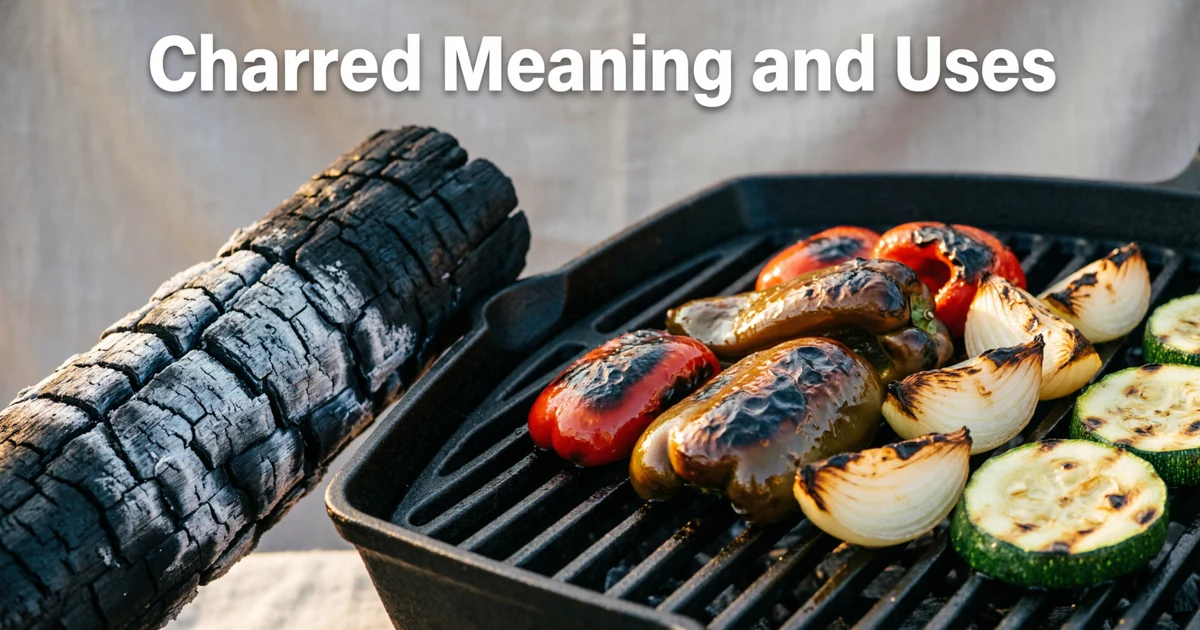
Quick Answer
Charred means burned so intensely that the surface becomes blackened, scorched, or partially turned into charcoal. The word is most often used to describe food, wood, buildings, plants, or objects that have been exposed to high heat or fire.
For example:
- A charred steak has a blackened outer crust from cooking over high heat.
- A charred log is wood that has been burned by fire.
- A charred building shows visible damage from flames and heat.
Depending on the context, charred can describe anything from a desirable cooking technique to serious fire damage. Understanding the situation helps determine whether the word has a positive, neutral, or negative meaning.
Introduction
People often encounter the word charred when reading recipes, watching cooking shows, following news reports about fires, or describing something damaged by heat. While the term may seem simple, its meaning can vary depending on the situation.
In cooking, charred foods are often intentionally blackened to create a smoky flavor and appealing texture. In contrast, when discussing homes, forests, furniture, or personal belongings, charred usually refers to damage caused by excessive heat or flames.
Because the word appears in many different contexts, people frequently search for its definition, pronunciation, examples, and differences from similar words such as burned, scorched, and roasted. Understanding these distinctions helps improve both everyday communication and writing.
This guide explains the meaning of charred, how it is used, practical examples, related terms, common mistakes, and answers to frequently asked questions.
What Does Charred Mean?
The word charred comes from the verb char, which means to burn something until it becomes blackened or partly converted into carbon.
When something is charred, it has been exposed to enough heat that its surface changes color and texture. The result is usually a black, dark brown, or carbonized appearance.
A charred object may be:
- Slightly blackened
- Partially burned
- Heavily damaged by fire
- Intentionally cooked over intense heat
The exact meaning depends on the context.
Simple Definition
Charred: Burned until blackened or carbonized by heat or fire.
Example Sentences
- The firefighters examined the charred remains of the building.
- She served charred vegetables with grilled chicken.
- The campfire left several charred logs behind.
- The toast became charred after staying in the toaster too long.
Charred Meaning in Different Contexts
The word can have slightly different meanings depending on where it is used.
| Context | Meaning | Example |
|---|---|---|
| Cooking | Intentionally blackened surface from high heat | Charred corn tacos |
| Fire Damage | Burned and damaged by flames | Charred house remains |
| Nature | Burned vegetation or trees | Charred forest after wildfire |
| Woodworking | Surface intentionally burned for appearance or protection | Charred wood siding |
| Everyday Description | Blackened by heat | Charred paper edges |
Charred vs Similar Words
Many people confuse charred with other heat related terms. While they are related, they are not identical.
| Term | Meaning | Best Use | Example |
|---|---|---|---|
| Charred | Blackened by intense heat | Cooking or fire damage | Charred vegetables |
| Burned | Damaged by heat or fire | General use | Burned hand |
| Scorched | Slightly burned surface | Mild heat damage | Scorched grass |
| Roasted | Cooked with dry heat | Cooking | Roasted potatoes |
| Singed | Lightly burned edges | Hair, fabric, paper | Singed hair |
| Carbonized | Converted largely into carbon | Scientific or severe burning | Carbonized wood |
A charred item is typically more heavily affected than something that is merely scorched.
How Charred Is Used in Cooking
One of the most common modern uses of charred is in food preparation.
Chefs often intentionally char foods to create:
- Smoky flavors
- Rich aromas
- Crispy textures
- Visual contrast
High heat caramelizes natural sugars and creates deeper flavor profiles.
Common Charred Foods
- Corn
- Peppers
- Onions
- Broccoli
- Steak
- Chicken
- Bread
- Cabbage
Example
A chef may grill corn directly over an open flame until dark spots appear on the surface. The result is charred corn with a smoky, slightly sweet taste.
Is Charred Food Burned?
Not necessarily.
A properly charred food has controlled blackening that enhances flavor. Completely burned food may taste bitter and unpleasant.
The difference lies in balance. Light charring often improves taste, while excessive burning usually reduces food quality.
Charred Objects After a Fire
Outside of cooking, charred often describes damage caused by fire.
Examples include:
- Charred buildings
- Charred furniture
- Charred vehicles
- Charred trees
- Charred debris
In these situations, the word usually indicates significant exposure to heat.
Example Sentence
After the fire was extinguished, investigators searched through the charred remains of the warehouse.
This use of charred typically carries a serious or negative meaning because it refers to destruction or damage.
Charred Wood and Modern Design
Interestingly, charred wood is not always a sign of damage.
Some builders intentionally burn wood surfaces to improve appearance and durability.
This process creates:
- A dark textured finish
- Improved resistance to weather
- Greater resistance to insects
- Unique visual character
The technique has become popular in modern architecture and interior design.
Common Uses
- Exterior siding
- Decorative walls
- Furniture
- Garden structures
In these situations, charred wood is considered desirable rather than damaged.
Examples of Charred in Sentences
Seeing the word used naturally can help you understand its meaning more clearly.
Cooking Examples
- The chef served charred asparagus with lemon sauce.
- Charred peppers added a smoky flavor to the dish.
- The burger had a perfectly charred exterior.
Fire Related Examples
- Firefighters examined the charred structure.
- The wildfire left miles of charred landscape behind.
- Only a few charred pieces of furniture remained.
Everyday Examples
- The candle left a charred mark on the table.
- The paper’s edges looked charred after touching the flame.
- He removed the charred wood from the fire pit.
Common Use Cases for the Word Charred
People commonly use charred in the following situations:
Food and Recipes
Recipes frequently mention charred vegetables, meats, or breads to indicate a smoky cooking style.
News Reports
Journalists often describe charred buildings, vehicles, and property after fires.
Environmental Discussions
Reports about wildfires commonly reference charred forests and landscapes.
Construction and Design
Architects and designers may discuss charred wood as a decorative building material.
Literature and Creative Writing
Writers use charred imagery to create vivid descriptions of destruction, heat, or dramatic scenes.
Related Words and Phrases
Several words are closely related to charred.
| Term | Relationship |
|---|---|
| Burned | General heat damage |
| Scorched | Light surface burning |
| Blackened | Darkened by heat |
| Singed | Slight edge burning |
| Smoked | Exposed to smoke |
| Carbonized | Reduced to carbon |
| Fire damaged | Harmed by fire |
| Toasted | Lightly browned from heat |
Knowing these alternatives can improve writing and help avoid repetition.
Common Mistakes People Make
Many readers misunderstand the word charred. Here are some common mistakes.
Assuming Charred Always Means Ruined
In cooking, charred food can be intentional and desirable.
Confusing Charred With Scorched
Scorched usually means lightly burned. Charred generally indicates a darker and more significant effect.
Thinking Charred Means Completely Destroyed
An object can be charred without being fully consumed by fire.
Using Burned and Charred Interchangeably
While related, charred specifically refers to blackening and carbonization from heat.
Assuming All Charred Food Is Unsafe
Light charring is common in cooking. However, severely burned food may affect flavor and quality.
Why Writers Use the Word Charred
The word creates strong visual imagery.
Instead of saying something was burned, a writer can say it was charred to help readers imagine:
- Blackened surfaces
- Smoke damage
- Intense heat
- Fire aftermath
- Smoky textures
Because it is more descriptive than burned, it often appears in fiction, journalism, and food writing.
Conclusion
The word charred describes something that has been burned until it becomes blackened or partially carbonized. It is commonly used in cooking, fire damage reports, environmental discussions, construction, and everyday language.
While charred often suggests destruction, it can also describe desirable flavors in food or intentional design techniques in woodworking. Understanding the context helps you determine whether the term carries a positive, neutral, or negative meaning.
FAQs
What does charred mean?
Charred means burned until blackened or partially converted into carbon by intense heat or fire.
Is charred the same as burned?
Not exactly. Burned is a broader term, while charred specifically refers to blackening and carbonization caused by heat.
Can food be charred on purpose?
Yes. Many chefs intentionally char vegetables, meats, and breads to create smoky flavors and attractive textures.
Is charred food safe to eat?
Lightly charred food is commonly eaten. However, excessively burned food may have an unpleasant taste and should generally be avoided.
What does charred wood mean?
Charred wood is wood that has been burned on the surface. It may result from fire damage or from an intentional design technique.
What is a charred landscape?
A charred landscape refers to land, vegetation, or forests that have been blackened by fire.
What color is something that is charred?
Most charred objects appear black, dark brown, or dark gray because of carbonization.
Can paper become charred?
Yes. Paper exposed to flames or high heat often develops blackened, brittle, charred edges.