
Quick Answer
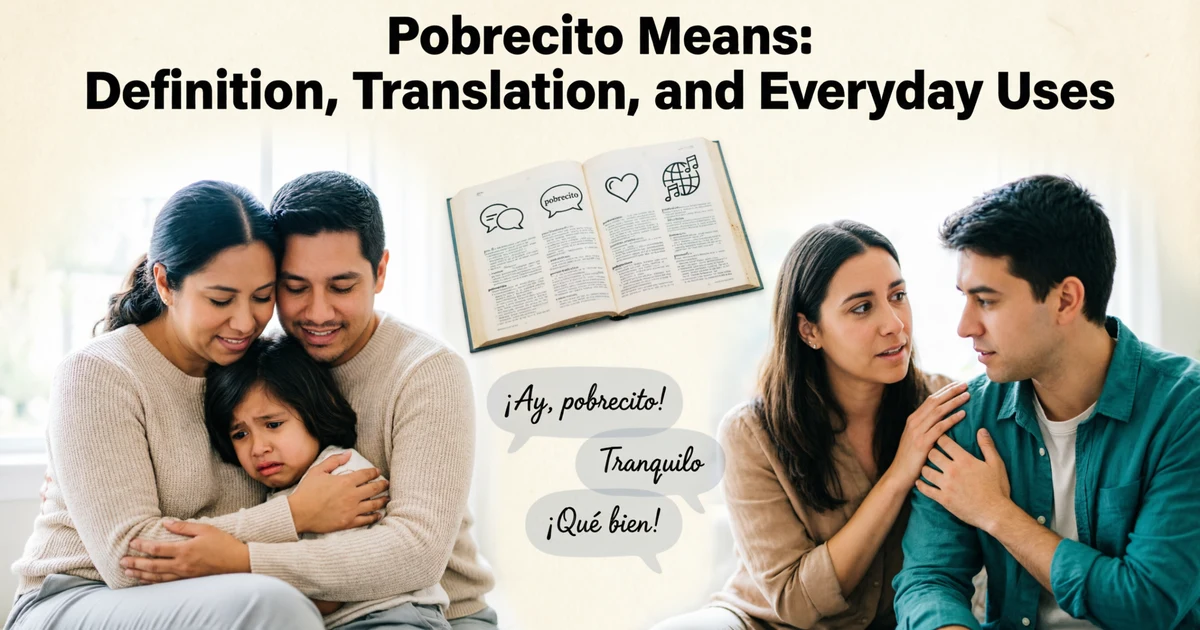
Pobrecito means poor little one or poor thing in Spanish. People use it to express sympathy, affection, or compassion toward someone who is having a difficult time, feels sad, or has experienced something unfortunate. Depending on the situation and tone of voice, it can sound genuinely caring, playful, or even sarcastic.
The word comes from pobre, which means poor, with the diminutive ending cito, making it sound gentler and more affectionate. You may also see forms such as pobrecita, pobrecitos, and pobrecitas, depending on the person’s gender and whether the reference is singular or plural.
Introduction
If you searched for pobrecito means, chances are you saw the word in a conversation, social media post, television show, movie, or while learning Spanish. It is one of those everyday Spanish expressions that often carries more emotion than a direct English translation can capture.
While many dictionaries translate pobrecito as poor thing or poor little one, the actual meaning depends on the context. Someone might say it after hearing bad news, comforting a crying child, talking about a sick pet, or even joking with a friend who had a minor inconvenience. The same word can communicate warmth, empathy, teasing, or irony.
This guide explains exactly what pobrecito means, when to use it, how native speakers use it in everyday conversations, and how it differs from similar Spanish expressions. You will also find pronunciation tips, practical examples, common mistakes, and answers to frequently asked questions.
Meaning of Pobrecito
Pobrecito is a Spanish adjective and expression of sympathy.
It comes from two parts:
- Pobre means poor.
- Cito is a diminutive ending that adds affection or tenderness.
Together, pobrecito literally means poor little one, but English speakers usually translate it as:
- Poor thing
- Poor guy
- Poor little guy
- Poor dear
- Bless his heart in some situations
The exact English translation depends on the situation.
For example:
- Pobrecito, he lost his favorite toy.
- Poor thing, he lost his favorite toy.
Here, the speaker expresses genuine sympathy.
Meaning Comparison Table
| Term | Meaning | Tone | Example |
|---|---|---|---|
| Pobrecito | Poor little one | Caring or affectionate | Pobrecito, he looks tired |
| Pobrecita | Poor little girl or poor woman | Caring | Pobrecita, she is sick |
| Pobrecitos | Poor people or poor little ones | Compassionate | Pobrecitos, they missed the bus |
| Pobre | Poor | Neutral | Él es pobre |
| Ay pobrecito | Oh, poor thing | Emotional | Ay pobrecito, that must hurt |
How to Pronounce Pobrecito
The word is pronounced approximately as:
Poh breh SEE toh
Breaking it into syllables:
Po bre ci to
The stress falls on ci.
Speaking it naturally with a warm tone helps communicate the intended feeling.
When People Use Pobrecito
People commonly use pobrecito in situations where someone deserves sympathy or kindness.
Comforting Someone
If a friend has had a difficult day, someone may say:
Pobrecito. I hope tomorrow is better.
Talking About Children
Parents often use the word when comforting children.
Example:
Pobrecito. Did you scrape your knee?
Referring to Pets
Many pet owners use the expression for injured or frightened animals.
Example:
Pobrecito. The puppy looks scared.
Responding to Bad News
If someone shares unfortunate news, another person may respond with compassion.
Example:
Pobrecito. That sounds really difficult.
Can Pobrecito Be Sarcastic?
Yes.
Like many expressions of sympathy, pobrecito can also be sarcastic.
Imagine someone complains because their phone battery dropped from one hundred percent to ninety eight percent.
Someone might jokingly respond:
Oh, pobrecito. Life must be so hard.
In this situation, the speaker is not expressing genuine sympathy. Instead, they are teasing the person for complaining about something minor.
Tone of voice and context make all the difference.
Different Forms of Pobrecito
Spanish adjectives change depending on gender and number.
| Form | Used For | English Meaning |
|---|---|---|
| Pobrecito | One male | Poor little guy |
| Pobrecita | One female | Poor little girl or poor woman |
| Pobrecitos | Multiple males or mixed group | Poor things |
| Pobrecitas | Multiple females | Poor girls or poor women |
Using the correct form makes the expression sound natural.
Everyday Examples
Here are common examples you may hear.
Family
Pobrecito. He has a fever today.
School
Pobrecita. She forgot her homework and feels embarrassed.
Work
Pobrecito. He worked all weekend.
Pets
Pobrecito. The cat is hiding because of the thunderstorm.
Sports
Pobrecitos. They lost the championship after playing so well.
Examples in Conversations
Example One
Person A:
My son fell off his bike.
Person B:
Pobrecito. Is he okay now?
Example Two
Person A:
Our dog needs surgery.
Person B:
Pobrecito. I hope everything goes well.
Example Three
Person A:
I forgot my lunch today.
Person B:
Pobrecito. At least we can order something.
Example Four
Person A:
I had to wake up at five this morning.
Person B:
Pobrecito.
Depending on the tone, this response may be sincere or playful.
Similar Spanish Expressions
Several Spanish phrases express sympathy in similar ways.
| Expression | Meaning | Best Used For |
|---|---|---|
| Pobrecito | Poor thing | General sympathy |
| Qué pena | What a shame | Unfortunate situations |
| Lo siento | I am sorry | Apologies or sympathy |
| Qué lástima | What a pity | Sad news |
| Ánimo | Stay strong | Encouragement |
Each phrase fits a slightly different situation.
Common Situations Where You May Hear Pobrecito
You are likely to hear this expression in:
- Family conversations
- Childcare settings
- Hospitals
- Veterinary clinics
- Television dramas
- Romantic movies
- Social media comments
- Friendly conversations
- Everyday Spanish speaking communities
It is one of the most common affectionate expressions in conversational Spanish.
Common Mistakes
Many learners misunderstand pobrecito. Here are the most common mistakes.
Thinking It Always Means Financial Poverty
Although pobre means poor, pobrecito usually refers to someone who deserves sympathy rather than someone without money.
Ignoring Tone
The exact meaning changes depending on voice and context.
A warm voice shows compassion.
A playful voice may signal teasing.
Using the Wrong Gender
Remember:
- Pobrecito for a male.
- Pobrecita for a female.
Translating It Word for Word
The literal translation is poor little one, but poor thing often sounds more natural in English.
Assuming It Is Always Serious
Native speakers frequently use pobrecito humorously among friends and family.
Tips for Using Pobrecito Naturally
If you are learning Spanish, these tips can help.
- Use it when expressing kindness or sympathy.
- Match the gender and number correctly.
- Listen carefully to tone in movies and conversations.
- Avoid using it sarcastically until you understand the cultural context.
- Pair it with caring expressions like asking whether someone is okay.
Conclusion
Understanding pobrecito means more than simply knowing its dictionary translation. Although it literally comes from the Spanish word for poor, it most often means poor thing, poor little one, or poor guy in everyday conversation. The expression communicates sympathy, affection, and concern, but it can also become playful or sarcastic depending on tone and context.
Learning when and how to use pobrecito, along with its related forms like pobrecita and pobrecitos, will help you better understand Spanish conversations and sound more natural when expressing empathy.
Frequently Asked Questions
What does pobrecito means in English?
Pobrecito usually means poor thing, poor little one, or poor guy. It expresses sympathy or affection.
Is pobrecito a compliment?
Not usually. It is an expression of compassion rather than praise. It shows that someone feels sorry for another person.
What is the difference between pobre and pobrecito?
Pobre simply means poor, while pobrecito adds affection and sympathy through the diminutive ending.
Can pobrecito be used for adults?
Yes. Native speakers often use it for adults, children, and even pets when expressing compassion.
Is pobrecito always sincere?
No. Depending on tone and context, it may be sincere, playful, or sarcastic.
What is the female form of pobrecito?
The female form is pobrecita.
Can I use pobrecito in everyday conversation?
Yes. It is a very common conversational Spanish expression and sounds natural when used appropriately.