
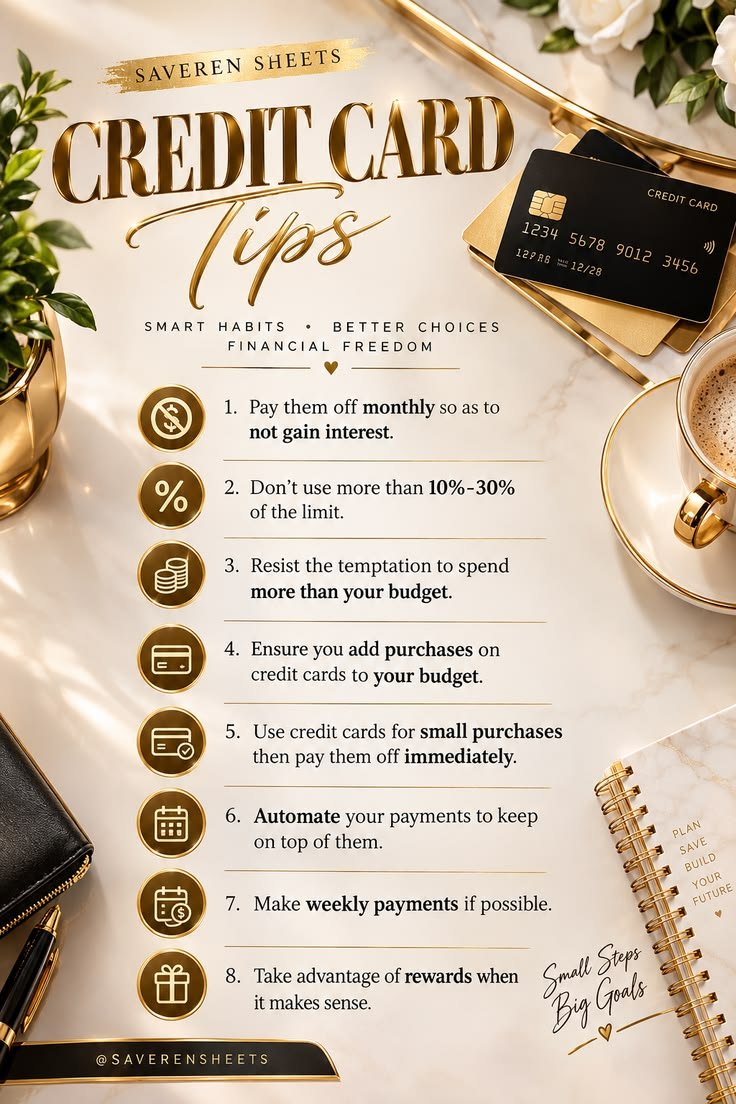
Credit cards can be useful financial tools when managed responsibly. They offer convenient payment options, help establish a credit history in countries with credit scoring systems, and may provide benefits such as cashback, purchase protection, and travel rewards. However, using a credit card without understanding how it works can lead to expensive interest charges, unnecessary fees, and growing debt.
For first-time users, learning the basics of credit card management is essential. Understanding billing cycles, payment deadlines, credit limits, interest rates, and spending habits can help you make better financial decisions and avoid common mistakes.
The best credit card tips for beginners focus on spending within your means, paying bills on time, keeping balances manageable, and choosing a card that matches your financial needs.
Whether you are a student, a young professional, or someone applying for their first credit card, this comprehensive guide explains 20 practical strategies for using credit cards wisely, improving financial habits, and building a stronger financial foundation.
What Is a Credit Card and How Does It Work?
A credit card is a payment card that allows you to borrow money from a financial institution up to an approved credit limit.
Unlike a debit card, which generally deducts money directly from your bank account, a credit card allows you to make purchases using borrowed funds that must be repaid according to the card agreement.
For example, suppose your credit card has a limit of $2,000. You use it to purchase groceries, pay bills, and make other purchases totaling $500.
Your available credit would generally decrease to $1,500 until payments or other account adjustments restore it.
At the end of your billing cycle, the card issuer generates a statement showing your transactions, outstanding balance, minimum payment, and payment due date.
If your card offers a purchase grace period and you meet its conditions, paying the full statement balance by the due date generally allows you to avoid interest on eligible purchases.
However, carrying balances, taking cash advances, or missing payments may result in interest charges and additional fees.
Important Credit Card Terms Every Beginner Should Know
Before using your first credit card, familiarize yourself with the most common financial terms.
| Credit Card Term | Meaning |
|---|---|
| Credit Limit | Maximum credit available under your card agreement |
| Statement Balance | Amount shown as owed when your billing statement closes |
| Current Balance | Account balance reflecting posted transactions and payments |
| Minimum Payment | Smallest payment required by the due date to satisfy the statement’s minimum payment obligation |
| APR | Annual Percentage Rate, expressing the annualized borrowing cost |
| Billing Cycle | Period during which transactions are collected for a statement |
| Due Date | Deadline for making the required payment |
| Grace Period | Period during which qualifying purchases may avoid interest when conditions are met |
| Credit Utilization | Percentage of available revolving credit currently being used |
| Annual Fee | Yearly charge for holding certain credit cards |
| Balance Transfer | Moving debt from one credit account to another |
| Cash Advance | Borrowing cash against a credit card, often with additional fees and interest |
Understanding these terms makes it easier to compare credit cards and recognize potential costs.
20 Best Credit Card Tips for Beginners
1. Choose the Right Credit Card for Your Needs
Your first credit card should match your financial situation, spending habits, and ability to repay borrowed money.
Avoid choosing a card simply because it offers attractive advertisements or promotional rewards.
Compare annual fees, interest rates, eligibility requirements, payment terms, and potential penalties.
Beginners who are establishing credit may benefit from starter cards, student cards, or secured credit cards, depending on what is available in their country.
If you expect to pay your balance in full every month, a low-fee card with straightforward benefits may be more practical than a premium rewards card with a substantial annual fee.
2. Understand Your Credit Limit
Your credit limit represents the amount of credit your issuer makes available.
For example, a card with a $1,000 limit generally allows purchases up to that amount, subject to account conditions and available credit.
However, your credit limit should not determine how much you spend.
Instead, establish a personal spending budget based on your income and essential expenses.
Treat the credit limit as a borrowing ceiling rather than money available for unnecessary purchases.
3. Always Pay Your Credit Card Bill on Time
Payment history is an important component of many credit scoring systems.
Late payments may lead to fees, additional interest, and negative credit reporting, depending on the issuer and local regulations.
Set reminders several days before your payment due date.
You can also consider automatic payments, provided your linked bank account consistently has sufficient funds.
Paying on time helps maintain a positive relationship with your lender and reduces avoidable borrowing costs.
4. Pay Your Full Statement Balance Whenever Possible
One of the most valuable credit card habits is paying your statement balance in full by the due date.
For cards with an applicable purchase grace period, this can help you avoid interest on eligible purchases.
For example, if your statement shows $600 in purchases, paying the entire $600 by the deadline may prevent purchase interest charges when grace-period conditions are satisfied.
Paying only the minimum amount usually leaves an outstanding balance that can generate interest.
The full statement balance is not necessarily the same as the current balance, which may include purchases made after the statement closed.
5. Avoid Paying Only the Minimum Amount
Credit card issuers generally allow customers to make a minimum monthly payment.
Although paying the minimum can keep the account current, it may result in substantial interest charges over time.
Consider a hypothetical example:
| Payment Detail | Amount |
|---|---|
| Outstanding Balance | $1,000 |
| Illustrative APR | 24% |
| Minimum Payment | $35 |
| Remaining Balance Before Interest | $965 |
This example excludes additional purchases, fees, and interest calculations. The actual remaining amount owed will depend on how the issuer calculates interest and applies payments.
The important lesson is that minimum payments may reduce debt slowly, particularly when interest rates are high.
Whenever possible, pay the full statement balance rather than relying on minimum payments.
6. Keep Your Credit Utilization Low
Credit utilization measures how much of your available revolving credit you are using.
Credit Utilization Formula:
\[ \text{Credit Utilization}=\frac{\text{Credit Card Balance}}{\text{Credit Limit}}\times100 \]
For example, if your credit limit is $2,000 and your reported balance is $400, your utilization is 20%.
In many credit scoring systems, lower utilization is generally better than consistently using most of your available credit.
Keeping utilization below 30% is a commonly mentioned guideline, but it is not a guaranteed scoring threshold. Lower reported balances may be preferable, depending on your circumstances and the scoring model.
Most importantly, do not carry interest-bearing debt simply to maintain a credit utilization percentage.
7. Create a Monthly Credit Card Budget
A credit card should fit within your existing financial plan.
Before making purchases, determine how much you can afford to repay from your regular income.
A simple monthly budget might look like this:
| Spending Category | Monthly Budget |
|---|---|
| Groceries | $200 |
| Transportation | $100 |
| Utilities | $120 |
| Entertainment | $80 |
| Total Planned Card Spending | $500 |
These figures are illustrative.
Track your spending throughout the month and avoid making purchases that exceed your repayment capacity.
8. Understand Credit Card Interest Rates
Credit card interest can become expensive when balances remain unpaid.
The Annual Percentage Rate, or APR, represents the annualized cost of borrowing.
Many issuers calculate interest using a daily periodic rate and an average daily balance or similar method.
For illustration, a $1,000 balance subject to a 24% APR could generate approximately $20 in interest over a 30-day period if the balance remained constant and the issuer applied a simple daily-rate calculation.
Actual charges depend on the card agreement, transaction timing, balance changes, and applicable fees.
Review the interest rate carefully before applying for any card.
9. Avoid Credit Card Cash Advances
A cash advance allows you to obtain cash using your credit card.
However, cash advances are often more expensive than ordinary purchases.
They may involve transaction fees, higher interest rates, and interest beginning immediately without a purchase grace period.
For beginners, cash advances can create unexpected financial pressure.
Consider other lawful, lower-cost financial options before using a credit card to withdraw cash.
10. Monitor Your Credit Card Transactions
Regularly reviewing transactions helps you understand spending patterns and identify unauthorized activity.
Most card issuers provide mobile applications or online banking platforms where you can check purchases and account balances.
Review your transactions frequently and compare them with receipts or purchase records.
If you notice an unfamiliar charge, contact the issuer promptly.
Monitoring your account also helps identify subscriptions or recurring payments you may no longer need.
11. Set Up Automatic Payments Carefully
Automatic payments can reduce the risk of forgetting a credit card bill.
Many issuers allow customers to schedule payments for the minimum amount, statement balance, or a chosen fixed amount.
If financially feasible, automatic payment of the full statement balance may help prevent interest on eligible purchases.
However, automatic payments require sufficient money in your linked bank account.
Insufficient funds may lead to failed payments, bank charges, or late fees.
Check your account regularly even when automatic payments are enabled.
12. Avoid Applying for Too Many Credit Cards
Applying for several credit cards within a short period can create unnecessary complications.
In credit scoring systems such as those used in the United States, applications may generate hard inquiries that can temporarily affect credit scores.
Multiple new accounts may also make spending and payment management more difficult.
Beginners should focus on learning responsible habits with one manageable account before considering additional cards.
13. Understand Credit Card Fees
Credit cards can involve several types of fees.
Common examples include annual fees, late payment fees, balance transfer fees, foreign transaction fees, and cash advance fees.
Some cards also charge fees for certain account services.
Before applying, read the card’s pricing disclosures and terms carefully.
A card with attractive rewards may offer poor value if its fees exceed the benefits you realistically expect to receive.
14. Use Credit Card Rewards Wisely
Some credit cards provide cashback, points, travel miles, or other rewards.
These benefits can be useful when earned through purchases you would make anyway.
However, rewards should never encourage unnecessary spending.
For example, earning 2% cashback on a $500 purchase produces $10 in rewards.
If the purchase creates interest charges or exceeds your budget, the financial cost may outweigh the reward.
Choose rewards programs based on your actual spending habits rather than promotional claims.
15. Protect Your Credit Card Information
Credit card security is an essential responsibility.
Keep your card number, expiration date, security code, and online banking credentials private.
Avoid entering payment details on suspicious websites or sharing one-time verification codes.
Use strong passwords and enable multifactor authentication when available.
If your card is lost or stolen, report it to your issuer immediately.
Prompt reporting can help limit unauthorized transactions and allow the issuer to block further card use.
16. Understand Your Credit Score
A credit score is a numerical assessment of credit risk used in certain financial systems.
In the United States, commonly used credit scoring models consider factors such as payment history, amounts owed, credit history length, credit mix, and recent applications.
Other countries may use different credit reporting systems and lending criteria.
Responsible credit card usage may help establish a positive credit history where the relevant reporting infrastructure exists.
However, no specific spending strategy guarantees a particular score increase.
17. Do Not Spend Money You Cannot Repay
One of the biggest mistakes beginners make is treating credit cards as additional income.
Credit cards provide access to borrowed money, not free money.
Before purchasing something, ask whether you could afford to pay for it using money already available or reliably budgeted.
If the answer is no, reconsider whether the purchase is necessary.
Avoid using credit cards to finance a lifestyle that consistently exceeds your income.
18. Review Your Credit Card Statement Every Month
Your monthly statement contains important information about account activity.
It typically shows purchases, payments, fees, interest charges, and the payment due date.
Review the statement for billing errors and unexpected transactions.
Also check whether interest has been charged despite your expectation of a grace period.
If something appears incorrect, contact the issuer and follow the applicable dispute procedure within the required timeframe.
19. Keep Your First Credit Card Account in Good Standing
Maintaining an established credit account responsibly can be beneficial, particularly in scoring systems where the age of credit accounts matters.
However, keeping an account open is not always the best decision.
An unused card with a high annual fee or unfavorable terms may not be worth retaining.
Evaluate account costs, security concerns, and your overall financial situation before closing or keeping a card.
20. Build an Emergency Fund Instead of Relying on Credit
Credit cards can provide short-term payment flexibility, but they are not a substitute for emergency savings.
Unexpected medical expenses, vehicle repairs, or income disruptions can create serious financial challenges.
A dedicated emergency fund helps cover essential costs without automatically creating high-interest debt.
Start with a manageable savings target and increase it gradually.
Even a modest financial reserve can reduce dependence on credit cards during difficult situations.
How to Choose Your First Credit Card
Choosing a first credit card requires comparing more than promotional rewards or advertised credit limits.
Different cards serve different financial needs, and eligibility requirements vary among issuers.
| Credit Card Type | Main Advantage | Important Consideration |
|---|---|---|
| Secured Credit Card | May help establish credit history | Usually requires a refundable security deposit |
| Student Credit Card | Designed for eligible students | Income and age requirements may apply |
| No-Annual-Fee Card | Avoids a recurring annual fee | Other charges may still apply |
| Cashback Credit Card | Rewards qualifying purchases | Rewards may encourage unnecessary spending |
| Travel Rewards Card | Travel-related points or benefits | Annual fees and redemption restrictions |
| Low-Interest Credit Card | May reduce borrowing costs | Rates and eligibility vary |
| Store Credit Card | Retailer-specific promotions | May have high interest rates or limited acceptance |
For most beginners, simplicity, manageable fees, and transparent repayment terms should take priority over complicated rewards programs.
How to Build Credit With Your First Credit Card
Building a positive credit history generally requires responsible borrowing behavior over time.
In countries with credit scoring systems, lenders may report payment activity and outstanding balances to credit bureaus.
Making payments consistently and maintaining manageable balances can support a healthier credit profile.
Use Your Card for Small, Planned Purchases
Consider using your credit card for predictable expenses such as groceries or transportation.
This makes it easier to track spending and budget for repayment.
Pay Your Statement Balance on Time
Paying the full statement balance by the due date can help you avoid interest on eligible purchases when a grace period applies.

Consumer Financial Protection Bureau
+1
Avoid Unnecessary Borrowing
You do not need to carry an interest-bearing balance to build credit.
Responsible use and timely repayment are more important than paying interest.
Check Your Credit Reports
Where credit reporting services are available, review your reports periodically for inaccurate information.
Report errors through the appropriate credit bureau or lender dispute process.
Maintain Consistent Financial Habits
Credit history generally develops over time.
Avoid expecting immediate score improvements after opening a card or making a few payments.
Credit Card Mistakes Beginners Should Avoid
First-time cardholders sometimes develop habits that create unnecessary financial problems.
Common mistakes include spending beyond their income, forgetting payment deadlines, relying on minimum payments, and overlooking account fees.
Another mistake is assuming that rewards automatically make a credit card profitable.
For example, earning $50 in cashback offers little financial benefit if you incur $150 in interest and fees.
Beginners should also avoid withdrawing cash unnecessarily, sharing sensitive card information, and applying for several cards without a clear reason.
Developing disciplined financial habits early can reduce the likelihood of expensive credit card debt.
Credit Card vs. Debit Card: Which Is Better for Beginners?
Credit cards and debit cards both allow electronic payments, but they work differently.
| Feature | Credit Card | Debit Card |
|---|---|---|
| Source of Funds | Borrowed money | Linked bank account |
| Interest Charges | Possible when carrying balances | Generally no purchase interest |
| Credit History | May help establish credit | Usually does not build credit |
| Spending Limit | Available credit and issuer restrictions | Available funds and account limits |
| Rewards | Available on some cards | Available on some cards |
| Fraud Protections | Depend on law and issuer | Depend on law and issuer |
| Debt Risk | Can create revolving debt | Generally lower for ordinary transactions |
A debit card may be more suitable for people who want to avoid borrowing.
A credit card may be useful for individuals who can consistently control spending and repay their balances.
Neither option is automatically better for everyone.
Simple Credit Card Budget for Beginners
A practical credit card budget should be based on income and essential financial obligations.
Consider this hypothetical monthly example:
| Financial Category | Amount |
|---|---|
| Monthly Take-Home Income | $2,500 |
| Rent and Utilities | $1,000 |
| Groceries and Transportation | $400 |
| Savings | $300 |
| Other Essential Expenses | $300 |
| Remaining Discretionary Budget | $500 |
In this example, the person has $500 remaining for discretionary spending.
However, this does not mean they should automatically charge $500 to their credit card.
Credit card purchases must fit within the overall budget, including money already allocated to essential expenses.
The goal is to ensure that every purchase can be repaid without sacrificing necessary bills or savings.
What to Do if You Cannot Pay Your Credit Card Bill
Financial difficulties can occur because of unexpected expenses, job loss, or changes in income.
If you cannot pay your full statement balance, prioritize making at least the required minimum payment by the due date when possible.
This does not eliminate interest, but it may help avoid additional consequences associated with missing the required payment.

Consumer Advice
Contact your card issuer as soon as possible if repayment becomes difficult.
Some lenders offer hardship assistance, modified payment arrangements, or other support depending on eligibility.
Avoid taking additional high-interest debt simply to cover existing credit card payments without understanding the total costs.
If balances become unmanageable, consider speaking with a reputable nonprofit credit counselor or qualified financial adviser.
Frequently Asked Questions About Credit Card Tips for Beginners
Is a Credit Card Good for Beginners?
A credit card can be useful for beginners who understand borrowing costs, follow a budget, and make payments on time. However, individuals who struggle with spending control may prefer debit cards while developing stronger financial habits.
How Should Beginners Use Their First Credit Card?
Beginners should start with small, planned purchases, track transactions, and pay the full statement balance by the due date whenever possible.
What Is a Good Credit Limit for a Beginner?
There is no universal ideal credit limit. The appropriate amount depends on income, financial responsibilities, lender eligibility criteria, and spending habits. A manageable limit may be easier for first-time users to control.
Should I Use My Credit Card Every Day?
Daily use is not necessary. Use your credit card when it offers a practical benefit and when you can comfortably repay the purchases.
Is It Better to Pay a Credit Card Early?
Paying early can help manage balances and may reduce interest when interest is accruing. It can also affect the balance reported to credit bureaus, depending on reporting dates. However, paying early does not replace the need to meet the statement due date.
Does Paying the Minimum Hurt Your Credit Score?
Making at least the required minimum payment on time generally prevents that payment from being classified as late. However, carrying a large balance may negatively affect credit utilization and result in interest charges.
How Many Credit Cards Should a Beginner Have?
One credit card is often sufficient for learning responsible spending and repayment habits. Additional cards should be considered only when they serve a clear financial purpose.
Can I Build Credit Without Paying Interest?
Yes. In systems where card activity is reported to credit bureaus, responsible use and timely payments can help build credit without carrying interest-bearing balances.
Consumer Financial Protection Bureau
What Happens if I Miss a Credit Card Payment?
Missing a payment may result in late fees, interest charges, and possible negative credit reporting. The consequences depend on the card agreement, the length of the delay, and applicable regulations.
Are Credit Cards Safe for Online Shopping?
Credit cards can provide useful protections for online purchases, but users should still shop through trustworthy websites, protect account information, and review transactions regularly. Billing dispute rights depend on local laws and issuer policies.
Consumer Financial Protection Bureau
Conclusion
Learning how to manage a credit card responsibly is an important part of developing healthy financial habits.
The most valuable credit card tips for beginners involve choosing an appropriate card, understanding borrowing costs, maintaining a realistic budget, paying bills on time, and avoiding unnecessary debt.
Credit cards can provide convenience, purchase benefits, and opportunities to establish credit history, but these advantages depend on responsible usage.
Paying the full statement balance whenever possible, monitoring transactions, and keeping emergency savings can help reduce financial risks.
For first-time users, the goal should not be to obtain the highest credit limit or earn the maximum rewards. Instead, focus on building consistent repayment habits and maintaining control over everyday spending.
By following these principles, beginners can use credit cards more confidently while protecting their financial stability and working toward long-term financial goals.