
Quick Answer
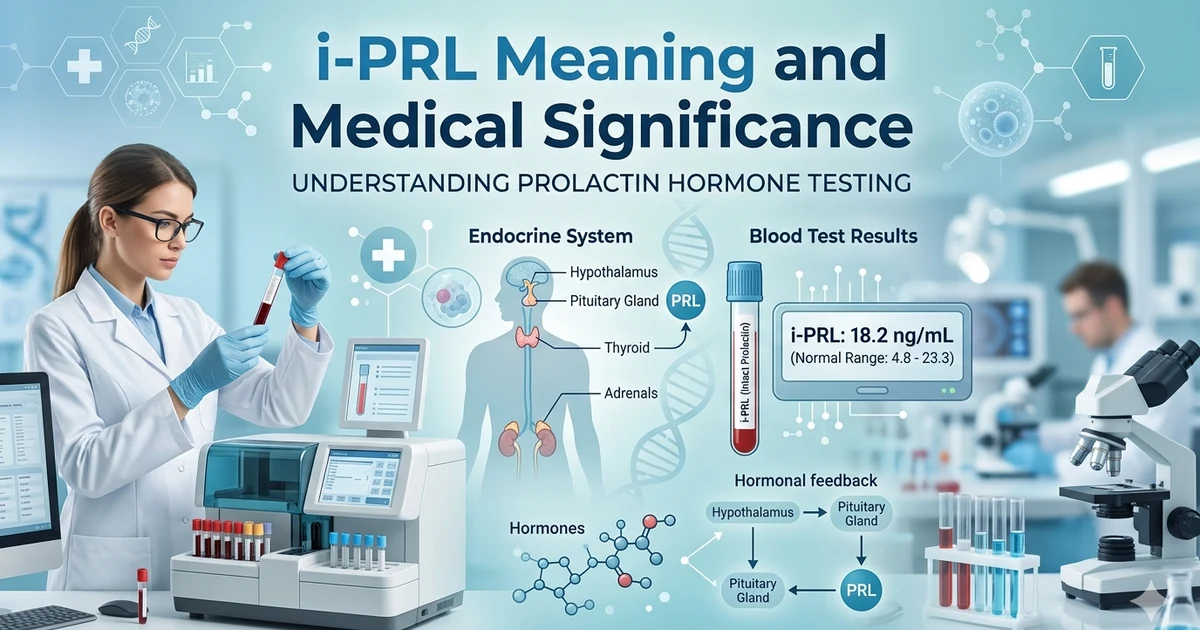
i-PRL most commonly stands for Immunoreactive Prolactin. It is a medical and laboratory term used to describe prolactin hormone that is detected by immunological testing methods. Prolactin is a hormone produced mainly by the pituitary gland and plays an important role in lactation, reproductive health, and several body functions. In medical reports, research papers, and laboratory studies, i-PRL helps healthcare professionals measure and evaluate prolactin activity in the body.
Common interpretations include:
- i-PRL = Immunoreactive Prolactin
- Used in endocrinology and hormone testing
- Often appears in medical research and laboratory reports
- Related to prolactin hormone measurement and analysis
Introduction
Many people search for the term i-prl after seeing it in a medical report, research article, laboratory result, or scientific publication. Unlike common abbreviations used in everyday conversation, i-PRL belongs primarily to the medical and scientific field.
The challenge is that abbreviations can have multiple meanings depending on context. While PRL alone can represent several different terms across industries, the form i-PRL is most often associated with Immunoreactive Prolactin, a laboratory term used in hormone research and testing.
Understanding what i-PRL means can help patients, students, researchers, and healthcare professionals interpret medical information more accurately. In this guide, you will learn the meaning of i-PRL, how it is used, why prolactin matters, common situations where the term appears, and mistakes people often make when interpreting it.
What Does i-PRL Mean?
The abbreviation i-PRL stands for Immunoreactive Prolactin. The term refers to prolactin that can be detected through immunological laboratory methods. These tests identify hormone molecules by using antibodies that react with specific substances in a sample.
Prolactin itself is a hormone produced primarily by the pituitary gland. It is best known for supporting milk production after childbirth, but it also contributes to reproductive health, metabolism, immune function, and other biological processes.
When a laboratory report or scientific paper refers to i-PRL, it is usually discussing prolactin levels that have been measured through immunoreactive testing methods rather than referring to a different hormone.
Simple Definition
- i = Immunoreactive
- PRL = Prolactin
- i-PRL = Prolactin detected through immunological testing methods
This terminology is especially common in endocrinology, hormone research, and laboratory medicine.
Meaning Table
| Term | Meaning | Where It Is Used | Simple Explanation |
|---|---|---|---|
| i-PRL | Immunoreactive Prolactin | Medical laboratories | Measured prolactin detected by testing methods |
| PRL | Prolactin | Medicine and endocrinology | A hormone produced mainly by the pituitary gland |
| PRLR | Prolactin Receptor | Medical research | The receptor that responds to prolactin signals |
| Hormone Test | Laboratory measurement | Healthcare | Used to evaluate hormone levels in the body |
Understanding Prolactin and Why It Matters
To understand i-PRL, it helps to understand prolactin itself.
Prolactin is a naturally occurring hormone that affects several body systems. Its most recognized role is supporting breast development and milk production after pregnancy. However, researchers have found that prolactin influences many additional functions throughout the body.
Prolactin levels may be evaluated when a healthcare provider investigates:
- Fertility concerns
- Menstrual irregularities
- Lactation issues
- Pituitary gland disorders
- Hormonal imbalances
- Certain reproductive health conditions
Because hormone levels can influence multiple body systems, accurate measurement is important. This is where immunoreactive prolactin testing becomes useful.
How i-PRL Is Used in Medical Testing
Laboratories use specialized testing techniques to identify and measure hormone concentrations.
In an i-PRL test, antibodies recognize prolactin molecules within a blood sample. The reaction allows laboratory professionals to estimate how much prolactin is present. This measurement can then be compared with reference ranges established by the laboratory.
The exact testing method may vary between laboratories, but the general goal remains the same:
- Collect a blood sample.
- Detect prolactin using immunological methods.
- Measure the hormone concentration.
- Report the result for clinical interpretation.
Healthcare providers use these results alongside symptoms, medical history, and additional testing when making decisions.
Common Situations Where You May See i-PRL
Medical Research Papers
Researchers studying hormones frequently use abbreviations such as i-PRL to simplify scientific writing.
For example, a study may compare immunoreactive prolactin levels between different patient groups.
Laboratory Reports
Some hormone testing reports may include technical abbreviations that reference prolactin measurements.
Endocrinology Discussions
Endocrinologists often discuss prolactin and related hormones when evaluating hormonal disorders.
Academic Coursework
Students studying biology, medicine, nursing, or health sciences may encounter the term while learning about endocrine system function.
Examples of i-PRL in Context
Here are some simplified examples of how the term may appear.
Example 1
The patient’s i-PRL level was measured during hormone testing.
Meaning: The laboratory measured immunoreactive prolactin in the blood sample.
Example 2
Researchers compared i-PRL concentrations before and after treatment.
Meaning: Scientists measured prolactin levels using immunological testing methods.
Example 3
The endocrinologist reviewed the patient’s i-PRL results alongside other hormone markers.
Meaning: Prolactin measurements were part of a broader hormonal evaluation.
Related Terms You May Encounter
When researching i-PRL, you may also see related medical terminology.
| Term | Meaning |
| PRL | Prolactin |
| PRLR | Prolactin Receptor |
| Endocrinology | Study of hormones |
| Pituitary Gland | Gland that produces prolactin |
| Hormone Assay | Laboratory hormone measurement |
| Hyperprolactinemia | Elevated prolactin levels |
Understanding these terms can make medical articles and laboratory reports easier to follow.
Common Mistakes People Make
Assuming i-PRL Is a Disease
i-PRL is not a disease or diagnosis.
It is a measurement term related to prolactin testing.
Confusing It With Other PRL Meanings
The abbreviation PRL has many meanings across different industries, including technology, telecommunications, business, and scientific research. Context matters. In medical settings, PRL most commonly refers to prolactin.
Self Diagnosing From Test Results
A single hormone result does not automatically indicate a health problem.
Laboratory values must be interpreted by a qualified healthcare professional who understands your symptoms and medical history.
Ignoring Laboratory Reference Ranges
Different laboratories may use different testing methods and reference intervals. Always review results according to the specific laboratory’s standards.
When Should You Talk to a Healthcare Professional?
If you received an i-PRL result and are unsure what it means, discussing it with a healthcare provider is the best approach.
A healthcare professional can:
- Explain your results
- Compare values with reference ranges
- Consider symptoms and medical history
- Recommend additional testing if needed
Hormone interpretation is often more complex than simply determining whether a number is high or low.
Frequently Asked Questions
What does i-PRL stand for?
i-PRL most commonly stands for Immunoreactive Prolactin, a laboratory term used when measuring prolactin through immunological testing methods.
Is i-PRL the same as prolactin?
i-PRL refers to prolactin measured using immunoreactive laboratory techniques. In practical use, it relates directly to prolactin hormone evaluation.
Is i-PRL a medical condition?
No. i-PRL is not a disease. It is a testing and measurement term used in medicine and research.
Why is prolactin tested?
Healthcare providers may evaluate prolactin levels when investigating hormone balance, reproductive health, fertility concerns, or pituitary gland function.
Can high i-PRL levels indicate a health issue?
Elevated prolactin levels can be associated with several medical conditions, but only a healthcare professional can determine whether a result is clinically significant.
Where is prolactin produced?
Prolactin is produced mainly by the pituitary gland.
Can I interpret my i-PRL result by myself?
It is best not to rely solely on internet information. Test results should be reviewed with a healthcare provider who can interpret them correctly.
Conclusion
The term i-prl most commonly means Immunoreactive Prolactin, a laboratory and medical abbreviation used when measuring prolactin through immunological testing methods. Understanding this term helps make sense of hormone testing reports, medical literature, and endocrinology discussions. While prolactin plays an important role in several body functions, laboratory results should always be interpreted within the broader context of your health, symptoms, and professional medical guidance.