
Quick Answer
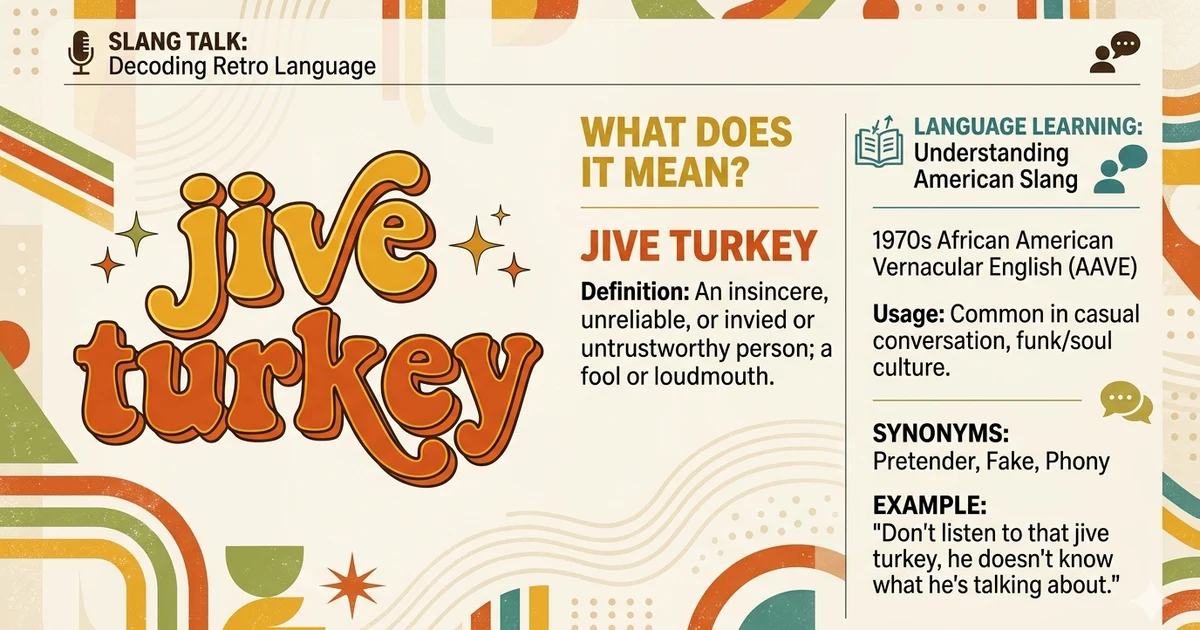
A jive turkey is a slang insult used to describe someone who is acting foolish, fake, annoying, or not being genuine. It became popular in American English during the 1970s and is often used in a humorous or playful way rather than as a serious insult. Today,
people also search jive turkey to understand old school slang from movies, music, and cultural references. It usually means someone who is talking nonsense or pretending to be something they are not.
In simple terms, calling someone a jive turkey is like saying they are not being real or they are acting silly in a way that is hard to take seriously.
Introduction
The phrase jive turkey often shows up in classic movies, older TV shows, and retro music references. Many modern readers come across it while watching vintage comedy or exploring slang from past decades. Because it sounds unusual, people naturally search for its meaning and how it was used in conversation.
Understanding jive turkey helps you make sense of older American slang and pop culture humor. It is part of a group of expressions that were popular in casual street language during the 1970s and 1980s. These terms were often playful, exaggerated, and used to call out someone acting fake or ridiculous.
In this guide, you will learn what jive turkey means, where it came from, how it is used in sentences, and what similar slang expressions exist today. You will also see real examples so you can clearly understand how the phrase works in context without confusion.
Meaning and Definition of Jive Turkey
The phrase jive turkey is a slang insult that combines two older American English slang words.
Jive originally referred to misleading talk, nonsense speech, or exaggerated storytelling. It can also mean a style of lively talk or dance, depending on context.
Turkey in slang often means a foolish or awkward person. It is not referring to the animal in a literal sense but is used as a playful insult.
When combined, jive turkey describes someone who is:
- Acting fake or insincere
- Talking nonsense or exaggerating
- Behaving in a silly or foolish way
- Trying too hard to impress others in a dishonest way
The phrase became widely recognized in American pop culture during the 1970s, especially in comedy, television, and street slang. It was often used in a humorous tone rather than aggressive anger. In many cases, it was a way to call someone out while still keeping the conversation light.
Today, jive turkey is considered old fashioned slang. You may still hear it in nostalgic contexts, parody speech, or retro themed content, but it is not common in everyday modern conversation.
Comparison of Meanings and Related Slang
To understand jive turkey better, it helps to compare it with similar slang expressions.
| Meaning | Where It Is Used | Simple Explanation | Example |
|---|---|---|---|
| Jive turkey | Old school American slang | A fake or foolish person | Stop acting like a jive turkey |
| Jive talk | Informal speech slang | Nonsense or exaggerated talk | He is full of jive talk |
| Phony person | General English slang | Someone who is not genuine | She is acting like a phony |
| Fool | Everyday slang | A silly or careless person | Do not be a fool |
This comparison shows that jive turkey is mostly a playful insult rather than a serious label. It is closely related to other words that describe dishonesty or foolish behavior, but it carries a more vintage and humorous tone.
Practical Usage of Jive Turkey
Even though the phrase is not commonly used today, understanding it helps when reading or watching older content. It is often used in a teasing or comedic way.
The tone of jive turkey depends heavily on context. In most cases, it is not meant to be deeply offensive. Instead, it works like a joking callout among friends or characters in a comedy scene.
Here is how it is typically used:
- To call out someone exaggerating a story
- To react to silly or awkward behavior
- To tease a friend in a lighthearted way
- To show disbelief at nonsense talk
It is important to note that tone matters. The same phrase can sound funny in one situation and rude in another if the context is serious.
Examples of Jive Turkey in Sentences
Seeing examples makes the meaning easier to understand.
- Stop talking like a jive turkey and tell me what really happened
- He is acting like a jive turkey with all that wild storytelling
- Do not be a jive turkey, everyone knows that is not true
- She called him a jive turkey after he made a ridiculous excuse
- Those jive turkey comments do not make any sense
These examples show that the phrase is usually directed at behavior, not physical appearance or identity. It focuses on actions like lying, exaggerating, or acting silly.
Common Use Cases in Pop Culture and Language
The phrase jive turkey became popular during a specific era of American entertainment. It is often associated with:
- 1970s comedy films
- Classic television sitcoms
- Stand up comedy routines
- Funk and soul music culture references
- Retro themed humor and parody content
In these settings, the phrase was used to create a fun and expressive way of calling someone out without sounding too serious.
Today, you may still hear it in:
- Comedy sketches that imitate older slang
- Nostalgic discussions about past decades
- Internet memes referencing vintage culture
- Educational explanations of slang history
Because language evolves, most younger speakers do not use this phrase regularly. However, it remains recognizable in American English culture.
Similar Terms and Related Expressions
If you understand jive turkey, you can also recognize similar slang terms that carry related meanings.
Some common alternatives include:
- Fake person
- Clown
- Foolish talker
- Pretender
- Big talker
- Nonsense speaker
Each of these terms reflects the idea of someone acting insincere or silly. However, jive turkey stands out because of its cultural and historical background.
It is more expressive and humorous compared to modern simple insults. That is why it is often remembered as part of vintage slang rather than everyday language.
Common Mistakes People Make
People often misunderstand jive turkey because of how unusual it sounds today.
Here are some common mistakes:
- Thinking it refers to a real turkey animal
- Assuming it is a modern slang term used widely today
- Believing it is always offensive or harsh
- Confusing it with dance related meaning of jive
- Using it in serious professional or formal settings
Another mistake is using it without understanding tone. In some contexts, it may sound playful, but in others it can feel outdated or confusing.
It is also important not to overuse it in modern conversation because most people may not fully understand it without explanation.
Conclusion
The phrase jive turkey is a classic piece of American slang that describes someone acting fake, foolish, or overly dramatic. While it is not widely used in modern conversation, it remains an important part of cultural and linguistic history, especially in comedy and entertainment from past decades.
Understanding jive turkey helps you recognize humor and tone in older media and gives you insight into how slang evolves over time. It is best used as a historical or playful reference rather than a serious insult in today’s conversations.
FAQs About Jive Turkey
What does jive turkey mean in simple words
It means a person who is acting fake, silly, or talking nonsense in a playful or humorous way.
Is jive turkey an insult
Yes, but it is usually a light or joking insult rather than a serious offensive term.
Where did jive turkey come from
It became popular in American slang during the 1970s and is often linked to comedy and pop culture from that era.
Is jive turkey still used today
It is not common in modern everyday speech but may appear in retro content or humorous references.
Can I use jive turkey in conversation
You can, but it may sound old fashioned or confusing to younger audiences who are not familiar with the term.
Is jive turkey related to dancing jive
No, it is not directly related to dance. It comes from slang usage of jive meaning nonsense talk.
What is a modern equivalent of jive turkey
Modern equivalents include calling someone fake, a clown, or saying they are talking nonsense.