
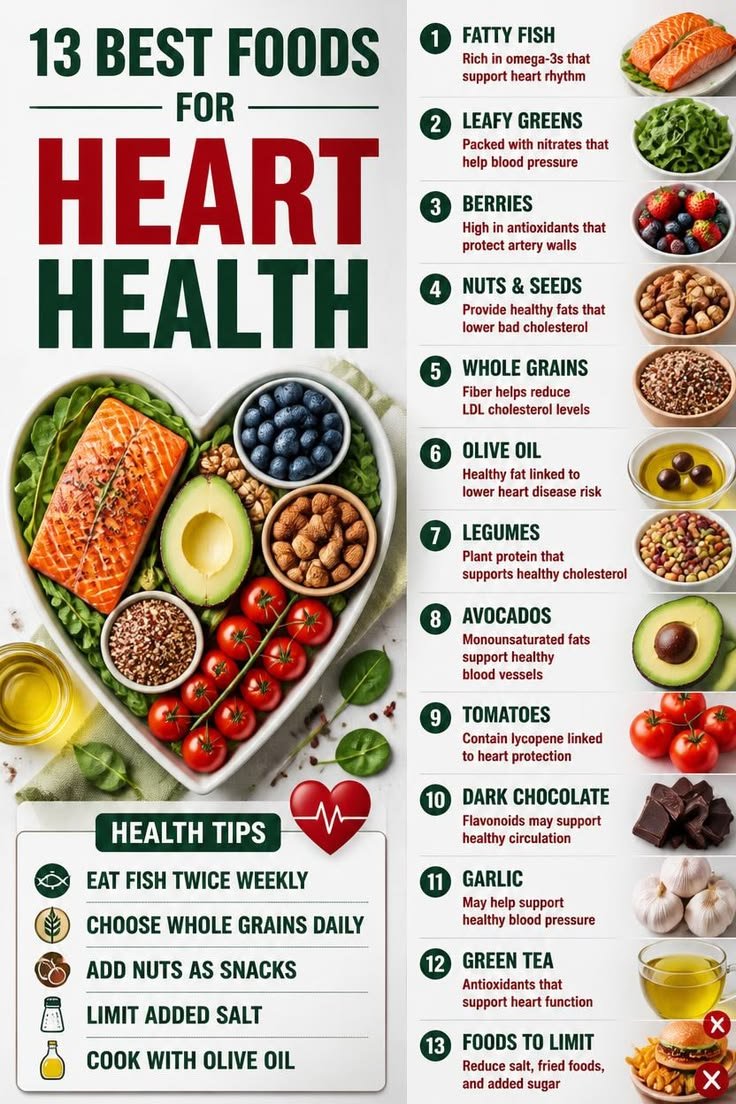
A healthy heart is essential for maintaining energy, supporting circulation, and promoting overall well-being. While genetics, physical activity, sleep, and lifestyle habits all influence cardiovascular health, the foods you eat every day can make a meaningful difference.
Choosing the best foods for heart health can help support healthy cholesterol levels, maintain normal blood pressure, improve blood vessel function, and reduce certain risk factors associated with cardiovascular disease. Nutrient-rich foods such as leafy vegetables, berries, fatty fish, whole grains, nuts, and legumes provide fiber, vitamins, minerals, antioxidants, and beneficial fats.
However, protecting your heart does not require following a complicated diet or eliminating every food you enjoy. A balanced eating pattern that emphasizes minimally processed foods, healthy fats, plant-based proteins, and moderate sodium intake can provide long-term benefits.
This comprehensive guide explores 25 heart-friendly foods, explains how their nutrients support cardiovascular wellness, and provides practical advice for including them in your daily meals.
Quick Answer: What Are the Best Foods for Heart Health?
Some of the best foods for heart health include salmon, oats, walnuts, almonds, blueberries, spinach, avocados, lentils, beans, olive oil, and whole grains.
These foods provide nutrients associated with cardiovascular health, including soluble fiber, unsaturated fats, omega-3 fatty acids, potassium, and naturally occurring plant compounds.
A heart-healthy diet should include a variety of these foods rather than relying on a single ingredient. The overall dietary pattern matters more than any individual superfood.
25 Best Foods for Heart Health at a Glance
| Food | Key Nutrients | Potential Heart Health Benefits |
|---|---|---|
| Salmon | Omega-3 fatty acids | Supports healthy triglyceride levels |
| Oats | Beta-glucan fiber | Helps lower LDL cholesterol |
| Walnuts | Unsaturated fats, ALA | Supports healthy blood lipids |
| Blueberries | Anthocyanins, fiber | Supports vascular health |
| Spinach | Potassium, folate | Supports blood pressure regulation |
| Avocados | Monounsaturated fats, fiber | Supports healthy cholesterol levels |
| Almonds | Unsaturated fats, vitamin E | Supports lipid management |
| Olive Oil | Monounsaturated fats | Helps improve dietary fat quality |
| Lentils | Fiber, plant protein | Supports cholesterol and blood sugar control |
| Beans | Soluble fiber, potassium | Supports cardiovascular risk management |
| Sardines | EPA and DHA omega-3s | Provides heart-friendly marine fats |
| Apples | Pectin, polyphenols | Supports cholesterol management |
| Oranges | Vitamin C, potassium | Supports overall cardiovascular nutrition |
| Broccoli | Fiber, vitamin C | Provides beneficial plant nutrients |
| Tomatoes | Lycopene, potassium | Supports a nutrient-rich diet |
| Flaxseeds | ALA, fiber | Supports healthy lipid levels |
| Chia Seeds | Fiber, ALA | Adds beneficial fats and fiber |
| Quinoa | Fiber, magnesium | Supports whole-grain intake |
| Brown Rice | Fiber, magnesium | Replaces refined grains |
| Sweet Potatoes | Potassium, fiber | Supports balanced nutrition |
| Beets | Dietary nitrates | May support blood vessel function |
| Plain Yogurt | Protein, calcium | Can fit a heart-healthy diet |
| Tofu | Soy protein | Replaces higher-saturated-fat proteins |
| Pumpkin Seeds | Magnesium, unsaturated fats | Provides minerals and healthy fats |
| Strawberries | Fiber, polyphenols | Supports a fruit-rich eating pattern |
These benefits are associated with the nutrients and dietary patterns containing these foods. Eating any one item does not guarantee prevention of heart disease.
1. Salmon – Best Source of Heart-Healthy Omega-3 Fatty Acids
Salmon is one of the most widely recommended foods for cardiovascular health because it contains long-chain omega-3 fatty acids, particularly EPA and DHA.
These fats play important roles in normal cellular function and are associated with cardiovascular benefits.
How Salmon Supports Heart Health
Omega-3 fatty acids can help reduce elevated triglyceride levels, although the effects depend on the amount consumed.
Eating fish as part of a balanced diet can also replace protein sources that are higher in saturated fat.
Salmon provides high-quality protein, vitamin B12, selenium, and other essential nutrients.
How to Eat Salmon
Grill, bake, steam, or roast salmon with herbs, lemon, and a small amount of olive oil.
Serve it alongside vegetables and whole grains for a balanced meal.
The American Heart Association generally recommends eating fish, particularly fatty fish, about twice per week.
2. Oats – Best Breakfast Food for Cholesterol Management
Oats are rich in beta-glucan, a type of soluble fiber that can help lower LDL cholesterol.
LDL cholesterol is often called bad cholesterol because elevated levels contribute to plaque buildup in arteries.
Why Oats Are Good for Your Heart
Soluble fiber helps reduce cholesterol absorption and supports healthy digestive function.
Oats can also improve meal satisfaction, making them useful in a balanced eating plan.
Regularly consuming adequate amounts of oat beta-glucan may produce modest reductions in LDL cholesterol.
How to Eat Oats
Prepare oatmeal with unsweetened milk or fortified plant milk.
Add berries, walnuts, cinnamon, or sliced apples for additional fiber and flavor.
Choose plain oats rather than heavily sweetened instant varieties.
3. Walnuts – Best Nuts for Plant-Based Omega-3 Fats
Walnuts contain unsaturated fats, fiber, and alpha-linolenic acid (ALA), a plant-based omega-3 fatty acid.
They can be a nutritious alternative to snacks high in refined carbohydrates or saturated fats.
Heart Health Benefits of Walnuts
Replacing less healthy fats with unsaturated fats can improve blood cholesterol levels.
Walnuts also contain polyphenols and other plant compounds that contribute to overall nutritional quality.
How to Eat Walnuts
Add a small handful to oatmeal, salads, or plain yogurt.
Walnuts are calorie-dense, so moderate portions are useful when managing overall energy intake.
Choose unsalted varieties whenever possible.
4. Blueberries – Best Antioxidant-Rich Berries
Blueberries contain anthocyanins, natural pigments responsible for their deep blue color.
These compounds are part of a broader group of plant substances known as flavonoids.
Why Blueberries Support Cardiovascular Wellness
Research suggests that berry-rich dietary patterns may support healthy blood vessel function and cardiovascular risk factors.
Blueberries also provide fiber, vitamin C, and other beneficial nutrients.
However, evidence does not establish that eating blueberries alone prevents heart attacks or other cardiovascular events.
How to Eat Blueberries
Enjoy them fresh or frozen in oatmeal, smoothies, yogurt, and fruit salads.
Frozen blueberries without added sugar can be a convenient alternative when fresh berries are expensive or unavailable.
5. Spinach – Best Leafy Green Vegetable
Spinach provides potassium, folate, vitamin K, and naturally occurring dietary nitrates.
These nutrients contribute to several normal body functions, including blood pressure regulation and blood vessel health.
How Spinach Benefits the Heart
Potassium helps counterbalance some of sodium’s effects on blood pressure.
Dietary nitrates can be converted into nitric oxide, a compound involved in blood vessel relaxation.
Spinach also adds valuable nutrients to meals without contributing large amounts of calories.
How to Eat Spinach
Add spinach to salads, soups, omelets, lentil dishes, or vegetable stir-fries.
People taking warfarin should maintain consistent vitamin K intake and follow their clinician’s guidance rather than suddenly increasing or avoiding leafy greens.
6. Avocados – Best Fruit for Monounsaturated Fats
Avocados are rich in monounsaturated fats, fiber, potassium, and other beneficial nutrients.
Unlike many fruits, they provide substantial amounts of fat, primarily unsaturated fat.
Heart Health Benefits of Avocados
Replacing foods high in saturated fat with avocados can improve the overall fat composition of a diet.
Avocados also provide fiber that contributes to digestive health and cholesterol management.
How to Eat Avocados
Spread mashed avocado on whole-grain toast.
Add slices to salads, sandwiches, or grain bowls.
Use avocado as an alternative to some butter-based or high-saturated-fat spreads.
7. Almonds – Best Everyday Heart-Healthy Snack
Almonds provide monounsaturated fats, fiber, vitamin E, magnesium, and plant protein.
They are a convenient snack that requires little preparation.
Why Almonds Are Good for the Heart
Eating nuts as part of a balanced diet is associated with improved cardiovascular risk profiles.
Almonds may help improve cholesterol levels when they replace snacks containing saturated fats or refined carbohydrates.
How to Eat Almonds
Choose plain, unsalted almonds.
A small handful can be added to breakfast, eaten as a snack, or sprinkled over salads.
Avoid assuming that honey-coated or heavily salted varieties offer identical nutritional advantages.
8. Extra Virgin Olive Oil – Best Cooking Fat for Heart Health
Extra virgin olive oil is a major component of Mediterranean-style eating patterns.
It contains monounsaturated fats and naturally occurring plant compounds.
Why Olive Oil Supports Heart Health
Replacing butter or other saturated-fat-rich ingredients with unsaturated oils can help reduce LDL cholesterol.
Mediterranean-style diets that include olive oil, vegetables, whole grains, legumes, and nuts have demonstrated cardiovascular benefits.
How to Use Olive Oil
Use it for salad dressings, sautéing vegetables, roasting foods, and preparing homemade sauces.
Olive oil is still calorie-dense, so use amounts appropriate for your overall dietary needs.
9. Lentils – Best Plant Protein for Heart Health
Lentils are affordable, versatile legumes that provide plant protein, dietary fiber, folate, iron, and potassium.
They are naturally low in saturated fat.
Heart Benefits of Lentils
Lentils can help increase fiber intake and replace processed meats or other protein sources high in saturated fat.
Their combination of fiber and protein can support satiety and steadier post-meal blood sugar responses.
How to Eat Lentils
Prepare lentil soup, dal, salads, or vegetable stews.
Use herbs, garlic, onions, and spices for flavor instead of relying on excessive salt.
10. Beans – Best Affordable Food for Cholesterol Control
Beans are among the most economical foods for improving the nutritional quality of meals.
Black beans, kidney beans, chickpeas, and other varieties contain fiber, plant protein, and minerals.
Why Beans Are Heart-Friendly
Soluble fiber contributes to cholesterol management.
Replacing some red or processed meat with beans can reduce saturated fat intake.
Beans also provide complex carbohydrates and protein that support balanced meals.
How to Eat Beans
Add beans to soups, salads, grain bowls, and homemade chili.
If using canned beans, choose no-salt-added varieties or drain and rinse them to reduce sodium.
11. Sardines – Best Budget-Friendly Fatty Fish
Sardines are small oily fish that provide EPA and DHA omega-3 fatty acids, protein, vitamin B12, and calcium when their edible bones are consumed.
Heart Health Benefits
Sardines offer many of the nutritional advantages associated with fatty fish.
Their omega-3 content can help support a dietary pattern beneficial for cardiovascular health.
How to Eat Sardines
Serve sardines with whole-grain bread, vegetables, or salads.
Choose varieties packed in water or olive oil and compare sodium content between products.
12. Apples – Best Convenient High-Fiber Fruit
Apples provide fiber, water, and plant compounds called polyphenols.
They are easy to transport and can replace less nutritious snacks.
Why Apples Are Good for Your Heart
Apples contain pectin, a form of soluble fiber associated with cholesterol management.
Regular fruit consumption is also part of dietary patterns linked with better cardiovascular outcomes.
How to Eat Apples
Eat whole apples with their edible skins after washing them.
Pair apple slices with unsalted nut butter for a more filling snack.
Whole apples generally provide more fiber than filtered apple juice.
13. Oranges – Best Citrus Fruit for Heart-Friendly Nutrition
Oranges provide vitamin C, potassium, fiber, and naturally occurring flavonoids.
How Oranges Support Heart Health
Potassium contributes to normal blood pressure regulation.
Fiber supports digestive and metabolic health, while vitamin C plays an important role in maintaining healthy tissues.
How to Eat Oranges
Choose whole oranges rather than relying on juice.
Whole fruit provides fiber and is generally more filling than an equivalent serving of juice.
14. Broccoli – Best Cruciferous Vegetable
Broccoli contains fiber, vitamin C, folate, potassium, and glucosinolates, which are naturally occurring compounds found in cruciferous vegetables.
Heart Health Benefits
Broccoli contributes to a nutrient-rich eating pattern and provides fiber that supports overall metabolic health.
Regular vegetable consumption is associated with improved long-term health outcomes.
How to Eat Broccoli
Steam, roast, or lightly sauté broccoli.
Serve it with whole grains and a healthy protein source.
Avoid excessive high-sodium sauces.
15. Tomatoes – Best Source of Lycopene
Tomatoes contain lycopene, a carotenoid responsible for their red color.
They also provide potassium, vitamin C, and water.
Why Tomatoes Are Heart-Friendly
Lycopene has been studied for its antioxidant properties and potential associations with cardiovascular health.
However, the evidence is not strong enough to claim that tomatoes alone prevent cardiovascular disease.
How to Eat Tomatoes
Add fresh tomatoes to salads and sandwiches.
Use unsalted canned tomatoes in soups and homemade sauces.
Cooking tomatoes with a small amount of olive oil can improve lycopene absorption.
16. Flaxseeds – Best Seeds for Fiber and Plant Omega-3s
Flaxseeds contain ALA omega-3 fatty acids, fiber, and lignans.
Heart Health Benefits
Flaxseed fiber may contribute to cholesterol reduction, while its unsaturated fats can improve the nutritional quality of meals.
Ground flaxseeds are generally easier to digest than whole seeds.
How to Eat Flaxseeds
Add one or two tablespoons of ground flaxseed to oatmeal, yogurt, or smoothies, according to your nutritional needs and tolerance.
Store ground flaxseed appropriately to preserve freshness.
17. Chia Seeds – Best Fiber-Rich Seeds
Chia seeds provide fiber, ALA omega-3 fatty acids, magnesium, and plant protein.
Why Chia Seeds Support Heart Health
Their fiber content can help increase overall dietary fiber intake.
Replacing lower-fiber ingredients with chia seeds may improve the nutritional quality of meals.
However, chia seeds should not be considered a substitute for proven medical treatment or a balanced diet.
How to Eat Chia Seeds
Mix chia seeds into yogurt, oatmeal, or smoothies.
Allow them to hydrate in liquid before preparing chia pudding.
Do not swallow a spoonful of dry chia seeds followed by water, because they expand considerably and may present a choking risk.
18. Quinoa – Best Versatile Whole Grain
Quinoa is a nutrient-rich seed commonly prepared and eaten like a whole grain.
It provides fiber, magnesium, plant protein, and several essential minerals.
Heart Health Benefits
Using quinoa in place of refined grains can increase fiber and mineral intake.
Whole-grain-rich dietary patterns are associated with cardiovascular benefits.
How to Eat Quinoa
Use cooked quinoa as a base for vegetable bowls, salads, and side dishes.
Combine it with beans, leafy greens, and olive oil for a balanced meal.
19. Brown Rice – Best Everyday Whole-Grain Alternative
Brown rice retains the bran and germ, providing more fiber and certain nutrients than refined white rice.
Why Brown Rice Is Heart-Friendly
Replacing some refined grains with whole grains can improve dietary fiber intake and overall nutritional quality.
Brown rice also provides magnesium and complex carbohydrates.
How to Eat Brown Rice
Serve brown rice with vegetables, lentils, fish, or tofu.
Rotate it with other whole grains for dietary variety.
20. Sweet Potatoes – Best Nutrient-Rich Starchy Vegetable
Sweet potatoes contain fiber, potassium, and beta-carotene, which the body can convert into vitamin A.
Heart Health Benefits
Potassium contributes to blood pressure regulation, while fiber supports overall metabolic health.
Sweet potatoes can be part of a balanced meal when prepared without excessive salt, sugar, or saturated fat.
How to Eat Sweet Potatoes
Bake or roast sweet potatoes with herbs and a small amount of olive oil.
Pair them with vegetables and a lean protein source.
21. Beets – Best Vegetable for Dietary Nitrates
Beets contain naturally occurring nitrates, fiber, folate, and potassium.
Why Beets May Benefit Blood Vessels
The body can convert dietary nitrates into nitric oxide, which contributes to blood vessel relaxation.
Some studies suggest beetroot products may modestly lower blood pressure in certain populations, but results vary.
How to Eat Beets
Roast beets, add them to salads, or blend cooked beets into vegetable dishes.
Beetroot juice is not necessary to obtain nutritional benefits from beets.
22. Plain Yogurt – Best Versatile Dairy Option
Plain yogurt provides protein, calcium, and, in some varieties, live bacterial cultures.
Heart Health Benefits
Unsweetened yogurt can fit into a heart-healthy eating pattern.
Choosing plain yogurt helps limit added sugar, while lower-saturated-fat varieties may be useful for people working to reduce saturated fat intake.
How to Eat Yogurt
Combine plain yogurt with berries, oats, or nuts.
Compare nutrition labels because protein, saturated fat, and added sugar content vary between products.
23. Tofu – Best Soy-Based Protein Alternative
Tofu is made from soybeans and provides plant protein, unsaturated fats, and varying amounts of calcium and iron.
Why Tofu Is Good for the Heart
Replacing higher-saturated-fat meats with tofu can improve dietary fat quality.
Soy protein can also contribute modestly to cholesterol management when incorporated into an appropriate dietary pattern.
How to Eat Tofu
Bake, grill, or stir-fry tofu with vegetables.
Use lower-sodium sauces and seasonings to control salt intake.
24. Pumpkin Seeds – Best Mineral-Rich Snack
Pumpkin seeds provide magnesium, zinc, protein, and unsaturated fats.
Heart Health Benefits
Magnesium contributes to normal muscle and nerve function and plays a role in blood pressure regulation.
Unsaturated fats can also help improve dietary fat quality when they replace saturated fats.
How to Eat Pumpkin Seeds
Choose unsalted pumpkin seeds and add them to salads, oatmeal, or homemade trail mixes.
Moderate portions are appropriate because seeds are energy-dense.
25. Strawberries – Best Heart-Friendly Sweet Snack
Strawberries provide vitamin C, fiber, and polyphenols.
They are naturally sweet and can replace desserts high in added sugar.
Why Strawberries Support Heart Health
Strawberries contribute beneficial plant compounds and fiber to the diet.
Consuming a variety of fruits, including berries, is associated with healthier overall dietary patterns.
How to Eat Strawberries
Enjoy fresh or frozen strawberries with plain yogurt or oatmeal.
Choose unsweetened varieties rather than fruit products packed in syrup.
Best Foods for Heart Health by Nutritional Benefit
Different foods support cardiovascular health in different ways. Choosing a variety helps provide the nutrients your body needs.
| Health Goal | Foods to Include | Key Nutrients |
|---|---|---|
| Support healthy cholesterol | Oats, beans, lentils, apples | Soluble fiber |
| Support blood pressure | Spinach, beans, sweet potatoes | Potassium, magnesium |
| Improve dietary fat quality | Olive oil, avocados, walnuts | Unsaturated fats |
| Support healthy triglycerides | Salmon, sardines | EPA and DHA omega-3s |
| Increase antioxidant intake | Blueberries, strawberries, tomatoes | Polyphenols, carotenoids |
| Improve fiber intake | Oats, lentils, chia seeds | Soluble and insoluble fiber |
| Replace saturated-fat-rich proteins | Tofu, beans, lentils | Plant protein |
7-Day Heart-Healthy Meal Plan
A practical meal plan makes it easier to include heart-friendly foods consistently.
| Day | Breakfast | Lunch | Dinner |
|---|---|---|---|
| Monday | Oatmeal with blueberries and walnuts | Chickpea salad with olive oil | Baked salmon with brown rice |
| Tuesday | Plain yogurt with strawberries | Lentil soup and whole-grain bread | Grilled tofu with vegetables |
| Wednesday | Whole-grain toast with avocado | Quinoa and black bean bowl | Baked fish with sweet potatoes |
| Thursday | Oatmeal with ground flaxseed | Spinach and chickpea salad | Vegetable and lentil curry |
| Friday | Plain yogurt with almonds | Brown rice with beans | Grilled salmon and broccoli |
| Saturday | Whole-grain toast with fruit | Quinoa vegetable salad | Tofu stir-fry with brown rice |
| Sunday | Overnight oats with chia seeds | Lentil and vegetable soup | Sardines with roasted vegetables |
This is a general example, not a personalized medical diet. Portion sizes and food choices should be adjusted for individual energy needs, allergies, medical conditions, and dietary preferences.
Foods to Limit for Better Heart Health
Choosing nutritious foods is important, but limiting certain dietary components can also support cardiovascular wellness.
Processed Meats
Bacon, sausages, hot dogs, and some deli meats can contain substantial amounts of sodium and saturated fat.
Frequent consumption of processed meat is associated with increased cardiovascular risk.
Choose beans, lentils, fish, or other minimally processed proteins more often.
Foods High in Saturated Fat
Butter, fatty cuts of meat, and some high-fat dairy products can contribute substantial saturated fat.
Replacing some saturated fats with unsaturated fats from olive oil, nuts, and seeds can help lower LDL cholesterol.
High-Sodium Foods
Excessive sodium intake can contribute to elevated blood pressure.
Common sources include packaged snacks, processed meats, instant noodles, canned soups, and restaurant meals.
Compare nutrition labels and choose lower-sodium options when practical.
Sugary Drinks
Regularly consuming sugar-sweetened beverages can contribute to excess calorie intake and unfavorable metabolic health.
Water, unsweetened tea, and other drinks without added sugar are generally better everyday choices.
Foods Containing Industrial Trans Fats
Industrial trans fats increase cardiovascular risk and should be avoided.
Check ingredient labels for partially hydrogenated oils where they remain permitted.
How Much Should You Eat for a Healthy Heart?
Heart health depends on overall eating patterns rather than fixed portions of individual foods.
General dietary guidance encourages:
- Eating a variety of vegetables and fruits daily.
- Choosing whole grains more often than refined grains.
- Including legumes, nuts, and seeds regularly.
- Eating fish, particularly fatty fish, about twice weekly when appropriate.
- Replacing saturated fats with unsaturated fats.
- Limiting excess sodium and added sugars.
- Choosing portions that support your nutritional and energy needs.
For many adults, the American Heart Association recommends limiting sodium to no more than 2,300 mg daily, with an ideal goal of 1,500 mg for most adults. Individual targets may differ according to medical advice.
People with kidney disease, heart failure, or conditions requiring fluid or potassium restrictions should seek individualized dietary guidance.
Mediterranean Diet vs. DASH Diet for Heart Health
Two widely recommended eating patterns are the Mediterranean diet and the DASH diet.
| Feature | Mediterranean Diet | DASH Diet |
|---|---|---|
| Main emphasis | Plant foods and unsaturated fats | Blood pressure-friendly nutrition |
| Primary fats | Olive oil, nuts, seeds | Emphasis on unsaturated fats |
| Vegetables and fruits | Strong emphasis | Strong emphasis |
| Whole grains | Encouraged | Encouraged |
| Fish | Regularly included | Included |
| Sodium | Generally limited | Specific sodium targets |
| Main benefit | Cardiovascular risk reduction | Blood pressure management |
Both approaches emphasize nutritious foods rather than relying on supplements or restrictive short-term diets.
The best approach is one that meets your medical needs and that you can maintain consistently.
Healthy Cooking Tips to Protect Your Heart
Food preparation can influence the nutritional quality of your meals.
Choose Healthier Cooking Methods
Baking, grilling, steaming, roasting, and sautéing can reduce the need for excessive added fat compared with deep-frying.
Use Herbs Instead of Excess Salt
Garlic, ginger, lemon, black pepper, coriander, and other herbs and spices can add flavor without large amounts of sodium.
Replace Refined Grains
Choose oats, whole-wheat bread, quinoa, and brown rice more frequently instead of relying entirely on refined grains.
Include Plant Proteins
Beans, lentils, tofu, and chickpeas can replace some meat-based meals while increasing fiber intake.
Read Nutrition Labels
Pay attention to saturated fat, sodium, added sugar, fiber, and serving sizes.
Products marketed as natural or healthy are not automatically heart-friendly.
Common Mistakes When Following a Heart-Healthy Diet
A few misconceptions can make healthy eating unnecessarily difficult.
Relying on a Single Superfood: No individual food can compensate for an otherwise unbalanced diet.
Avoiding All Fats: Unsaturated fats are important components of a healthy diet. The type and amount of fat matter.
Drinking Fruit Juice Instead of Eating Whole Fruit: Whole fruit usually provides more fiber and greater fullness.
Ignoring Portion Sizes: Even nutritious foods can contribute excess calories when consumed in quantities beyond individual needs.
Assuming Supplements Replace Food: Supplements generally cannot reproduce all the benefits of a balanced eating pattern, and some may interact with medications.
Making Extreme Dietary Changes: Gradual, sustainable improvements are usually easier to maintain than highly restrictive diets.
Frequently Asked Questions About the Best Foods for Heart Health
What Is the Number One Best Food for Heart Health?
There is no single best food for everyone. Oats, fatty fish, legumes, nuts, vegetables, and fruits all provide important cardiovascular benefits. A balanced eating pattern matters more than choosing one specific food.
What Foods Help Lower Bad Cholesterol?
Oats, beans, lentils, apples, nuts, and foods rich in unsaturated fats can help improve LDL cholesterol levels. Soluble fiber and replacing saturated fats with unsaturated fats are particularly useful dietary strategies.
Which Fruits Are Best for Heart Health?
Blueberries, strawberries, apples, oranges, and avocados are nutritious options. They provide different combinations of fiber, potassium, antioxidants, and beneficial fats.
What Is the Best Breakfast for a Healthy Heart?
Plain oatmeal topped with berries, walnuts, and ground flaxseed is a practical choice. Whole-grain toast with avocado or unsweetened yogurt with fruit can also fit a heart-healthy eating pattern.
Are Eggs Good for Heart Health?
Eggs can fit into a balanced diet for many people. However, individual cholesterol levels, overall saturated fat intake, and medical history may influence appropriate consumption. People with specific cardiovascular conditions should follow individualized dietary advice.
Is Coffee Good or Bad for the Heart?
Moderate coffee consumption can fit into a healthy diet for many adults. However, caffeine may affect blood pressure, sleep, or heart rhythm symptoms in susceptible individuals. Sugary coffee drinks can also contribute substantial added sugar.
Can Diet Alone Prevent Heart Disease?
A healthy diet can reduce cardiovascular risk, but it cannot guarantee prevention. Physical activity, tobacco avoidance, sleep, blood pressure management, cholesterol control, and appropriate medical treatment are also important.
How Long Does It Take for a Heart-Healthy Diet to Work?
Some risk factors, such as blood pressure or cholesterol levels, may begin improving within weeks of sustained dietary changes. Long-term cardiovascular benefits depend on consistent habits and individual health circumstances.
Conclusion
Including the best foods for heart health in your daily meals is a practical way to support cardiovascular wellness and improve the overall quality of your diet. Foods such as salmon, oats, walnuts, blueberries, spinach, lentils, beans, and olive oil provide nutrients that contribute to healthy cholesterol levels, blood pressure regulation, and normal blood vessel function.
Rather than searching for a single miracle ingredient, focus on creating balanced meals that include vegetables, fruits, whole grains, plant proteins, and unsaturated fats. Reduce excessive sodium, added sugars, processed meats, and foods high in saturated fat.
Small changes can make healthy eating easier. Replace refined grains with whole grains, choose fruit instead of sugary snacks, add beans to meals, and use olive oil instead of butter when appropriate.
A heart-healthy diet works best alongside regular physical activity, sufficient sleep, tobacco avoidance, and routine medical care.
The most effective heart-healthy eating plan is one that is nutritious, enjoyable, affordable, and sustainable over the long term.