
Quick Answer
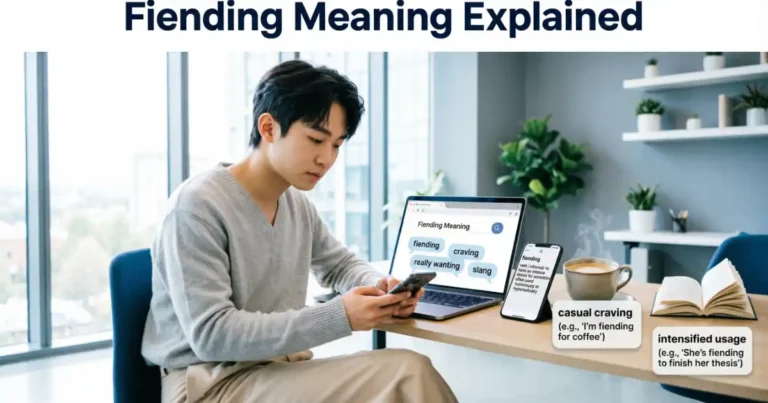
Fiending is informal slang that means strongly craving, wanting, or feeling an intense desire for something. Someone might say, “I’m fiending for coffee” when they really want coffee or “She’s fiending for the new game” when she cannot wait to play it.
The word comes from fiend, which can describe someone intensely devoted to or excessively interested in something. In some contexts, especially when discussing drugs, fiending can refer to an intense craving associated with addiction.
The meaning depends heavily on context. In everyday texting and conversation, it often sounds casual and exaggerated rather than clinical.
Introduction
People often search for fiending meaning after seeing the word in a text, TikTok comment, social media post, song lyric, gaming conversation, or casual conversation. The word can look serious because it comes from fiend, a word historically associated with an evil spirit or cruel person. In modern informal English, however, its meaning has expanded considerably.
Today, fiending commonly describes a powerful desire for something. A person can be fiending for food, coffee, attention, entertainment, a particular song, or almost anything they really want. The expression often adds emphasis, so “I want pizza” becomes “I’m fiending for pizza.”
There is also a more serious use. When the context involves substance use or addiction, fiending can describe an intense craving for a drug or another addictive substance. That meaning should not automatically be assumed when someone uses the word casually. This guide explains both uses, shows natural examples, compares related terms, and explains how to recognize the intended meaning.
What Does Fiending Mean?
Fiending generally means craving or strongly desiring something. It is the present participle of the informal verb fiend, which dictionaries also record as meaning to desire something greatly.
The word can express different levels of desire depending on context.
In everyday slang, fiending often means someone really wants something. The speaker may use it playfully or dramatically:
I’m fiending for some tacos right now.
This usually does not mean the person has a literal addiction to tacos. It simply emphasizes how much they want them.
The word can also describe someone who repeatedly seeks out a particular activity or thing. For example:
He’s a coffee fiend.
Here, fiend works as a noun and suggests someone who is extremely interested in or consumes a lot of something. Dictionaries recognize this informal sense for people who are highly interested in particular activities or things.
In addiction related contexts, however, fiending can carry a much more serious meaning. It may describe a strong craving for a substance. Readers should therefore consider the surrounding conversation before interpreting the word.
Fiending in Simple English
A simple way to remember the everyday slang meaning is:
Fiending = really wanting something or craving it badly.
For example:
I’m fiending for a burger.
This means:
I really want a burger.
The exact intensity can range from playful exaggeration to a serious craving.
Fiending Meaning by Context
The context usually tells you which meaning the speaker intends.
| Meaning | Where It Is Used | Simple Explanation | Example |
|---|---|---|---|
| Strong desire | Everyday conversation | Really wanting something | I’m fiending for pizza |
| Strong interest | Hobbies and entertainment | Wanting more of something you enjoy | He’s fiending for new games |
| Casual craving | Texting and social media | Dramatically expressing a want | I’m fiending for iced coffee |
| Addiction related craving | Substance use discussions | Experiencing a powerful craving | He was fiending for the substance |
The first three uses can be casual and harmless. The final use involves a more serious context and should not be treated as merely humorous slang.
Is Fiending a Slang Word?
Yes. Fiending is commonly used as informal slang when it means strongly wanting or craving something.
The related noun fiend has several meanings. Besides its older meaning involving an evil spirit or cruel person, dictionaries record informal meanings involving excessive interest, strong enthusiasm, addiction, or exceptional skill.
This explains why the word can sound different depending on the sentence.
Compare:
He was fiending for a cigarette.
with:
She is a fitness fiend.
The first sentence describes an intense desire. The second describes someone who is extremely interested in fitness.
In casual internet language, fiending usually relies on the first idea: wanting something intensely.
How Is Fiending Used in Texting and Social Media?
On social media and in texting, people often use fiending for emphasis.
Someone might write:
I’m fiending for summer break.
The person probably means they desperately want summer break to arrive.
Another example:
Been fiending for this album all week.
This means the person has been eagerly wanting to listen to the album.
The expression can also appear in memes, comments, captions, gaming conversations, and group chats. The informal setting makes exaggerated language more common.
Common Texting Examples
Here are several natural examples:
I’m fiending for some Chinese food.
Meaning: I really want Chinese food.
We’ve been fiending for a vacation.
Meaning: We strongly want to go on vacation.
She’s fiending for the next episode.
Meaning: She is very eager to watch the next episode.
I’m fiending for another game.
Meaning: I really want to play another game.
Bro is fiending for attention.
Meaning: The person seems to want attention very strongly.
The tone can be playful, dramatic, or slightly critical depending on the situation.
What Does I’m Fiending Mean?
I’m fiending usually means I strongly want or crave something.
However, the sentence often needs additional context because “I’m fiending” by itself does not identify what the person wants.
For example:
I’m fiending for coffee.
This clearly describes a strong desire for coffee.
But:
I’m fiending.
could have several interpretations. In casual conversation, it may simply mean “I really want something.” In a substance related conversation, it could refer to an intense drug craving.
The surrounding words and topic determine the meaning.
What Does Fiending for Something Mean?
Fiending for something means wanting or craving it intensely.
The phrase often follows this structure:
fiending for + noun
Examples include:
I’m fiending for a cheeseburger.
She’s fiending for some sleep.
They’re fiending for a beach vacation.
He’s fiending for the next season.
The phrase does not necessarily indicate addiction. In ordinary conversation, it frequently acts as an exaggerated way to say really wanting something.
Fiending vs. Craving
Fiending and craving overlap, but they do not always carry the same tone.
| Term | Meaning | Tone | Example |
|---|---|---|---|
| Fiending | Strongly wanting something | Informal, slang | I’m fiending for pizza |
| Craving | Having a powerful desire | Neutral to informal | I’m craving pizza |
| Wanting | Desiring something | Neutral | I want pizza |
| Longing | Strong emotional desire | More emotional | I’m longing for home |
| Eager | Very interested or excited to do something | Positive | I’m eager to see the movie |
Craving is generally more neutral and widely appropriate. Fiending sounds more casual and can imply greater intensity.
Fiending vs. Jonesing
Jonesing is another informal word that can mean strongly wanting or craving something. Dictionary.com notes that the modern broader sense of jonesing developed from earlier drug related slang and later came to mean strongly wanting something more generally.
The two words can work similarly:
I’m fiending for coffee.
I’m jonesing for coffee.
Both can mean that the speaker really wants coffee.
The tone and personal speech habits determine which expression sounds more natural. Neither word should automatically be interpreted as referring to drugs without supporting context.
Is Fiending Always About Drugs?
No. Fiending does not always refer to drugs.
This is one of the most important points to understand.
Someone saying:
I’m fiending for tacos.
is usually expressing a strong craving for tacos.
Someone saying:
She’s fiending for the new video game.
is probably talking about intense enthusiasm or desire.
However, a sentence involving substance use can give fiending a more serious meaning. The word has an established connection with addiction related language, and dictionaries recognize this sense.
Therefore, readers should interpret the word from the complete conversation rather than assuming that every use refers to drugs.
Common Things People Say They Are Fiending For
The expression can apply to many ordinary situations.
Food and Drinks
I’m fiending for a slice of pizza.
She’s fiending for an iced latte.
We’re fiending for some late night tacos.
These examples usually express an exaggerated food craving.
Entertainment
I’m fiending for the next episode.
He’s fiending for a new game.
Everyone is fiending for the next album.
Here, the word communicates excitement and anticipation.
Sleep and Relaxation
I’m fiending for a good night’s sleep.
This means the person strongly wants rest.
Social Interaction
He’s fiending for attention.
This use can sound more critical. It suggests that someone seems unusually eager for attention or validation.
Is Fiending Positive or Negative?
Fiending can be positive, neutral, humorous, or negative depending on context.
When someone says:
I’m fiending for dessert.
the tone is usually playful.
When someone says:
She’s fiending for a new phone.
the statement could simply describe strong interest.
When the word appears in a discussion about addiction, however, it can describe a serious craving.
Because the term has several shades of meaning, readers should avoid judging the speaker’s intent from the word alone.
Common Mistakes With Fiending
Understanding the context prevents most misunderstandings.
Assuming It Always Means Drug Craving
This is the biggest mistake. The word has a broader informal meaning involving strong desire or interest.
Assuming It Always Means Something Serious
Someone can use fiending jokingly.
I’m fiending for fries.
That sentence usually expresses an ordinary food craving.
Using It in Formal Writing
Fiending is informal. It works naturally in texts, conversations, social media posts, and casual writing, but a formal report may benefit from clearer alternatives such as strongly wanting, craving, or eager for.
Ignoring the Context
A sentence about food, gaming, or entertainment usually points toward the casual meaning. A conversation about substance use can point toward the addiction related meaning.
Confusing Fiend With Fiending
Fiend is the base word. Fiending is the form used to describe the act or state of strongly wanting something.
For example:
He is a coffee fiend.
He is fiending for coffee.
These sentences are related but grammatically different.
How to Use Fiending Naturally
If the conversation is casual, fiending can add emphasis without sounding unusual.
A natural structure is:
I’m fiending for + something
Examples:
I’m fiending for some barbecue.
I’m fiending for a vacation.
I’m fiending for a good movie tonight.
Another structure is:
Someone is fiending for + something
Examples:
My brother is fiending for the new console.
She’s fiending for concert tickets.
They’re fiending for some downtime.
Use the word when the conversational tone allows slang. Choose craving, wanting, or eager for when a more neutral tone makes more sense.
Conclusion
The simplest fiending meaning is strongly wanting or craving something. In everyday slang, people use it to add intensity to ordinary desires, such as wanting food, entertainment, sleep, attention, or a vacation. It can sound playful and exaggerated in texts and social media.
The word also has a more serious meaning in conversations involving addiction, where fiending can describe an intense craving for a substance. Context therefore matters more than the word alone.
If someone says, “I’m fiending for pizza,” they probably mean they really want pizza. If the conversation involves substance use, the meaning may be considerably more serious. Understanding that difference makes it easier to interpret fiending accurately and use it naturally.
Frequently Asked Questions About Fiending
What does fiending mean in slang?
In slang, fiending usually means strongly wanting, craving, or desiring something. It can describe ordinary things such as food, entertainment, sleep, or attention.
What does I’m fiending for you mean?
I’m fiending for you can mean that someone strongly desires, misses, or wants another person. Depending on the relationship and conversation, it can sound romantic, emotionally intense, or sexually suggestive.
Is fiending the same as craving?
They can have the same basic meaning, especially in casual conversation. Fiending sounds more slang based and intense, while craving works in both casual and more neutral contexts.
Is fiending a bad word?
Not necessarily. Fiending is informal slang rather than a profanity. However, its addiction related meaning can make it inappropriate or sensitive in certain situations.
Can you use fiending for food?
Yes. Saying I’m fiending for pizza is a casual way to say that you really want pizza.
What is the difference between fiending and jonesing?
Both can mean strongly wanting or craving something. Jonesing also has historical roots in drug related slang, but its modern use can describe ordinary cravings as well.
Does fiending mean addicted?
Not necessarily. In casual speech, it often means simply wanting something very badly. The addiction related meaning depends on context.
Is fiending appropriate in professional writing?
Usually, no. Because it is informal slang, professional writing generally benefits from clearer words such as craving, strongly desiring, eager for, or wanting intensely.