
Quick Answer
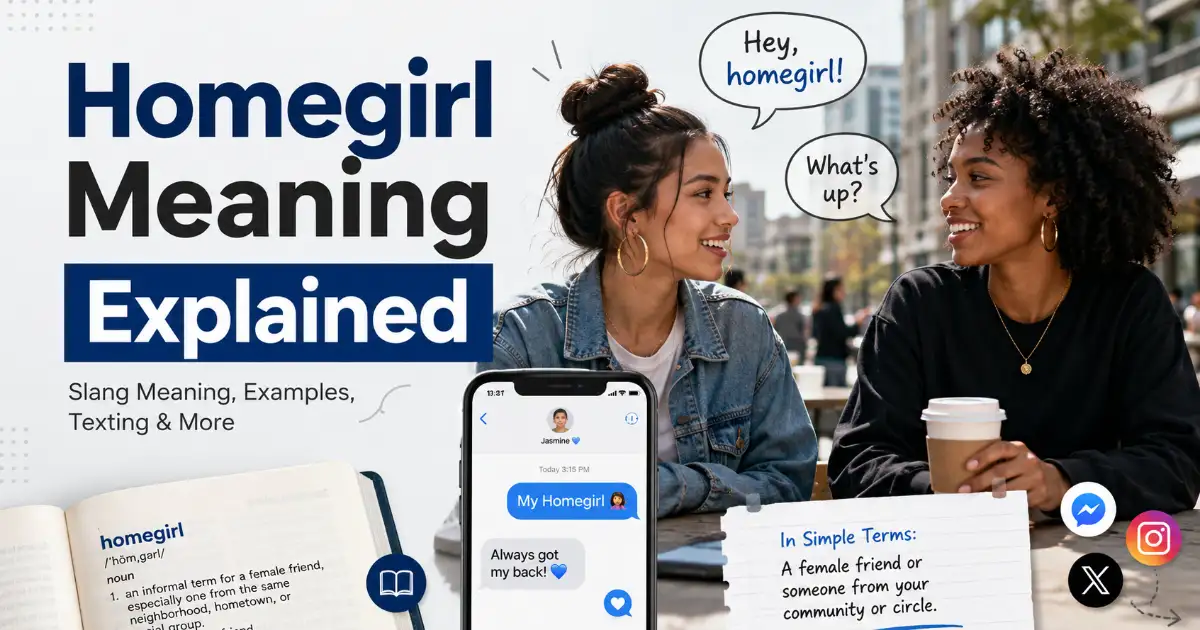
Homegirl is an informal slang term for a female friend, especially someone who shares your neighborhood, hometown, social circle, or a close personal connection. In everyday conversation, it usually means a close female friend, trusted friend, or girl from your community.
The word can also be used directly when talking to a woman in a friendly way, such as, “Hey, homegirl, how are you?” The meaning depends on context, but it normally describes friendship rather than a romantic relationship.
Introduction
If someone calls a woman their homegirl, they are usually talking about friendship, familiarity, or a shared connection. The word appears in texting, social media posts, music, movies, casual conversations, and everyday American slang. A person might say, “She is my homegirl,” when referring to a close female friend, or use the word casually when speaking directly to another woman.
The term can create confusion for people who are unfamiliar with American slang. The word home may make it sound as though it refers to someone who lives in the same house, but that is not normally what it means. In slang, home points more toward a shared community, background, neighborhood, or sense of familiarity. Dictionaries define homegirl as a female friend or a woman from the same town, neighborhood, region, or peer group.
This guide explains what homegirl means, how people use it in texting and conversation, how it differs from girlfriend and best friend, and what the word can communicate about a friendship. It also covers examples, related terms, common mistakes, and the meaning of homegirl when someone uses it as a direct form of address.
What Does Homegirl Mean?
Homegirl generally means a female friend or a woman with whom someone shares a familiar social or community connection. The word is informal slang, so it fits casual conversation much better than formal writing.
The original sense connects the word with a woman from the same neighborhood, hometown, or local community. Over time, its everyday meaning broadened. Today, someone can call a woman their homegirl even when they do not currently live in the same area.
For example:
“She is my homegirl from college.”
This sentence identifies the woman as a friend from the speaker’s college years.
Another example is:
“My homegirl helped me pick out a dress.”
Here, homegirl simply means a trusted female friend.
The word can also describe a broader friendship group:
“I am going out with my homegirls tonight.”
In this context, homegirls means female friends or women in the speaker’s social circle.
Homegirl does not normally mean girlfriend. If someone says, “She is my homegirl,” the safest interpretation is that she is a friend, not a romantic partner.
Homegirl Meaning by Context
The meaning can shift slightly depending on how someone uses the word. The main ideas remain friendship, familiarity, and shared social connection.
| Meaning | Where It Is Used | Simple Explanation | Example |
|---|---|---|---|
| Female friend | Everyday slang | A woman who is a friend | “She is my homegirl.” |
| Friend from the same area | Community conversations | A woman from the same neighborhood or hometown | “She is an old homegirl from back home.” |
| Close social friend | Texting and social media | A trusted woman in someone’s circle | “My homegirl always has my back.” |
| Friendly form of address | Casual conversation | A relaxed way to address a woman | “Hey, homegirl, what is up?” |
| Peer or community member | Informal group settings | A woman connected to the same social group | “My homegirls are coming over.” |
Is Homegirl a Slang Word?
Yes. Homegirl is an informal slang term, especially associated with American English. Major dictionaries classify it as slang or informal language.
The term has historical connections to American urban speech and communities, including Black and Latino communities. Dictionary sources also show that its meaning has expanded into broader informal American usage.
That cultural background matters because slang often carries more than a dictionary definition. Depending on the speaker and situation, homegirl can communicate familiarity, loyalty, friendship, or shared experience.
People should avoid assuming that every woman described as a homegirl comes from the same neighborhood. Modern usage often focuses more on friendship than geography.
How Is Homegirl Used in Texting?
In texting, homegirl usually means female friend. The term can make a message sound relaxed, friendly, and familiar.
Examples include:
- “My homegirl is coming over later.”
- “I talked to my homegirl about it.”
- “Homegirl always knows what to say.”
- “I am meeting my homegirls after work.”
- “Hey homegirl, how have you been?”
The tone depends heavily on the relationship. Between friends, the word can sound warm and natural. From a stranger, however, it may feel overly familiar.
People may also shorten homegirl to HG in texting or social media contexts. The abbreviation can mean homegirl when the surrounding conversation makes that interpretation clear.
How Is Homegirl Used on Social Media?
Social media gives homegirl a broader and more flexible meaning. People may use it in captions, comments, videos, and casual posts when talking about female friends or someone they feel connected to.
For example:
“My homegirl understood the assignment.”
This usually expresses approval or admiration.
Another example:
“Out with my homegirls tonight.”
Here, homegirls simply refers to a group of female friends.
Someone might also write:
“Homegirl really showed up for me.”
This suggests that a female friend provided support or helped during an important situation.
On social media, the word can also be playful. A person may call an unfamiliar woman homegirl when the context creates a sense of friendly familiarity. That use depends strongly on tone and the relationship between the people involved.
Homegirl vs Girlfriend
One of the most common misunderstandings involves the difference between homegirl and girlfriend.
A girlfriend usually refers to a romantic partner. Homegirl normally refers to a female friend.
| Term | Meaning | Best Use | Example |
| Homegirl | Female friend | Casual friendship | “She is my homegirl.” |
| Girlfriend | Romantic female partner | Dating relationship | “She is my girlfriend.” |
| Best friend | Closest friend | Strong friendship | “She is my best friend.” |
| Friend | General friendship term | Most situations | “She is my friend.” |
| Homie | Close friend, often gender neutral | Casual friendship | “She is my homie.” |
The distinction becomes especially important when someone introduces another person. Saying “This is my homegirl” normally signals friendship. Saying “This is my girlfriend” normally signals a romantic relationship.
Homegirl vs Best Friend
Homegirl does not automatically mean best friend.
A person can have several homegirls without considering all of them their closest friends. The term usually communicates familiarity or friendship, while best friend describes a stronger level of personal closeness.
For example:
“I have known her for years. She is one of my homegirls.”
This suggests a long standing friendship.
However:
“She is my best friend.”
This directly identifies her as the person’s closest or most important friend.
The two terms can overlap. Someone can absolutely be both a homegirl and a best friend.
Homegirl vs Homie and Homeboy
Homegirl belongs to the same family of informal expressions as homeboy and homie.
Homeboy traditionally refers to a male friend or someone from the same neighborhood or social group. Homegirl generally applies to a female friend. Homie can work as a more gender neutral term for a close friend.
These words often emphasize familiarity rather than simply describing someone as an acquaintance.
For example:
- “She is my homegirl.”
- “He is my homeboy.”
- “They are my homies.”
The exact choice depends on the speaker’s personal style, community, age, and social setting.
Natural Examples of Homegirl in Conversation
Understanding real examples makes the slang easier to recognize.
Talking About a Friend
“My homegirl helped me study for the exam.”
Meaning: A female friend helped with studying.
Talking About an Old Friend
“She is an old homegirl from high school.”
Meaning: She is a female friend the speaker has known since high school.
Talking About a Group
“I am going out with my homegirls tonight.”
Meaning: The speaker is spending time with female friends.
Addressing Someone Directly
“Hey, homegirl, what are you doing later?”
Meaning: A casual and friendly way to address a woman.
Showing Appreciation
“My homegirl always knows how to make me laugh.”
Meaning: The speaker considers this woman a trusted or close friend.
Social Media Example
“My homegirl came through when I needed help.”
Meaning: A female friend provided support.
Does Homegirl Mean Someone From Your Neighborhood?
Not necessarily.
The connection to a neighborhood, hometown, or local community is part of the word’s traditional meaning. Modern everyday usage often focuses more broadly on friendship. Merriam Webster and Cambridge both include the ideas of a woman from one’s neighborhood or hometown and a female friend.
For example, someone might say:
“She is my homegirl from college.”
The two people may have met at college rather than growing up in the same neighborhood.
Therefore, context matters. If someone says “my homegirl from the neighborhood,” the geographic connection is clear. If someone simply says “my homegirl,” friendship is usually the main idea.
Can You Call Someone Homegirl Directly?
Yes, but the situation matters.
A person can use homegirl as a casual form of address, especially when speaking in a relaxed and friendly setting. Dictionary examples include direct uses such as “Hey homegirl.”
Still, it is better to consider familiarity and tone. Slang can sound natural between friends but awkward when used with a stranger.
For example, a close friend might say:
“Homegirl, you need to tell me what happened.”
Among friends, this can sound playful and familiar.
Using the same expression toward someone who does not know the speaker may sound presumptuous. When in doubt, a person’s name or the neutral word friend is safer.
Is Homegirl Offensive?
Homegirl is generally not offensive when people use it naturally to describe a female friend. However, slang always depends on context, speaker, audience, and tone.
The word also has cultural associations, so people should avoid using it as a stereotype or pretending to speak in a particular cultural style simply because they have heard the term online.
A natural use usually comes from an actual conversational relationship. Forced use can sound awkward or disrespectful.
The safest approach is simple: understand the term, pay attention to how people around you use it, and avoid exaggerating its cultural meaning.
Common Mistakes When Using Homegirl
Several misunderstandings can make this slang confusing.
Assuming It Means Girlfriend
Homegirl usually describes a friend, not a romantic partner. Context can always change meaning, but the standard slang use points toward friendship.
Assuming She Must Live Nearby
The woman does not have to live in the same neighborhood. Modern usage often refers simply to a close female friend.
Assuming Homegirl Means Best Friend
A homegirl can be a close friend without being someone’s best friend.
Using It in Formal Writing
Homegirl is slang and informal language. It usually does not belong in formal business writing, academic essays, professional reports, or official documents unless the writer is specifically discussing language or quoting dialogue.
Using It With a Stranger Without Considering Tone
Calling an unfamiliar woman homegirl can sound overly familiar. The relationship and setting should guide the choice.
Conclusion
Homegirl is an informal American slang term that usually means a female friend, especially someone connected through friendship, community, shared experience, or a social group. The word originally carried a stronger connection to someone’s neighborhood or hometown, but modern usage often simply means a close female friend.
The most important distinction is that homegirl normally describes friendship rather than romance. It does not automatically mean girlfriend or best friend. Context, tone, and the relationship between the speakers determine the exact feeling behind the word.
If you see homegirl in a text, caption, conversation, or social media post, the safest interpretation is usually female friend or close female acquaintance unless the surrounding context suggests something more specific.
Frequently Asked Questions About Homegirl
What does homegirl mean in simple terms?
Homegirl usually means a female friend or a woman from the same social group, neighborhood, hometown, or community. In modern casual speech, female friend is often the simplest interpretation.
Does homegirl mean girlfriend?
Usually no. Homegirl normally refers to a female friend. Girlfriend generally refers to a romantic partner.
What does my homegirl mean?
“My homegirl” usually means “my female friend” or “a female friend I feel close to.” It can also suggest shared community or background.
What does homegirl mean in texting?
In texting, homegirl usually means a female friend. It can also appear as a casual way to address a woman.
What is the difference between homegirl and homie?
Homegirl specifically identifies a female friend, while homie can refer to a friend without specifying gender. Both terms can express familiarity and friendship.
Can a homegirl be a best friend?
Yes. Someone can be both a homegirl and a best friend. Homegirl describes the informal friendship connection, while best friend describes the level of closeness.
Is homegirl a compliment?
It can be. When used naturally, homegirl can communicate friendliness, familiarity, loyalty, or affection. The exact tone depends on the speaker and situation.
What is the male version of homegirl?
The traditional male counterpart is homeboy. Homie is another casual term that can refer to a friend without emphasizing gender.