
Quick Answer
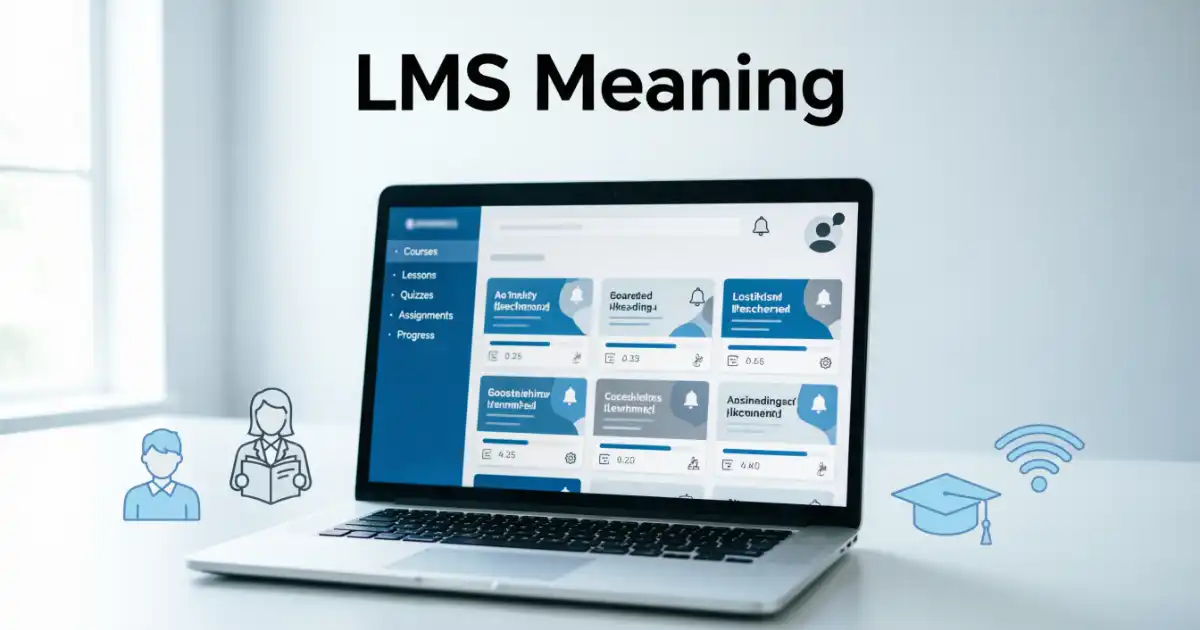
LMS stands for Learning Management System. It is software used to create, organize, deliver, and track online learning and training. Schools, colleges, universities, businesses, and training organizations use an LMS to manage courses, lessons, assignments, quizzes, grades, and learner progress in one place.
Depending on the context, LMS can have other meanings, but Learning Management System is the most common meaning when people search for LMS in education, workplace training, or online learning.
Introduction
If you have taken an online class, completed workplace training, or logged into a school portal to submit an assignment, you may have already used an LMS without realizing it. The abbreviation appears frequently in education, employee training, professional development, and online courses.
People often search for LMS because they want to understand what the term means, what an LMS does, or how it differs from a regular website or video learning platform.
An LMS provides a central place where instructors and learners can interact with educational content. A teacher might upload reading materials, create quizzes, post announcements, and grade assignments. A student can log in, complete lessons, submit work, check grades, and monitor progress.
In a company, employees might use an LMS to complete onboarding, compliance training, or professional development courses.
This guide explains the LMS meaning in simple terms. You will learn what a Learning Management System does, how it works, common examples of LMS features, where organizations use these platforms, and the differences between an LMS and related learning tools.
What Does LMS Mean?
LMS means Learning Management System. It refers to software that helps an organization manage learning and training activities digitally.
The word learning refers to educational or training content. Management describes the organization and administration of that learning. System means the software platform that brings these functions together.
An LMS can store course materials, organize lessons, assign learning activities, collect submissions, administer tests, record grades, and track learner progress. Some platforms also support live classes, discussion boards, certificates, attendance, reporting, and automated notifications.
For example, imagine a college professor teaching an online course. Instead of sending every assignment and announcement by email, the professor can place the course materials in an LMS. Students log into the system, read the lessons, complete quizzes, submit assignments, and view their grades.
Businesses use the same basic concept for employee training. A company might create a course about workplace policies. Employees log into the LMS, watch the required lessons, complete a quiz, and receive a record showing that they finished the training.
The exact features vary between platforms. A simple LMS may focus on course delivery and assignments, while a larger system may include detailed reporting, integrations, certificates, assessments, and administrative tools.
LMS Meaning in Different Contexts
Although Learning Management System is the most relevant meaning in education and training, LMS can represent different things in other contexts. The surrounding words usually make the intended meaning clear.
| Meaning | Where It Is Used | Simple Explanation | Example |
|---|---|---|---|
| Learning Management System | Education and training | Software for managing learning | The class uses an LMS for assignments |
| Learning Management Software | Technology and education | Software that supports learning management | The organization selected new LMS software |
| Local Management System | Some technical contexts | A system for managing local operations | The term appears in specialized documentation |
| Least Mean Square | Mathematics and engineering | A method used in statistical or signal processing work | The engineer applies LMS calculations |
When someone says, I need to log into the LMS, they are usually referring to a Learning Management System. In a math, engineering, or highly technical document, LMS may have a completely different meaning.
How Does an LMS Work?
An LMS typically connects administrators, instructors, learners, and educational content through one online platform.
An administrator can set up courses, create user accounts, assign permissions, and manage system settings. An instructor can build lessons, upload materials, create assessments, communicate with learners, and review performance.
Learners usually access the platform through a web browser or mobile application. Depending on the system, they may see a dashboard showing their courses, upcoming assignments, grades, progress, and required training.
A typical learning process looks like this:
- An administrator or instructor creates a course.
- Learning materials are added to the course.
- Students or employees receive access.
- Learners complete lessons and activities.
- The LMS records their progress.
- Learners complete quizzes or assignments.
- Instructors review results and provide feedback.
- Reports show completion and performance information.
This setup allows an organization to manage learning without relying on separate tools for every part of the process.
What Features Does an LMS Have?
Different platforms offer different features, but many Learning Management Systems include several core functions.
Course Management
Instructors can create and organize courses into modules, lessons, topics, or units. Materials may include written content, presentations, videos, documents, and other learning resources.
Assignments and Assessments
An LMS can allow learners to submit assignments and complete quizzes or exams. Instructors can review submissions and record grades.
Progress Tracking
The system can track information such as completed lessons, quiz results, course progress, and training completion.
Communication
Many LMS platforms include announcements, discussion areas, messaging, notifications, or other communication features.
Reporting
Administrators and instructors can use reports to understand participation, completion, assessment results, and other learning activity.
Certificates
Some systems can issue certificates after a learner completes a course or meets specific requirements.
User Management
Organizations can create accounts, assign learners to courses, manage instructor permissions, and organize users into groups.
The availability of these features depends on the specific LMS.
Common Uses of an LMS
LMS platforms appear in many types of organizations because they can support both formal education and professional training.
Schools and Colleges
Teachers can use an LMS to distribute course materials, collect homework, administer quizzes, and communicate with students.
Universities
Higher education institutions may use LMS platforms for online courses, hybrid classes, course management, assessments, and student resources.
Businesses
Companies commonly use an LMS for employee onboarding, internal training, professional development, and required learning programs.
Professional Training
Organizations that provide certifications or continuing education can use an LMS to deliver structured courses and track completion.
Nonprofit Organizations
Nonprofits can use an LMS to train employees, volunteers, or members without requiring everyone to attend the same physical location.
Online Course Providers
Creators and educational organizations can use LMS software to organize paid or free courses and manage learners.
LMS Examples in Everyday Life
You may encounter an LMS in situations that feel very different even though the underlying concept is similar.
College example:
A professor posts lecture slides and reading assignments in the LMS. Students submit homework through the same platform and check their grades there.
Workplace example:
A new employee receives an onboarding course. They complete several training modules and take a short quiz before their training is marked complete.
Professional development example:
A worker enrolls in an online course to develop a new skill. The LMS records completed lessons and assessment results.
School example:
A teacher creates a weekly module containing a video, reading assignment, quiz, and discussion activity. Students complete each item through the course page.
These examples show why an LMS is more than simply a place to watch educational videos. It can manage the broader learning process.
LMS vs Online Course Platform
An LMS and an online course platform can overlap, but they are not always the same thing.
| Term | Meaning | Best Use | Example |
|---|---|---|---|
| LMS | Software for managing learning and training | Schools, organizations, businesses | Managing employee courses |
| Online course platform | Service focused on delivering online courses | Course creators and learners | Selling a structured course |
| Virtual classroom | Tool for live online instruction | Live classes and meetings | Hosting a real time lesson |
| Student portal | Website for accessing school services | Student administration | Viewing schedules and records |
An LMS may include virtual classroom functions or connect with other learning tools. The exact boundaries depend on the software.
Why Do Organizations Use an LMS?
One major advantage of an LMS is centralization. Instead of keeping course materials, assignments, grades, and training records in unrelated places, an organization can manage many of these tasks through one system.
An LMS can also make learning easier to organize. Instructors can reuse course materials, learners can access content from a central dashboard, and administrators can monitor completion.
For businesses, tracking training can be especially useful when employees need to complete specific internal programs. For schools, an LMS can give students a consistent place to find assignments and course information.
However, an LMS does not automatically make a course effective. The quality of the teaching materials, course design, instructor support, accessibility, and learner engagement still matter.
Common Mistakes When Understanding LMS
People sometimes use LMS as if it means any website that contains educational content. That is not always accurate.
Assuming Every LMS Works the Same Way
Different platforms can have very different interfaces and features. One LMS might focus heavily on academic courses, while another may be designed primarily for corporate training.
Confusing an LMS With a Video Platform
A video platform primarily delivers video content. An LMS can organize complete learning experiences, including lessons, assessments, assignments, progress tracking, and reporting.
Assuming LMS Always Means Learning Management System
Context matters. LMS can have different meanings in technical, mathematical, and other specialized fields.
Thinking an LMS Replaces the Instructor
An LMS is a tool. It can organize and deliver learning, but it does not automatically replace teachers, trainers, feedback, or human support.
Ignoring Accessibility
When an organization chooses an LMS, accessibility should be considered alongside features and price. Learners may have different needs involving vision, hearing, mobility, reading, or technology access.
Conclusion
LMS usually means Learning Management System, a software platform designed to organize, deliver, and track learning or training. Schools can use it for courses and assignments, while businesses can use it for employee training and professional development.
The key thing to remember is that an LMS is more than a place to store educational content. It can bring courses, learners, assessments, progress tracking, communication, and reporting together in one system. When you see LMS in an education or workplace training context, Learning Management System is usually the meaning you need.
Frequently Asked Questions About LMS
What does LMS stand for?
LMS most commonly stands for Learning Management System. It is software used to organize, deliver, manage, and track education or training.
What is an LMS used for?
An LMS can be used for online courses, school assignments, employee training, quizzes, assessments, progress tracking, communication, and training records.
Is an LMS only for schools?
No. Schools and universities use LMS platforms, but businesses, nonprofits, professional training organizations, and course creators also use them.
Is Google Classroom an LMS?
Google Classroom provides many functions associated with learning management, including class organization, assignments, communication, and grading. Whether an organization classifies it as an LMS can depend on the definition being used and the context.
What is the difference between LMS and online learning?
Online learning is the broader concept of learning through digital technology. An LMS is a software system that can be used to organize and manage that learning.
Can an LMS track student progress?
Yes. Many LMS platforms can track information such as completed activities, quiz results, assignment submissions, and course progress. The exact tracking features depend on the platform.
What does LMS mean at work?
In a workplace, LMS usually means Learning Management System. Employees may use it for onboarding, professional development, safety training, compliance programs, or other company training.
Can LMS have meanings outside education?
Yes. LMS can represent different terms in fields such as mathematics, engineering, and technology. The surrounding context determines the intended meaning.