
Quick Answer
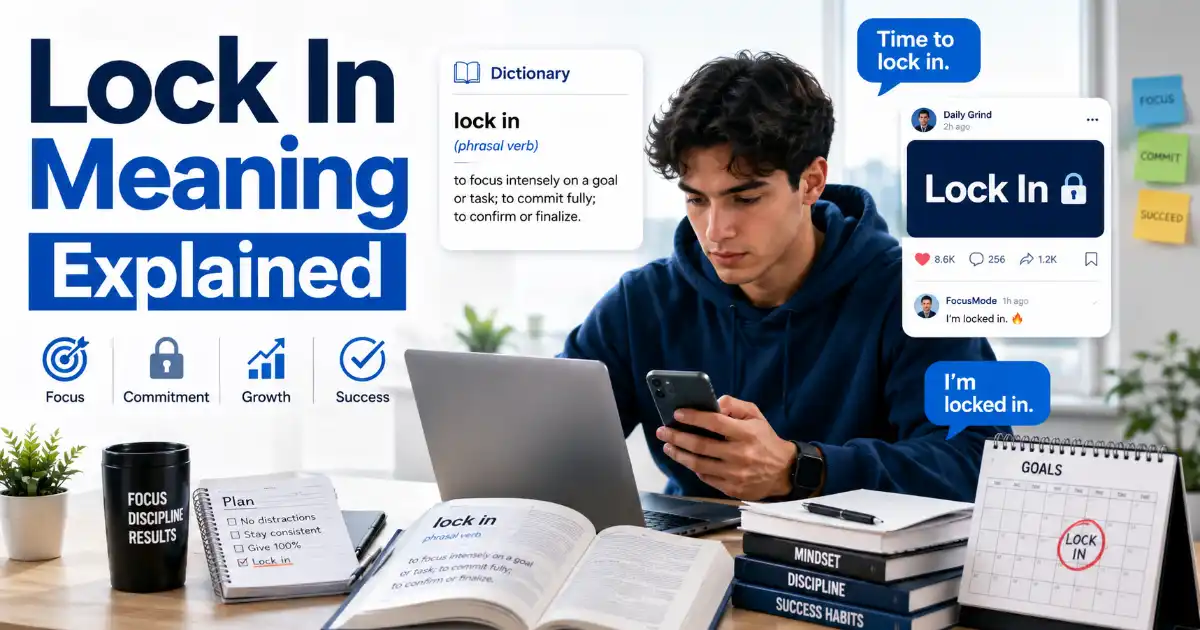
Lock in means to fully focus on something, commit to a goal, or become intensely determined to get something done. In modern slang, especially on social media, gaming platforms, and among younger speakers, someone might say lock in when they want another person to stop getting distracted and concentrate. It can also mean confirming a plan, decision, or commitment.
Introduction
You may hear someone say, lock in, during a study session, workout, gaming match, work project, or even a casual conversation. The phrase has become especially common online, where people use it to describe a moment when someone becomes serious, focused, or determined.
The meaning can change slightly depending on the situation. If a friend says, lock in, before an exam, they probably mean focus and take studying seriously. If someone says, I am locked in, while working on a project, they mean they are deeply focused. In a scheduling conversation, however, lock in can simply mean confirm or finalize something.
Understanding lock in therefore requires looking at context. This guide explains its slang meaning, traditional uses, example sentences, related phrases, tone, and common mistakes so you can recognize and use it naturally.
What Does Lock In Mean?
Lock in generally means to commit yourself to something or focus completely on it. In casual slang, it often carries the idea of entering a serious, highly focused state.
For example:
You have a test tomorrow. Lock in.
Here, the speaker is telling someone to stop procrastinating and concentrate on studying.
Another common expression is:
I need to lock in tonight and finish this project.
This means the person plans to eliminate distractions and work seriously until the task is complete.
The phrase also has a more traditional meaning. Lock in can mean to secure or finalize something so that it cannot easily change. For example, someone might say they locked in a hotel rate or locked in a meeting time.
The context usually makes the intended meaning obvious.
| Meaning | Where It Is Used | Simple Explanation | Example |
|---|---|---|---|
| Focus intensely | Slang, social media, everyday speech | Concentrate seriously | I need to lock in for this exam. |
| Commit to a goal | Casual conversation | Become determined | She locked in and finished the assignment. |
| Finalize something | Business, planning, everyday speech | Confirm or secure something | Let’s lock in the meeting time. |
| Secure a rate or deal | Finance, shopping, business | Fix an agreed condition | They locked in the price. |
| Enter a focused state | Gaming, sports, work | Become highly concentrated | He locked in during the final round. |
How Lock In Became Popular Slang
The phrase lock in existed long before its current internet slang use. English speakers have traditionally used it to describe securing something or making a commitment.
Its newer slang sense builds naturally from that older idea. When someone says they are locked in, the implication is that their attention and commitment have become fixed on a particular goal.
Social media, gaming communities, sports discussions, and short form video platforms helped make this usage highly visible. People began using the phrase humorously for everything from studying and exercising to preparing for an important conversation.
Today, lock in can sound serious, motivational, humorous, or playful depending on who says it and how they say it.
What Does It Mean to Lock In on Social Media?
On social media, lock in usually means focus, get serious, and stop getting distracted.
A post might say:
Finals are next week. Time to lock in.
The writer means it is time to concentrate on school and put distractions aside.
Someone might also comment:
Bro needs to lock in.
This usually means the person needs to improve their focus, performance, or effort.
The expression can also become humorous. Friends may tell someone to lock in when that person is procrastinating, joking around, losing a game, or failing to complete a simple task.
What Does I’m Locked In Mean?
I’m locked in means I am fully focused, committed, or determined.
The phrase often describes a mental state rather than a physical action.
For example:
I have three hours before my exam. I’m locked in.
The speaker is saying they are ready to concentrate on studying.
In sports:
We are locked in for the second half.
This suggests the team has become focused and determined to perform well.
In gaming:
I’m locked in right now.
This can mean the player is playing with strong concentration and does not want interruptions.
What Does Lock In Mean in Gaming?
Gaming communities frequently use lock in to describe intense concentration or strong performance.
A player who suddenly starts making excellent decisions might be described as locked in. The phrase can also appear before an important match when someone wants to signal that they are taking the game seriously.
Examples include:
Lock in. We can still win this.
She was completely locked in during the final round.
Everyone needs to lock in for this match.
In this context, the phrase usually combines focus, confidence, and determination.
What Does Lock In Mean in School?
Students often use lock in when talking about studying, exams, homework, or academic goals.
For example:
I wasted most of the weekend. Now I have to lock in.
This means the student needs to stop procrastinating and concentrate on schoolwork.
Another example:
We need to lock in before finals.
Here, the phrase encourages serious preparation.
The expression works especially well in casual conversations between students. In a formal academic paper, however, more precise language such as focus, concentrate, or commit to studying usually works better.
What Does Lock In Mean at Work?
At work, lock in can have either a slang meaning or a practical business meaning.
In casual workplace conversation, someone might say:
I am going to lock in this afternoon and finish the report.
They mean they intend to focus without unnecessary distractions.
In a professional planning context, lock in can mean finalize something:
Let’s lock in the presentation date.
That means the participants should confirm the date.
The phrase therefore works in professional speech, but the intended meaning depends heavily on the sentence.
Lock In vs Locked In
These expressions are closely related, but they do not function exactly the same way.
Lock in often describes an action or instruction.
I need to lock in.
Locked in usually describes a current state.
I am locked in.
You can think of the distinction this way:
| Expression | Meaning | Example |
|---|---|---|
| Lock in | Become focused or commit | I need to lock in. |
| Locked in | Already focused or committed | I am locked in. |
| Lock someone in | Secure or commit someone | They locked him in for the project. |
| Lock it in | Confirm or finalize something | Lock it in for Friday. |
Lock In vs Focus
Focus is the more general and neutral word.
Lock in sounds more casual and energetic. It often suggests stronger determination or urgency.
For example:
I need to focus on studying.
This sounds neutral.
I need to lock in and study.
This sounds more intense and motivational.
In everyday conversation, both can work. The better choice depends on the tone you want.
Lock In vs Commit
Commit emphasizes making a decision or dedicating yourself to something.
Lock in can communicate commitment, but it often adds a sense of immediate focus.
For example:
She committed to exercising regularly.
This emphasizes a longer term decision.
She locked in and finished her workout.
This emphasizes the moment when she became focused and got the task done.
Common Ways People Use Lock In
The phrase appears in many everyday situations. Common uses include:
Studying
I have a test tomorrow, so I need to lock in.
The person needs to concentrate on studying.
Working
I am locking in for the next two hours.
The person plans to work without distractions.
Exercising
Summer is coming. Time to lock in.
The speaker means they intend to become serious about fitness or their personal goals.
Gaming
Lock in, we are almost at the final boss.
The speaker wants teammates to concentrate.
Sports
The team really locked in during the fourth quarter.
The team became highly focused and performed with greater intensity.
Personal Goals
I am locking in and finally learning Spanish.
The person is committing serious effort to a goal.
Making Plans
Are we locked in for Saturday?
Here, locked in means confirmed or finalized rather than intensely focused.
Examples of Lock In in Text Messages
The phrase works naturally in texting because it is short and informal.
Bro, lock in 😂
This can playfully tell someone to focus.
I am locked in for finals.
This means the person is taking exam preparation seriously.
We locked in the restaurant for 7.
Here, it means the reservation or plan has been confirmed.
Lock in. This game is winnable.
This encourages teammates to concentrate.
I need to lock in at work today.
This means the person wants to focus and get things done.
How to Respond When Someone Says Lock In
The appropriate response depends on the context.
If someone is encouraging you to focus, you can respond casually:
I’m locked in.
Or:
Say less. I got it.
If the person asks you to confirm a plan:
Yep, locked in.
Or:
That works. Lock it in.
If someone uses the phrase jokingly, a humorous response can work:
Already locked in.
The phrase usually belongs in informal conversation, so the response can match that relaxed tone.
Is Lock In Positive or Negative?
Usually, lock in has a positive or motivational meaning. It often communicates determination, focus, preparation, or commitment.
However, tone matters.
If someone says:
You seriously need to lock in.
They may be criticizing another person’s lack of effort.
If someone says:
We are locked in!
The phrase sounds enthusiastic and confident.
Online, people also use it sarcastically. Someone might tell a friend to lock in over something extremely minor, creating a humorous contrast.
Common Mistakes With Lock In
People sometimes misunderstand the phrase because it has both slang and traditional meanings.
Mistaking It for Only Internet Slang
Lock in did not originate as internet slang. The phrase has established uses involving securing, confirming, or finalizing something.
Assuming It Always Means Focus
Context matters. Lock in the appointment means confirm the appointment, not concentrate on it.
Using It in Formal Writing
The slang sense can sound too casual for academic or formal professional writing. In those situations, focus, concentrate, commit, or finalize may communicate the idea more clearly.
Confusing Lock In With Lock Up
Lock up can mean securing a physical place or object, while lock in can mean focusing, committing, or securing an arrangement.
They are not interchangeable in every sentence.
Taking Every Use Literally
When someone says:
I am locked in.
They usually are not physically trapped somewhere. In modern casual speech, the phrase often describes mental focus or commitment.
Conclusion
Lock in usually means to focus intensely, become serious, or commit yourself to a goal. In slang and social media conversations, people often use it as encouragement when someone needs to stop getting distracted and concentrate.
The phrase can also mean confirming or finalizing something, so context matters. I’m locked in normally describes a focused or committed state, while lock it in can mean finalize a plan.
The easiest way to remember the slang meaning is simple: when someone tells you to lock in, they are usually telling you to focus, get serious, and give the task your full attention.
FAQs About Lock In
What does lock in mean in slang?
In slang, lock in usually means to focus intensely, become serious, or commit strongly to a task or goal.
What does I’m locked in mean?
I’m locked in means the speaker feels highly focused, determined, or committed to what they are doing.
Is lock in a Gen Z slang term?
The current slang use is strongly associated with younger online culture, including social media and gaming, but the phrase itself is much older than modern Gen Z slang.
What does lock in mean on TikTok?
On TikTok and other social platforms, lock in commonly means getting serious, concentrating, or committing to a goal. People also use it humorously.
Can lock in mean confirm?
Yes. In planning and business contexts, lock in can mean confirm or finalize something. For example, Let’s lock in Friday means confirm Friday as the chosen date.
Is lock in formal English?
The phrase itself is standard English, but its slang meaning is informal. Formal writing may require a more specific word such as concentrate, commit, confirm, or finalize.
What does bro lock in mean?
Bro, lock in is an informal way to tell someone to focus, take the situation seriously, or put more effort into what they are doing. Depending on the context, it can sound supportive or teasing.
What is the opposite of being locked in?
The opposite can be distracted, unfocused, uncommitted, or not taking something seriously, depending on the context.