
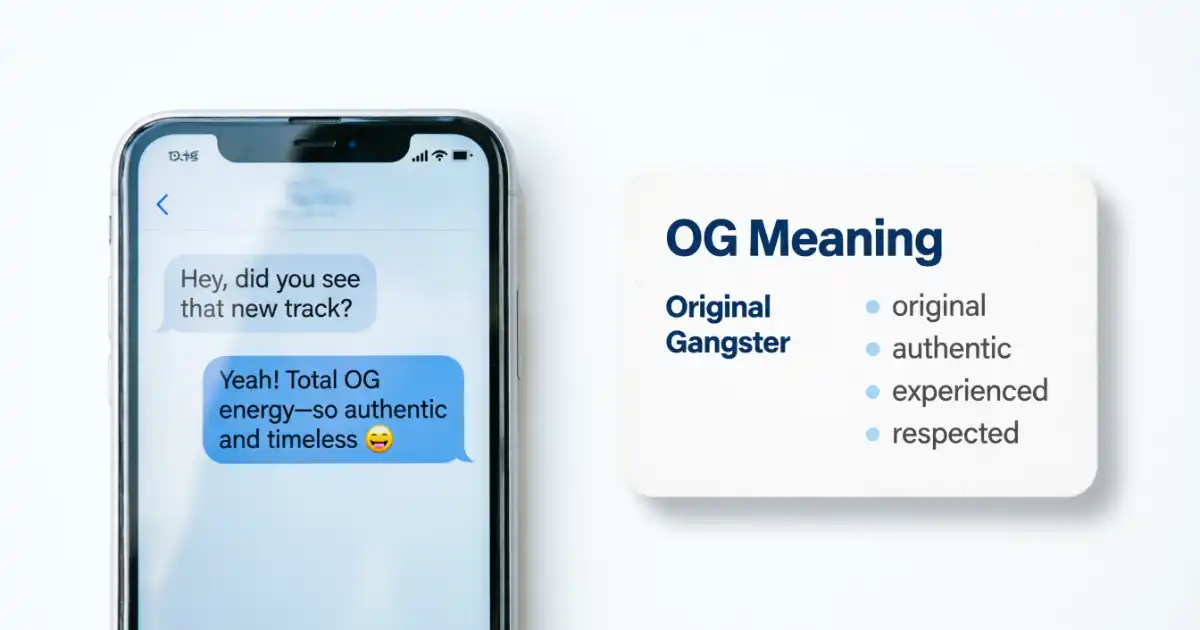
Quick Answer
OG usually means Original Gangster, but in modern texting, slang, and social media, it usually describes someone or something that is original, authentic, respected, experienced, or one of the first of its kind. Calling someone an OG is generally a compliment.
For example, saying “She is an OG in this community” means she has been around for a long time and has earned respect. The term can also describe things, such as an OG version of a game, song, recipe, or product.
Introduction
If you have seen OG in a text message, social media comment, gaming chat, or casual conversation, you may wonder what those two letters actually mean. The term is short, but its meaning has changed significantly over time.
Today, people commonly use OG to show respect for someone who is original, experienced, authentic, or connected to the early days of a particular community or trend.
The original phrase behind OG is Original Gangster. The expression came from street and hip hop culture, where it referred to an established or respected person. Over time, the slang moved into broader popular culture and developed a much wider meaning.
Modern dictionaries now describe OG as someone or something that was among the first of its kind.
You may now see OG used for longtime friends, musicians, athletes, gamers, creators, classic products, old versions of games, recipes, and even ideas. This guide explains the OG meaning, where it came from, how people use it in texts and online conversations, and how it differs from related terms such as GOAT and legend.
What Does OG Mean?
In modern slang, OG generally means an original, authentic, experienced, or highly respected person or thing. It can refer to someone who has been involved in something since the beginning or someone whose experience gives them special credibility.
For example, if someone says:
“Mike is an OG in the gaming community.”
They probably mean Mike has been around for a long time, understands the community well, and has earned respect from other people.
OG can also describe an object or version:
“I still prefer the OG version of that game.”
Here, OG means the original or classic version.
The term does not usually have a literal gang related meaning when people use it in ordinary texting or social media. Its modern meaning has expanded far beyond its original context. Cambridge Dictionary defines OG as someone or something that was one of the first of its kind and notes that the term originally stood for Original Gangster.
What Does OG Stand For?
OG originally stands for Original Gangster.
The expression developed in American street and hip hop culture. In its earlier use, it described an established or senior member of a gang or someone associated with the early generation of gang culture. Later, hip hop helped spread the expression more widely, and its meaning gradually became less literal.
A notable example was Ice T’s 1991 album O.G. Original Gangster, which helped bring the expression into wider popular culture.
Today, most people who use OG casually are not referring to gang membership. Instead, they use it to communicate ideas such as originality, authenticity, longevity, experience, or respect.
That change is important because understanding the original phrase does not always tell you what someone means when they use OG today.
OG Meaning in Text Messages
In texting, OG is usually a casual compliment.
When someone calls another person an OG, they may mean that the person has been around from the beginning, has experience, or deserves respect. The exact meaning depends on the conversation.
For example:
“Thanks for helping me when I first started. You’re an OG.”
Here, OG suggests that the person is a longtime supporter who has earned respect.
Another example is:
“You still have the original version? That’s OG.”
In this sentence, OG describes something as original or classic rather than describing a person.
Because texting often relies on short expressions, OG provides a quick way to communicate respect without explaining the entire idea.
OG Meaning on Social Media
On platforms such as TikTok, Instagram, YouTube, and other online communities, OG often refers to someone who was there early.
A creator might call their longtime followers OGs because those followers supported them before they became widely known. Similarly, users may call an early creator an OG because that person helped establish a particular trend or community.
For example:
“You’ve been following her since 2018? You’re an OG.”
In this case, the speaker is recognizing the person’s early support.
OG can also describe older content that people remember fondly:
“That was the OG version of the challenge.”
Here, OG means the original version rather than a newer variation.
OG Meaning in Gaming
Gaming communities frequently use OG to describe longtime players, original players, classic versions, or people who experienced a game during its early period.
For example:
“He has played this game since launch. He’s an OG.”
The phrase can recognize experience and longevity.
Gamers may also talk about an OG version of a game, map, character, item, or feature. In that context, OG generally means the original or classic version.
The meaning can vary slightly between communities. Someone might be considered an OG because they joined early, because they have exceptional experience, or simply because they are strongly associated with the older version of a community.
Common Examples of OG in Everyday Conversation
The easiest way to understand OG is to see how it works in natural sentences.
“Sarah is an OG at this company.”
This means Sarah has been there for a long time and has experience or respect within the workplace.
“My dad is an OG when it comes to fixing cars.”
Here, OG means highly experienced and knowledgeable.
“I want the OG recipe.”
This means the speaker wants the original or traditional recipe.
“He’s one of the OG players.”
This usually means he was one of the early players or longtime members of the gaming community.
“She was an OG fan before the band became famous.”
This emphasizes that she supported the band early.
“That is the OG version.”
This means it is the original or classic version.
“You’re an OG for remembering that.”
Here, OG is a playful way to recognize someone’s knowledge or familiarity with something from the past.
What Does The OG Mean?
When someone says the OG, they usually mean the original, classic, or highly respected person or thing.
For example:
“That restaurant is the OG.”
Depending on the conversation, this could mean the restaurant was one of the first, is considered the original version, or has a special reputation within its community.
Similarly:
“She’s the OG of this group.”
This suggests she has been there from the beginning or is recognized as an important longtime member.
The word the often makes the expression sound more specific. Instead of simply describing something as original, the speaker may be identifying it as the original or most established example.
Is OG a Compliment?
Usually, yes. OG is generally positive when used in modern casual conversation.
Calling someone an OG can show respect for their experience, loyalty, originality, influence, or long history with something.
For example:
“You helped everyone when nobody knew what they were doing. You’re an OG.”
That statement clearly expresses admiration.
However, tone matters. Like many slang terms, OG can sometimes be used jokingly or sarcastically. You should consider the surrounding conversation rather than assuming every use is serious praise.
OG vs GOAT vs Legend
OG, GOAT, and legend can all express admiration, but they are not interchangeable.
OG usually emphasizes originality, early involvement, authenticity, or long experience.
GOAT means Greatest of All Time. It focuses on exceptional achievement or being considered the best ever.
Legend describes someone or something that is highly admired or remembered for significant achievements or influence.
For example, a person could be an OG without being considered the greatest person in their field. Someone could also be a GOAT without being one of the earliest people in that field.
Understanding this distinction helps you choose the expression that actually matches what you want to say.
When Should You Use OG?
OG works best in casual communication.
You can naturally use it when talking with friends, posting on social media, participating in gaming communities, or discussing music, sports, entertainment, hobbies, and internet culture.
It can describe:
- A longtime friend
- An early supporter
- An experienced community member
- An original creator
- A classic product or version
- An original recipe
- An early player in a game
- A respected person in a particular field
The term is informal, so a more traditional phrase may work better in formal business documents, academic writing, official reports, or professional correspondence.
Common Mistakes When Using OG
One common mistake is assuming OG always literally means Original Gangster. That is the original expansion of the abbreviation, but modern usage is usually broader.
Another mistake is assuming OG always means the best. OG can suggest respect, originality, or longevity, but it does not automatically mean someone is the greatest at something.
For example, calling someone an OG gamer may mean they have played for many years. It does not necessarily mean they are the best gamer.
It is also easy to confuse OG with GOAT. GOAT focuses on being the greatest of all time, while OG focuses more on being original, early, authentic, or respected.
Finally, remember that context matters. OG can have specialized meanings outside everyday slang. In soccer, for example, OG can be used as an abbreviation for own goal.
Other Meanings of OG
Although the slang meaning is the most relevant one for casual texting and social media, OG can appear in other contexts.
In soccer, OG can mean own goal. This is completely different from the slang meaning.
In casual conversation, OG may describe an original or traditional version of something.
In some specialized fields, organizations and industries may also use OG as an abbreviation for a different phrase. If you encounter OG in a technical, business, academic, or professional document, look at the surrounding words before assuming it means Original Gangster.
The context usually makes the intended meaning clear.
Conclusion
The modern OG meaning is usually someone or something that is original, authentic, experienced, established, or respected. The abbreviation originally came from Original Gangster, but its everyday meaning has expanded far beyond that phrase.
In texting, social media, gaming, and casual conversation, calling someone an OG is generally a way to recognize their history, authenticity, or experience. When OG describes an object or version, it usually means the original or classic form. The main thing to remember is that context determines the exact meaning.
FAQs About OG
What does OG mean in text?
OG usually means Original Gangster, but in modern texting it generally means someone or something original, authentic, experienced, or respected.
What does OG stand for?
OG originally stands for Original Gangster. Modern slang use has expanded the term to describe people or things that are original, established, authentic, or respected.
Is OG a bad word?
No. OG is generally an informal and positive slang term. Its original phrase has roots in gang culture, but modern everyday use usually does not refer to gangs.
What does OG mean on social media?
On social media, OG often describes someone who has been around since the early days of a community, creator, trend, or platform. It can also mean an original or classic version of something.
What does OG mean in gaming?
In gaming, OG can describe a longtime player, early community member, or original version of a game, item, map, or feature.
What does the OG mean?
The OG usually means the original, classic, longtime, or highly respected person or thing associated with a particular situation.
Is OG the same as GOAT?
No. OG usually refers to originality, authenticity, early involvement, or experience. GOAT means Greatest of All Time and focuses on exceptional achievement.
Can OG describe an object?
Yes. People commonly use OG for original or classic versions of games, recipes, products, songs, styles, and other things.