
Quick Answer
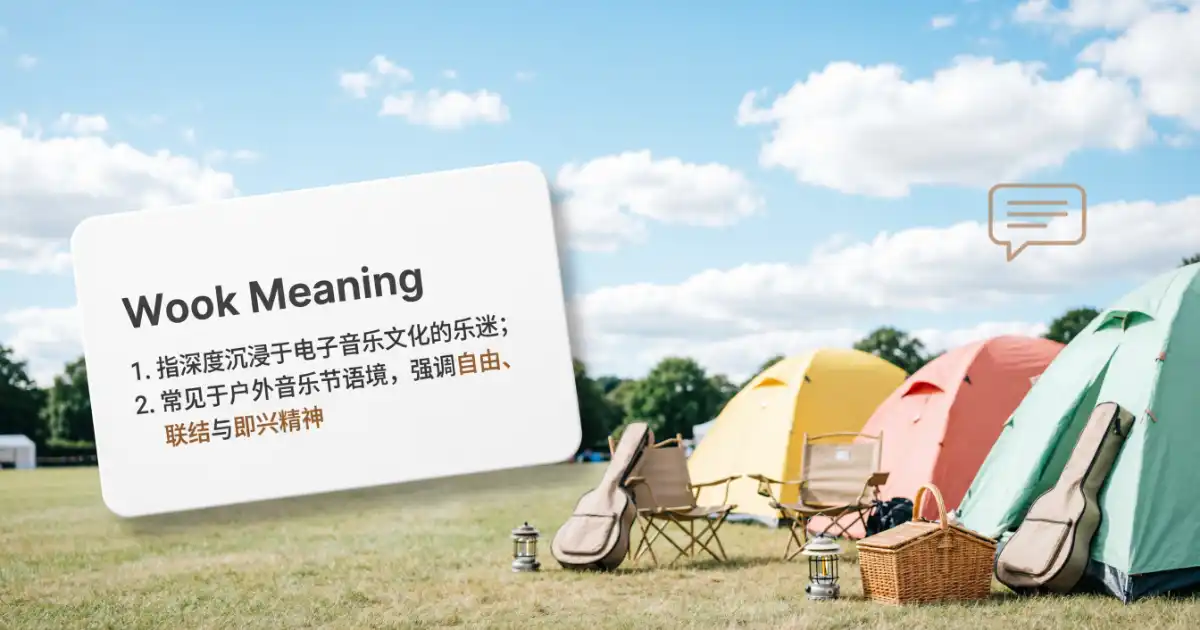
Wook is slang for a person associated with festival, rave, jam band, or hippie culture, especially someone viewed as carefree, unconventional, messy, or heavily involved in the music festival lifestyle.
The word can be playful or insulting depending on the situation. In some communities, people use wook affectionately to describe a festival regular, while others use it for someone they see as irresponsible, unhygienic, or always looking for free food, rides, tickets, or other favors.
Introduction
If you have seen the word wook on social media, at a music festival, or in conversations about EDM and jam bands, you may have wondered what it actually means. It is not a standard English word, and its meaning depends heavily on the community and the way someone uses it.
The term is especially associated with festival culture and alternative music communities. Online, it can describe a particular type of festival personality, style, or behavior. Someone might jokingly call themselves a wook after spending several days camping at a festival,
while another person might use the same word to criticize someone for being messy or constantly asking other people for things.
This guide explains what wook means, where the slang comes from, how people use it, and why the tone can change from friendly to insulting. You will also see examples that make the meaning easier to understand in everyday conversations and online posts.
What Does Wook Mean?
A wook is generally a person associated with a free spirited, unconventional, and heavily festival oriented lifestyle. The stereotype is particularly common around jam band concerts, EDM events, bass music communities, raves, and large music festivals.
The word can describe more than someone’s appearance. It often refers to a combination of lifestyle, behavior, music interests, and attitude.
A person described as a wook might be portrayed as someone who:
- Frequently attends music festivals or concerts
- Travels from one event to another
- Has a relaxed or unconventional lifestyle
- Dresses in distinctive festival clothing
- Spends a lot of time around alternative music communities
- Has a messy or carefree reputation
- Relies heavily on friends or other festivalgoers
- Does not care much about conventional social expectations
However, these are stereotypes rather than rules. A person can enjoy festivals, wear unconventional clothing, or follow a jam band without being a wook.
The word is also flexible. One person might use it as a friendly nickname, while another might use it to criticize someone’s behavior.
Wook Meaning in Slang and Social Media
On social media, wook is usually used as informal slang connected to festival culture. It often appears in jokes, memes, comments, videos, and conversations about concerts or rave communities.
For example, someone might post:
- I became a complete wook after three days at the festival.
- That campsite has serious wook energy.
- He looks like a wook after living at festivals all summer.
- The crowd was full of wooks dancing until sunrise.
In these examples, the word is not necessarily meant as a serious insult. It can simply point to a recognizable festival stereotype.
Online communities also use the word humorously to exaggerate someone’s behavior. A person who has not showered after a long camping weekend might jokingly say they have entered their wook era.
The tone comes from context. A friend saying it jokingly is very different from a stranger using it to insult someone’s appearance or lifestyle.
Wook Meaning in Festival Culture
Festival culture is where the word has much of its modern identity.
A festival wook is often imagined as someone who spends a significant amount of time following concerts, camping at events, meeting other festivalgoers, and participating in alternative music communities.
The stereotype may include unusual clothing, long or messy hair, a backpack, camping gear, and a generally unconventional appearance. However, appearance alone does not define the term.
Behavior is often more important.
In its negative sense, wook can describe someone who repeatedly asks other people for food, money, rides, tickets, cigarettes, or other favors. It can also refer to someone who behaves inconsiderately at a festival or treats the community as a source of free resources.
In its more positive sense, the word can describe someone who is deeply connected to festival life, music, travel, creativity, and community.
That difference explains why you may see the same word used as both an insult and a compliment.
Is Wook an Insult?
Wook can be an insult, but it is not always insulting.
The meaning depends on the speaker, audience, and situation.
| Context | Meaning | Tone | Example |
|---|---|---|---|
| Festival friends | Festival regular or eccentric friend | Playful | You are such a wook |
| Meme or joke | Chaotic festival personality | Humorous | This campsite is full wook mode |
| Negative description | Messy or inconsiderate person | Critical | That guy is acting like a wook |
| Music community | Alternative festival enthusiast | Neutral or friendly | He is a longtime wook |
| Online argument | Someone seen as irresponsible | Insulting | Stop acting like a wook |
If you are not familiar with the people involved, it is safer to understand the context before using the word toward someone directly.
Where Did the Word Wook Come From?
The exact origin of wook is not completely settled.
A common explanation connects the word to Wookiee, the fictional species from Star Wars. The shortened form is often explained as a reference to the stereotypical long or unkempt hair associated with festival hippies. Some slang references specifically describe wook as a clipping of wookie.
The term has also been associated with older jam band and festival communities. References to the word appear in discussions surrounding hippie, touring, and concert culture, where it developed as slang for a particular type of festival attendee.
Over time, the meaning expanded. What began as niche music scene slang became more widely recognized through online forums, memes, social media, EDM communities, and festival content.
Because slang develops informally, it is difficult to identify one person, date, or event that definitively created the modern meaning.
What Is a Typical Wook Stereotype?
The stereotype varies between communities, but several traits commonly appear in descriptions of a wook.
A stereotypical wook may be portrayed as:
- Deeply interested in live music
- A frequent festival traveler
- Relaxed about conventional routines
- Unconventional in appearance
- Comfortable with camping and outdoor living
- Connected to jam band or electronic music communities
- Social and highly community oriented
- Sometimes disorganized or careless
- Occasionally dependent on other people’s generosity
It is important not to treat this stereotype as a factual description of every person who attends festivals.
The term is a cultural label, not an objective category. Two people can attend the same festival and have completely different lifestyles.
Wook vs. Hippie
Wook and hippie can overlap, but they are not identical.
A hippie is a much broader cultural term associated with counterculture, alternative lifestyles, peace, nature, community, and other ideas. Wook is more closely tied to a specific festival and music scene stereotype.
| Term | Meaning | Best Use | Example |
|---|---|---|---|
| Wook | Festival oriented, unconventional person | Festival and music slang | He is a longtime wook |
| Hippie | Broad counterculture identity or stereotype | General cultural discussion | She has a hippie lifestyle |
| Raver | Person who participates in rave culture | Electronic music events | He is a regular raver |
| Festivalgoer | Person attending a festival | Neutral description | Thousands of festivalgoers arrived |
Someone can be both a hippie and a wook, but the terms do not automatically mean the same thing.
Examples of Wook in a Sentence
Here are some natural examples of how the word can appear in casual conversation.
Example 1
That guy has been at every festival this summer. Total wook.
Here, wook describes someone who spends a lot of time attending festivals.
Example 2
I turned into a wook after four days of camping.
This is a humorous use. The speaker is joking about becoming messy or adopting a carefree festival lifestyle.
Example 3
The festival parking lot was packed with wooks.
This uses the word as a broad label for people associated with the festival scene.
Example 4
He gave me some food when I forgot mine. Not all wooks are bad.
Here, the speaker is acknowledging the stereotype while describing a positive experience.
Example 5
That outfit is giving serious wook energy.
This is an informal social media style of using the word to describe a distinctive festival look or vibe.
Common Situations Where You May See Wook
You are most likely to encounter wook in conversations involving:
- EDM and bass music
- Jam bands
- Music festivals
- Raves
- Festival camping
- Alternative music communities
- Concert memes
- Social media discussions about festival culture
- Online communities centered around live music
The word is much less appropriate in formal writing, professional communication, academic work, or serious business conversations.
If you are writing a professional email, describing someone at work, or communicating with someone who may not know festival slang, use a more specific description instead.
Is Calling Someone a Wook Rude?
It can be.
The word is often used jokingly, but it can also carry negative assumptions about hygiene, responsibility, money, lifestyle, or behavior. Calling someone a wook based only on their clothes or appearance can therefore come across as judgmental.
If you are describing a real situation, it is often clearer to describe the actual behavior.
For example, instead of saying:
He is such a wook.
You could say:
He kept asking everyone for free food and a ride home.
The second sentence tells the reader exactly what happened without relying on a stereotype.
This is especially useful when you are speaking to someone outside festival culture who may not understand the slang.
Common Mistakes About Wook
Assuming every festivalgoer is a wook
Going to festivals does not automatically make someone a wook. The word refers to a stereotype associated with particular lifestyles and behaviors.
Thinking wook always means dirty
Messiness or poor hygiene is part of some negative stereotypes, but the term can also refer more broadly to festival culture and an unconventional lifestyle.
Treating wook as a formal word
Wook is informal slang. It is best suited to casual conversations, social media, music communities, and festival discussions.
Assuming the word is always offensive
Some people use wook affectionately or even describe themselves that way. Others use it negatively. Context determines the tone.
Assuming the origin is completely proven
The connection to Wookiee is widely repeated, but the precise development of the slang is not fully documented. It is better to describe the origin as a common explanation rather than an unquestionable fact.
Conclusion
Wook is informal slang mainly associated with music festivals, rave communities, jam bands, and alternative music culture. It usually describes a person with a carefree and unconventional festival lifestyle, although the word can also carry negative ideas about messiness, irresponsibility, or relying on others.
The meaning depends heavily on context. Some people use wook as a joke or term of affection, while others use it as criticism. The word is therefore best understood as a cultural stereotype rather than a precise description of a particular type of person.
If you see wook in a text, meme, or festival conversation, look at the surrounding context. That will usually tell you whether the speaker means a festival enthusiast, a humorous stereotype, or a criticism of someone’s behavior.
FAQs About Wook
What does wook mean in slang?
Wook usually refers to a person associated with festival, rave, jam band, or hippie culture who has a carefree, unconventional, or sometimes messy reputation.
Is wook a bad word?
Wook is not automatically offensive, but it can be insulting when used to criticize someone’s appearance, lifestyle, or behavior.
Is wook short for Wookiee?
The word is commonly explained as a shortened form of Wookiee, although the exact history of the slang is not completely certain.
What does wook mean at a music festival?
At a music festival, wook can describe a highly involved festival regular who embraces an unconventional lifestyle. It can be affectionate, humorous, or critical depending on context.
Is wook the same as hippie?
Not exactly. Hippie is a broader cultural term, while wook is more specifically associated with festival and music culture.
Can you call yourself a wook?
Yes. Some people use the term for themselves as a humorous or affectionate description of their festival lifestyle.
Is wook used on social media?
Yes. The word appears in festival memes, music communities, social media posts, and discussions about rave and jam band culture.
What is wook energy?
Wook energy is an informal phrase describing a carefree, unconventional, chaotic, or strongly festival oriented vibe. It is usually used humorously.