
Quick Answer
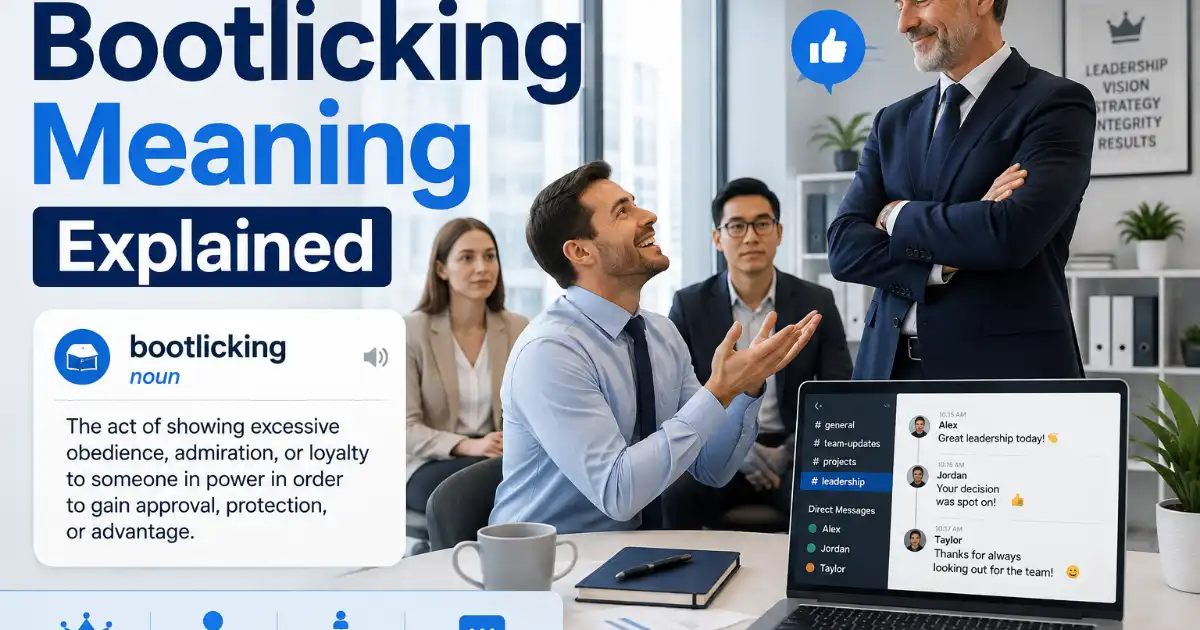
Bootlicking means showing excessive obedience, admiration, or loyalty toward a person in power, usually to gain approval, protection, status, or some personal advantage. The word describes behavior that goes beyond normal respect or cooperation.
Someone may call another person a bootlicker when they believe that person constantly supports a boss, politician, authority figure, or powerful group even when criticism would be reasonable. The term is usually negative and can sound insulting.
Introduction
People often search for bootlicking after seeing the word in a social media argument, political discussion, workplace conversation, or online comment. The term can describe someone who appears overly eager to please a powerful person. It may also appear in debates about bosses, government officials, wealthy individuals, celebrities, institutions, or other people with influence.
The word has a strong negative tone, so understanding the context matters. Supporting a manager, respecting an authority figure, or agreeing with someone’s decision does not automatically count as bootlicking. The term usually suggests that a person gives excessive praise or obedience because they want something in return or fear losing approval or protection.
This guide explains what bootlicking means, how people use the term, how it differs from ordinary respect, and how to recognize the behavior in everyday situations. It also covers common examples, related expressions, mistakes people make when using the word, and frequently asked questions.
What Does Bootlicking Mean?
Bootlicking describes behavior in which someone acts extremely submissive, flattering, or loyal toward a person or group with power. The person may praise authority excessively, defend questionable decisions, or avoid criticism because they want approval or some other benefit.
The term comes from the figurative image of someone being so submissive to a powerful person that they would metaphorically lick that person’s boots. It does not describe a literal action in normal usage. Instead, it criticizes an attitude of excessive obedience or servility.
For example, imagine an employee who constantly praises a manager, agrees with every decision, and publicly defends the manager even when the decision clearly creates problems for the team. A coworker might describe that behavior as bootlicking.
However, context matters. An employee who agrees with a manager because they genuinely believe the decision makes sense is not necessarily bootlicking. The criticism usually involves excessive flattery, submissiveness, or self serving loyalty.
Bootlicking Meaning in Simple Terms
In simple language, bootlicking means trying very hard to please someone powerful, often at the expense of honesty or personal principles.
A person may behave this way because they want:
- Favor from a boss or authority figure
- Better treatment
- A promotion or other advantage
- Protection from criticism
- Social status
- Approval or recognition
- Access to an influential person
The important idea involves the relationship between power and behavior. The term often appears when someone seems willing to overlook problems or abandon independent judgment to stay on the good side of a powerful person.
Bootlicking vs Respect: What Is the Difference?
Respect and bootlicking can look similar on the surface, but they carry very different meanings.
| Term | Meaning | Tone | Example |
|---|---|---|---|
| Respect | Showing regard for someone or their position | Usually positive | An employee respects a manager’s experience |
| Cooperation | Working with someone toward a shared goal | Neutral or positive | A team follows an agreed workplace plan |
| Loyalty | Supporting someone because of trust or shared values | Usually positive | A friend supports someone during a difficult time |
| Flattery | Giving praise, sometimes excessively | Can be positive or negative | Someone repeatedly praises a boss |
| Bootlicking | Excessive submission or praise toward power | Strongly negative | Someone defends every decision their boss makes |
The key difference involves excess and motivation. Respect does not require abandoning independent judgment. Bootlicking often implies that someone puts pleasing a powerful person above honesty, fairness, or personal principles.
What Does It Mean to Call Someone a Bootlicker?
A bootlicker is a person who engages in bootlicking behavior. The word usually acts as an insult or criticism.
For example:
He agreed with every decision the executive made, so people started calling him a bootlicker.
The speaker is not simply saying that the person respects the executive. The accusation suggests that the person gives excessive support because of the executive’s power.
Because bootlicker carries a harsh tone, people should use it carefully. Calling someone a bootlicker during an argument can make the conversation more hostile, especially when the accusation lacks evidence about the person’s motives.
Common Examples of Bootlicking
Bootlicking can appear in many settings because power exists in workplaces, schools, politics, organizations, and online communities.
Workplace Example
An employee constantly praises a supervisor and agrees with every decision, even when the rest of the team raises reasonable concerns.
Someone might describe this as bootlicking if the behavior appears motivated by a desire for special treatment or career advancement.
School Example
A student repeatedly praises a teacher and supports every classroom decision simply because they want special recognition or favorable treatment.
Normal participation or respect does not automatically make this bootlicking. The accusation depends on whether the behavior seems excessive or self serving.
Online Example
A social media user defends a powerful influencer in every disagreement, dismisses all criticism, and attacks anyone who questions the influencer.
Other users might call that behavior bootlicking because the supporter appears unwilling to evaluate the influencer independently.
Political Example
Someone may strongly support a political leader and defend every action without considering evidence or reasonable criticism. Critics might describe that behavior as bootlicking.
However, political disagreement alone does not prove bootlicking. People can sincerely hold strong political beliefs.
Organizational Example
A lower ranking employee constantly praises senior executives and dismisses legitimate concerns from coworkers because they want to gain favor with leadership.
That pattern may reasonably lead others to describe the behavior as bootlicking.
Signs of Bootlicking Behavior
No single behavior proves that someone is a bootlicker. The term usually describes a broader pattern.
Common signs may include:
- Excessive praise toward people with power
- Agreeing with every decision without independent evaluation
- Defending authority figures despite clear evidence of wrongdoing
- Treating powerful people differently from ordinary people
- Attacking critics mainly to protect a powerful person’s reputation
- Seeking personal advantages through excessive flattery
- Ignoring unfair treatment when speaking up could create personal risk
- Changing opinions quickly to match the preferences of someone influential
These signs become more meaningful when they appear repeatedly. A single compliment or agreement does not establish a pattern of bootlicking.
Why Do People Engage in Bootlicking?
People can behave this way for different reasons. Personal gain represents one possible motivation, but it is not the only one.
Some people want approval from authority figures. Others may believe that staying close to powerful people offers career opportunities, social advantages, or protection.
Fear can also influence behavior. Someone who depends heavily on a job or position may avoid challenging a powerful supervisor because they worry about consequences.
Social pressure can play a role as well. In some groups, people may copy the opinions of influential members because they want to belong.
It is also possible for people to sincerely support a powerful person without realizing that outsiders perceive their behavior as excessive. That distinction matters because calling someone a bootlicker involves an interpretation of their behavior and motives.
Bootlicking in Workplace Culture
Workplaces provide many situations where people may use this term. Employees often interact with managers, executives, clients, and other people who have authority or influence.
A person who regularly agrees with leadership can become the target of a bootlicking accusation, especially if coworkers believe that the person receives special treatment.
However, workplace dynamics require careful judgment. Following a manager’s instructions, supporting a team decision, or praising good work does not automatically qualify.
A useful distinction is whether the employee can disagree professionally when necessary. Someone who can support good decisions while raising legitimate concerns demonstrates independent judgment. Someone who appears unable or unwilling to question authority may attract accusations of bootlicking.
Bootlicking in Social Media Conversations
The term appears frequently in online arguments because social media encourages short, emotionally charged labels.
Someone might call another user a bootlicker after seeing them defend a celebrity, politician, company executive, influencer, or moderator.
Online, the word often functions as an insult rather than a carefully established description. A person may use it simply because another user disagrees with them.
For that reason, readers should consider the surrounding conversation. Ask whether the person actually shows excessive loyalty to power or whether someone simply uses the label to dismiss an opposing opinion.
Is Bootlicking Always About Money?
No. Money can motivate bootlicking, but the behavior can involve other rewards.
A person might seek recognition, social status, job security, access, protection, popularity, or personal approval. In some cases, the person may simply want to remain close to someone influential.
The common thread involves excessive deference toward power, not necessarily a direct financial reward.
Bootlicking vs Sucking Up
Sucking up and bootlicking have similar meanings, but they do not always carry exactly the same emphasis.
Sucking up usually means trying to gain someone’s favor through excessive praise or friendliness. People commonly use it in workplace and social situations.
Bootlicking carries a stronger connection to power, authority, and submission. It often suggests that someone supports a powerful person in an excessively obedient or servile way.
| Term | Main Idea | Typical Context | Strength |
| Sucking up | Trying to gain someone’s favor | Workplace or social situations | Informal |
| Flattery | Giving praise, sometimes excessively | Many situations | Mild to strong |
| People pleasing | Trying hard to keep others happy | Personal and social relationships | Usually neutral |
| Bootlicking | Excessive submission toward power | Authority and hierarchy | Strongly negative |
| Brown nosing | Excessive effort to gain favor | Workplace or authority | Negative |
Similar Words and Related Phrases
Several expressions overlap with bootlicking, although their meanings are not identical.
Brown nosing describes excessive attempts to gain favor, especially from a boss or authority figure.
Sucking up means trying to please someone because the person wants approval or another benefit.
Kissing up has a similar meaning and often appears in casual workplace conversations.
Yes man describes someone who agrees with another person, especially a leader, instead of offering independent opinions.
Servile describes an excessively submissive attitude toward someone more powerful.
These terms can overlap, but bootlicking specifically emphasizes excessive deference to power.
When Is Bootlicking Used as an Insult?
The word is usually negative and can sound aggressive. Someone may use it to accuse another person of sacrificing independence or principles to please authority.
For example:
Calling every coworker who supports management a bootlicker is unfair.
The sentence shows why context matters. Supporting management does not automatically prove excessive loyalty.
A more precise description can sometimes communicate the issue better. Instead of immediately labeling someone a bootlicker, a person could describe the specific behavior, such as excessive praise, refusing to acknowledge problems, or defending a decision without considering evidence.
Common Mistakes When Using Bootlicking
People often misuse the word by treating any support for authority as bootlicking.
Mistake 1: Assuming Agreement Means Bootlicking
Someone can agree with a boss, teacher, politician, or leader for legitimate reasons. Agreement alone does not establish excessive loyalty.
Mistake 2: Ignoring Context
The same behavior can have different meanings depending on the situation. A compliment after someone does excellent work does not automatically represent flattery.
Mistake 3: Treating the Word as Neutral
Bootlicking usually carries a strong negative judgment. It can sound insulting in professional or personal conversations.
Mistake 4: Assuming Motivation Without Evidence
A person may appear overly supportive without actually seeking a reward. It is better to describe observable behavior than confidently claim to know someone’s motives.
Mistake 5: Using It Only Because Someone Disagrees
Political or workplace disagreement does not automatically make one side a bootlicker. The term describes a particular pattern of excessive deference, not ordinary disagreement.
How to Respond If Someone Calls You a Bootlicker
If someone uses the word during an argument, responding calmly can prevent the conversation from becoming more hostile.
Ask what specific behavior they consider excessive. For example, you might say, What makes you think my support is excessive?
Then explain your actual reasoning. If you support a decision because you believe it works, explain why. If you disagree with some decisions but support others, make that distinction clear.
This approach shifts the conversation away from labels and toward evidence, reasoning, and specific behavior.
Conclusion
Bootlicking describes excessive praise, obedience, or submission toward someone with power or authority. The term usually carries a negative meaning and suggests that the person may be seeking approval, protection, status, or another advantage.
The most important distinction is between respect and excessive deference. Supporting a boss, leader, teacher, or public figure does not automatically make someone a bootlicker. Context, consistency, and the person’s behavior toward criticism all matter.
When you see the word online or hear it in conversation, look beyond the label. Consider what the person actually did and whether the behavior shows genuine support or an excessive desire to please someone powerful.
Read: FN Meaning
Read: HYB Meaning in Text
Read: MLG Meaning
Read: TFTI Meaning in Text
Read: IKTR Meaning in Text
Frequently Asked Questions About Bootlicking
What does bootlicking mean in simple words?
Bootlicking means excessively pleasing, praising, or obeying someone who has power or authority, often because the person wants approval, protection, status, or another advantage.
Is bootlicking a bad word?
Yes. Bootlicking usually has a strongly negative meaning. Calling someone a bootlicker generally criticizes their behavior and may function as an insult.
What is a bootlicker?
A bootlicker is someone who appears excessively submissive or flattering toward a powerful person or authority figure. The term usually suggests that the person wants approval or another benefit.
Is bootlicking the same as respecting someone?
No. Respect can involve admiration and cooperation while still allowing independent thought and reasonable criticism. Bootlicking suggests excessive submission or praise.
What is another word for bootlicking?
Depending on the context, related expressions include sucking up, brown nosing, kissing up, sycophancy, and excessive flattery. Each expression has slightly different emphasis.
Can someone bootlick without getting money?
Yes. A person may seek approval, status, protection, career opportunities, social access, or personal recognition instead of money.
Is supporting a boss considered bootlicking?
Not necessarily. Supporting a boss can reflect genuine agreement, professionalism, or teamwork. The term usually applies when support becomes excessive, submissive, or clearly self serving.
Why do people call others bootlickers online?
People often use the term during arguments involving authority, politics, celebrities, influencers, or institutions. Sometimes it describes a genuine pattern of excessive loyalty, while other times it simply acts as an insult against someone with a different opinion.