
Quick Answer
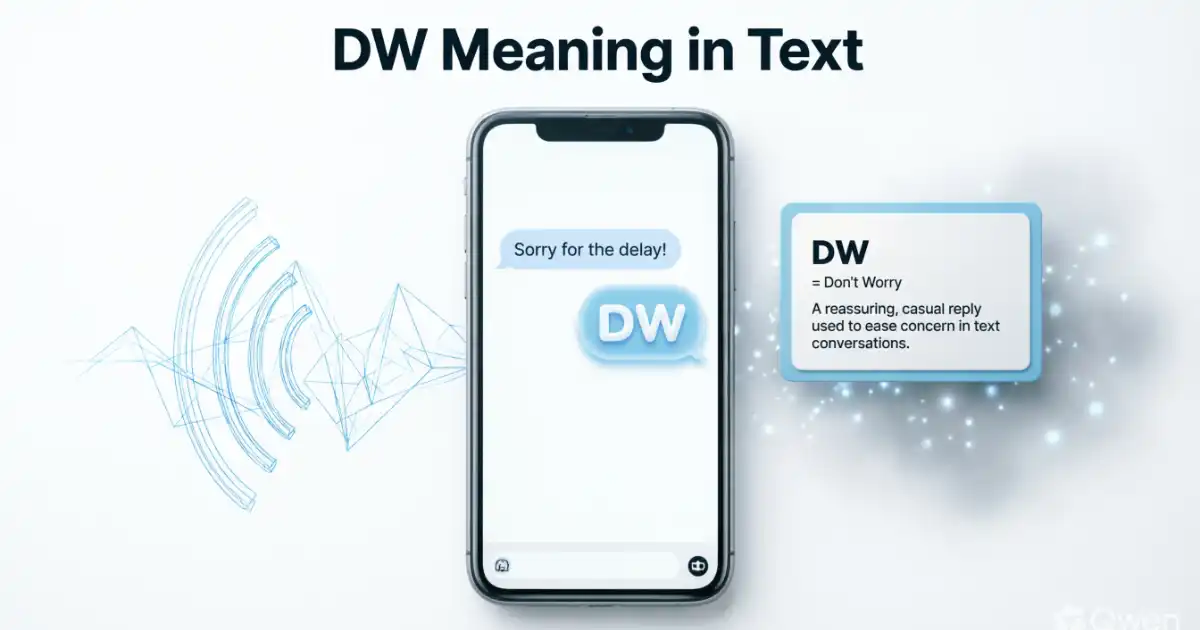
DW usually means don’t worry in text messages, social media, and online chats. People use it to reassure someone, dismiss a small concern, respond to an apology, or say that everything is okay. For example, if someone texts, “Sorry I’m running late,” you can reply, “DW, take your time.” In some contexts, DW can also mean dear wife or darling wife, so the surrounding conversation matters.
Introduction
Short texting abbreviations can make online conversations faster, but they can also be confusing when you see one for the first time. DW is a good example. You might see it in a text message, group chat, Instagram DM, Snapchat conversation, gaming chat, or social media comment and wonder what the person is trying to say.
In most casual conversations, DW means don’t worry. It is a quick way to reassure someone, tell them that a problem is not serious, or let them know they do not need to apologize. The abbreviation can make a response feel relaxed and friendly because it removes the need to type the full phrase.
However, DW does not always have the same meaning. In some online communities and family related conversations, it can mean dear wife or darling wife. The difference is easy to understand when you look at the sentence around it.
This guide explains the most common DW meaning, how people use it, examples, tone, alternative meanings, and how to respond naturally.
What Does DW Mean in Text?
In texting, DW means don’t worry. It is an informal abbreviation made from the first letters of the words don’t and worry. People generally use it when they want to reassure another person or tell them that something is not a big deal.
For example:
“Sorry I forgot to text you back.”
“DW, it’s totally fine.”
Here, DW means don’t worry and tells the other person that the missed message is not a problem.
People also use DW when someone is nervous or concerned:
“I think I’m going to be late.”
“DW, we have plenty of time.”
The abbreviation is especially common in casual digital communication because people often shorten familiar phrases when texting.
DW Meaning at a Glance
| Meaning | Where It Is Used | Simple Explanation | Example |
|---|---|---|---|
| Don’t worry | Texting and social media | Reassurance | “DW, it’s okay.” |
| Dear wife | Some personal or online conversations | Refers to a wife | “My DW made dinner.” |
| Darling wife | Some online communities | Affectionate reference to a wife | “My DW is coming too.” |
The first meaning is the one you should usually consider when DW appears by itself in a casual text.
How Is DW Used in Texting?
DW is commonly used when someone wants to make another person feel less concerned. It can respond to an apology, a mistake, a delay, a question, or a stressful situation.
For example:
After an apology
“Sorry I missed your call.”
“DW, call me whenever you’re free.”
After a delay
“I’m going to be 15 minutes late.”
“DW, I’m not in a hurry.”
When someone is worried
“I’m nervous about tomorrow’s presentation.”
“DW, you’ll do great.”
When someone makes a small mistake
“I accidentally sent you the wrong file.”
“DW, just send the right one.”
In each case, DW communicates reassurance rather than introducing a completely new idea.
What Does DW Mean on Social Media?
On social media, DW usually still means don’t worry. The meaning generally stays the same across comments, direct messages, group chats, and other casual online conversations.
For example, someone might comment:
“I forgot to add the date to the post.”
Another person might respond:
“DW, you can edit it.”
You may also see lowercase dw instead of uppercase DW. There is normally no difference in meaning.
The lowercase version often looks more natural in casual texting:
“dw, you’re good”
The uppercase version can simply reflect a person’s typing style:
“DW, it’s fine!”
Neither automatically changes the meaning.
Common Ways People Use DW
The meaning of DW is simple, but people use it in several situations. Understanding these situations helps you recognize the intended tone.
Reassuring Someone
This is one of the most common uses.
“DW, everything is handled.”
The speaker is telling the other person that there is no reason to be concerned.
Responding to an Apology
DW can mean that the speaker accepts an apology and does not want the other person to feel bad.
“Sorry I forgot your birthday.”
“DW, I understand.”
Dismissing a Small Problem
Sometimes DW means that something is not important enough to worry about.
“I spilled a little coffee on the table.”
“DW, I’ll clean it up.”
Telling Someone Not to Stress
DW can also be used when someone is nervous about an upcoming event.
“I’m worried about the interview.”
“DW, just be yourself.”
Offering Reassurance in a Group Chat
The abbreviation can keep a group conversation quick and casual.
“Sorry guys, I’m running behind.”
“DW, we haven’t left yet.”
DW Examples in Real Conversations
Seeing DW in complete conversations makes the meaning easier to understand.
Example 1: Late reply
Alex: Sorry for the late reply.
Sam: DW, I was busy too.
Here, DW means don’t worry.
Example 2: School
“I forgot to bring the notes today.”
“DW, I can send you pictures.”
The response reassures the person that the mistake is manageable.
Example 3: Work
“I might need another hour to finish this.”
“DW, just send it when it’s ready.”
This use is casual and supportive.
Example 4: Making plans
“I’m running late for dinner.”
“DW, we’ll wait for you.”
Again, DW means there is no need to worry.
Example 5: Online conversation
“I accidentally deleted my comment.”
“DW, you can post it again.”
The abbreviation keeps the response short without sounding overly formal.
Does DW Sound Friendly or Rude?
DW is generally friendly and reassuring, but tone depends on the conversation. A short message can sometimes feel dismissive if the other person is discussing something serious.
Compare these examples:
“DW, everything is okay.”
This sounds reassuring.
But:
“dw.”
This could feel brief or uninterested if someone is sharing a serious concern.
That does not mean DW itself is rude. The relationship between the people, the subject of the conversation, punctuation, and the rest of the messages all affect how the response feels.
If someone is genuinely upset, a longer response may be more appropriate than simply writing DW.
For example:
“DW, I understand why you’re upset. We can figure it out.”
This gives reassurance while also acknowledging the person’s feelings.
Does DW Mean Dear Wife?
Yes. DW can also mean dear wife or darling wife in some online communities and personal conversations. This meaning is much easier to identify from context. Oxford’s dictionary lists both darling wife or dear wife and don’t worry as informal meanings of DW.
For example:
“My DW is making dinner tonight.”
Here, DW cannot mean don’t worry. The writer is referring to their wife.
Another example:
“DW and I are going to the store.”
Again, the context shows that DW refers to a wife.
This meaning is less likely when someone simply sends you “DW” as a reply to an apology or concern.
How to Tell Which DW Meaning Someone Intended
Context is the easiest way to determine what DW means.
| Message | Likely Meaning |
|---|---|
| “Sorry I’m late.” “DW!” | Don’t worry |
| “DW, I’ll handle it.” | Don’t worry |
| “My DW loves cooking.” | Dear wife |
| “DW and I went shopping.” | Dear wife |
| “I forgot the tickets.” “DW, we can get more.” | Don’t worry |
If DW appears as a response to something you said, don’t worry is usually the intended meaning.
If DW appears before or after a possessive or relationship statement such as “my DW,” it may refer to someone’s wife.
How Do You Respond to DW?
If someone sends you DW meaning don’t worry, you usually do not need a complicated response. A simple acknowledgment works well.
You can reply with:
“Thanks!”
“Okay, appreciate it.”
“Got it.”
“Thanks, I feel better.”
“Alright, sounds good.”
If the person says:
“DW, I’ve got it.”
You might simply say:
“Thanks, I appreciate it.”
Your response should match the situation. A casual DW usually deserves a casual reply.
Is DW the Same as No Worries?
DW and no worries have similar meanings, but they are not exactly the same expression.
| Term | Meaning | Typical Use | Example |
|---|---|---|---|
| DW | Don’t worry | Reassuring someone | “DW, you’re fine.” |
| No worries | It is okay | Accepting an apology or request | “No worries, it happens.” |
| NP | No problem | Saying something is not a problem | “NP, happy to help.” |
| It’s okay | Reassurance | More direct and conversational | “It’s okay, really.” |
DW is particularly useful when you want to tell someone not to stress about something.
Common Mistakes When Using DW
Understanding DW is easy, but a few mistakes can cause confusion.
Assuming DW Always Means Don’t Worry
Most of the time in casual texting, that is the correct interpretation. However, DW can refer to a wife in certain contexts. Look at the surrounding words before deciding what it means.
Using DW in Formal Writing
DW is informal. It works well in texts, DMs, group chats, and casual online conversations.
It is usually not appropriate for formal emails, professional reports, academic assignments, or official documents.
Instead of:
“DW about the delay.”
A professional message could say:
“Please do not worry about the delay.”
Using Only DW for a Serious Situation
If someone is dealing with a serious problem, simply saying DW may sound dismissive.
Instead, acknowledge the situation and offer useful support:
“I’m sorry you’re dealing with that. DW, I’m here if you need help.”
Assuming Capitalization Changes the Meaning
DW, dw, and Dw generally carry the same meaning in casual messaging. Capitalization usually reflects the person’s typing style rather than a different definition.
Conclusion
DW usually means don’t worry in texting, social media, and online chats. People use it to reassure someone, respond to an apology, reduce concern, or show that a small problem is not a big deal.
The main thing to remember is context. In most casual messages, DW means don’t worry. In some personal or online communities, it can also mean dear wife or darling wife. If you look at the words around DW, the intended meaning is usually easy to identify.
Frequently Asked Questions About DW
What does DW mean in a text?
DW usually means don’t worry. It is an informal texting abbreviation used to reassure someone, dismiss a small concern, or respond to an apology.
What does DW mean on social media?
On social media, DW usually means don’t worry. You may see it in comments, DMs, group chats, and other casual conversations.
Is DW slang?
DW is commonly described as texting slang or internet slang, although abbreviation or initialism is a more precise description. It is formed from the first letters of don’t worry.
What does DW mean from a girl?
If a girl texts DW in a casual conversation, it usually means don’t worry. The meaning does not change simply because of the sender’s gender.
What does DW mean from a guy?
If a guy sends DW in response to an apology, question, or concern, it usually means don’t worry. Context determines the meaning, not the sender’s gender.
Can DW mean dear wife?
Yes. DW can mean dear wife or darling wife in some online and personal conversations. For example, “My DW is coming home soon” refers to a wife, not the phrase don’t worry.
Is DW rude?
Usually, no. DW is normally friendly and reassuring. However, a very short “dw” can feel dismissive when someone is talking about a serious or emotional issue.
What is the difference between DW and no worries?
Both can reassure someone, but DW directly shortens don’t worry, while no worries commonly means that something is okay or that an apology or request is not a problem.