
Quick Answer
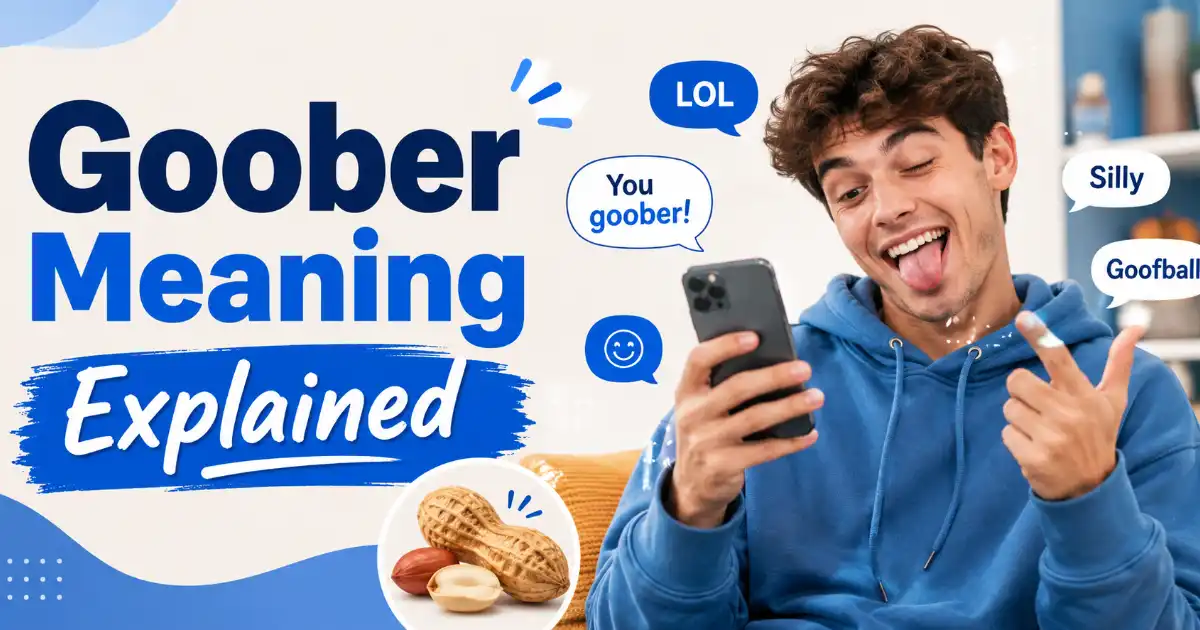
Goober is an informal word for a silly, goofy, awkward, or lovable person. People often use it playfully to tease a friend, family member, child, or pet without seriously insulting them. It can also mean peanut, especially in the phrase goober pea, and older uses of the word can refer to a foolish or naive person. The exact tone depends on context, but modern everyday use usually feels humorous and affectionate.
Introduction
If someone calls a friend a goober, they usually are not delivering a serious insult. The word often describes someone who acts goofy, makes an awkward mistake, or behaves in a way that others find amusing. A parent might call a playful child a goober, friends might use it after someone makes a silly comment, and pet owners often use it as a cute nickname for an animal doing something ridiculous.
People also encounter goober in memes, social media posts, text messages, television, and casual conversations. That can make the word confusing because its tone can change depending on who says it and why. In one situation, goober sounds affectionate. In another, it can describe someone as foolish or clueless.
This guide explains what goober means, where the word comes from, how people use it today, and how it differs from words such as goofball, nerd, dork, and dummy. It also provides natural examples so readers can recognize the intended meaning when they see the term online or hear it in conversation.
What Does Goober Mean?
The most common modern meaning of goober is a silly, goofy, or slightly foolish person. The word usually carries a lighthearted tone rather than serious hostility.
For example, if someone accidentally puts their phone in the refrigerator and later realizes what they did, a friend might laugh and say, “You’re such a goober.” The speaker probably does not mean that the person lacks intelligence. Instead, the comment points out the funny mistake.
Goober can also describe someone who behaves in an awkward or ridiculous way. The person does not necessarily need to make a mistake. A friend dancing badly at a party, making strange faces, or telling an obviously silly joke might earn the nickname.
The word can also function as an affectionate nickname. Parents may call children goobers, couples may use it jokingly with each other, and pet owners often describe dogs or cats as goobers when they act unusually silly.
There is another important meaning. Goober can mean a peanut, particularly in Southern American English and in expressions such as goober pea. This meaning comes from a different historical use of the word and has nothing to do with calling someone foolish.
| Meaning | Where It Is Used | Simple Explanation | Example |
|---|---|---|---|
| Silly person | Casual conversation | Someone who acts goofy or foolish | “You’re such a goober.” |
| Affectionate nickname | Family, friends, pets | A playful name for someone lovable and silly | “Come here, you little goober.” |
| Peanut | Food and regional usage | Another word for a peanut | “The recipe calls for goober peas.” |
| Foolish or naive person | Older usage | Someone viewed as inexperienced or foolish | “He was treated like a goober.” |
Is Goober a Bad Word?
Goober is usually not a harsh or offensive word. Most modern uses sound playful, teasing, or affectionate.
Still, tone matters. Calling a close friend a goober after they make a silly mistake will probably sound harmless. Calling a stranger a goober during an argument could sound dismissive or insulting.
The relationship between the speakers also matters. A word that sounds cute between friends might feel patronizing when used by someone with authority, especially toward an adult.
A useful rule is simple: if the situation feels friendly and humorous, goober usually has a soft tone. If the speaker uses it during serious criticism, it may carry a more negative meaning.
How Is Goober Used in Everyday Conversation?
People commonly use goober as a noun and sometimes as a nickname.
Here are several natural examples:
- “You forgot your keys again, you goober.”
The speaker playfully points out a mistake. - “My dog is such a goober.”
The owner describes a dog that behaves in a funny or goofy way. - “Stop being a goober and help me find the remote.”
The speaker jokingly tells someone to stop fooling around. - “Look at that little goober trying to climb onto the couch.”
The word expresses affection toward someone or something behaving foolishly. - “I was a total goober in that meeting.”
The speaker admits that they acted awkwardly or made a silly mistake.
In texting, the word can feel even more playful because people often use it as a nickname or reaction to something funny.
Goober as a Nickname
One of the most common modern uses involves affectionate nicknames.
A person might say:
“Good morning, goober.”
This does not normally mean, “Good morning, foolish person.” Instead, it can communicate familiarity and affection.
Parents sometimes use similar playful names for children. Friends can also use goober when someone has an amusing personality. Pet owners frequently use it because animals can behave in wonderfully ridiculous ways.
The nickname works because the word combines mild criticism with affection. It recognizes silly behavior without making the person feel seriously judged.
Goober as a Term for a Silly Person
When goober refers to a person, it often describes behavior rather than a permanent personality trait.
Someone can be a goober for five minutes without generally being considered foolish. For example, a normally serious coworker might accidentally walk into the wrong conference room and laugh about it afterward. A friend could respond, “Classic goober move.”
The expression focuses on the moment.
That distinction helps explain why goober usually feels softer than stronger insults. The speaker often laughs at the person’s behavior rather than attacking their intelligence, character, or appearance.
What Does Goober Mean on Social Media?
On social media, goober generally keeps its playful meaning. People may use it in captions, comments, memes, or replies when someone behaves in a goofy or unexpectedly funny way.
A post showing a dog sitting upside down might receive a comment such as:
“What a little goober.”
The commenter probably means that the dog looks hilariously silly.
The term can also appear when people describe fictional characters, celebrities, friends, or themselves. Online communities often favor playful language, and goober fits that style because it sounds informal and harmless.
Context remains important. A sarcastic comment can make the same word sound less friendly.
What Does Goober Mean When Talking About a Dog?
When someone calls a dog a goober, the word almost always sounds affectionate.
Dogs often earn this nickname when they:
- Trip over their own feet
- Chase their tail
- Make strange facial expressions
- Sit in unusual positions
- Get excited over simple things
- Steal socks or household objects
- Run around the house for no obvious reason
For example, “My dog is being a goober today” usually means the dog is acting silly or ridiculous in an endearing way.
People can use the same idea for cats and other pets. It does not describe a particular animal breed or behavior scientifically. It simply expresses affection toward a goofy animal.
Goober Can Also Mean Peanut
The slang meaning gets most of the attention today, but goober also has a food related meaning.
In some American regional usage, goober refers to a peanut. The expression goober pea is especially associated with peanuts.
This meaning can appear in older writing, regional speech, food discussions, and cultural references. It can sound unusual to someone who knows goober only as a nickname for a silly person.
Context makes the difference.
If someone says, “That guy is a goober,” they probably mean a silly person. If a discussion involves crops, food, farming, or Southern culinary traditions, goober may refer to a peanut instead.
Where Does the Word Goober Come From?
The word has a long history in American English. The peanut related sense connects to African language influences, particularly words related to peanuts that entered American English through historical contact and usage.
The foolish person sense developed as a separate informal use. Over time, goober became a humorous way to describe someone considered foolish, awkward, or silly.
Modern speakers generally do not think about this history when they use the word. They simply recognize goober as a playful informal term.
Because slang evolves, the meaning has also softened in many everyday situations. What once could describe a foolish person more directly can now function as an affectionate nickname.
Goober vs. Goofball
Goober and goofball have very similar meanings, but their tone can differ slightly.
| Term | Meaning | Tone | Example |
|---|---|---|---|
| Goober | Silly or goofy person | Playful, affectionate | “You little goober.” |
| Goofball | Person who acts silly | Playful, humorous | “He is such a goofball.” |
| Dork | Awkward or socially goofy person | Teasing | “You are such a dork.” |
| Dummy | Someone who makes a foolish mistake | More critical | “You dummy, you left the door open.” |
| Fool | Someone who acts unwisely | More serious | “That was a foolish decision.” |
Goober often sounds especially soft and affectionate. Goofball can describe someone who regularly behaves in a silly way, while dork and dummy may sound more critical depending on context.
Goober vs. Dork, Dummy, and Fool
These words overlap, but they do not carry exactly the same emotional weight.
Dork often describes someone who seems socially awkward, uncool, or amusingly nerdy. Friends may use it affectionately.
Dummy usually points toward a mistake or poor judgment. It can be playful between close friends, but it can also sound insulting.
Fool has a broader and sometimes more serious meaning. It can describe someone who makes an unwise decision or behaves without good judgment.
Goober generally emphasizes harmless silliness. That makes it a good choice when the speaker wants to tease someone without sounding genuinely angry.
When Should Someone Use Goober?
Goober works best in casual, familiar situations.
Good contexts include:
- Talking with close friends
- Joking with family members
- Describing a silly pet
- Reacting to an amusing mistake
- Writing a playful social media caption
- Teasing someone who understands the joke
- Describing one’s own awkward behavior
For example, telling a close friend, “You are such a goober,” can sound warm and funny.
However, avoid assuming that every person will interpret the word positively. Professional communication usually calls for clearer and more neutral language. Calling a coworker a goober may sound overly familiar unless the workplace relationship supports that kind of humor.
When Can Goober Sound Insulting?
Although goober is usually mild, it can become insulting through tone and context.
Someone might use the word sarcastically:
“Sure, let the goober handle the project.”
Here, the speaker does not sound affectionate. The sentence suggests that the person is incompetent or foolish.
The word can also feel condescending when directed at someone who does not share the speaker’s sense of humor.
When in doubt, consider the relationship, setting, and tone before using it. Friendly teasing works best when both people understand the intention.
Common Mistakes About the Word Goober
Several misunderstandings can make the word confusing.
Assuming It Always Means Stupid
Goober does not automatically mean unintelligent. Modern use often focuses on silly behavior rather than intelligence.
Treating It as a Serious Insult
In most casual contexts, goober is much softer than words such as idiot or moron. The surrounding sentence determines how harsh it feels.
Ignoring the Peanut Meaning
Goober can also mean peanut. Food or regional context may signal this meaning.
Using It in Formal Writing
Goober is an informal word. A formal report, academic paper, or professional document usually needs a more precise term.
Assuming Every Person Will Like the Nickname
Even mild teasing can bother someone if the relationship does not support it. Familiarity matters more than the dictionary definition.
Conclusion
Goober usually means a silly, goofy, or lovable person who behaves in an amusing way. Modern speakers often use it as a playful nickname for friends, family members, children, or pets. It usually feels much softer than a serious insult, although sarcasm can change its tone.
The word also has another established meaning: peanut, particularly in regional and historical expressions such as goober pea. Context therefore matters when interpreting the term.
When someone calls another person a goober in a friendly conversation, the safest interpretation is usually that they are teasing them affectionately. Understanding the relationship and tone helps reveal whether the word sounds funny, affectionate, or mildly critical.
Frequently Asked Questions About Goober
What does goober mean in slang?
In slang, goober usually means a silly, goofy, awkward, or mildly foolish person. It often sounds playful rather than genuinely insulting.
Is goober a friendly word?
Usually, yes. Friends and family often use goober as an affectionate nickname. However, tone and context can make it sound sarcastic or insulting.
Does goober mean stupid?
Not necessarily. Goober can describe someone acting foolishly or awkwardly, but it does not automatically mean the person lacks intelligence.
What does goober mean when someone calls a dog one?
Calling a dog a goober usually means the dog is acting silly, goofy, or adorably ridiculous. It normally expresses affection.
Is goober an insult?
Goober can function as a mild insult, but modern usage often makes it playful. The speaker’s tone and relationship with the person determine the intended meaning.
What is another word for goober?
Depending on context, alternatives include goofball, dork, silly person, clown, or dummy. Goofball often comes closest to the playful tone.
Does goober mean peanut?
Yes. Goober can refer to a peanut in certain regional and historical uses, especially in the expression goober pea.
Can goober be used in texting?
Yes. Goober works naturally in casual texts, especially when teasing a friend, family member, or partner in a playful way.