
Quick Answer
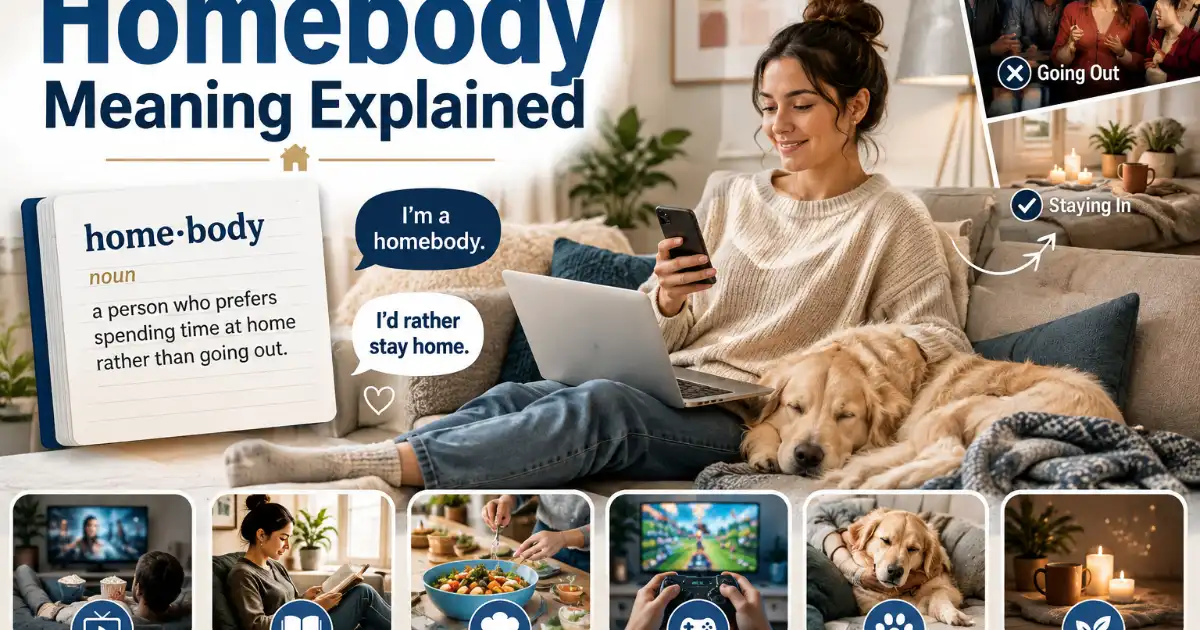
A homebody is a person who enjoys spending most of their free time at home rather than going out. A homebody may prefer relaxing, watching movies, reading, cooking, gaming, spending time with family, or enjoying hobbies at home.
Being a homebody does not automatically mean someone is shy, lonely, or antisocial. It usually describes a personal preference for the comfort and familiarity of home.
Introduction
Some people feel energized by crowded restaurants, parties, concerts, and busy social calendars. Others would rather put on comfortable clothes, order their favorite food, watch a show, and enjoy a quiet evening at home. The second group often describes themselves as homebodies.
The word homebody commonly appears in everyday conversations, dating profiles, social media posts, text messages, and discussions about personality. Someone might say, I am such a homebody, after turning down plans to stay home and relax. Another person might describe their partner as a homebody because they prefer quiet evenings together instead of frequent nights out.
Understanding the word requires more than knowing that it means someone who likes being at home. A homebody can still enjoy friendships, travel, work events, restaurants, and occasional parties. The main idea involves where a person naturally feels most comfortable during their free time.
This article explains the homebody meaning, common traits, examples, related terms, misconceptions, and ways the word works in everyday conversation.
What Does Homebody Mean?
A homebody is someone who prefers staying at home and enjoys spending a significant amount of their leisure time there. The word usually has a neutral or positive tone. It often describes someone who finds comfort, relaxation, entertainment, and satisfaction in their own living space.
Being a homebody does not necessarily mean avoiding people. A person can love their friends and family while still preferring to socialize at home. For example, someone may invite friends over for dinner instead of meeting at a busy restaurant. Another person may enjoy video calls with friends but feel happiest spending the evening in their own home.
The meaning also depends on context. If someone says, I am a homebody, they usually describe their lifestyle or personal preference. If someone says, She has become a homebody lately, the statement may simply mean that she has recently started spending more time at home.
The word can also describe different levels of preference. Some homebodies rarely want to go out, while others simply prefer home most of the time but still enjoy occasional outings.
Homebody Meaning in Simple Terms
The simplest definition of a homebody is a person who likes being at home more than going out.
A homebody may enjoy activities such as:
- Watching television or movies
- Reading books
- Cooking or baking
- Playing video games
- Listening to music
- Cleaning or organizing
- Working on creative hobbies
- Spending time with pets
- Relaxing with family
- Using social media
- Working on personal projects
For example, if someone gets home from work and looks forward to making dinner, taking a shower, and watching a favorite show instead of meeting friends at a bar, they might call themselves a homebody.
The term focuses on preference rather than a strict personality type. A homebody does not have to stay inside all the time. They simply tend to enjoy home more than many other social or recreational environments.
Homebody vs Introvert: Are They the Same?
Homebody and introvert describe different things, although they can overlap.
An introvert generally describes a person who may prefer lower stimulation or smaller social settings and may need quiet time to recharge after social interaction. A homebody describes someone who prefers spending free time at home.
A person can be an introvert without being a homebody. For example, an introvert might love traveling alone, visiting museums, hiking, or exploring a new city.
Likewise, an outgoing person can be a homebody. They might love talking to people and hosting large gatherings but still prefer doing those activities at home.
| Term | Meaning | Best Use | Example |
|---|---|---|---|
| Homebody | Someone who prefers being at home | Lifestyle preference | She is a total homebody |
| Introvert | Someone who may prefer less social stimulation | Personality description | He is naturally introverted |
| Extrovert | Someone who often gains energy from social interaction | Personality description | She is very outgoing |
| Hermit | Someone who lives or spends time in isolation | Stronger description | He lives like a hermit |
| Antisocial | Avoiding or rejecting social interaction, often used incorrectly in casual speech | More specific context | The term should not automatically describe a homebody |
Is Being a Homebody a Bad Thing?
Being a homebody is not inherently good or bad. It is usually a lifestyle preference.
Spending time at home can provide opportunities to rest, pursue hobbies, maintain a comfortable routine, and spend meaningful time with people who live in the same household. Many people simply enjoy the privacy and convenience that home provides.
The important factor involves balance. Staying home because it feels enjoyable and restorative is different from feeling unable to leave home or maintain necessary relationships and responsibilities.
Someone who enjoys quiet evenings at home can still have a healthy social life. There is no requirement to attend every party, accept every invitation, or spend every weekend outside.
Common Traits of a Homebody
Homebodies do not all behave the same way, but several preferences commonly appear.
They Enjoy Comfortable Routines
A homebody may enjoy having a predictable evening routine. Cooking dinner, watching a favorite series, reading, or relaxing with a pet can feel more appealing than making last minute plans.
They Like Their Personal Space
Home often gives homebodies control over their surroundings. They can choose the lighting, music, food, temperature, entertainment, and schedule.
They Prefer Relaxed Socializing
Many homebodies still enjoy social interaction. They may simply prefer having a few friends over rather than spending several hours in a crowded venue.
They Have Hobbies at Home
Reading, gaming, painting, baking, gardening, crafting, exercising, and watching movies can all make staying home enjoyable rather than boring.
They Value Quiet Time
After a busy day at school or work, a homebody may look forward to having uninterrupted personal time.
How Is Homebody Used in Everyday Conversation?
Homebody usually appears as a noun. People commonly use it to describe themselves or someone they know.
Here are some natural examples:
I am definitely a homebody. I would rather watch a movie at home tonight.
This means the speaker prefers staying home instead of going out.
My brother is a huge homebody.
This means the brother strongly prefers spending his free time at home.
She used to go out every weekend, but now she is more of a homebody.
This suggests her lifestyle or preferences have changed.
I am a homebody, but I still love going on vacation.
This shows that being a homebody does not mean someone never travels.
He is a social person, but he is also a homebody.
This example shows that being comfortable at home does not automatically mean being shy or socially withdrawn.
Why Do People Call Themselves Homebodies?
People may identify as homebodies for many ordinary reasons. Home can offer comfort, privacy, convenience, and control over the environment.
Someone with a demanding job may prefer quiet evenings after work. A college student may enjoy staying in their apartment with roommates. A parent may prefer spending weekends with family at home. Someone with several hobbies may find plenty of entertainment without going out.
Cost can also influence lifestyle choices. Cooking at home, watching streaming services, reading, gaming, or enjoying existing hobbies can sometimes feel more appealing than spending money on frequent outings.
The important point is that being a homebody can come from many different preferences. It does not automatically reveal someone’s personality, emotional state, or social skills.
Homebody Examples in Different Situations
The meaning becomes especially easy to understand through everyday situations.
In Dating
Someone might write, Looking for another homebody who enjoys movie nights and cooking together.
Here, homebody describes a preferred relationship lifestyle.
In Friendship
A friend might say, I know you are a homebody, so we can just hang out at my place.
The speaker recognizes that staying home may be more appealing.
At Work
A coworker might say, I am a homebody, so I usually spend my weekends catching up on things around the house.
The word describes weekend habits rather than work performance.
On Social Media
Someone might post, Weekend plans: pajamas, snacks, and absolutely nowhere to be. Total homebody energy.
Here, homebody has a playful and positive tone.
Homebody Lifestyle Ideas
Being a homebody does not mean spending every evening doing nothing. Home can become a place for meaningful recreation and personal growth.
A homebody might:
- Try a new recipe
- Start a reading list
- Learn an instrument
- Work on an art project
- Exercise at home
- Rearrange a room
- Host a small dinner
- Start a movie night
- Play games with friends online
- Spend quality time with family
- Care for houseplants
- Work on a personal project
The goal is not to justify staying home. If someone genuinely enjoys their time at home, there is nothing unusual about building a lifestyle around that preference.
Homebody vs Someone Who Never Goes Out
These ideas are not always identical.
A homebody generally prefers staying home. Someone who rarely goes outside may have many different reasons for doing so. Their situation could involve work, responsibilities, finances, transportation, personal circumstances, or other factors.
Therefore, calling someone a homebody works best when describing a clear preference rather than making assumptions about why they stay home.
Common Misconceptions About Homebodies
Several misconceptions can make the word confusing.
Homebodies Are Always Introverts
Not necessarily. An outgoing person can enjoy spending most evenings at home.
Homebodies Have No Friends
A person can have an active and meaningful social life while still preferring home.
Homebodies Hate Going Outside
Most homebodies simply prefer home. They can still enjoy restaurants, vacations, concerts, shopping, hiking, or other activities.
Being a Homebody Means Being Lazy
A person can be highly productive while spending most of their free time at home. Location does not determine motivation.
Homebody Is an Insult
The word is usually neutral or positive. Context and tone determine how it feels. In many casual conversations, people use homebody affectionately or proudly.
Common Mistakes When Using Homebody
The most common mistake involves treating homebody as a synonym for antisocial.
Someone who prefers staying home can still enjoy friendships, conversations, parties, and group activities. The word mainly describes a preference for home rather than a rejection of other people.
Another mistake involves assuming that every homebody has the same personality. Some are quiet and private, while others are energetic and highly social. The term does not provide a complete personality profile.
It is also unnecessary to use homebody as a negative label. For many people, enjoying home simply means they have found an environment where they feel comfortable and relaxed.
Conclusion
A homebody is simply someone who prefers spending free time at home. The term usually describes comfort, lifestyle, and personal preference rather than shyness or a lack of social connections.
A homebody can still have close friends, enjoy travel, attend events, host gatherings, and maintain an active social life. The key difference is that home often feels like the preferred place to relax and spend free time.
If someone describes themselves as a homebody, they are usually saying that a comfortable evening at home sounds better than going out. In everyday English, the word carries a simple and generally positive meaning: someone who genuinely enjoys being at home.
Frequently Asked Questions About Homebody
What is the exact meaning of homebody?
Homebody means a person who prefers spending much of their free time at home instead of going out. It describes a lifestyle preference and does not automatically describe someone’s personality.
Is homebody a slang word?
Homebody is an informal everyday term rather than specialized slang. People commonly use it in conversations, texts, social media posts, and casual writing.
Is being a homebody the same as being an introvert?
No. An introvert and a homebody describe different characteristics. Introversion relates more to how someone experiences social interaction and stimulation, while homebody describes a preference for spending time at home.
Can an extrovert be a homebody?
Yes. An extroverted person can enjoy social interaction while still preferring to spend most free time at home. For example, an outgoing person might love hosting friends instead of going to crowded venues.
Does homebody mean antisocial?
No. Homebody does not automatically mean antisocial. A homebody can maintain friendships, attend events, travel, and enjoy social activities while still preferring home.
Is homebody a positive word?
Homebody usually has a neutral or positive meaning. People often use it proudly to describe their preference for comfortable evenings, hobbies, family time, and relaxation at home.
Can someone become more of a homebody?
Yes. Lifestyle preferences can change over time. Work schedules, family responsibilities, hobbies, living arrangements, and changing interests can all influence how much time someone wants to spend at home.
What is a good example of a homebody?
Someone who would rather cook dinner, read, play games, watch a movie, or relax with their pet at home than go out every weekend is a good example of a homebody.