
Quick Answer
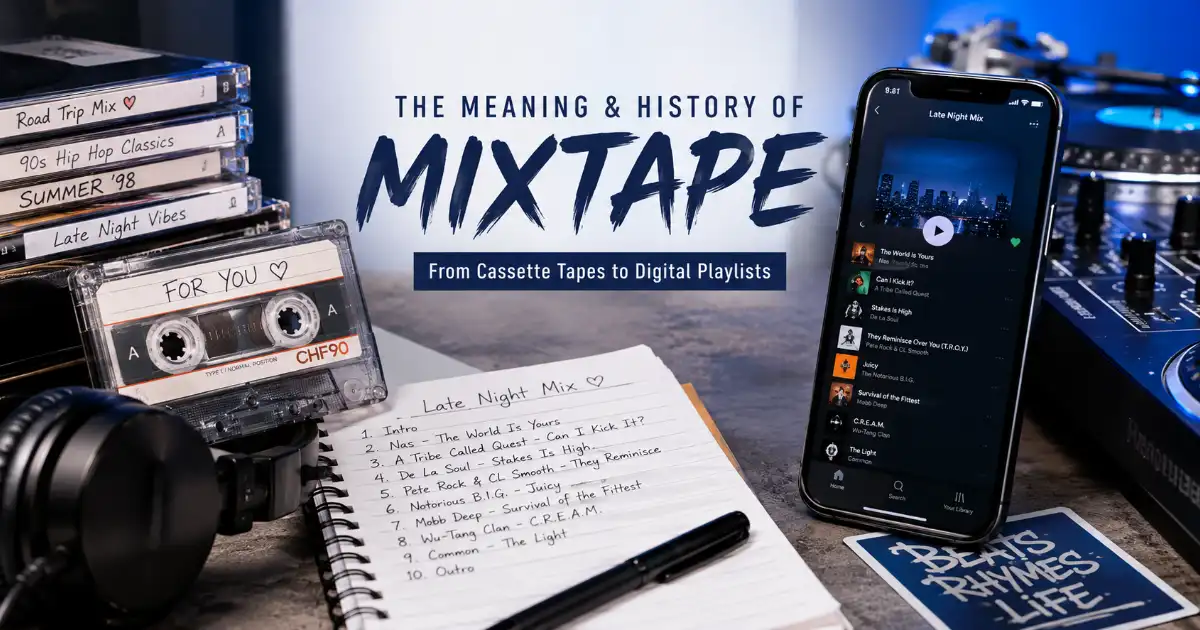
A mixtape is a curated collection of songs arranged together for a specific person, mood, theme, occasion, or audience. Traditionally, people recorded mixtapes onto cassette tapes and shared them with friends, family, or romantic partners. Over time, the meaning expanded.
In hip hop, a mixtape can also describe an artist’s unofficial or independently released music project, often used to experiment, build an audience, or share music before an album. Today, a mixtape may exist as a digital release, playlist, downloadable project, or physical cassette.
Introduction
The word mixtape can describe something very personal or something closely connected to music culture. For one person, it may mean a cassette carefully filled with favorite songs and given to a friend. For another, especially a hip hop listener, it may mean an artist project that sits somewhere between a collection of songs and a formal album.
The term became closely associated with cassette culture because blank tapes made it possible for ordinary listeners to record, arrange, and share music. People could choose songs that matched a relationship,
road trip, party, breakup, or particular moment in their lives. The order mattered because a good mixtape could create a mood or tell a story without saying much directly.
The meaning later expanded through DJ culture and hip hop. Mixtapes became a way for DJs and artists to distribute music outside traditional album channels, showcase new material, experiment with sounds, and reach listeners directly. As technology moved from cassettes to CDs and then digital files, the format changed while the basic idea of music curation remained.
What Does Mixtape Mean?
A mixtape is a collection of songs selected and arranged together rather than simply presented as unrelated individual tracks. The creator usually has a reason for choosing the songs and deciding their order.
The traditional meaning refers to music recorded onto a cassette tape. Someone might record songs from different albums, radio broadcasts, or other sources and arrange them into one listening experience. The finished tape could then be given to another person as a gift or shared among friends.
The word does not necessarily mean that the creator performed or produced the songs. In its classic personal use, the creator’s main contribution was selection and sequencing.
For example, someone might make a mixtape containing:
- Songs that remind them of a close friend
- Relaxing music for a long drive
- Favorite songs from different artists
- Romantic songs for a partner
- Energetic tracks for a workout
- Songs connected to a particular summer or school year
In hip hop, the meaning can be different. An artist’s mixtape may contain original songs, freestyles, remixes, collaborations, or other material. Historically, these releases often helped artists build attention without treating the project like a conventional studio album.
| Meaning | Where It Is Used | Simple Explanation | Example |
|---|---|---|---|
| Personal mixtape | Friends and relationships | Songs selected for another person | A tape of songs for a best friend |
| Compilation mixtape | Music listening | Several songs arranged around a theme | A collection for a road trip |
| DJ mixtape | DJ and club culture | A curated or mixed selection of tracks | A DJ recording a continuous set |
| Hip hop mixtape | Rap and music culture | An artist project outside a traditional album | A rapper sharing new songs online |
| Digital mixtape | Modern music | A mixtape distributed as digital audio | A downloadable music project |
How Did Mixtapes Start?
The idea of collecting and sharing recorded music existed before modern streaming, but the compact cassette made personal music compilation much easier. Cassette technology gave people an affordable and portable way to record and rearrange music.
Personal mixtapes became a form of musical communication. Instead of simply telling someone which songs they liked, a person could create an entire listening experience. The selection, sequence, and transitions could communicate feelings that were difficult to express directly.
Mixtape culture also developed an important connection with hip hop. Early hip hop performances and DJ culture relied on recorded tapes to preserve and distribute music beyond the immediate performance space. Later, DJs and artists used mixtapes to circulate new tracks, demonstrate DJ skills, promote artists, and introduce listeners to underground music.
The format continued to change as music technology changed. Cassette tapes gave way to CD based collections, then MP3 files and online distribution. Today, the word can describe projects that have never existed on physical tape at all.
Why Were Mixtapes Important in Hip Hop?
Mixtapes became particularly important in hip hop because they offered artists and DJs a flexible way to reach listeners. Traditional album releases required significant industry support, while mixtape culture provided a more direct route for distributing music.
DJs could use mixtapes to showcase their mixing abilities and introduce listeners to emerging artists. Rappers could use them to share freestyles, unreleased material, remixes, collaborations, and experimental songs.
This made the mixtape more than a collection of tracks. It became a tool for discovery and promotion. Columbia’s account of mixtape history describes the format as an important record of hip hop culture, from cassette recordings of early performances to later CD based projects.
The digital era expanded this role even further. Online distribution removed much of the physical limitation of cassette and CD releases, allowing artists to reach large audiences quickly.
Mixtape vs Playlist: What Is the Difference?
A mixtape and a playlist can look similar because both involve selecting songs. The main difference comes from context and tradition.
A playlist usually means a digital collection created for convenient listening. A mixtape often suggests stronger personal curation, a particular theme, or a deliberate listening journey. In hip hop, the term can also describe an artist’s music project rather than a listener’s playlist.
| Term | Meaning | Best Use | Example |
|---|---|---|---|
| Mixtape | Curated music collection or artist project | Personal expression or music culture | A collection made for someone |
| Playlist | Songs grouped for convenient listening | Streaming and everyday listening | Workout songs saved in an app |
| Album | Formal body of music released by an artist | Major artistic release | A studio album |
| EP | Shorter formal music release | Smaller artist project | Five original songs |
| DJ set | Music selected and mixed during a performance | Live or recorded DJ performance | A club mix |
The boundaries are not always strict. Modern artists sometimes use the word mixtape for projects that sound as polished and structured as albums. That is why the label alone does not always tell you exactly how formal a release is.
Mixtape vs Album: Are They the Same?
A mixtape and an album are not necessarily the same thing, although modern music has blurred the distinction.
An album generally represents a formal release from an artist. It may have a planned concept, original production, professional distribution, and an established release strategy.
A mixtape has historically offered more flexibility. An artist might use one to test ideas, share music quickly, work with other artists, or build an audience before releasing a major album.
In contemporary music, however, the difference can become difficult to identify. Some projects called mixtapes have professional production, original songs, major distribution, and strong commercial ambitions.
The safest approach is to look at how the artist describes the project and how the music functions rather than assuming that every mixtape follows one fixed format.
What Is a Mixtape Used For?
People create mixtapes for many different reasons. The purpose usually determines the song selection and order.
Common uses include:
- Sharing favorite music with someone
- Expressing feelings indirectly through songs
- Creating music for a road trip
- Building a themed collection
- Introducing someone to an artist or genre
- Preserving memories from a particular period
- Showcasing DJ skills
- Promoting new music
- Testing creative ideas
- Building an audience before a larger release
For artists, a mixtape can provide more creative freedom. For listeners, making one can turn ordinary music selection into a personal creative project.
How to Make a Good Mixtape
Creating a mixtape does not require professional music equipment. The most important part is having a clear purpose.
Choose a Theme
Start with a simple idea. The theme could be a relationship, season, trip, mood, genre, decade, or personal memory.
A clear theme makes song selection easier and helps the collection feel intentional.
Select Songs That Fit
Do not add a song simply because it is popular. Ask whether it belongs with the other tracks.
A strong mixtape usually feels connected even when the songs come from different artists or genres.
Think About Song Order
Sequencing can completely change the listening experience.
You might start with an accessible song, build energy gradually, place the emotional centerpiece near the middle, and finish with a memorable closing track.
Keep the Listening Experience in Mind
Consider how one song moves into the next. Differences in tempo, mood, vocals, and intensity can either create an interesting contrast or make the collection feel disconnected.
Give It an Identity
A title and cover can make a mixtape feel like a complete project. Even a simple digital collection benefits from a memorable name and consistent visual idea.
What Makes a Mixtape Personal?
The personal nature of a mixtape comes from the choices behind it.
Two people can select completely different songs for the same theme because music carries individual memories and associations. A song that reminds one person of a summer vacation might remind another person of a breakup or a favorite movie.
This is why old cassette mixtapes often have emotional value beyond the music itself. The physical tape represents the time, effort, and thought someone put into creating it.
A playlist can also be deeply personal, but the word mixtape often emphasizes the creator’s role as a curator.
Are Mixtapes Still Used Today?
Yes. The format has changed, but the concept remains relevant.
People now create digital collections instead of recording songs onto blank cassettes. Artists may release projects as digital mixtapes, while listeners can create themed collections through streaming services and music platforms.
The word also retains cultural importance because of its connection to earlier music scenes. The Grammy’s history of the format notes that the term remains relevant decades after the cassette era, while hip hop continues to use mixtape as a description for certain artist projects.
Physical cassette mixtapes also retain nostalgic appeal. Cassette culture has experienced renewed interest among collectors, musicians, and listeners who appreciate the physical format and its distinctive limitations.
What Is a Digital Mixtape?
A digital mixtape is essentially a mixtape distributed through digital audio rather than a physical cassette.
It might appear as:
- A group of downloadable audio files
- A streaming collection
- An artist project
- A curated online release
- A collection shared through a music platform
Digital distribution makes sharing much easier, but it can also reduce some of the physical intimacy associated with traditional cassette mixtapes.
Still, the basic concept remains the same: someone selects music and creates a collection with a particular purpose or identity.
Common Mistakes About Mixtapes
Several misunderstandings can make the term confusing.
Assuming Every Mixtape Uses a Cassette
The word comes from the tape era, but modern mixtapes do not need to exist on physical tape. Digital releases can also use the term.
Assuming Every Mixtape Is an Album
An artist may call a project a mixtape even when it does not follow the traditional structure of an album. The terms overlap, but they are not automatically interchangeable.
Assuming Mixtapes Only Belong to Hip Hop
Hip hop played a major role in developing the cultural importance of mixtapes, but people have created personal music compilations across many genres.
Assuming a Mixtape Must Contain Different Artists
A traditional personal mixtape often included different artists, but an artist can also release a mixtape containing mostly or entirely their own work.
Confusing a Mixtape With a Random Song Collection
A good mixtape usually has some kind of intention. The songs may share a mood, story, audience, occasion, or musical relationship.
Frequently Asked Questions About Mixtapes
What is a mixtape in simple terms?
A mixtape is a collection of songs selected and arranged for a particular person, mood, theme, occasion, or audience. Historically, people recorded them onto cassette tapes. Today, the term can also describe digital collections and artist projects.
Why do people make mixtapes?
People make mixtapes to share music, express feelings, create a mood, introduce someone to new artists, preserve memories, or organize songs around a particular theme.
Is a mixtape the same as a playlist?
Not exactly. A playlist is usually a digital collection of songs, while a mixtape often implies more personal curation or a specific creative purpose. In hip hop, mixtape can also describe an artist release.
What does mixtape mean in hip hop?
In hip hop, a mixtape can refer to a project released outside the traditional album format. It may contain original songs, freestyles, remixes, collaborations, or experimental material and can help an artist reach listeners.
Can a mixtape be digital?
Yes. Modern mixtapes can exist as digital files or online music releases. The term no longer requires a physical cassette.
How many songs should a mixtape have?
There is no universal number. A mixtape can contain a small group of carefully selected songs or a much larger collection. The purpose and listening experience matter more than a fixed track count.
Can a mixtape have only one artist?
Yes. Although traditional mixtapes often combined songs from different artists, modern artist mixtapes may focus on one performer.
Are mixtapes still relevant?
Yes. The technology has changed, but curated music collections and artist mixtape projects remain part of modern music culture. The term also continues to carry historical and nostalgic meaning.
Conclusion
A mixtape is more than a collection of songs. At its core, it represents intentional music selection and the idea that the order and combination of songs can create a particular experience.
Traditional mixtapes used cassette tapes to share music with friends, partners, and family members. Hip hop later gave the term another important meaning by turning mixtapes into a powerful tool for DJs and artists to distribute music, experiment, and build audiences. Digital technology changed the format but did not eliminate the concept.
Today, a mixtape can be physical or digital, personal or professional. The key thing to remember is that the word usually suggests curation with a purpose. Whether it is a nostalgic cassette, a carefully arranged digital collection, or an artist project, a mixtape is ultimately about how music is selected, connected, and shared.