
Quick Answer
NPC stands for Non Player Character. The term originally comes from video games, where NPCs are characters controlled by the game’s programming rather than by real players. Today,
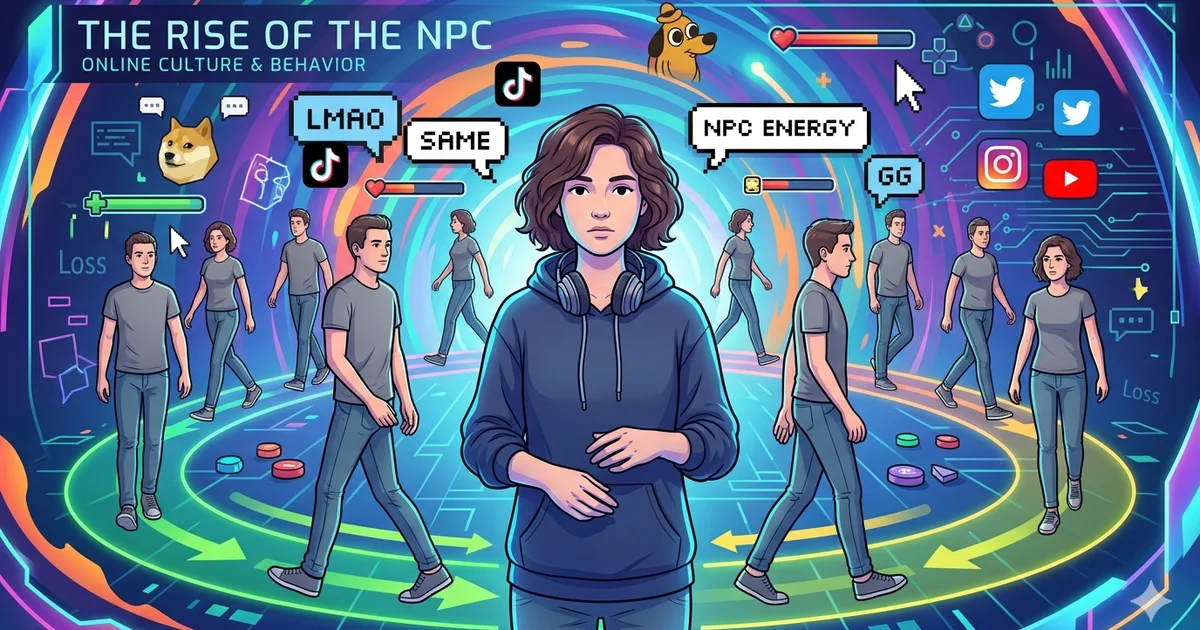
NPC is also widely used as internet slang to describe someone who seems to repeat common opinions, behaves predictably, or appears to follow trends without much independent thought.
Depending on the context, NPC can mean:
- Non Player Character in video games
- An internet slang term for someone seen as unoriginal or overly predictable
- A meme used on social media platforms and online communities
Most people searching for NPC today are looking for either the gaming definition or the modern slang meaning used in online conversations, memes, and social media posts.
Introduction
The term NPC has become one of the most recognizable words in gaming culture and internet slang. While it started as a technical gaming term, its meaning has expanded far beyond video games and now appears regularly on social media, discussion forums, streaming platforms, and meme pages.
Many people encounter NPC in comments, videos, or online debates and wonder what it actually means. In some cases, it refers to a video game character that follows a programmed script. In other situations, it is used to describe a person whose behavior is viewed as repetitive, predictable, or lacking originality.
Understanding the different meanings of NPC is important because the term can be harmless in one context and insulting in another. This guide explains what NPC means, where it came from, how people use it today, examples of NPC usage, common misconceptions, and when you should avoid using the term.
What Does NPC Mean?
NPC stands for Non Player Character.
In video games, NPCs are characters that exist within the game world but are not controlled by human players. Instead, they follow programmed behaviors and dialogue created by the game’s developers.
Examples of NPCs include:
- Shopkeepers who sell items
- Quest givers who assign missions
- Villagers who provide information
- Guards who patrol certain areas
- Characters that help move the story forward
Players interact with NPCs, but NPCs generally respond according to predetermined rules rather than making independent decisions.
Over time, internet users borrowed the gaming term and began using NPC as slang. In this newer meaning, calling someone an NPC suggests that the person acts automatically, follows popular opinions, or lacks independent thinking.
The slang meaning is often subjective and may be used jokingly, sarcastically, or critically depending on the situation.
NPC Meanings at a Glance
| Meaning | Where It Is Used | Simple Explanation | Example |
|---|---|---|---|
| Non Player Character | Video games | Character controlled by game software | A shopkeeper in a role playing game |
| Internet slang | Social media | Person viewed as predictable or unoriginal | Someone repeating popular talking points |
| Meme character | Online culture | Character representing repetitive behavior | NPC meme videos on social platforms |
NPC in Video Games
The original meaning of NPC comes directly from gaming.
Game developers use NPCs to make virtual worlds feel alive and interactive. Without NPCs, many games would feel empty and lack meaningful interactions.
Common Types of NPCs
Friendly NPCs
These characters help players by providing information, equipment, rewards, or story details.
Examples include:
- Merchants
- Teachers
- Quest givers
- Healers
Neutral NPCs
These characters exist in the world but may not significantly affect gameplay.
Examples include:
- Citizens
- Travelers
- Background workers
- Town residents
Hostile NPCs
Some NPCs act as enemies controlled by the game’s artificial intelligence.
Examples include:
- Guards
- Monsters
- Rival factions
- Enemy soldiers
Modern games often include advanced NPC behavior that makes characters feel more realistic and responsive to player actions.
NPC as Internet Slang
The slang version of NPC became popular through memes and online discussions.
When someone calls a person an NPC online, they usually mean that the individual appears to:
- Repeat common opinions
- Follow trends without questioning them
- Behave in predictable ways
- Use similar phrases as many other people
- Show little originality in discussions
For example, if someone posts the same popular opinion that many others are sharing, another user might jokingly comment:
“You’re acting like an NPC.”
In this context, the term implies that the person is operating on a script rather than thinking independently.
However, this use is often subjective and can be seen as dismissive or insulting.
How NPC Became a Popular Meme
The NPC meme grew rapidly through internet culture and social media.
The joke was based on the idea that some online conversations seemed repetitive. Meme creators compared certain behaviors to video game NPCs who repeat the same dialogue every time a player interacts with them.
Popular NPC memes often include:
- Repeated catchphrases
- Predictable responses
- Copycat behavior
- Identical opinions
- Scripted sounding conversations
Short videos on social media later expanded the trend, with creators pretending to act like NPC characters by repeating the same lines and reactions.
This helped the term become mainstream beyond gaming communities.
Examples of NPC Usage
Understanding NPC is easier when you see it used in context.
Gaming Examples
- The NPC in the village gave me a new quest.
- Every NPC in the town has unique dialogue.
- That merchant NPC sells rare equipment.
Internet Slang Examples
- People online keep repeating the same opinion like NPCs.
- The comment section is full of NPC responses.
- He called me an NPC because I agreed with a popular trend.
Meme Examples
- The creator made funny NPC videos by repeating identical phrases.
- NPC memes often exaggerate robotic behavior for comedic effect.
NPC vs Player Character
Many beginners confuse NPCs with player characters.
| Term | Meaning | Controlled By | Example |
| NPC | Non Player Character | Game software | Shopkeeper |
| Player Character | Main playable character | Human player | The hero you control |
| Enemy NPC | Hostile game character | Game software | Monster or guard |
| Multiplayer Player | Real participant | Another human | Online teammate |
The key difference is control. A player character is controlled by a real person, while an NPC follows game programming.
Common Situations Where People Use NPC
The term NPC appears in several different environments.
Gaming Discussions
Players talk about NPCs when discussing quests, game design, storylines, or character interactions.
Social Media
Users may jokingly describe repetitive trends or opinions as NPC behavior.
Meme Culture
Content creators often use NPC jokes to parody predictable online interactions.
Streaming and Online Communities
Gamers and streamers frequently reference NPCs when discussing game mechanics or internet culture.
Similar Terms and Related Phrases
Several terms are related to NPC depending on the context.
| Term | Meaning | Best Use | Example |
| NPC | Predictable or scripted behavior | Gaming and internet slang | Acting like an NPC |
| Bot | Automated account or robotic behavior | Social media | Sounds like a bot |
| Sheep | Someone who follows others | Informal discussions | Following the crowd |
| Follower | Person who copies trends | General conversation | Trend follower |
| Main Character | Person acting as the center of attention | Social media slang | Main character energy |
Although these terms overlap, they are not identical and can carry different levels of criticism.
Common Mistakes About NPC
People often misunderstand the term NPC.
Assuming It Always Means an Insult
In gaming, NPC is a neutral technical term. It only becomes potentially insulting when directed at a real person.
Confusing NPCs With Bots
NPCs and bots are not the same thing. NPCs exist within games as characters, while bots often refer to automated software accounts or programs.
Thinking Every NPC Is Unimportant
Many modern games feature NPCs that are central to the story and significantly influence gameplay.
Ignoring Context
The meaning of NPC changes depending on where it is used. A gaming discussion and a social media argument may use the term very differently.
Assuming Someone Lacks Intelligence
Calling someone an NPC does not actually prove anything about their intelligence. It is usually a subjective opinion or joke rather than a factual description.
Is Calling Someone an NPC Offensive?
It can be.
In gaming conversations, NPC is usually harmless because it refers to fictional characters.
When directed at a real person, however, it may be viewed as insulting because it suggests that the individual lacks originality, independent thinking, or self awareness.
Whether people find it offensive often depends on:
- The tone of the conversation
- The relationship between the people involved
- Whether it is clearly a joke
- The context in which it is used
If you are unsure how someone will react, it is generally better to avoid using the term as a personal label.
Conclusion
NPC most commonly stands for Non Player Character, a game character controlled by software rather than a human player. While the term began in video games, it has evolved into a popular piece of internet slang and meme culture.
Today, NPC can refer either to game characters or to people who are perceived as acting in predictable or scripted ways. Understanding the context is the key to understanding what NPC means and how it is being used.
FAQs
What does NPC stand for?
NPC stands for Non Player Character. It originally referred to characters in video games that are controlled by the game’s programming instead of a human player.
What does NPC mean in slang?
In internet slang, NPC describes someone who is viewed as predictable, repetitive, or lacking original thought. The term is often used in memes and online discussions.
Is NPC an insult?
It can be. While NPC is neutral in gaming, calling a real person an NPC may be interpreted as criticism or mockery.
What is an NPC in a video game?
An NPC is a character controlled by the game’s software. Examples include shopkeepers, villagers, quest givers, and enemy characters.
Why do people call others NPCs online?
People use the term to suggest that someone appears to be following common opinions or repeating ideas without much individuality. This use is often subjective.
Are NPCs important in games?
Yes. NPCs often provide quests, information, story development, services, and interactions that make game worlds feel realistic and engaging.
What is the difference between an NPC and a player?
A player controls their character directly, while an NPC is controlled by the game’s programming and artificial intelligence systems.
Can NPC be used as a joke?
Yes. Many people use NPC humorously in memes, gaming communities, and casual conversations. However, context matters because some people may find it insulting.