
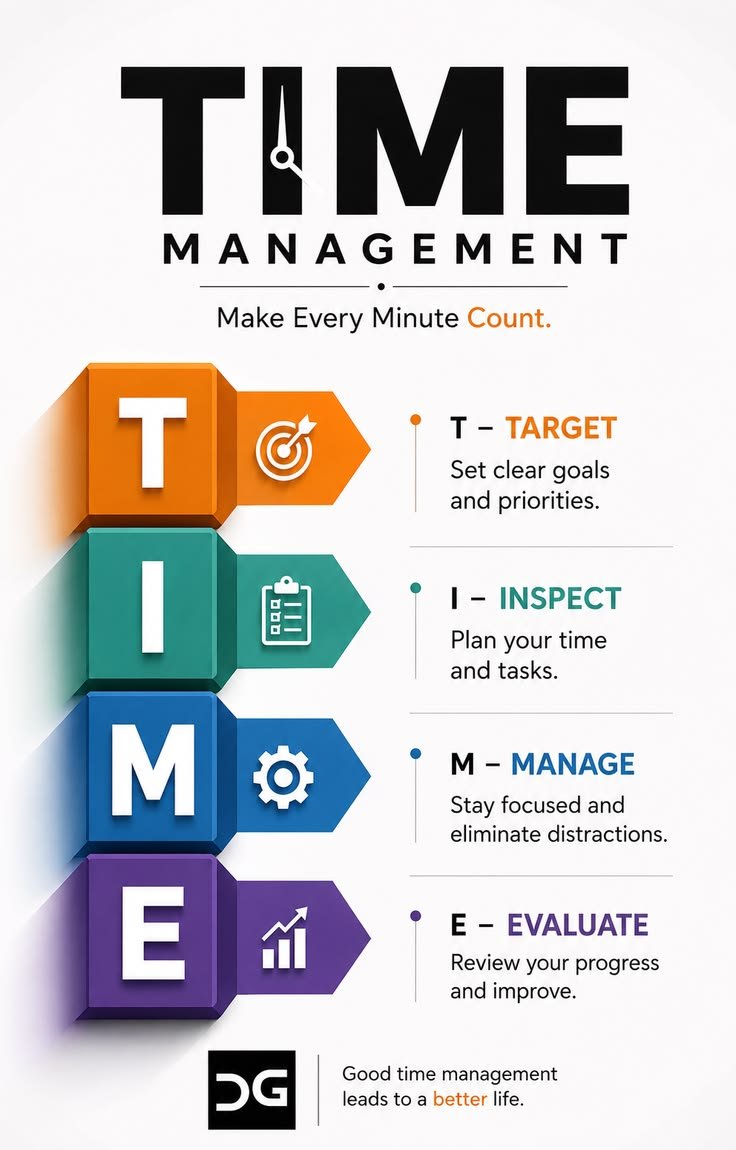
Time is one of the most valuable resources in life, yet managing it effectively can be challenging. Between professional responsibilities, academic commitments, personal goals, and everyday distractions, many people struggle to complete important tasks without feeling overwhelmed.
Developing strong time management skills can help you organize your schedule, improve productivity, reduce unnecessary stress, and maintain a healthier work-life balance. Rather than working longer hours, effective time management focuses on using available time wisely and directing your attention toward activities that produce meaningful results.
Whether you are a student preparing for examinations, an employee managing multiple projects, an entrepreneur running a business, or someone trying to build better daily habits, learning how to manage time can make a significant difference.
This comprehensive guide explores the meaning of time management, its importance, 20 essential skills, proven productivity techniques, common mistakes, and practical strategies for improving your daily routine.
What Are Time Management Skills?
Time management skills are the abilities that help individuals plan, organize, prioritize, and complete activities efficiently within a specific period.
These skills involve deciding which tasks deserve immediate attention, estimating how long activities will take, managing distractions, and allocating time according to personal or professional priorities.
Effective time management is not about filling every minute with work. Instead, it involves creating a balanced schedule that supports productivity, personal well-being, and long-term goals.
For example, a student who creates a realistic study timetable, completes important assignments before deadlines, and reserves time for rest is demonstrating effective time management.
Similarly, an employee who prioritizes high-impact projects, avoids unnecessary meetings, and communicates realistic deadlines is applying time management skills in the workplace.
Why Are Time Management Skills Important?
Time management influences productivity, decision-making, stress levels, and overall performance.
People who manage their time effectively are often better equipped to handle responsibilities without constantly rushing or reacting to unexpected problems.
Improves Productivity
Organizing tasks according to importance allows individuals to focus on meaningful activities rather than spending excessive time on low-value work.
Reduces Stress
A realistic schedule can reduce uncertainty about deadlines and responsibilities. Planning ahead also creates room for unexpected challenges.
Supports Better Decision-Making
When priorities are clear, choosing between competing tasks becomes easier.
Encourages Work-Life Balance
Allocating time for family, hobbies, exercise, and rest helps prevent work responsibilities from consuming every part of daily life.
Helps Achieve Long-Term Goals
Large objectives become more manageable when divided into smaller tasks with realistic deadlines.
Builds Professional Reliability
Meeting commitments consistently can strengthen trust among colleagues, clients, teachers, and supervisors.
20 Essential Time Management Skills Everyone Should Develop
1. Goal Setting
Goal setting is the foundation of effective time management.
Without clear objectives, it becomes difficult to determine which activities deserve attention.
Establishing specific goals helps you focus on tasks that contribute to meaningful outcomes.
One useful approach is the SMART framework, which encourages goals that are:
- Specific: Clearly define what you want to accomplish.
- Measurable: Identify how progress will be evaluated.
- Achievable: Set objectives that are realistic.
- Relevant: Ensure goals support your broader priorities.
- Time-Bound: Establish a target completion date.
For example, instead of saying, “I want to improve my writing,” you might decide to complete three well-researched articles each week for the next month.
This creates a measurable objective and makes scheduling easier.
2. Prioritization
Prioritization involves identifying which tasks are most important and completing them in an appropriate order.
Not every responsibility requires equal attention.
Some activities contribute directly to major goals, while others have limited impact.
A popular prioritization technique is the Eisenhower Matrix.
| Task Category | Recommended Action |
|---|---|
| Urgent and Important | Complete as soon as practical |
| Important but Not Urgent | Schedule dedicated time |
| Urgent but Less Important | Delegate when appropriate |
| Neither Urgent nor Important | Reduce or eliminate |
This method helps distinguish genuinely important work from activities that simply demand immediate attention.
3. Planning and Scheduling
Planning allows you to organize responsibilities before beginning work.
A daily or weekly schedule provides structure and reduces the need to make repeated decisions about what to do next.
Effective planning includes identifying important tasks, estimating completion times, and assigning realistic deadlines.
For example, you might reserve mornings for demanding assignments and afternoons for meetings or administrative responsibilities.
Reviewing your schedule regularly helps you adjust when unexpected priorities arise.
4. Task Organization
Task organization involves keeping responsibilities, deadlines, documents, and relevant information arranged systematically.
Disorganized workflows can lead to forgotten commitments, repeated work, and unnecessary confusion.
Digital task managers, calendars, notebooks, and project management platforms can help maintain order.
The most effective organizational system is one that is simple enough to use consistently.
Avoid creating complicated systems that require more time to maintain than the tasks themselves.
5. Time Blocking
Time blocking is a scheduling technique in which specific periods are reserved for particular activities.
Instead of switching randomly between responsibilities, you assign dedicated time to focused work.
For example:
| Time | Activity |
|---|---|
| 8:00–8:30 AM | Planning and email review |
| 8:30–10:30 AM | High-priority project |
| 10:30–10:45 AM | Short break |
| 10:45 AM–12:00 PM | Secondary tasks |
| 12:00–1:00 PM | Lunch and rest |
| 1:00–2:30 PM | Meetings or collaboration |
| 2:30–3:30 PM | Administrative work |
| 3:30–4:00 PM | Review and preparation |
This schedule is only an example. Actual time blocks should reflect individual responsibilities, energy levels, and working conditions.
6. Focus and Concentration
Concentration is the ability to direct attention toward a task without repeatedly becoming distracted.
Strong focus helps individuals complete demanding work more efficiently and with fewer avoidable errors.
Improving concentration may involve reducing unnecessary notifications, organizing your workspace, and setting clear objectives for each work session.
Some people find it helpful to work in quiet environments, while others prefer background sounds.
Experiment with different conditions to discover what supports your attention.
7. Decision-Making
Everyday decisions consume time and mental energy.
Effective decision-making involves evaluating available information, identifying relevant priorities, and choosing an appropriate course of action without unnecessary delays.
Not every decision requires extensive research.
Routine choices can often be simplified through established procedures, while important financial or professional decisions deserve more careful consideration.
Learning to distinguish between these situations can improve efficiency.
8. Delegation
Delegation involves assigning appropriate responsibilities to other people.
It is especially important for managers, business owners, and professionals handling multiple projects.
Effective delegation requires clear instructions, realistic deadlines, and an understanding of each person’s capabilities.
Delegating does not mean abandoning responsibility.
Regular communication and appropriate follow-up help ensure that assigned tasks meet expectations.
9. Avoiding Procrastination
Procrastination occurs when individuals delay tasks despite recognizing that the delay may create problems.
Common causes include fear of failure, unclear expectations, perfectionism, and feeling overwhelmed.
One practical strategy is to divide a large task into smaller actions.
For example, instead of postponing an entire research project, begin by identifying the topic, gathering sources, and preparing an outline.
Starting with a manageable activity can make the remaining work feel less intimidating.
10. Setting Realistic Deadlines
Deadlines create structure and encourage progress.
However, unrealistic deadlines can lead to rushed work, unnecessary stress, and declining quality.
Estimate how much time a task requires based on its complexity and your previous experience.
Include additional time for revisions, interruptions, and unexpected difficulties.
When working with other people, communicate potential delays early rather than waiting until a deadline has passed.
11. Self-Discipline
Self-discipline is the ability to follow through on planned activities even when motivation is low.
It helps individuals maintain routines, resist unnecessary distractions, and complete important responsibilities.
Building discipline often begins with small, repeatable habits.
For example, consistently spending the first 30 minutes of each workday on a priority task may gradually strengthen your ability to work independently.
Consistency is generally more sustainable than relying on occasional bursts of motivation.
12. Adaptability
Unexpected events can disrupt even carefully organized schedules.
Adaptability allows individuals to adjust priorities and plans without losing sight of their main objectives.
For example, an urgent client request may require moving a less important task to another day.
Effective time management involves recognizing when adjustments are necessary rather than following a schedule rigidly.
Maintaining some flexibility helps prevent minor disruptions from affecting the entire day.
13. Stress Management
Stress can interfere with concentration, decision-making, and productivity.
Developing healthy ways to manage stress supports more consistent performance.
Useful approaches include taking regular breaks, maintaining realistic expectations, exercising, and allowing sufficient time for sleep.
It is also important to recognize when a workload exceeds available capacity.
In such situations, renegotiating deadlines or requesting support may be more effective than simply working longer hours.
14. Communication Skills
Clear communication prevents misunderstandings and reduces unnecessary delays.
In professional environments, poorly communicated instructions can lead to duplicated work, missed deadlines, and repeated revisions.
Effective communication involves explaining expectations, confirming responsibilities, and providing timely updates.
When discussing deadlines, clarify what needs to be delivered and which requirements matter most.
Good communication can save considerable time for everyone involved.
15. Problem-Solving
Problems are an unavoidable part of academic, professional, and personal life.
Strong problem-solving skills help individuals identify obstacles and respond efficiently.
Instead of repeatedly reacting to the same issue, investigate its underlying cause.
For example, if assignments are frequently completed late, determine whether the problem involves unrealistic scheduling, unclear instructions, distractions, or insufficient resources.
Addressing the cause can produce more lasting improvements.
16. Managing Distractions
Digital notifications, social media, unnecessary meetings, and frequent interruptions can fragment attention.
Managing distractions requires identifying which activities regularly interfere with important work.
Consider silencing nonessential notifications, checking messages at designated times, and keeping unrelated browser tabs closed.
Where appropriate, communicate your availability to colleagues or family members.
The goal is not to eliminate every interruption but to reduce avoidable distractions during focused work.
17. Energy Management
Productivity depends not only on available time but also on physical and mental energy.
Some people concentrate best early in the morning, while others perform demanding tasks more effectively later in the day.
Observe your natural energy patterns and schedule challenging activities during periods when you feel most alert.
Adequate sleep, balanced meals, movement, and rest can also support sustained performance.
Working continuously without breaks does not necessarily produce better results.
18. Single-Tasking
Single-tasking involves focusing on one demanding activity at a time.
Although multitasking may appear efficient, repeatedly switching between complex tasks can increase errors and require additional time to regain concentration.
For example, writing a report while constantly responding to unrelated messages can interrupt the thinking process.
Completing one meaningful task before moving to another often creates a more organized workflow.
Routine activities may sometimes be combined effectively, but complex tasks generally benefit from focused attention.
19. Progress Monitoring
Monitoring progress helps you understand whether your current schedule is producing the desired results.
Review completed tasks, missed deadlines, and activities that required more time than expected.
A short daily review can reveal patterns that might otherwise go unnoticed.
For example, you may discover that meetings regularly exceed their scheduled duration or that certain assignments require more preparation time.
Use these observations to improve future planning.
20. Learning to Say No
One of the most overlooked time management skills is the ability to decline commitments that do not align with your priorities or available capacity.
Accepting every request can lead to excessive workloads and reduced performance.
Before agreeing to additional responsibilities, consider existing deadlines and the importance of the new task.
A polite refusal or an alternative deadline can protect your ability to fulfill current commitments.
Setting reasonable boundaries is an important part of sustainable productivity.
Most Effective Time Management Techniques
Several established productivity methods can help individuals apply time management skills more consistently.
The Pomodoro Technique
The Pomodoro Technique organizes work into focused intervals separated by short breaks.
A common version uses 25 minutes of focused work followed by a five-minute break.
After several intervals, a longer break is taken.
This method can make demanding tasks feel more manageable and encourage regular rest.
The Eisenhower Matrix
The Eisenhower Matrix categorizes responsibilities according to urgency and importance.
It is particularly useful when multiple tasks compete for attention.
By separating urgent matters from strategically important activities, individuals can make more deliberate scheduling decisions.
The Pareto Principle
The Pareto Principle, commonly called the 80/20 rule, suggests that a relatively small portion of activities may account for a large share of results.
In time management, it encourages identifying tasks that contribute most strongly to important objectives.
The 80/20 relationship is a useful heuristic, not a universal mathematical rule.
The Two-Minute Rule
A common productivity guideline suggests completing a task immediately when it can be finished in approximately two minutes.
Examples include filing a document, confirming an appointment, or sending a brief acknowledgment.
However, this approach should not repeatedly interrupt focused work. Small tasks can also be grouped into designated administrative periods.
The ABCDE Method
The ABCDE method assigns priorities according to the consequences and importance of tasks.
- A: Essential tasks with significant consequences.
- B: Important tasks with less serious consequences.
- C: Optional tasks with minimal consequences.
- D: Tasks suitable for delegation.
- E: Tasks that can be eliminated.
This method provides a simple framework for organizing daily responsibilities.
Time Management Skills for Students
Students often balance lectures, assignments, examinations, extracurricular activities, and personal responsibilities.
Developing effective time management habits can help them prepare more consistently and avoid last-minute pressure.
A useful approach involves creating a weekly study timetable that includes classes, revision periods, assignment deadlines, and breaks.
Large academic projects should be divided into smaller milestones.
For example, a research assignment might involve selecting a topic, gathering information, preparing an outline, drafting the content, and reviewing the final submission.
Students should also prioritize understanding concepts rather than measuring productivity only by the number of hours spent studying.
Regular revision, adequate sleep, and realistic planning can support better academic performance.
Time Management Skills in the Workplace
Professional environments often require employees to handle competing deadlines, meetings, communication, and independent assignments.
Strong time management skills help employees maintain reliable performance while reducing unnecessary workload pressure.
Useful workplace habits include establishing daily priorities, preparing for meetings, documenting responsibilities, and communicating realistic completion dates.
Employees should also identify recurring administrative activities that can be simplified or automated.
Managers can support effective time management by clarifying priorities, distributing workloads fairly, and reducing unnecessary interruptions.
A productive workplace depends on both individual habits and organizational practices.
Time Management Skills for Entrepreneurs
Entrepreneurs frequently manage multiple responsibilities, including marketing, customer communication, financial planning, business operations, and strategic decisions.
Without an organized schedule, urgent daily tasks can consume time intended for business development.
Entrepreneurs can benefit from separating operational responsibilities from strategic activities.
For example, designated periods can be reserved for customer support, financial reviews, marketing, and long-term planning.
Delegating repetitive work and establishing standardized processes may also improve efficiency.
Regularly reviewing business priorities helps ensure that daily activities support sustainable growth rather than simply keeping everyone busy.
Best Time Management Tools and Apps
Digital tools can simplify scheduling, task organization, and collaboration.
| Tool | Main Purpose | Useful For |
|---|---|---|
| Google Calendar | Scheduling and reminders | Daily and weekly planning |
| Todoist | Task management | Personal productivity |
| Trello | Visual project organization | Team and individual projects |
| Notion | Notes, databases, and planning | Combined knowledge and task organization |
| Asana | Project and workflow management | Team collaboration |
| Microsoft To Do | Personal task lists | Everyday responsibilities |
| Toggl Track | Time tracking | Understanding work patterns |
The best tool depends on your workflow and preferences.
A simple notebook may be just as effective as sophisticated software when used consistently.
How to Improve Time Management Skills in Daily Life
Improving time management requires regular practice rather than a complete overnight transformation.
Begin by observing how you currently spend your time.
Identify activities that contribute to your goals and those that create unnecessary delays.
Next, establish a small number of daily priorities and schedule dedicated periods for completing them.
Avoid filling your calendar completely. Leave room for unexpected responsibilities and rest.
At the end of each day, review what worked and what needs adjustment.
Over time, these small improvements can develop into reliable habits that support both productivity and personal well-being.
Example of a Productive Daily Routine
A structured routine can help individuals balance work, personal development, and relaxation.
| Time | Activity |
|---|---|
| 6:30 AM | Wake up and morning routine |
| 7:00 AM | Exercise or personal preparation |
| 7:30 AM | Breakfast and daily planning |
| 8:00 AM | Important work or study |
| 10:00 AM | Short break |
| 10:15 AM | Continue priority tasks |
| 12:00 PM | Lunch and rest |
| 1:00 PM | Meetings, classes, or secondary work |
| 3:00 PM | Administrative responsibilities |
| 4:00 PM | Review progress and plan ahead |
| 5:00 PM | Personal activities and family time |
| 8:00 PM | Light learning or relaxation |
| 10:00 PM | Prepare for sleep |
This routine is illustrative and should be adapted to personal commitments, work shifts, sleep needs, and lifestyle preferences.
Common Time Management Mistakes to Avoid
Even motivated individuals can develop habits that reduce productivity.
One common mistake is creating unrealistic daily task lists. Scheduling more activities than can reasonably be completed often leads to frustration.
Another mistake is confusing busyness with meaningful progress.
Spending an entire day responding to messages and attending meetings does not necessarily mean important objectives have been achieved.
Other problems include excessive multitasking, failing to take breaks, postponing difficult tasks, and neglecting long-term planning.
Avoiding these mistakes requires honest evaluation of how time is used and a willingness to adjust ineffective habits.
Benefits of Strong Time Management Skills
Developing better time management habits can improve multiple areas of life.
| Benefit | How Time Management Helps |
|---|---|
| Higher Productivity | Directs attention toward meaningful tasks |
| Reduced Stress | Creates clearer schedules and expectations |
| Better Work Quality | Allows adequate time for focused effort |
| Improved Reliability | Supports consistent deadline management |
| Greater Confidence | Builds a sense of control over responsibilities |
| Work-Life Balance | Protects time for personal needs |
| Career Development | Supports dependable professional performance |
| Personal Growth | Creates opportunities for learning and reflection |
These benefits develop gradually and depend on how consistently time management strategies are applied.
Frequently Asked Questions About Time Management Skills
What Are the Five Most Important Time Management Skills?
Five essential time management skills are prioritization, planning, goal setting, concentration, and self-discipline. Together, they help individuals identify important responsibilities and complete them efficiently.
How Can I Improve My Time Management Skills Quickly?
Start by identifying your three most important daily tasks, creating a realistic schedule, reducing distractions, and reviewing progress each evening. Small, consistent changes are generally more sustainable than attempting to transform every habit immediately.
Why Is Time Management Important for Students?
Time management helps students organize academic responsibilities, prepare for examinations, meet assignment deadlines, and maintain time for rest and personal activities.
What Is the Best Time Management Technique?
There is no single technique that works best for everyone. Time blocking can help with scheduling, the Eisenhower Matrix supports prioritization, and the Pomodoro Technique can make focused work sessions easier to manage.
How Do Time Management Skills Improve Productivity?
These skills help individuals allocate attention to important activities, reduce avoidable interruptions, and complete responsibilities with clearer priorities.
Can Time Management Reduce Stress?
Effective planning and realistic scheduling can reduce stress related to uncertainty and missed deadlines. However, time management alone cannot resolve excessive workloads or all sources of stress.
What Are Examples of Time Management Skills on a Resume?
Examples include project scheduling, deadline management, task prioritization, workflow organization, delegation, multitasking coordination, and productivity planning. Resume claims should reflect skills demonstrated through actual experience.
Conclusion
Developing strong time management skills is an important part of achieving personal, academic, and professional success.
Effective time management involves more than creating schedules or completing long task lists. It requires setting meaningful goals, identifying priorities, maintaining concentration, managing distractions, and making thoughtful decisions about how time is spent.
Skills such as planning, delegation, self-discipline, adaptability, and progress monitoring can help individuals complete responsibilities more efficiently while maintaining a healthier balance between work and personal life.
The most effective approach is to begin with manageable changes, evaluate their results, and gradually build consistent routines.
By practicing these strategies regularly, you can develop greater control over your schedule, improve the quality of your work, reduce unnecessary pressure, and make steady progress toward your long-term goals.