
Quick Answer
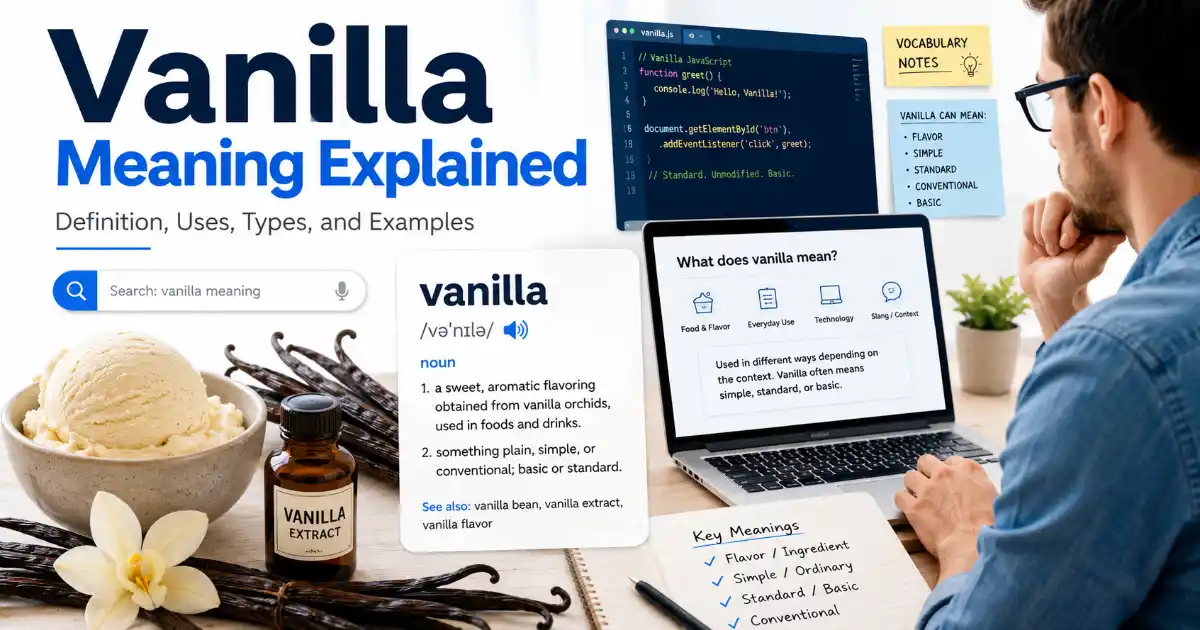
Vanilla is a flavoring and aromatic ingredient that comes from the cured fruit of vanilla orchids. It has a sweet, warm, creamy aroma and appears in foods such as ice cream, cakes, cookies, coffee, and desserts. The word vanilla can also describe something simple, ordinary, or basic, such as a vanilla design or vanilla option.
In some contexts, especially adult conversations, vanilla can describe conventional preferences rather than unusual ones. In technology, vanilla can mean something used in its standard form without major modifications.
Introduction
The word vanilla appears everywhere, from grocery store shelves and restaurant menus to recipes, product descriptions, technology discussions, and everyday conversations. Most people first connect it with the familiar sweet flavor found in ice cream, cakes, frosting, coffee drinks, and other foods. However, vanilla has several meanings that depend on context.
People also use vanilla as an adjective to describe something simple, traditional, or lacking unusual features. For example, someone might call a basic software setup a vanilla installation. In casual conversation, a person may describe a design as vanilla when it follows a conventional style. The word can even have a specialized meaning in adult discussions, where it generally refers to conventional preferences.
This guide explains what vanilla means, where it comes from, how people use it, how natural vanilla differs from imitation vanilla, and why the word has developed broader meanings. It also covers common examples, related terms, mistakes to avoid, and frequently asked questions.
What Does Vanilla Mean?
Vanilla primarily refers to the flavoring and aromatic substance obtained from vanilla orchids. The plants belong to the genus Vanilla, and the most widely recognized commercial species is Vanilla planifolia. The plant produces long fruit pods commonly called vanilla beans.
Fresh vanilla fruit does not immediately have the familiar sweet flavor associated with vanilla extract. Producers cure and process the pods through several stages so that the characteristic aroma and flavor can develop. The finished product can appear as whole beans, vanilla paste, vanilla extract, powder, or other flavoring preparations.
The word also works as an adjective. When someone describes something as vanilla, they often mean that it is simple, conventional, standard, or not especially unusual.
For example, a restaurant might offer a vanilla milkshake, where vanilla refers to the flavor. A technology professional might discuss a vanilla version of software, meaning the standard version without substantial customization.
Context therefore matters. The same word can describe a food ingredient, a simple choice, a standard product, or a conventional preference.
The Main Meanings of Vanilla at a Glance
| Meaning | Where It Is Used | Simple Explanation | Example |
|---|---|---|---|
| Vanilla flavor | Food and drinks | A sweet, aromatic flavor from vanilla | Vanilla ice cream |
| Vanilla bean | Cooking and baking | The cured fruit of a vanilla orchid | Scraped vanilla bean |
| Vanilla extract | Recipes | Flavoring made by extracting vanilla compounds | Add vanilla extract |
| Plain or basic | Everyday language | Simple or conventional | A vanilla design |
| Standard version | Technology | Original version without major changes | Vanilla software |
| Conventional preference | Adult discussions | A preference viewed as traditional or typical | A vanilla relationship |
Where Does Vanilla Come From?
Vanilla comes from orchids in the Vanilla genus. These tropical climbing plants produce long fruit pods that contain many tiny seeds.
Commercial vanilla production involves careful cultivation, harvesting, curing, drying, and storage. The curing process plays a major role in developing the familiar fragrance and flavor.
Vanilla has a long history of culinary use. The plant originated in the Americas and later became an important crop in tropical regions around the world. Today, vanilla is associated with several producing regions, each of which can produce beans with distinctive characteristics.
The word vanilla itself comes through European languages from Spanish vainilla, which relates to a word meaning little pod.
What Does Vanilla Taste Like?
Vanilla usually tastes sweet, warm, creamy, and aromatic. However, real vanilla contains many flavor compounds, so its flavor can have more complexity than the simple sweetness associated with vanilla flavored foods.
Depending on the bean and preparation, natural vanilla can have notes that seem floral, woody, fruity, spicy, or caramel like.
This complexity explains why vanilla works well in both simple and sophisticated recipes. It can provide the main flavor in ice cream or quietly enhance chocolate, fruit, coffee, custards, cakes, and sauces.
Vanilla Bean, Vanilla Extract, and Vanilla Flavor
These terms often appear together, but they do not mean exactly the same thing.
A vanilla bean is the physical cured fruit of the vanilla orchid. When opened, it contains tiny seeds surrounded by aromatic material. Cooks can scrape the seeds into creams, sauces, batters, and other recipes.
Vanilla extract is a prepared flavoring made by extracting flavor compounds from vanilla material into a liquid base. It provides a convenient way to add vanilla flavor without using whole beans.
Vanilla flavor can describe a broader category of products designed to provide a vanilla taste or aroma. Some products use natural vanilla components, while others use flavor compounds produced through other methods.
Natural Vanilla vs Imitation Vanilla
Natural vanilla and imitation vanilla can both provide a recognizable vanilla flavor, but they differ in how their flavor compounds are obtained and in the complexity of the final flavor.
Natural vanilla products use vanilla derived from vanilla beans or vanilla material. Imitation vanilla uses flavor compounds that reproduce important characteristics of vanilla without relying entirely on vanilla beans.
The best choice depends on the recipe, budget, desired flavor, and personal preference. In strongly flavored desserts, the difference may be less noticeable than in delicate preparations where vanilla plays a leading role.
| Type | Main Source | Flavor Character | Common Use |
| Vanilla bean | Cured vanilla fruit | Complex and aromatic | Custards and premium desserts |
| Vanilla extract | Extracted vanilla compounds | Familiar and balanced | Baking and cooking |
| Vanilla paste | Vanilla material in a thick preparation | Rich with visible vanilla seeds | Desserts and sauces |
| Imitation vanilla | Manufactured flavor compounds | Direct vanilla character | Everyday baking |
How Is Vanilla Used in Food?
Vanilla has an unusually broad culinary role. It can serve as the main flavor or support other ingredients.
Common uses include:
- Ice cream
- Cakes
- Cookies
- Custards
- Puddings
- Frosting
- Pancakes
- French toast
- Coffee drinks
- Smoothies
- Milkshakes
- Fruit desserts
- Chocolate desserts
A small amount of vanilla can also make other flavors seem more rounded. Bakers often add it to chocolate recipes even when the finished dessert does not taste strongly like vanilla.
Why Is Vanilla So Common in Desserts?
Vanilla works well with many ingredients because its aroma complements sweet, creamy, fruity, and chocolate based flavors.
It can add depth to a simple sugar based recipe and balance stronger flavors. That versatility makes it useful in both home kitchens and commercial food production.
Vanilla also has a familiar aroma. Many people associate it with desserts, baked goods, warm kitchens, and comforting foods, which helps explain its popularity.
What Does Vanilla Mean in Everyday Language?
Outside food, vanilla often means simple, ordinary, conventional, or lacking unusual features.
For example, someone might say:
- The client chose a vanilla website design.
- The new phone uses a vanilla interface.
- The restaurant offers a vanilla version of the dish.
- The presentation stayed vanilla and traditional.
This usage does not always mean something negative. Sometimes vanilla simply means straightforward or standard.
However, depending on tone, it can suggest that something feels boring or unoriginal. The surrounding conversation determines whether the word sounds neutral, positive, or critical.
What Does Vanilla Mean in Technology?
In technology, vanilla commonly describes software, hardware, or a configuration that remains close to its standard form.
For example, a developer might refer to vanilla JavaScript when discussing JavaScript used without a major framework or library. A gaming community might describe a vanilla game as the original game without extensive modifications.
The basic idea remains the same: vanilla means standard, original, or minimally customized.
| Context | Meaning of Vanilla | Example |
| Food | A flavor or ingredient | Vanilla pudding |
| Design | Simple or conventional | Vanilla layout |
| Software | Standard implementation | Vanilla JavaScript |
| Gaming | Original version | Vanilla game |
| Conversation | Ordinary or basic | A vanilla choice |
| Adult context | Conventional preference | Vanilla preferences |
What Does Vanilla Mean in Adult Conversations?
In adult conversations, vanilla can describe conventional or traditional preferences. It generally contrasts with interests that people consider more unusual or specialized.
The term does not automatically describe a particular activity. Its meaning depends on the people involved and the context.
Because the word can carry different meanings, readers should avoid assuming that someone means food or technology when the surrounding conversation clearly points toward another context. It is also better to avoid labeling another person’s preferences without understanding what they mean by the term.
Examples of Vanilla in Sentences
The word can appear naturally in several contexts.
Food Examples
She ordered vanilla ice cream after dinner.
The recipe calls for one teaspoon of vanilla extract.
The bakery makes a rich vanilla cake with buttercream frosting.
Everyday Examples
The client wanted a vanilla design without complicated features.
The basic package is fairly vanilla but works well for most users.
Technology Examples
The developer started with vanilla JavaScript before adding other tools.
The game community prefers the vanilla version without modifications.
Descriptive Examples
The room has a vanilla color that creates a soft, neutral appearance.
The company chose a vanilla approach because it was simple and reliable.
Vanilla vs Plain: Are They the Same?
Vanilla and plain can overlap, but they are not always interchangeable.
Plain usually means something without additional flavor, decoration, or complexity. Vanilla specifically identifies a flavor or, in informal language, something conventional or basic.
For example, plain yogurt does not necessarily contain vanilla. Vanilla yogurt has a specific flavor.
In casual language, both words can describe something uncomplicated, but vanilla often carries a stronger sense of being conventional or standard.
Vanilla vs Chocolate: Why Do People Compare Them?
Vanilla and chocolate represent two of the most familiar dessert flavors, so people often compare them when discussing ice cream, cakes, milkshakes, frosting, and other foods.
Chocolate generally provides a deeper, richer flavor associated with cocoa. Vanilla tends to provide a lighter, sweeter, and more aromatic profile.
Neither flavor is objectively better. The choice depends on personal taste and the recipe.
Common Mistakes About Vanilla
People often misunderstand vanilla because the word has several meanings.
Assuming Vanilla Means Boring
When someone describes something as vanilla, they may simply mean standard or conventional. The word can imply simplicity without necessarily insulting the subject.
Confusing Vanilla Beans With Extract
A vanilla bean and vanilla extract are different products. A recipe that calls for one does not always allow a direct one to one substitution.
Assuming All Vanilla Products Are Identical
Natural vanilla, vanilla extract, vanilla paste, vanilla powder, and imitation vanilla can differ in ingredients, preparation, flavor, and price.
Missing the Context
A sentence about vanilla JavaScript has nothing to do with ice cream. Likewise, a casual conversation about a vanilla design may use the word metaphorically.
Treating Vanilla as a Strict Technical Definition
In everyday language, vanilla often has flexible meaning. The exact interpretation depends on the field and the surrounding sentence.
How to Choose the Right Vanilla for a Recipe
The right product depends on what the recipe needs.
For cookies, cakes, and everyday baking, vanilla extract offers convenience and consistent flavor. Vanilla beans can work well when the vanilla flavor plays a central role and the recipe benefits from visible seeds.
Vanilla paste can provide a concentrated flavor while also adding the appearance of vanilla seeds. Imitation vanilla can make sense when cost, availability, or the recipe itself makes the distinction less important.
Always check the recipe instructions before substituting one type for another because concentrations and ingredients can vary.
Conclusion
Vanilla has a simple core meaning but a surprisingly wide range of uses. It primarily refers to the aromatic ingredient produced from vanilla orchids, including vanilla beans and products such as vanilla extract. In everyday language, the word can also describe something simple, conventional, or standard.
Context makes the difference. A vanilla ice cream refers to flavor, vanilla JavaScript refers to a standard approach to JavaScript, and a vanilla design may describe something uncomplicated. In adult conversations, the term can refer to conventional preferences.
The most important point is to look at the surrounding words before deciding what vanilla means. Whether it appears in a recipe, a technology discussion, a product description, or casual conversation, the context usually makes the intended meaning clear.
Frequently Asked Questions About Vanilla
Is vanilla a flavor or a plant?
Vanilla can refer to both. The vanilla plant is an orchid that produces fruit pods, while vanilla flavor comes from those pods and related flavoring preparations.
Is vanilla naturally sweet?
Vanilla itself provides a distinctive aromatic flavor, but it is not simply the same thing as sugar. Many vanilla flavored foods taste sweet because they also contain sugar or other sweeteners.
What does vanilla mean in slang?
In casual slang, vanilla often means ordinary, basic, conventional, or not unusual. Its meaning changes according to context.
What does vanilla mean in technology?
In technology, vanilla usually means the standard or original form of software without major customization, modifications, or additional layers.
Is vanilla extract the same as vanilla bean?
No. A vanilla bean is the cured fruit of the vanilla orchid. Vanilla extract is a prepared liquid flavoring made using vanilla material and an extraction process.
Why is vanilla used in chocolate recipes?
Vanilla can complement chocolate and help create a more rounded flavor profile. It may appear in a chocolate recipe even when the final dessert does not have an obvious vanilla taste.
Is vanilla always a positive description?
No. In some situations, vanilla simply means standard or conventional. In others, a speaker may use it to suggest that something feels boring or lacks originality. Tone and context matter.
Why does vanilla have so many meanings?
The original food related meaning expanded into a metaphor for simplicity and conventionality. Technology and other communities later adopted the word to describe standard or unmodified versions.