
Quick Answer
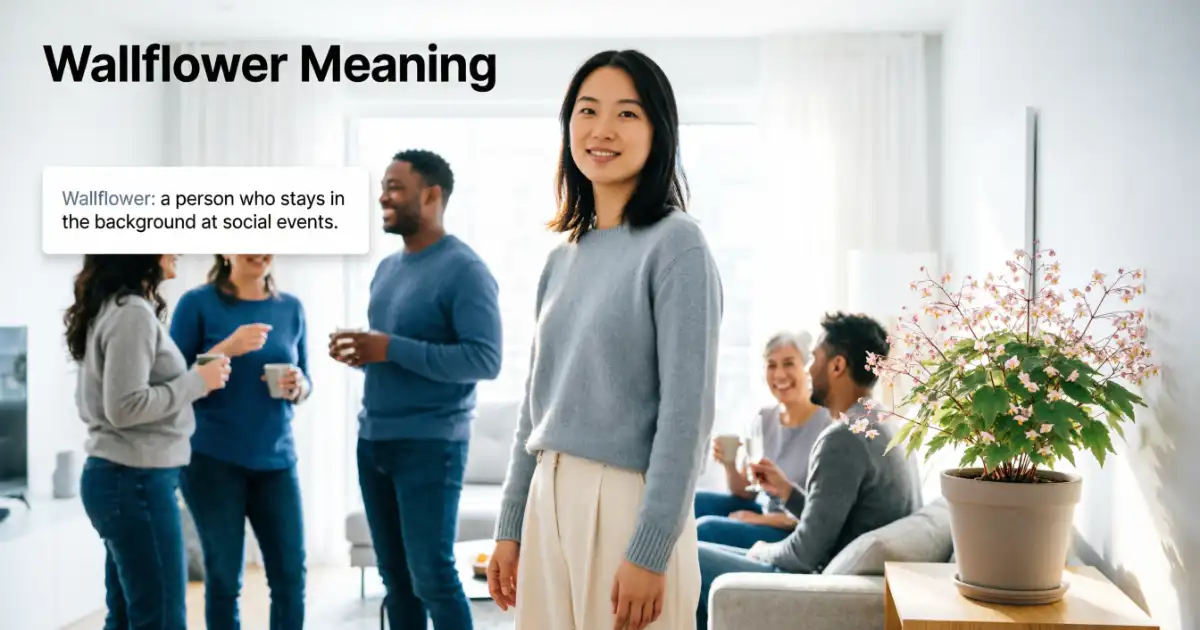
A wallflower is a person who tends to stay quiet, avoid the center of attention, or remain on the edge of a social gathering rather than actively joining in. The word often describes someone who feels shy, reserved, or uncomfortable in large groups. For example, a person who stands quietly at a party while watching others socialize may be called a wallflower. The term can also refer literally to a flowering plant, but when people use wallflower to describe a person, they usually mean someone who stays in the background.
Introduction
People often search for the meaning of wallflower after seeing it in a book, movie, conversation, social media post, or description of someone’s personality. The word can sound confusing because it combines two ordinary words, wall and flower, but its common figurative meaning has little to do with gardening. Instead, it describes a person who remains quiet and unnoticed in social situations.
Calling someone a wallflower can describe shyness, introversion, social discomfort, or simply a preference for observing instead of participating. The meaning also depends heavily on context. Sometimes the word sounds sympathetic and recognizes that a quiet person may need time to become comfortable. In other situations, it can suggest that someone rarely takes part in social activities.
This guide explains what wallflower means, where the expression comes from, how people use it, and how it differs from related terms such as shy, introverted, reserved, and antisocial. It also provides natural examples so readers can recognize the word in everyday English.
What Does Wallflower Mean?
The most common meaning of wallflower describes a person who stays quiet and does not actively participate in social situations. The person may stand or sit away from the main group, avoid starting conversations, or feel more comfortable observing other people.
The image behind the expression helps explain its meaning. Imagine a person at a party standing near the wall while other guests dance, talk, and socialize. That person may appear almost like a flower growing against a wall, quietly remaining in the background.
The term does not automatically mean that someone dislikes people. A wallflower may enjoy socializing but feel nervous about approaching others. Another person may simply prefer listening instead of speaking. Someone can also behave like a wallflower in one setting and become outgoing in another.
For example:
Maya was a wallflower at the office party and spent most of the evening listening to conversations.
Here, wallflower suggests that Maya stayed in the background instead of actively joining the social activity.
The word can also have a literal meaning. A wallflower is a type of flowering plant, but in everyday conversations about personality, the figurative meaning usually comes first.
Wallflower Meaning in Different Contexts
The meaning can change slightly depending on how someone uses the word. Understanding the context prevents confusion.
| Meaning | Where It Is Used | Simple Explanation | Example |
|---|---|---|---|
| Quiet person | Social situations | Someone who stays in the background | He was a wallflower at the party. |
| Shy person | Conversations | Someone reluctant to interact | She can be a wallflower around strangers. |
| Observer | Groups and events | Someone who watches more than participates | He became a wallflower during the discussion. |
| Flowering plant | Gardening | A plant commonly known as a wallflower | She planted wallflowers in the garden. |
The personality meaning usually appears in conversations about parties, school, dating, friendships, workplaces, and other social settings.
Why Is Someone Called a Wallflower?
People may call someone a wallflower because that person rarely seeks attention or takes the initiative in social situations. The behavior can come from several different reasons.
A person may feel shy around strangers. Someone else may need more time to become comfortable in a new environment. Another person might simply enjoy listening and observing rather than speaking.
For example, a new employee at a company gathering may spend the first hour quietly listening to coworkers. Calling that employee a wallflower describes the visible behavior, but it does not necessarily explain why the person behaves that way.
This distinction matters. The word describes how someone participates socially. It does not provide a complete explanation of their personality.
Wallflower Examples in Everyday Conversation

The word appears naturally in many everyday situations.
Here are several examples:
- At a party:
“I was such a wallflower at my first college party.” - At work:
“He is usually a wallflower during large team meetings.” - At school:
“The quiet student seemed like a wallflower during the class discussion.” - At a wedding:
“She started as a wallflower but eventually joined everyone on the dance floor.” - Among strangers:
“I tend to be a wallflower when I do not know anyone.” - In a new environment:
“The new student was a wallflower during the first few weeks.”
These examples show that wallflower usually describes behavior rather than a permanent personality trait.
Is Being a Wallflower the Same as Being Shy?
Not exactly. Shy and wallflower overlap, but they describe slightly different ideas.
Shyness usually refers to discomfort, nervousness, or hesitation around other people. Wallflower focuses more on what the person does in a social setting. A wallflower stays in the background, while a shy person may feel nervous even when they want to participate.
| Term | Meaning | Best Use | Example |
| Wallflower | Someone who stays in the background | Describing social behavior | She was a wallflower at the party. |
| Shy | Someone who feels nervous or hesitant socially | Describing social discomfort | He is shy around new people. |
| Introverted | Someone who often prefers lower stimulation or more private settings | Describing personality tendencies | She is introverted and enjoys quiet evenings. |
| Reserved | Someone who does not readily express thoughts or feelings | Describing communication style | He is reserved during meetings. |
| Antisocial | Often used casually to mean avoiding people, but technically has a different meaning | Use carefully | She avoids crowds, but that does not make her antisocial. |
A person can be shy without being a wallflower, and an introverted person does not necessarily act like a wallflower.
Wallflower vs. Introvert
People often confuse wallflower with introvert, but the terms are not interchangeable.
An introvert generally describes a personality tendency. Introverted people may enjoy social interaction but often prefer smaller groups, quiet environments, or time alone to recharge.
Wallflower describes social behavior. Someone may become a wallflower at a crowded party even if that person is normally confident and outgoing.
For example, a confident public speaker could feel uncomfortable at a large networking event because they know nobody there. They might spend the evening quietly observing. In that situation, wallflower describes their behavior at that particular event.
Is Wallflower an Insult?
Usually, wallflower is not a strong insult. However, its tone depends on the speaker and the situation.
Someone might use the word affectionately to describe a quiet friend. For example, a person could say, “I used to be a wallflower, but now I love meeting new people.”
The term can become negative when someone uses it to criticize another person for being too quiet or socially inactive. Calling someone a wallflower can also feel dismissive if the person does not identify with the label.
When describing someone directly, consider the tone and relationship. If the goal is to be respectful, phrases such as quiet, reserved, or more comfortable observing may sound more neutral.
How to Use Wallflower in a Sentence
Wallflower works most naturally as a noun.
Common sentence patterns include:
Someone is a wallflower.
“Jordan is a wallflower at large social events.”
Someone can be a wallflower.
“She can be a wallflower when she meets new people.”
Someone was a wallflower at an event.
“He was a wallflower at the wedding.”
Someone starts as a wallflower.
“She started as a wallflower but eventually joined the conversation.”
The plural form is wallflowers.
For example:
“Several wallflowers stood near the edge of the dance floor.”
Wallflower in School and College
A student may act like a wallflower during group discussions, classroom activities, parties, or campus events. They might listen carefully without volunteering answers or starting conversations.
This behavior does not necessarily indicate a lack of knowledge or interest. Some students need more time to formulate their thoughts, while others feel more comfortable participating in smaller groups.
Teachers and classmates should avoid assuming that a quiet student has nothing to contribute. A person who rarely speaks may still have thoughtful ideas and strong social connections.
Wallflower in the Workplace
The word can also describe someone who stays quiet during workplace events or meetings.
For example:
“She is usually a wallflower at company parties.”
In this sentence, the word describes her social behavior at company events. It does not necessarily mean that she lacks confidence at work.
A quiet employee may contribute through written communication, one on one conversations, research, planning, or careful listening. Social visibility and professional ability are not the same thing.
Wallflower in Dating and Relationships
Someone may also describe themselves as a wallflower when talking about dating.
A person who rarely approaches potential partners, avoids crowded social events, or waits for others to start conversations might call themselves a wallflower.
For example:
“I was a wallflower when I started dating, so I rarely made the first move.”
The term can sound self descriptive and lighthearted in this context. It does not necessarily suggest that the person lacks confidence in every part of life.
Wallflower as a Plant
Wallflower also has a literal meaning in gardening. It refers to flowering plants in the genus Erysimum and related plants commonly grown for their colorful flowers.
The literal plant meaning helps explain the figurative expression. The word creates an image of a flower growing quietly beside a wall.
When you see wallflower in a gardening article, plant catalog, or landscaping discussion, the writer may be referring to the plant rather than a person’s personality.
Context usually makes the intended meaning clear.
Common Mistakes About the Word Wallflower
Several misunderstandings can make this word confusing.
Mistaking Wallflower for Introvert
Being an introvert does not automatically make someone a wallflower. Introversion relates to personality tendencies, while wallflower describes behavior in a social setting.
Assuming a Wallflower Hates People
A quiet person may enjoy friendships and conversations. They may simply need time to become comfortable or prefer smaller groups.
Treating Wallflower as a Permanent Label
Someone can be a wallflower in one situation and highly outgoing in another. The term often describes a particular social behavior rather than someone’s entire identity.
Confusing Wallflower With Antisocial
In casual conversation, people sometimes use antisocial to describe someone who avoids social activities. However, antisocial has a specific psychological meaning and should not simply replace words such as shy, reserved, introverted, or wallflower.
Assuming Quiet Means Unfriendly
A person who does not start conversations may still be friendly, interested, and approachable. Quiet behavior does not automatically indicate a negative attitude.
When Should You Use the Word Wallflower?
Use wallflower when you want to describe someone who stays in the background during a social event or group interaction.
It works especially well in informal conversations, personal descriptions, storytelling, and character descriptions.
For example:
“At first, Sam was a wallflower, but after meeting a few people, he became much more comfortable.”
If you need a more neutral description, words such as quiet, reserved, or less outgoing may work better.
The best word depends on whether the focus is social behavior, personality, emotional comfort, or communication style.
Conclusion
The meaning of wallflower is straightforward once the context becomes clear. When used to describe a person, it means someone who tends to stay quiet, observe others, and remain in the background during social situations. The word can describe shyness or reserved behavior, but it does not automatically mean that someone dislikes people or lacks confidence.
It is also important to distinguish wallflower from introvert, shy, reserved, and antisocial. These terms overlap in everyday conversation but describe different ideas. Wallflower focuses mainly on how someone behaves in a social setting.
The word also has a literal gardening meaning, so context matters. Whether you encounter wallflower in a conversation, novel, social media post, or gardening guide, the surrounding words usually reveal which meaning applies.
Frequently Asked Questions About Wallflower
What does wallflower mean in simple terms?
A wallflower is someone who tends to stay quiet and in the background during social situations instead of actively participating or seeking attention.
Is wallflower a negative word?
Wallflower is usually mild rather than strongly negative. However, the tone depends on how someone uses it. It can sound affectionate, neutral, or mildly critical.
Does wallflower mean shy?
Not exactly. A shy person may feel nervous or uncomfortable around others, while a wallflower is someone who stays in the background. Shyness can be one reason someone behaves like a wallflower.
Can an introvert be a wallflower?
Yes. An introvert may behave like a wallflower in a large social setting, but introversion and being a wallflower have different meanings.
Can an outgoing person be a wallflower?
Yes. Someone who is normally outgoing may become a wallflower in an unfamiliar group, uncomfortable environment, or situation where they do not know anyone.
What is the opposite of a wallflower?
Depending on the context, possible opposites include an outgoing person, social butterfly, extrovert, or someone who actively seeks social interaction.
Is wallflower a noun or adjective?
Wallflower is primarily a noun when it describes a person. For example, “She is a wallflower.” The word also refers to a type of flowering plant.
Why is someone called a wallflower?
The expression creates an image of someone standing quietly beside a wall at a social event, much like a flower growing beside a wall. It came to describe people who remain in the background.