
Quick Answer
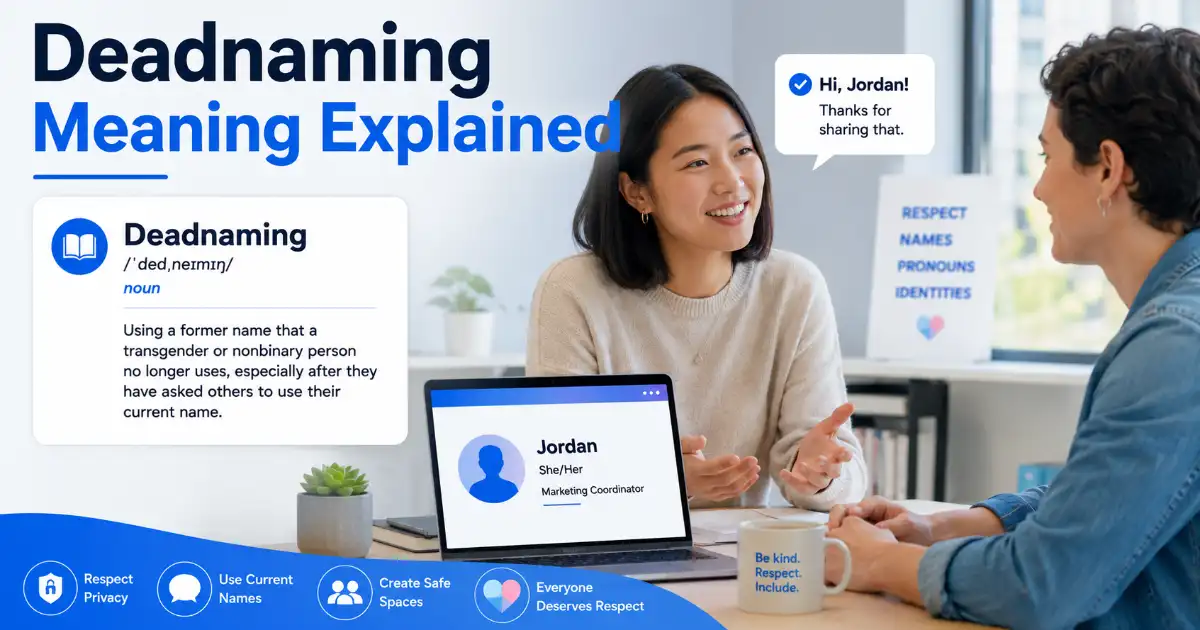
Deadnaming means referring to a transgender or nonbinary person by a former name that they no longer use, especially after they have asked others to use their current name. The former name is often called a deadname.
Deadnaming can happen accidentally when someone is still adjusting, but repeatedly or intentionally using a former name can feel disrespectful, invasive, or harmful. The respectful approach is simple: use the person’s current name and pronouns, correct mistakes briefly, and move on.
Introduction
People often search for deadnaming because they encounter the term in conversations about transgender people, social media, schools, workplaces, or online communities. Some readers want a basic definition, while others want to understand whether using a former name by accident counts as deadnaming, what to say after making a mistake, or why the issue matters.
The term connects to the broader idea of respecting a person’s gender identity and the name they currently use. The American Psychological Association explains that gender identity refers to a person’s internal sense of gender and recognizes that transgender people may make social, legal, or medical changes as part of a personal transition.
This guide explains what deadnaming means, how it differs from an accidental name mistake, where it commonly happens, how to respond respectfully, and what people should avoid when discussing someone’s former name.
What Does Deadnaming Mean?
Deadnaming is the act of calling a transgender or nonbinary person by a former name that they no longer use. That former name is commonly called a deadname.
For example, imagine that a person previously used the name Alex but now goes by Jordan. If friends, coworkers, teachers, or relatives know that Jordan uses that name and continue calling Jordan Alex, that can be described as deadnaming.
The context matters. A person may mention their former name when discussing their own history, completing certain records, or explaining a past event. That does not automatically mean they are being deadnamed. The key issue involves the name the person currently uses and whether someone is respecting that preference.
A person’s transgender identity does not depend on medical treatment, surgery, appearance, or legal paperwork. The APA notes that transgender people can transition in different ways and that transition can include social changes such as using a different name or pronouns.
Deadname vs. Current Name: What Is the Difference?
The simplest distinction is whether the name reflects what the person currently asks others to use.
| Term | Meaning | Best Use | Example |
|---|---|---|---|
| Deadname | A former name a person no longer uses | Historical context when the person is comfortable with it | A former name mentioned by the person |
| Current name | The name the person currently uses | Everyday conversation | Using Jordan instead of a former name |
| Legal name | The name appearing on certain official records | Situations that genuinely require legal information | A required government form |
| Nickname | An informal version or alternative name | When the person prefers it | Someone named Robert using Rob |
A legal name and a deadname can sometimes be the same name, but the terms describe different ideas. A legal name refers to what appears on official records. A deadname refers to a former name that a transgender or nonbinary person no longer uses.
Why Does Deadnaming Matter?
A person’s name is closely connected to everyday identity. It appears at school, at work, during appointments, in social conversations, and across online accounts. When someone has changed the name they use, consistently using the current name helps others interact with them in a respectful way.
Deadnaming can also reveal personal information that someone may not want others to know. GLAAD describes revealing a transgender person’s former name without consent as a privacy issue and notes that deadnaming and misgendering can have harmful real world effects.
The impact can depend heavily on the situation. An accidental mistake from someone who is learning a new name is different from deliberately using a former name to embarrass, challenge, or expose someone.
Is Accidentally Using Someone’s Old Name Deadnaming?
An accidental mistake can involve using a former name, but intention and response matter.
People who have known someone for years may need time to adjust after a name change. Habit can cause an old name to come out before the speaker consciously thinks about it. A single mistake does not necessarily show disrespect.
The best response is to correct the mistake without making the situation bigger than necessary.
For example:
Sorry, Jordan. I meant Jordan.
Then continue the conversation.
There is usually no need for a long explanation, repeated apology, or discussion about the person’s former name.
Intentional Deadnaming Is Different From a Mistake
Intent matters because people can make genuine mistakes while learning a new name. Intentional deadnaming involves knowingly using a former name after understanding that the person no longer uses it.
For example, someone might say:
I know you use Jordan now, but I am going to keep calling you Alex.
That statement shows a deliberate refusal to use the person’s current name.
Another situation involves using a former name publicly to reveal information about someone’s transgender history without permission. That can create privacy and safety concerns, particularly in workplaces, schools, online communities, or public settings. GLAAD specifically discusses targeted deadnaming as part of broader online harassment directed at transgender and nonbinary people.
Common Examples of Deadnaming
Deadnaming can appear in many ordinary situations.
At School or College
A student may ask teachers and classmates to use a different name from the one previously associated with their school records.
A teacher who knows the student’s current name should generally use that name in ordinary conversation and classroom interaction.
In the Workplace
A coworker might update their name in email, messaging platforms, or introductions. Other employees may accidentally use the old name during the adjustment period.
A respectful coworker corrects the mistake and uses the current name going forward.
In Family Conversations
Family members sometimes struggle with a name change because they have used the former name for many years. Familiarity can explain an accidental mistake, but it does not make intentional refusal respectful.
On Social Media
Deadnaming can become especially serious online because posts, comments, screenshots, and public profiles can spread quickly. Using someone’s former name to expose personal history without consent can turn a private matter into public information.
In Everyday Conversation
Someone may simply introduce a person by the wrong name because of an old habit. A quick correction usually handles the situation better than an extended explanation.
What Should Someone Do After Accidentally Deadnaming a Person?
The most useful response is simple and respectful.
- Stop and correct the name.
- Use the person’s current name.
- Avoid making the person comfort you.
- Do not ask them to explain their transition.
- Practice the correct name so the mistake becomes less likely.
- If appropriate, apologize briefly.
For example:
Sorry, Jordan. I used your old name by mistake.
That response acknowledges the mistake without turning the conversation into a discussion about the person’s private history.
How Can Someone Stop Making the Same Mistake?
Changing a long standing habit takes conscious practice. Someone who regularly used a person’s former name may need to retrain their automatic response.
Useful strategies include:
- Practice the current name privately.
- Use the person’s current name when thinking about them.
- Update contact information when appropriate.
- Avoid repeatedly saying the former name during practice.
- Ask trusted people to gently correct mistakes.
- Focus on improvement rather than making repeated excuses.
The goal is not perfection after one conversation. The goal is consistent respect over time.
Deadnaming vs. Misgendering
Deadnaming and misgendering are related but not identical.
Deadnaming involves using a former name that a person no longer uses.
Misgendering involves referring to someone with an incorrect gendered term, such as using the wrong pronouns or gendered language.
A person can experience both at the same time. For example, someone might use a former name and incorrect pronouns in the same sentence.
| Term | Meaning | Example |
| Deadnaming | Using someone’s former name | Calling Jordan by a former name |
| Misgendering | Using incorrect gendered language | Referring to Jordan as he when Jordan uses she |
| Name mistake | Accidentally using the wrong name | Calling Jordan by a former name once, then correcting it |
| Privacy violation | Sharing private identity information without consent | Publicly revealing someone’s former name |
When Might a Former Name Be Relevant?
There are situations where a former name may appear for practical or historical reasons. For example, older documents, records, publications, or archived material may contain a name that the person no longer uses.
That does not automatically make the reference disrespectful.
The important questions are:
- Does the information need to be mentioned?
- Is the former name necessary for understanding the situation?
- Has the person indicated that they are comfortable discussing it?
- Could mentioning it reveal private information?
- Can the situation be explained without unnecessarily repeating the former name?
When a former name is not necessary, there is usually little reason to include it.
How Should Schools and Workplaces Handle Name Changes?
Schools and workplaces can reduce mistakes by making current names easy to use in everyday settings.
For example, organizations can update appropriate directories, email displays, class lists, badges, messaging systems, and other routine materials when their policies and systems allow it.
Official records can create additional complications because some documents may require a legal name. That does not mean employees, teachers, or classmates need to use a legal name in every ordinary interaction.
The most useful approach separates administrative requirements from everyday respectful communication.
What Should You Avoid When Someone Changes Their Name?
Some questions can unintentionally turn a normal introduction into an invasive conversation.
Avoid asking unnecessary questions such as:
- What was your old name?
- Why did you change your name?
- What name did your parents give you?
- What does your birth certificate say?
- What medical procedures have you had?
The APA advises that people should not ask transgender individuals about their bodies, assigned sex at birth, medical history, or previous names unless the individual indicates that they are comfortable discussing those subjects.
A person’s current name usually provides all the information needed for ordinary conversation.
Common Mistakes People Make About Deadnaming
Several misunderstandings can make conversations about deadnaming more confusing than necessary.
Mistaking Every Name Error for Intentional Disrespect
An accidental mistake and deliberate refusal are not identical. Someone learning a new name may slip up because of habit.
Assuming a Legal Name Must Always Be Used
A legal name may appear on certain official documents, but that does not automatically determine what name someone uses socially.
Repeating the Former Name While Explaining the Mistake
Someone does not need to repeat the former name several times to explain what happened.
Turning the Conversation Into a Debate
A person’s name does not need to become a public argument. If the person has clearly stated what name they use, respectful communication starts there.
Assuming Every Transgender Person Has the Same Preferences
People differ. Some may be comfortable discussing a former name. Others may consider it deeply private. The safest approach is to follow the person’s stated preference.
Is Deadnaming Always Intentional?
No. Deadnaming can happen accidentally, especially when someone has used a former name for many years.
The word can describe the behavior regardless of whether the speaker intended harm, but the social meaning changes with context. An accidental slip followed by a quick correction is different from deliberately using a former name to disrespect someone.
This distinction helps people respond appropriately instead of treating every mistake as evidence of malicious intent.
What Should You Say If Someone Corrects You?
A simple response works best.
You can say:
Sorry, thanks for correcting me.
Or:
Sorry, Jordan. I will use Jordan.
Then continue the conversation.
Avoid making the correction about your own embarrassment. A long speech about how difficult the change is can place unnecessary emotional pressure on the person who was misnamed.
Conclusion
Deadnaming means using a transgender or nonbinary person’s former name after they have moved to a different name. The situation can range from an accidental slip caused by habit to deliberate use intended to disrespect or expose someone.
The practical rule is straightforward: use the name a person currently asks others to use. If a mistake happens, correct it briefly and keep moving. There is no need to debate someone’s identity or ask for private information about their past. Respectful naming is a small everyday choice that can make communication more considerate, private, and inclusive.
Frequently Asked Questions About Deadnaming
What is a deadname?
A deadname is a former name that a transgender or nonbinary person no longer uses. The term often appears when discussing names used before a person adopted their current name.
What does deadnaming mean?
Deadnaming means referring to someone by a former name they no longer use, particularly when others know that the person uses a different current name.
Is accidentally deadnaming someone always harmful?
Not necessarily. Accidental mistakes can happen because of habit. Correcting the mistake, apologizing briefly, and using the current name can help prevent repeated problems.
Is deadnaming the same as misgendering?
No. Deadnaming concerns a former name. Misgendering concerns incorrect gendered language, such as using pronouns or gendered terms that do not match how a person identifies.
Can a transgender person use their former name?
Yes. A person can discuss or use any name they choose. The important point is that each person decides what name they currently use and what personal history they want to share.
Why do people consider deadnaming disrespectful?
A former name can be connected to a person’s past identity or private history. Using it without consent can disregard the person’s current name and, in some situations, expose information they did not want others to know.
What should someone do after accidentally using a deadname?
Correct the mistake briefly, apologize if appropriate, and continue using the person’s current name. Practicing the current name can also help prevent future mistakes.
Should someone ask a transgender person for their deadname?
Usually, there is no reason to ask. A former name can be personal information, and the APA recommends avoiding questions about previous names unless the person is comfortable discussing them.