
Quick Answer
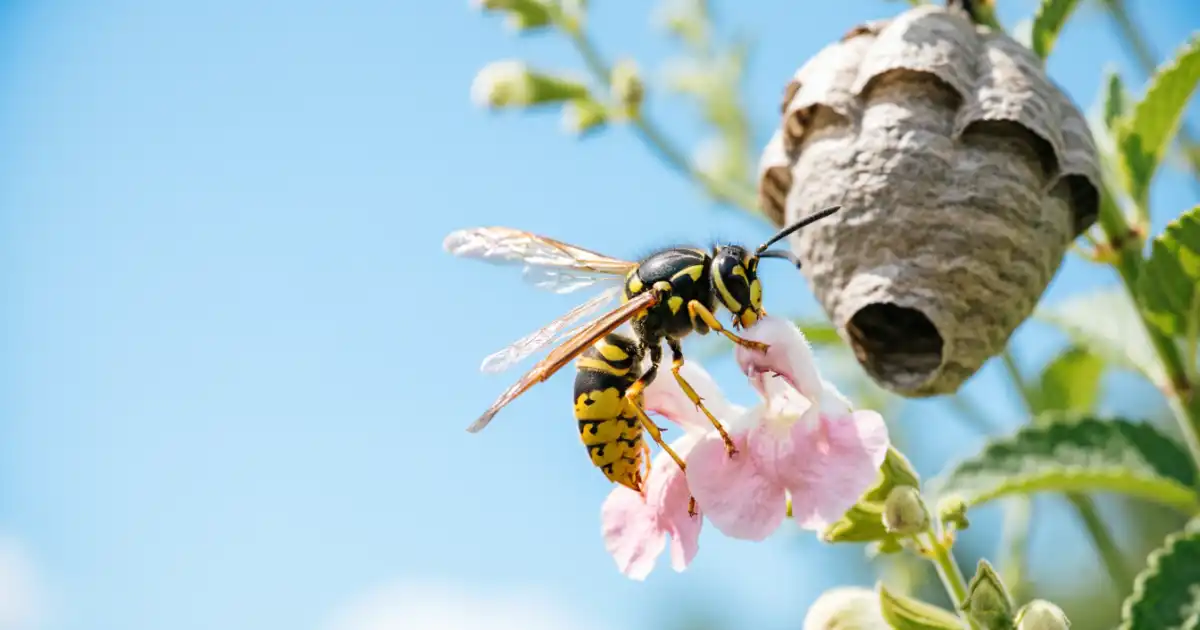
A wasp is a flying insect closely related to bees and ants. Wasps usually have slender, smooth bodies, narrow waists, and relatively few hairs compared with bees. Some wasps live in colonies, while others live alone.
Many species help gardens and ecosystems by eating insects, controlling pests, and visiting flowers. However, social wasps such as yellowjackets and some paper wasps can sting when they feel threatened or when their nest is disturbed.
The word wasp refers to a very large and diverse group of insects, so not every wasp behaves aggressively or builds a nest near homes. Understanding the type of wasp you are seeing can help you decide whether to leave it alone, take precautions, or seek professional help.
Introduction
People often search for wasp because they have spotted one around their home, garden, porch, garage, or outdoor food. Others want to know whether a wasp is dangerous, how to identify it, where it builds its nest, or how it differs from a bee or hornet.
The problem is that the word wasp covers many different insects with very different behaviors.
Some wasps are social and live together in colonies. Yellowjackets and paper wasps are familiar examples. Other wasps are solitary and spend most of their lives hunting insects, visiting flowers, or raising offspring in individual nests. Parasitoid wasps are another major group. Many are extremely small and help control insect pests.
This guide explains what a wasp is, how to recognize common types, where wasps build nests, why they sting, and what to do if you find one around your home. It also explains why not every wasp needs to be removed.
What Is a Wasp?
A wasp is an insect belonging to the order Hymenoptera, the same broad insect group that includes bees and ants. Wasps vary greatly in size, shape, color, lifestyle, and behavior. Some are tiny, while others can be more than an inch long.
Many wasps have smooth bodies with relatively little hair. Their bodies can be black, brown, yellow, orange, metallic, or combinations of these colors. Some have long legs that hang below their bodies while flying.
Wasps generally fall into two broad lifestyle groups:
| Type | Where It Is Used | Simple Explanation | Example |
|---|---|---|---|
| Social wasp | Colonies and nests | Lives with many other wasps | Yellowjacket |
| Solitary wasp | Individual nests | Usually lives and hunts alone | Digger wasp |
| Parasitoid wasp | Gardens and natural habitats | Uses another insect to complete its life cycle | Ichneumonid wasp |
| Paper wasp | Homes and buildings | Builds exposed paper nests | Paper wasp |
The important point is that wasp does not automatically mean dangerous insect. Some species rarely interact with people and provide useful natural pest control.
Wasp vs Bee vs Hornet
Wasps are frequently confused with bees and hornets. Looking at body shape, hair, behavior, and nesting habits can make identification easier.
| Insect | Body | Typical Behavior | Nesting |
|---|---|---|---|
| Wasp | Usually smooth and slender | Varies greatly by species | Ground, cavities, buildings, trees |
| Bee | Usually hairier | Often focused on flowers | Hives, cavities, or individual nests |
| Hornet | A type of social wasp | Can defend colonies | Large enclosed or paper nests |
Bees generally have more hair, particularly around the thorax and legs, because many species collect pollen. Wasps tend to have smoother bodies and narrower waists.
The word hornet can also cause confusion. Hornets are wasps, but not every wasp is a hornet. Yellowjackets and paper wasps are also wasps.
Common Types of Wasps
There are thousands of wasp species, and they have very different lifestyles. A few groups are especially relevant around homes and gardens.
Yellowjackets
Yellowjackets are social wasps that commonly have yellow and black markings. They can build nests in the ground, buildings, wall spaces, or other protected locations depending on the species.
They are often noticed around outdoor food and drinks, especially later in the warm season. Some species become more troublesome around people as colonies grow and food becomes harder to find.
Yellowjackets can sting repeatedly because they do not lose their stinger after a normal sting.
Paper Wasps
Paper wasps are generally slender and have long legs. Their nests are made from paper like material and often consist of an exposed comb rather than a fully enclosed structure.
You may find paper wasp nests under roof overhangs, eaves, beams, porches, garages, sheds, and other sheltered surfaces. Paper wasps are usually not aggressive while simply visiting flowers, but they may defend their nest when it is threatened.
Solitary Wasps
Solitary wasps do not live in large colonies like yellowjackets. Many hunt insects or spiders and provide natural pest control in gardens.
They may dig individual nests in soil or use cavities, stems, wood, or other protected spaces. They generally do not defend a large communal nest, which makes them much less likely to sting people.
Parasitoid Wasps
Parasitoid wasps are especially interesting because many are tiny and are rarely noticed by people. They lay their eggs in or on other insects, and their developing young use the host as part of their life cycle.
Many parasitoid wasps help regulate populations of insects that damage plants. Most do not sting or bite people and do not build colonies that need human management.
Where Do Wasps Build Nests?
The location depends on the species. Wasps may build nests in soil, trees, wall cavities, roof spaces, sheds, garages, under eaves, or other protected areas. Some species make visible paper nests, while others create individual underground nests.
A visible nest does not necessarily mean there is a dangerous infestation. The number of wasps, species, nest location, and proximity to people all matter.
A nest beside a frequently used doorway deserves more attention than a solitary wasp visiting flowers at the far end of a yard.
Why Do Wasps Sting?
Wasps do not normally spend their time looking for people to sting. Many stings occur when a person accidentally threatens a wasp or approaches a nest.
Social wasps are more likely to defend their colony because the nest contains developing young and resources. Solitary wasps usually have no large colony to protect and are generally less defensive toward people.
Common situations that can increase the chance of a sting include:
- Stepping on a ground nesting wasp
- Accidentally grabbing a wasp
- Disturbing a nest
- Swatting repeatedly at a wasp near the body
- Using equipment close to a hidden nest
- Blocking a wasp’s normal flight path
If a wasp is flying nearby, staying calm and moving away slowly is generally safer than aggressively swatting at it.
What Should You Do If You Find a Wasp Nest?
Start by identifying the situation rather than immediately trying to destroy the nest. Determine whether you are seeing individual wasps or a steady stream of insects entering and leaving one location.
Consider these factors:
- Where is the nest? A nest near a doorway or play area creates more concern than one in an unused part of a yard.
- How large is the colony? A small early nest can be very different from a mature colony.
- Can you safely stay away from it? If people and pets can avoid the area, removal may not be necessary.
- Is the species known? Identification can help determine how defensive the insect is.
- Is anyone allergic to insect stings? If so, professional assistance is especially important.
Penn State Extension recommends assessing the insect, nest location, accessibility, and colony size before attempting management. People with known severe sting allergies should not attempt to remove a colony themselves.
For a large nest, a hidden nest inside a wall or roof, or a nest in a difficult location, professional pest management may be the safer option.
Are Wasps Good for the Environment?
Yes. Although some wasps are pests around homes, many species provide valuable ecological services.
Wasps can prey on caterpillars, flies, beetles, spiders, and other organisms. Some species specialize in particular pests, which makes them useful natural predators. Wasps can also visit flowers and contribute to pollination.
This means removing every wasp you see is not always necessary. If a solitary wasp is simply visiting flowers or hunting insects away from people, leaving it alone can be the simplest approach.
What Does a Wasp Sting Feel Like?
A wasp sting commonly causes pain, burning, redness, itching, or swelling around the sting site. The reaction varies from person to person.
Some people experience a larger local reaction, while others can have an allergic reaction. Severe symptoms can include difficulty breathing, fainting, or swelling that affects the throat. These symptoms require immediate emergency medical attention.
If someone has a known serious allergy to insect stings, they should follow the emergency plan provided by their healthcare professional.
Do not assume that every sting will produce the same reaction. Individual responses can differ.
Common Mistakes People Make About Wasps
Assuming every wasp is aggressive
Many wasps rarely bother people. Solitary and parasitoid species are often much less defensive than colony forming wasps.
Calling every large wasp a hornet
Hornets are one type of wasp. Size alone does not tell you exactly what species you are seeing.
Treating a bee and wasp the same way
Bees and wasps have different body characteristics and behaviors. Correct identification matters, especially if a nest needs management.
Destroying a harmless solitary wasp nest
Some solitary wasps provide useful pest control and pose little risk to people. If the nest is away from regular human activity, leaving it alone may be reasonable.
Getting close to a nest to identify it
You do not need to stand beside an active nest to identify it. Getting too close can increase the risk of being stung, especially with social wasps.
Conclusion
A wasp is not simply a dangerous stinging insect. Wasps include social species, solitary hunters, and tiny parasitoid species that play important roles in natural pest control and pollination. Some can become a nuisance when they build nests close to homes, people, or pets, particularly species that actively defend their colonies.
The most useful approach is to identify the situation before taking action. A solitary wasp visiting flowers is very different from a large colony beside a frequently used doorway.
Keep your distance from active nests, avoid unnecessary disturbance, and consider professional help when a colony is large, hidden, difficult to access, or presents a significant sting risk.
Frequently Asked Questions About Wasps
What is a wasp?
A wasp is a flying insect related to bees and ants. Wasps include social species that live in colonies and solitary species that live and hunt alone.
Are wasps dangerous?
Some wasps can sting and may defend their nests, but many species are not aggressive toward people. Risk depends on the species, nest location, and situation.
Do wasps sting more than once?
Many wasps, including yellowjackets and paper wasps, can sting repeatedly because they can withdraw their stinger without dying.
What is the difference between a wasp and a bee?
Wasps generally have smoother, more slender bodies with fewer hairs. Bees are typically hairier, particularly around the body and legs. Behavior and nesting habits also differ.
Do wasps help gardens?
Yes. Many wasps prey on insects that can damage plants, and some species also visit flowers and contribute to pollination.
Should I remove a wasp nest?
Not necessarily. A nest in an isolated location may be best left alone, while a nest near a doorway, children’s play area, or heavily used space may require management. Large or difficult to access nests can be safer to handle through professional pest control.
What should I do if a wasp flies near me?
Stay calm, avoid sudden movements, and give it space. Do not intentionally disturb a nearby nest. If wasps repeatedly appear from one location, look for a nest from a safe distance rather than approaching it closely.
When should I seek emergency help after a wasp sting?
Seek emergency medical help immediately if a sting is followed by symptoms such as difficulty breathing, fainting, throat swelling, or other signs of a severe allergic reaction.