
Quick Answer
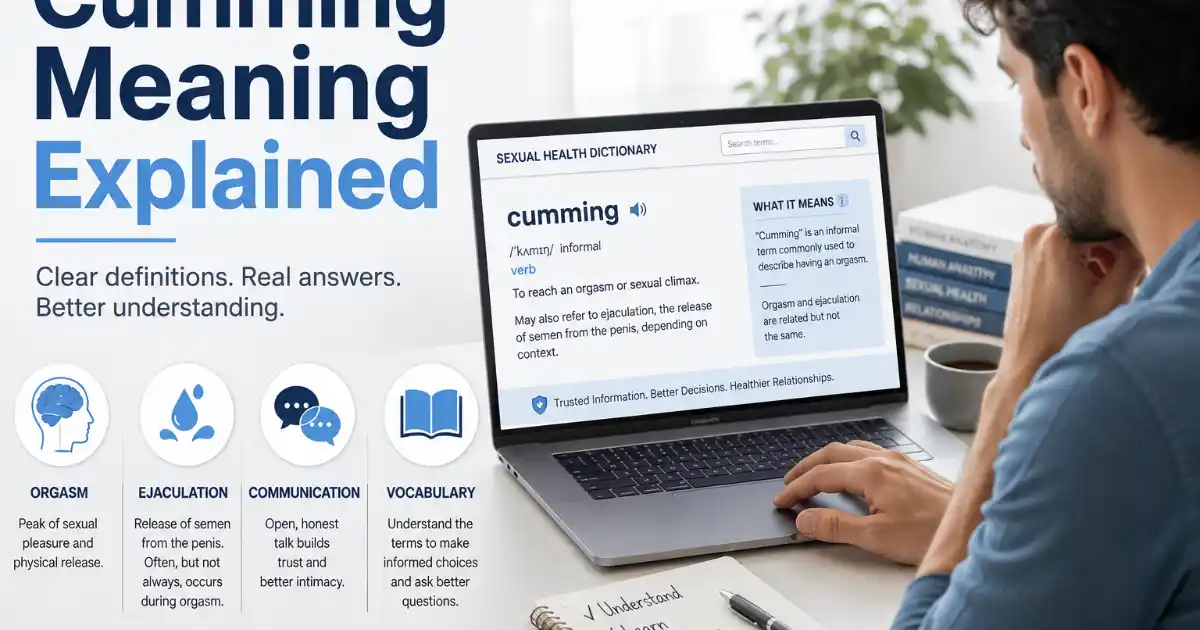
Cumming is a common informal term for having an orgasm, or reaching the peak of sexual pleasure. In some contexts, especially when discussing people with a penis, it can also refer to ejaculation, when semen leaves the penis. The two often happen together, but they are not exactly the same thing. A person can have an orgasm without ejaculating, and ejaculation can sometimes happen without an orgasm.
The word is casual and sexual in tone, so it usually appears in conversations, texting, social media, adult discussions, and informal writing rather than formal medical or professional communication.
Introduction
People often search for the meaning of cumming because they encounter the word in texting, social media, online conversations, sexual health articles, or informal speech. Unlike many slang terms, its meaning connects directly to a normal part of human sexual response, so understanding the distinction between related terms can prevent confusion.
In everyday English, cumming generally means reaching an orgasm. Some people also use it to describe ejaculation, particularly when talking about someone with a penis. Medical sources make an important distinction between these processes. An orgasm describes the pleasurable peak of sexual arousal, while ejaculation describes the release of semen from the penis. They commonly occur together, but one does not always require the other.
This guide explains what cumming means, how people use the word, how it differs from orgasm and ejaculation, what happens during sexual climax, and when a sexual health concern may deserve professional attention.
What Does Cumming Mean?
Cumming is an informal sexual expression that usually means having an orgasm or reaching sexual climax. It is the verb form commonly associated with the slang word cum, which can refer either to orgasm or, in some contexts, semen.
The exact meaning depends on context. When someone says a person is cumming, they may simply mean that the person is experiencing an orgasm. When the conversation involves a penis, the speaker may also be referring to ejaculation.
Medical terminology usually avoids the word cumming because it is informal. Healthcare professionals generally use terms such as orgasm, sexual climax, ejaculation, or semen release instead.
An orgasm involves the peak of sexual arousal and a release of built up sexual tension. It can involve pleasurable sensations, rhythmic muscle contractions, changes in breathing and heart rate, and increased sensitivity.
Cumming does not look or feel exactly the same for everyone. Some people experience a strong physical sensation, while others experience a milder climax. The experience can also change depending on stress, medication, health, stimulation, comfort, and other individual factors.
Cumming, Orgasm, and Ejaculation: What Is the Difference?
These terms often appear together, but they describe different things.
| Term | Meaning | Best Use | Example |
|---|---|---|---|
| Cumming | Informal term for reaching orgasm | Casual conversation | They said they were close to cumming. |
| Orgasm | Peak of sexual pleasure and arousal | Medical and general discussion | She experienced an orgasm. |
| Ejaculation | Release of semen from the penis | Medical or sexual health discussion | Ejaculation occurred after orgasm. |
| Semen | Fluid released during ejaculation that can contain sperm | Medical and reproductive context | Semen can contain sperm. |
| Climax | Another term for orgasm | General sexual discussion | He reached climax. |
The most important distinction is between orgasm and ejaculation. An orgasm is a neurological and physical experience involving sexual pleasure and release of tension. Ejaculation refers specifically to semen leaving the penis. They often happen at nearly the same time, but they are separate processes.
How Is Cumming Used in Everyday Conversation?
Cumming is an informal word, so context matters. People may use it in private conversations, sexual health discussions, texting, online communities, or other casual settings.
For example, someone might say:
- I think I am close to cumming.
- They talked openly about experiencing an orgasm.
- The article explains why orgasm and ejaculation are not always identical.
The first example uses the slang term naturally. The second and third examples use more neutral language.
Because cumming has a clearly sexual meaning, it generally does not fit professional emails, workplace conversations, academic papers, or formal medical writing. In those situations, orgasm or ejaculation usually communicates the intended meaning more clearly.
What Happens During an Orgasm?
An orgasm represents the peak of sexual arousal. During orgasm, the body releases sexual tension that developed during arousal. Heart rate, breathing, and blood pressure can increase, while muscles around the genitals may contract rhythmically.
People experience orgasm differently. One person may experience a brief, intense sensation, while another may experience a less intense or somewhat different response. There is no single physical experience that everyone must have.
After orgasm, the body usually begins returning to its resting state. Some people feel relaxed or tired, while others may feel temporarily sensitive around their genitals. Some people can become sexually aroused again relatively quickly, while others need more recovery time.
Is Cumming the Same as Ejaculation?
No. Cumming and ejaculation are related, but they are not technically identical.
Cumming commonly refers to orgasm. Ejaculation refers to semen leaving the penis. In many people with a penis, orgasm and ejaculation happen together, which explains why everyday speech often treats them as the same event.
However, medical information recognizes that a person can experience an orgasm without ejaculating. It is also possible for ejaculation to occur without a typical orgasm.
This distinction becomes particularly useful when reading sexual health information. Someone who experiences orgasm without visible semen has not necessarily experienced something abnormal.
Can Someone Have an Orgasm Without Ejaculation?
Yes. An orgasm does not always involve ejaculation.
For example, a person with a penis may experience a dry orgasm, meaning orgasm occurs without semen being released. Planned Parenthood also notes that orgasm and ejaculation can occur separately.
Certain medical conditions, medications, procedures, or other factors can affect ejaculation. If the change is persistent, unexpected, or concerning, a healthcare professional can help determine the cause.
A single unusual experience does not automatically indicate a medical problem.
Can Ejaculation Happen Without an Orgasm?
Yes. Although ejaculation usually accompanies orgasm, the two processes can occur independently.
Ejaculation is specifically the release of semen from the penis. Cleveland Clinic notes that ejaculation most often happens during orgasm but can also happen without orgasm.
This difference matters because people sometimes assume that seeing semen automatically means an orgasm occurred. The physical processes do not always line up perfectly.
What Is Cum in Sexual Health Language?
Cum is slang that can refer to semen or orgasm, depending on the sentence.
When it refers to fluid from a penis, it usually means semen, the fluid released during ejaculation. Semen contains sperm along with fluids produced by reproductive glands.
When someone says cum as a verb, it commonly means to have an orgasm.
That creates two related meanings:
- Cum as a noun: Informal term for semen or ejaculate.
- Cum as a verb: Informal term for reaching orgasm.
The surrounding sentence usually makes the intended meaning clear.
How Is Cumming Different From Coming?
The words cumming and coming can sound identical in speech but have very different meanings in writing.
Coming is the standard spelling of the verb meaning arriving or moving toward a place.
For example:
- Are you coming to the party?
- She is coming home later.
Cumming is an informal sexual spelling associated with orgasm.
For example:
- The discussion used the word cumming in a sexual health context.
Because the spelling changes the meaning significantly, context matters when reading texts or online conversations.
Is Cumming a Medical Term?
No. Cumming is primarily an informal slang expression, not a formal medical term.
Medical professionals generally use words such as:
- orgasm
- sexual climax
- ejaculation
- semen
- sexual response
Planned Parenthood identifies cum as slang for ejaculate and also as another way of saying someone has an orgasm.
If someone is discussing a medical concern with a doctor, using the more precise term can make communication easier. For example, saying I can reach orgasm but I cannot ejaculate provides more useful information than simply saying I cannot cum.
Common Reasons Someone May Have Difficulty Cumming
Difficulty reaching orgasm can happen for many reasons. It does not necessarily mean something is wrong with a person’s body or relationship.
Stress, fatigue, certain medications, health conditions, emotional factors, expectations, and relationship circumstances can all affect orgasm. Cleveland Clinic notes that both physical and psychological factors can influence the ability to reach orgasm.
For some people, the difficulty occurs only in certain situations. Someone might reach orgasm during masturbation but find it harder with a partner. Others may experience difficulty in all situations.
If difficulty reaching orgasm continues and causes distress, discussing it with a healthcare professional can help identify possible contributing factors.
When Difficulty With Ejaculation May Need Medical Attention
Occasional changes in ejaculation do not necessarily indicate a serious problem. However, persistent or sudden changes deserve attention, especially when they cause distress or affect fertility or sexual function.
Examples include:
- Being unable to ejaculate despite experiencing orgasm
- A major and persistent change in ejaculation
- Pain associated with ejaculation
- Blood appearing in semen
- Ongoing difficulty reaching orgasm
- Sexual changes that begin after starting a medication
- Concerns about fertility
Conditions such as delayed ejaculation or anejaculation can have physical, psychological, or medication related causes. A healthcare provider can evaluate persistent problems and recommend appropriate care.
Common Mistakes About the Word Cumming
Understanding the informal nature of the word helps prevent several common misunderstandings.
Assuming cumming always means ejaculation
The word commonly means orgasm, while ejaculation specifically means semen leaving the penis. They often occur together, but they are not identical.
Assuming everyone experiences orgasm the same way
People experience sexual climax differently. Sensations, intensity, duration, and physical responses can vary considerably.
Treating slang as medical terminology
Cumming works in casual communication, but orgasm and ejaculation provide greater precision in medical or educational discussions.
Assuming a lack of ejaculation means a lack of orgasm
Someone can experience orgasm without ejaculation. This can happen for different reasons and does not automatically indicate a problem.
Assuming sexual pleasure must end with orgasm
Orgasm is not the only form of sexual pleasure. Planned Parenthood notes that sexual activity can remain pleasurable even when someone does not reach orgasm.
Cumming vs Other Related Terms
Several words appear alongside cumming, but they are not interchangeable in every context.Conclusion
Conclusion
Cumming is an informal term that generally means reaching an orgasm or sexual climax. In conversations involving a penis, people may also use it when referring to ejaculation, which explains why the terms can seem interchangeable.
The key distinction is simple: orgasm describes the experience of sexual climax, while ejaculation describes the release of semen. They commonly occur together, but they can happen separately.
For casual conversations, cumming is easy to understand from context. For medical or educational discussions, more precise terms such as orgasm and ejaculation provide clearer communication.
Source note: The provided source file supplied the article brief and formatting requirements, including the focus keyword placeholder and SEO structure.
| Term | Meaning | Tone | Example |
|---|---|---|---|
| Cumming | Having an orgasm | Very informal | He said he was close to cumming. |
| Coming | Arriving or approaching | Neutral | Are you coming home? |
| Cum | Slang for orgasm or semen | Informal and sexual | The term can refer to semen. |
| Orgasm | Peak of sexual pleasure | Neutral and medical | Orgasm can vary from person to person. |
| Climax | Another term for orgasm | Neutral | She reached climax. |
| Ejaculation | Release of semen | Medical and neutral | Ejaculation usually occurs around orgasm. |
| Semen | Fluid released during ejaculation | Medical | Semen may contain sperm. |
Frequently Asked Questions
What does cumming mean?
Cumming is an informal sexual term that usually means having an orgasm or reaching sexual climax. In some contexts, it can also refer to ejaculation.
Is cumming the same as having an orgasm?
Usually, the words are used to mean the same thing in casual conversation. Technically, however, orgasm and ejaculation are different processes, and cumming commonly refers to orgasm.
Is cumming the same as ejaculating?
Not exactly. Ejaculation means releasing semen from the penis, while orgasm describes the pleasurable peak of sexual arousal. They often happen together but can occur separately.
Is cumming a slang word?
Yes. Cumming is an informal sexual expression. More neutral terms include orgasm, climax, and ejaculation.
What does cum mean?
As a noun, cum is informal slang for semen or ejaculate. As a verb, it can mean having an orgasm.
Can someone orgasm without ejaculating?
Yes. A person can experience orgasm without ejaculation. This can occur in different circumstances and does not automatically indicate a health problem.
Is it normal to have trouble cumming?
Occasional difficulty can happen. Stress, medications, health conditions, emotional factors, and other circumstances can affect orgasm. If the problem persists or causes distress, a healthcare professional can help evaluate it.
Is cumming appropriate in formal writing?
Usually not. Because cumming is slang, terms such as orgasm, sexual climax, or ejaculation are generally better choices for medical, academic, workplace, and professional writing.