
Quick Answer
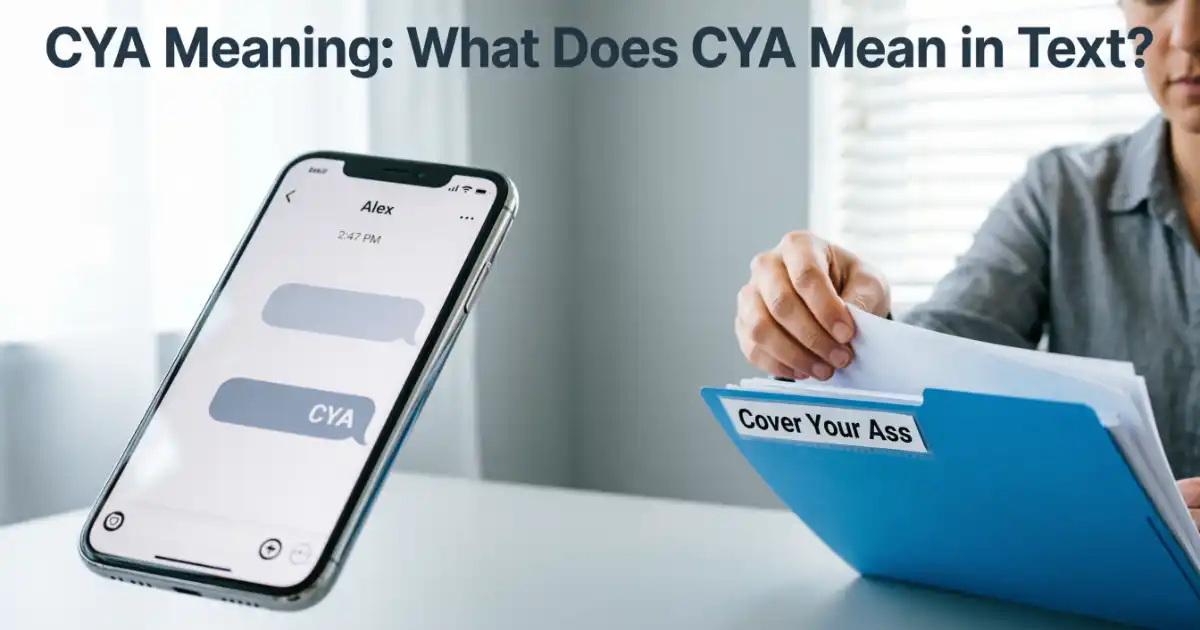
CYA usually means See Ya or See You in texting, online chats, and social media. It is a casual way to say goodbye, similar to Bye, Later, or See you later. For example, “I have to go, CYA!” simply means “I have to go, see ya!”
CYA can also mean Cover Your Ass, especially in workplace or business conversations. In that context, it means taking steps to protect yourself from blame, criticism, or other problems later.
Introduction
If someone sends you a message that simply says CYA, the meaning is usually easy to understand once you know the texting shorthand. In casual conversations, CYA is commonly used as a quick version of See Ya or See You. You might see it at the end of a text, social media conversation, gaming chat, or casual online discussion.
However, CYA has another important meaning that can completely change the message. In workplace conversations, CYA can mean Cover Your Ass, an informal expression for protecting yourself if something goes wrong later.
his might involve keeping records, confirming instructions in writing, or making sure there is documentation showing what you did.
Understanding the context is therefore important. A friend saying “CYA tomorrow” is saying goodbye, while a coworker saying “That email is good CYA” is talking about protecting themselves from possible trouble. This guide explains both meanings, how CYA is used, and how to respond naturally.
| Meaning | Where It Is Used | Simple Explanation | Example |
|---|---|---|---|
| See Ya | Texting and chat | A casual goodbye | “Gotta go, CYA!” |
| See You | Social media and messages | A short way to say goodbye | “CYA tomorrow!” |
| Cover Your Ass | Workplace and business | Protect yourself from possible trouble | “Save that email for CYA.” |
What Does CYA Mean?
The most common meaning of CYA in text is See Ya, an informal version of See You. People use it when they are ending a conversation or leaving a chat. Collins Dictionary lists CYA as a written abbreviation for “see you” used in messages and emails.
The spelling comes from the sound of the phrase. The letter C sounds like “see,” while ya is an informal spelling of “you.” So:
C + YA = CYA = See Ya
This makes CYA feel casual and conversational rather than formal. It is similar to writing “bye,” “later,” or “see you.”
There is also a second meaning:
CYA = Cover Your Ass
This expression refers to taking precautions to protect yourself from criticism, blame, penalties, or other consequences. It is particularly associated with workplace situations involving responsibility, documentation, decisions, or potential disputes. The phrase is informal and contains profanity, so it is not appropriate for every professional setting.
CYA as See Ya
When someone uses CYA in a casual message, they are usually saying goodbye.
For example:
“I’m heading home now, CYA!”
This means:
“I’m heading home now, see ya!”
You may also see variations such as CYA later, CYA tomorrow, or simply CYA.
CYA as Cover Your Ass
The workplace meaning is different. If someone says, “Keep a copy of that email for CYA,” they mean that keeping the email could help protect them if someone later questions what happened.
In this context, CYA is about documentation and self protection rather than saying goodbye. The phrase can describe sensible precautions, although it can also be used critically when people are seen as protecting themselves from responsibility.
How Is CYA Used in Texting?
In texting, CYA is usually a short and friendly farewell. It works best when the conversation is informal and both people are comfortable with casual language.
For example:
Friend: “I have to finish my homework.”
You: “No worries, CYA!”
Here, CYA simply means “see you.”
You might also write:
- “CYA later!”
- “Okay, CYA!”
- “I’ll see you tomorrow, CYA.”
- “Gotta run, CYA.”
- “Thanks for hanging out. CYA!”
The expression does not necessarily promise a specific meeting. Depending on the conversation, it can simply mean that the person expects to talk or see you again.
CYA Examples in Everyday Conversations
Seeing examples makes the meaning easier to recognize. Here are some natural situations where CYA can appear.
Example 1: Leaving a Group Chat
“I have class in five minutes. CYA!”
Here, CYA means see ya or see you later.
Example 2: Talking With a Friend
“I’ll meet you at the coffee shop tomorrow. CYA then!”
The person is using CYA as a casual goodbye.
Example 3: Ending a Gaming Chat
“My battery is almost dead. CYA!”
This means the person is leaving the conversation or game.
Example 4: Social Media Conversation
“Okay, I need to get ready for work. CYA!”
Again, it is simply a casual farewell.
Example 5: Workplace Context
“Make sure you save the approval email. Good CYA.”
Here, CYA does not mean “see ya.” It means taking a step that protects the person if the decision is questioned later.
What Does CYA Mean at Work?
In a workplace setting, CYA often means Cover Your Ass. It describes an action taken to protect yourself from possible criticism, blame, or consequences.
For example, imagine a manager gives you instructions during a meeting. You might follow up with an email confirming what the manager asked you to do. If a disagreement happens later, that written record can show what instructions you received.
Someone might informally call that CYA.
Common examples include:
- Keeping important emails
- Confirming instructions in writing
- Saving approval records
- Documenting important decisions
- Keeping copies of completed work
- Recording who approved a change
The expression is informal and somewhat vulgar, so a more professional alternative would be protect yourself, document the decision, keep a record, or create an audit trail.
Is CYA Rude?
CYA meaning See Ya is generally not rude. It is a relaxed and informal way to say goodbye.
The tone can depend on the conversation. For example:
“Thanks for your help, CYA!”
sounds friendly.
But:
“Whatever. CYA.”
could sound dismissive because of the surrounding words and situation.
The workplace meaning is more sensitive. Cover Your Ass contains profanity and can sound blunt or cynical. It is better avoided in formal emails, customer communication, or situations where professional wording matters.
CYA vs See Ya vs See You
These expressions communicate essentially the same farewell idea, but their level of formality differs.
| Term | Meaning | Tone | Example |
|---|---|---|---|
| CYA | See ya | Very casual | “CYA tomorrow!” |
| See ya | See you | Casual | “See ya later!” |
| See you | Goodbye or until next time | Neutral | “See you tomorrow.” |
| Bye | Goodbye | Casual and neutral | “Bye, take care!” |
| Later | See you later | Very casual | “Later!” |
CYA works best in casual conversations. If you are writing to a professor, manager, customer, or professional contact, “See you later” or “Take care” is usually more appropriate.
Is CYA an Acronym or Abbreviation?
The answer depends on which meaning you are discussing.
When CYA means Cover Your Ass, the letters directly represent the first letters of the three words:
C = Cover
Y = Your
A = Ass
When CYA means See Ya, it works more like informal shorthand. The C represents the sound of “see,” while “ya” represents the casual pronunciation of “you.”
So the same three letters can represent two different expressions.
How to Reply to CYA in a Text
If someone sends you CYA as a farewell, you do not need a complicated response. A similarly casual reply works well.
You could say:
- “CYA!”
- “See ya!”
- “Later!”
- “Talk soon!”
- “See you tomorrow!”
- “Take care!”
If you are unsure which meaning the sender intended, look at the surrounding conversation. A message such as “I gotta go, CYA” almost certainly uses the farewell meaning.
A sentence about documentation, responsibility, or workplace risk may indicate the Cover Your Ass meaning instead.
Common Mistakes With CYA
One common mistake is assuming that CYA always means See Ya. Context matters because the same abbreviation also has a workplace meaning.
Another mistake is using CYA in formal communication. Although most people understand it in casual texting, it can look overly informal in professional writing.
It is also easy to confuse CYA with a serious workplace instruction when the sender is actually saying goodbye. Look at the words around the abbreviation before deciding what it means.
Finally, do not assume that every abbreviation has one universal definition. Internet slang often changes depending on the platform, community, and conversation.
Conclusion
The most common CYA meaning in text is See Ya or See You, a quick and casual way to say goodbye. You may see it in texts, social media messages, gaming chats, and other informal conversations.
CYA can also mean Cover Your Ass, especially in workplace discussions about documentation, responsibility, and protecting yourself from potential problems. The surrounding context usually makes the intended meaning clear.
The main thing to remember is simple: CYA in a casual goodbye usually means See Ya, while CYA in a workplace risk or documentation discussion can mean Cover Your Ass.
FAQs About CYA
What does CYA mean in text?
CYA usually means See Ya or See You in text messages and online chats. It is a casual way to say goodbye.
What does CYA stand for?
CYA can stand for See Ya in casual messaging or Cover Your Ass in workplace and business contexts.
Is CYA a slang word?
CYA is an informal abbreviation commonly used in texting, online communication, and casual conversation. Its meaning depends on context.
Does CYA mean goodbye?
Yes. When used in texting, CYA commonly means See Ya and functions as a casual goodbye.
What does CYA mean at work?
At work, CYA can mean Cover Your Ass. It refers to taking precautions or keeping documentation that may protect you from blame or criticism later.
Is CYA professional?
The See Ya meaning is informal, so it is better suited to casual messages. The Cover Your Ass meaning is also informal and contains profanity, making it unsuitable for many professional communications.
Is CYA rude in texting?
Usually not. CYA is generally a friendly, casual farewell. However, the surrounding message can make it sound dismissive or abrupt.
What is another way to say CYA?
For the farewell meaning, you can say See you, See ya, Later, Talk soon, or Take care. In professional writing, choose a more formal phrase when appropriate.