
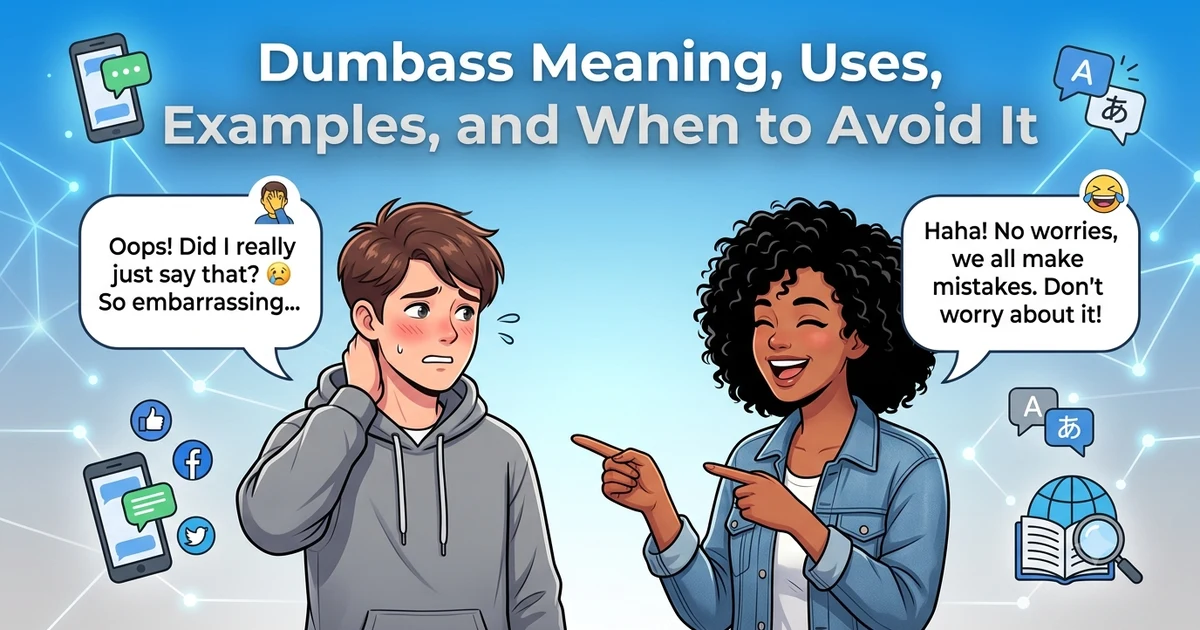
Quick Answer
A dumbass is a slang term used to describe someone who has done something foolish, careless, or lacking in good judgment. Although the word often refers to a person’s actions, it can also be used as a direct insult toward someone’s intelligence.
Depending on the situation, it may sound playful between close friends or deeply offensive in an argument. Understanding the context, tone, and audience is important because the same word can be interpreted very differently in everyday conversations, social media posts, movies, and text messages.
Introduction
The word dumbass appears frequently in casual conversations, online discussions, television shows, movies, and social media. Many people search for its meaning because they have heard it in a conversation, read it in a message, or want to know whether it is considered offensive. Others want to understand if it simply means someone made a mistake or if it attacks a person’s intelligence.
Like many slang expressions, the meaning of dumbass depends heavily on the situation. Two close friends might jokingly call each other a dumbass after a harmless mistake, while the same word could become a serious insult during an argument. Because tone, relationship, and intent all matter, learning how the term is commonly used helps avoid misunderstandings.
This guide explains what dumbass means, where the word comes from, how it is used in everyday English, when it may be inappropriate, and how it compares with similar expressions. By the end, you will know when the word is meant as lighthearted teasing and when it crosses the line into disrespect.
Meaning at a Glance
| Term | Meaning | Tone | Example |
|---|---|---|---|
| Dumbass | Someone acting foolish or making a poor decision | Informal and often insulting | He forgot his keys again. What a dumbass. |
| Playful dumbass | Friendly teasing between people who know each other well | Casual | You locked yourself out again, you dumbass. |
| Insulting dumbass | Direct criticism of someone’s intelligence or behavior | Rude | Don’t be such a dumbass. |
What Does Dumbass Mean?
The primary meaning of dumbass is a person who behaves in a foolish, careless, or unintelligent way. It is an informal slang insult that combines the word dumb, meaning lacking good judgment or intelligence, with ass, a common slang term used to emphasize criticism.
In modern English, people usually use dumbass to criticize an action rather than a person’s overall intelligence. Someone might forget an important meeting, send a message to the wrong person, or ignore obvious instructions. In those situations, another person may respond by calling the mistake dumb or referring to the person as a dumbass.
However, context makes a significant difference. Sometimes the word refers only to a single mistake. Other times it becomes a harsh personal insult suggesting someone is generally unintelligent.
For example:
- Forgetting to save an important document before closing the computer could lead a friend to jokingly say, “You’re such a dumbass.”
- During an angry disagreement, saying “You’re a dumbass” becomes a direct insult and is much more offensive.
Because of these differences, the word should be used carefully.
Is Dumbass Always Offensive?
No. The level of offensiveness depends on several factors:
- Your relationship with the other person
- The tone of voice
- The situation
- Cultural expectations
- Whether both people understand it as a joke
Among close friends, dumbass may simply express playful teasing after a harmless mistake.
Among coworkers, strangers, teachers, clients, or family members during a serious discussion, the same word can sound disrespectful, insulting, or even hostile.
Where Did the Word Dumbass Come From?
The expression developed from two older English words.
- Dumb originally referred to someone who could not speak. Over time, it also came to describe someone viewed as unintelligent or making poor decisions.
- Ass has long been used as slang to describe someone acting foolish or behaving badly. It also literally refers to a donkey, an animal that has historically been associated with stubbornness or foolishness in many cultures.
When combined, dumbass became a stronger way of criticizing someone’s behavior or judgment.
Today, the word is widely recognized throughout English speaking countries and commonly appears in entertainment, online discussions, and everyday informal speech.
Different Ways People Use Dumbass
Although the meaning stays generally the same, people use the word in several different situations.
After Someone Makes a Silly Mistake
This is probably the most common use.
Examples include:
- Forgetting your wallet at home.
- Leaving your phone on the roof of your car.
- Sending a private message to the wrong group chat.
- Walking into the wrong classroom.
In these situations, friends often use the word jokingly rather than seriously.
During an Argument
The word becomes much stronger during conflict.
Instead of criticizing one action, it attacks the other person’s judgment or intelligence.
For example:
- You’re a dumbass if you think that’s true.
Here, the speaker is no longer joking.
Referring to Yourself
Many people use the word about themselves after making an embarrassing mistake.
Examples include:
- I feel like such a dumbass.
- I can’t believe I forgot the tickets. I’m a complete dumbass.
Self directed use usually expresses frustration or embarrassment rather than self hatred.
Online and Social Media
The word appears regularly in:
- Comments
- Memes
- Gaming chats
- Discussion forums
- Reaction videos
- Text messages
Because online conversations lack facial expressions and tone of voice, dumbass is more likely to be misunderstood than in face to face conversations.
Practical Usage
Understanding when the word is appropriate is just as important as knowing what it means.
Appropriate Situations
People sometimes use dumbass:
- Between close friends who regularly joke with one another.
- When laughing about a harmless mistake.
- In comedy or entertainment.
- As self humor after an embarrassing moment.
Situations to Avoid
Avoid using dumbass in professional or respectful settings, including:
- Workplace meetings
- Job interviews
- Customer service conversations
- School assignments
- Academic writing
- Business emails
- Conversations with teachers or supervisors
- Formal speeches
- Public presentations
Using the word in these situations can make you appear disrespectful or unprofessional, even if you intended it as a joke.
Better Alternatives in Professional Settings
Instead of saying someone is a dumbass, consider more respectful alternatives.
| Informal Word | Professional Alternative | Example |
|---|---|---|
| Dumbass | Made a mistake | Everyone makes mistakes. |
| Dumbass | Careless | That was a careless decision. |
| Dumbass | Poor judgment | The choice showed poor judgment. |
| Dumbass | Oversight | It looks like there was an oversight. |
| Dumbass | Honest mistake | It was an honest mistake that can be corrected. |
These alternatives communicate the same idea without insulting the other person.
Examples of Dumbass in Everyday Conversation
Seeing the word in context makes its meaning much easier to understand. The examples below show both friendly and insulting uses.
Friendly or Playful Examples
These examples assume the speakers know each other well and are joking.
- You left your coffee on the car roof, you dumbass.
- I walked into the wrong classroom. I’m such a dumbass.
- You forgot your own birthday party invitation. Nice job, dumbass.
- We laughed because he accidentally wore two different shoes. What a dumbass.
In these situations, the word targets a silly mistake rather than the person’s overall intelligence.
Negative or Offensive Examples
These examples sound much harsher.
- You’re a dumbass if you think that plan will work.
- Stop acting like a dumbass and pay attention.
- Only a dumbass would ignore those warning signs.
These statements criticize the person directly and can easily offend someone.
Common Use Cases
The word appears in many everyday situations, especially in informal English.
Text Messages
Friends often use dumbass in texts after a harmless mistake.
Example:
Alex: I forgot my charger again.
Jordan: You’re such a dumbass.
The exchange sounds playful only if both people share that kind of humor.
Social Media
People often use the word when reacting to funny videos, memes, or embarrassing moments.
Examples include:
- That guy is a dumbass for trying that stunt.
- I felt like a dumbass after posting the wrong photo.
Because online messages lack tone and facial expressions, readers may interpret the word more negatively than intended.
Movies and Television
Many comedy films and action movies include dumbass as part of casual dialogue. Writers use it to show frustration, sarcasm, or friendly teasing between characters.
Gaming
Online gaming communities commonly use dumbass during team matches.
Examples include:
- Nice move, dumbass.
- Don’t run in there by yourself, dumbass.
Keep in mind that gaming conversations often become emotional, so the word may contribute to toxic communication.
Similar Terms and Related Phrases
Many English words express a similar idea, but each has a different tone.
| Term | Meaning | Best Use | Tone |
|---|---|---|---|
| Dumbass | Someone acting foolish | Casual conversation | Strong |
| Idiot | Unintelligent or foolish person | Informal | Strong |
| Moron | Very foolish person | Informal | Offensive |
| Fool | Someone showing poor judgment | General use | Mild |
| Airhead | Person who seems absent minded | Casual | Light |
| Bonehead | Someone making a silly mistake | Friendly teasing | Mild |
| Blockhead | Slow to understand | Informal | Mild |
| Doofus | Clumsy or silly person | Friendly | Light |
Some alternatives sound humorous, while others carry stronger insults. Choosing the right word depends on the relationship and situation.
Dumbass vs Idiot
Although many people use these words interchangeably, they are not always identical.
| Feature | Dumbass | Idiot |
|---|---|---|
| Focus | Foolish behavior or poor decisions | Intelligence or understanding |
| Tone | Slang and informal | Common insult |
| Can Be Playful | Yes | Less often |
| Professional Use | No | No |
Someone who makes one careless mistake may jokingly be called a dumbass. Calling someone an idiot often feels more personal because it questions their intelligence rather than a single action.
Is Dumbass Considered a Swear Word?
Most dictionaries classify dumbass as vulgar slang or offensive informal language rather than one of the strongest swear words.
Many adults use it casually among friends, but it is still inappropriate in many settings.
You should avoid using it in:
- Professional emails
- School essays
- Job interviews
- Workplace conversations
- Customer interactions
- Formal presentations
Even if the word seems common in movies or online discussions, it may leave a negative impression in professional environments.
Tone and Social Context Matter
One reason people search for the meaning of dumbass is because the word changes depending on context.
Consider these examples.
Friendly Tone
You’re such a dumbass. You left your sunglasses at my house again.
The speaker is laughing, and both people understand the joke.
Angry Tone
You’re a dumbass and nobody wants to work with you.
This sentence becomes a direct personal insult.
Self Deprecating Tone
I locked myself out of the apartment again. I’m such a dumbass.
Here, the speaker criticizes themselves rather than another person.
The same word can therefore express humor, frustration, embarrassment, or hostility.
Common Mistakes People Make
Many learners misunderstand how and when to use dumbass.
Thinking It Is Always Funny
Not everyone appreciates teasing. Someone who does not know you well may find the word rude instead of humorous.
Using It at Work
Even if coworkers joke together, insulting language can create uncomfortable situations or violate workplace policies.
Confusing It With Mild Vocabulary
Dumbass is stronger than words like silly or careless. It should not be treated as a neutral description.
Assuming It Only Refers to Intelligence
In many conversations, the speaker criticizes a specific action rather than the person’s intelligence.
For example:
- Forgetting your wallet once does not mean someone lacks intelligence.
- The speaker is commenting on the mistake.
Using It Around Children
Parents and teachers generally discourage children from using words like dumbass because they promote disrespectful communication.
When You Should Avoid Using Dumbass
There are many situations where choosing different language leads to better communication.
Avoid the word when speaking with:
- Teachers
- Employers
- Customers
- Clients
- Healthcare professionals
- Older relatives who may find it disrespectful
- People you have just met
- Anyone who appears upset or offended
Instead, describe the behavior rather than insulting the person.
For example:
- That decision was careless.
- That was probably an honest mistake.
- I think you overlooked something.
- Let’s fix the problem instead.
These alternatives encourage better conversations without unnecessary conflict
Conclusion
The word dumbass is an informal slang expression used to describe someone who has acted in a foolish, careless, or thoughtless way. While it often refers to a specific mistake, it can also be used as a stronger personal insult depending on the tone and context.
Among close friends, it may simply be playful teasing, but in professional settings or heated conversations, it is likely to be seen as rude and disrespectful.
Understanding when and where to use the word is just as important as knowing its definition. If you are unsure how someone will interpret it, choosing a more respectful alternative is usually the better option.
By recognizing its meaning, tone, and common uses, you can better understand conversations, movies, social media posts, and everyday English while avoiding unnecessary misunderstandings.
Frequently Asked Questions
What does dumbass mean in slang?
In slang, dumbass refers to someone who has done something foolish, careless, or lacking in common sense. It is usually used as an insult, although close friends may also use it jokingly after a harmless mistake.
Is dumbass a bad word?
Yes. Dumbass is generally considered a rude or vulgar slang term. While it is not among the strongest swear words in English, it can still offend people, especially in professional, academic, or formal settings.
Is dumbass always an insult?
No. The meaning depends on context. Friends sometimes use it playfully to tease each other after a minor mistake. However, during an argument or when directed at someone you do not know well, it is almost always understood as an insult.
Can I use dumbass at work?
It is best to avoid using dumbass in the workplace. Even if coworkers joke with one another, the word may be viewed as disrespectful or unprofessional and could create unnecessary conflict.
What is the difference between dumbass and idiot?
Both words criticize someone’s behavior or intelligence, but dumbass often refers to a foolish action or poor decision, while idiot more directly questions a person’s intelligence. Both are informal insults and should be used with caution.
Is calling yourself a dumbass offensive?
Many people jokingly call themselves a dumbass after making an embarrassing mistake, such as forgetting their keys or missing an appointment. In this case, the word is usually self deprecating humor rather than an insult toward someone else.
Are there polite alternatives to dumbass?
Yes. Depending on the situation, you could say:
- Careless
- Silly
- Foolish
- Absent minded
- Made a mistake
- Poor judgment
- Honest mistake
- Overlooked something
These alternatives communicate the idea without sounding insulting.