
Quick Answer
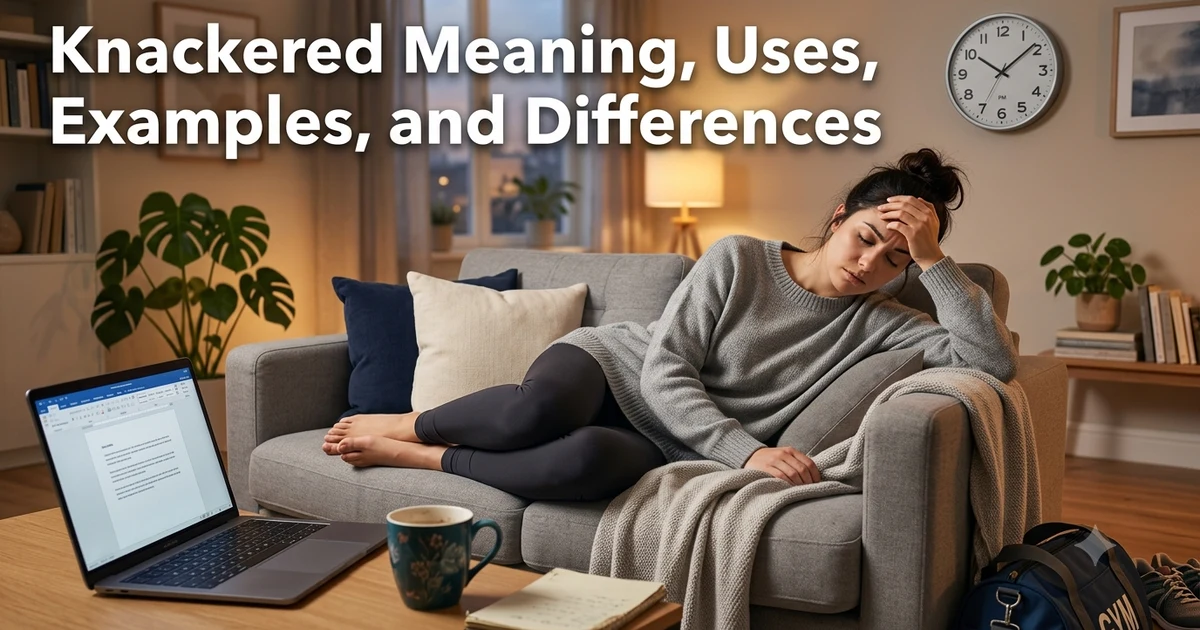
Knackered is an informal English word that means extremely tired, completely exhausted, or worn out. People use it when ordinary words like tired do not feel strong enough to describe how exhausted they are after work, exercise, travel, or a busy day.
The term appears most often in British English, but many people around the world recognize it through movies, television, books, and online conversations. While native speakers use it casually with friends and family, it is generally not suitable for formal writing or professional communication.
Introduction
If you have ever watched a British TV show, read a novel from the United Kingdom, or chatted with someone from Britain online, you have probably come across the word knackered. At first glance, it may seem confusing because it is not commonly used in everyday American English. However, once you understand its meaning, you will notice it appears in many casual conversations.
People often search for the meaning of knackered because they hear it in movies, social media videos, travel conversations, or while learning English. They want to know whether it simply means tired or if it carries a stronger feeling. Others wonder whether the word is rude, polite, or appropriate for everyday speech.
This guide explains exactly what knackered means, where it comes from, how native speakers use it, and how it compares with similar words like tired, exhausted, and worn out. You will also find practical examples that make it easy to understand when the word sounds natural and when another expression works better.
What Does Knackered Mean?
The primary meaning of knackered is completely exhausted. It describes someone who has very little energy left because they have worked hard, traveled for a long time, exercised intensely, or simply had an incredibly busy day.
Compared with the word tired, knackered expresses a much stronger level of fatigue. Someone who is tired may still continue working or socializing. Someone who is knackered usually wants to sit down, relax, or go straight to bed.
The word is considered informal, so it works best in relaxed conversations with friends, family members, or coworkers in casual settings. It is common in spoken English and informal writing such as text messages, social media posts, and personal emails.
Although the word usually refers to physical tiredness, it can also describe mental exhaustion. After studying for hours, finishing a difficult project, or dealing with a stressful week, someone may honestly say they feel knackered even if they have not done much physical activity.
In everyday conversation, the word simply emphasizes that a person feels completely drained of energy.
Meaning Comparison Table
| Term | Meaning | Best Used For | Example |
|---|---|---|---|
| Knackered | Completely exhausted | Informal conversations | I’m absolutely knackered after moving all day. |
| Tired | Low on energy | Everyday situations | I’m tired after work. |
| Exhausted | Extremely tired | Both casual and formal situations | She was exhausted after the marathon. |
| Worn out | Physically or mentally drained | Casual and professional use | We’re worn out after traveling. |
| Fatigued | Experiencing fatigue | Medical or professional contexts | The patient reported feeling fatigued. |
Where Does the Word Knackered Come From?
The word knackered has roots in the older English word knacker, which originally referred to a person who dealt with old or worn out animals that could no longer work. Over time, the expression developed into a way of describing something that had become completely worn out or no longer had any useful energy left.
Eventually, people began using knackered to describe themselves after demanding work, long journeys, sporting activities, or emotionally draining experiences.
Today, most speakers never think about the historical origin when they use the word. Instead, they simply understand it as a colorful way of saying someone feels completely exhausted.
Because of its long history in everyday speech, the word has become one of the most recognizable informal expressions in British English.
How Knackered Is Used in Everyday Conversation
Native speakers use knackered naturally in many everyday situations. The word usually appears after activities that require significant physical or mental effort.
Someone might say:
- I’m knackered after working twelve hours.
- We’re all knackered from cleaning the house.
- She’s knackered after looking after the kids all weekend.
- They were knackered by the end of the hiking trip.
- You’ll be knackered after running that race.
Notice that the word often follows the verb to be.
Examples include:
- I am knackered.
- We were knackered.
- He looks knackered.
- Everyone feels knackered today.
This pattern makes the expression simple and natural for English learners to remember.
Common Situations Where People Say Knackered
After a Long Day at Work
Many people use the word after spending hours at the office, construction site, hospital, school, or another demanding workplace.
Example
I have been in meetings since early morning. I’m completely knackered.
After Exercise
Hard workouts, sports competitions, and long runs often leave people feeling knackered.
Example
That cycling trip was incredible, but I’m absolutely knackered now.
After Traveling
Long flights, road trips, airport delays, and changing time zones can quickly drain a person’s energy.
Example
We finally arrived at the hotel after twenty hours of travel. Everyone was knackered.
After Looking After Children
Parents frequently use the word because caring for young children requires constant attention and energy.
Example
The twins kept us busy all day. We’re both knackered tonight.
After Mental Stress
Not every use involves physical activity. Intense concentration can leave someone mentally exhausted as well.
Example
I’ve been studying for final exams all week. My brain is completely knackered.
Everyday Example Sentences
These examples show how naturally knackered fits into casual English.
- I’m too knackered to cook dinner tonight.
- She looked knackered after finishing her presentation.
- We were knackered by the time we reached the top of the mountain.
- He’s always knackered after working the night shift.
- They felt knackered after unpacking all their boxes.
- I thought I could stay awake, but I was completely knackered.
- Everyone was knackered after helping with the community event.
- Even the dog looked knackered after the long hike.
These examples all communicate a stronger feeling than simply saying someone is tired. The speaker wants listeners to understand that they have very little energy left.
When to Use Knackered
Knackered works best in relaxed, everyday conversations. It helps express that someone feels far more than just a little tired. Because it is informal, it sounds natural when speaking with friends, family, classmates, or coworkers in casual settings.
Here are some situations where the word fits well:
Casual Conversations
This is the most common use of knackered.
Examples:
- I’m knackered after cleaning the garage all afternoon.
- We’re knackered. Let’s order takeout instead of cooking.
- She’s knackered after chasing the kids around the park.
Text Messages
The word often appears in texts because it is short and expressive.
Examples:
- Just got home. Totally knackered.
- Been traveling all day. I’m knackered.
- I’ll call you tomorrow. I’m exhausted and knackered.
Social Media Posts
People also use it when sharing updates about a busy day.
Examples:
- Finished my first marathon. Absolutely knackered but so happy.
- Twelve hour shift completed. Feeling completely knackered.
Friendly Workplace Conversations
It can be acceptable among coworkers who know each other well.
Example:
- That deadline was intense. I’m knackered.
However, avoid using it in formal reports, presentations, or official business emails.
When Not to Use Knackered
Although the word is widely understood, it is not suitable in every situation.
Avoid using knackered in:
- Academic essays
- Business reports
- Legal documents
- Medical records
- Professional presentations
- Formal customer communication
Instead, choose more neutral words such as:
- exhausted
- very tired
- fatigued
- physically drained
- mentally exhausted
These alternatives sound more professional while expressing the same general idea.
Knackered Versus Tired
Many English learners wonder whether knackered simply means tired. The answer is yes, but with much stronger emphasis.
| Word | Strength | Formality | Example |
|---|---|---|---|
| Tired | Mild | Neutral | I’m tired after work. |
| Knackered | Very strong | Informal | I’m knackered after moving furniture all day. |
| Exhausted | Very strong | Neutral | She was exhausted after the race. |
| Worn out | Strong | Neutral | We felt worn out after traveling. |
Think of it like this:
- Tired means you could probably keep going.
- Knackered means you really want to stop and rest.
Knackered Versus Exhausted
These words are close in meaning, but they are not identical.
Exhausted works in almost every situation because it is neutral and accepted in both formal and informal English.
Knackered feels more conversational and carries a distinctly informal tone.
Compare these examples:
- After the conference, I was exhausted.
- After the conference, I was knackered.
Both are correct, but the second sounds much more casual.
British English Versus American English
One reason many Americans search for knackered is that it appears frequently in British television, movies, podcasts, and books.
In British English, people commonly say:
- I’m knackered.
- You look knackered.
- We were absolutely knackered.
In American English, speakers usually prefer:
- I’m exhausted.
- I’m wiped out.
- I’m beat.
- I’m worn out.
- I’m dead tired.
Americans will often understand knackered, especially if they watch British entertainment, but they generally do not use it in everyday speech.
Similar Words and Related Expressions
Learning related vocabulary helps you choose the best word for each situation.
| Term | Meaning | Typical Use |
|---|---|---|
| Exhausted | Extremely tired | Formal and informal |
| Worn out | Very tired physically or mentally | Everyday conversation |
| Beat | Extremely tired | Informal American English |
| Wiped out | Completely drained | Casual conversation |
| Drained | Lacking energy | Physical or emotional fatigue |
| Fatigued | Experiencing fatigue | Medical or professional settings |
| Burned out | Emotionally exhausted over time | Work or long term stress |
Although these words overlap, each has a slightly different tone.
For example:
- Burned out often suggests ongoing stress rather than one busy day.
- Fatigued sounds clinical.
- Beat is mostly American slang.
- Knackered has a distinctly British flavor.
Common Example Sentences
Here are more examples showing natural usage.
At Home
- I’m knackered after cleaning the whole house.
- Dad was knackered after mowing the lawn.
- We were all knackered by bedtime.
At School or College
- I’m knackered after studying for three exams.
- She felt knackered after staying up all night finishing her assignment.
During Travel
- Everyone looked knackered after the overnight flight.
- The long drive left us completely knackered.
After Sports
- The team was knackered after extra time.
- I’m knackered after today’s workout.
After Busy Events
- We were knackered after helping with the wedding.
- They came home knackered after the music festival.
Common Mistakes
Many learners misunderstand how to use knackered. Avoid these common errors.
Thinking It Means Slightly Tired
This is the biggest mistake.
Knackered means very tired, not just a little sleepy.
Using It in Formal Writing
Avoid sentences like:
- The employee was knackered following the meeting.
A better choice would be:
- The employee was exhausted following the meeting.
Assuming It Is Offensive
The word is generally not considered a swear word. It is informal but acceptable in everyday conversation.
However, because it is slang, it is still better to avoid it in highly professional settings.
Using It for Every Situation
Not everyone who feels tired is knackered.
For example:
- After watching one movie, saying you are knackered may sound exaggerated.
- After moving into a new house all day, it sounds perfectly natural.
Tips for English Learners
If you are learning English, remember these simple rules.
- Use knackered with friends and in casual conversations.
- Replace it with exhausted in formal writing.
- Do not confuse it with ordinary tiredness.
- Listen for it in British television shows and podcasts.
- Practice using it after activities that require lots of energy.
The more authentic conversations you hear, the easier it becomes to recognize when knackered sounds natural and when another word fits better
Conclusion
Knackered is an informal English word that means extremely tired, exhausted, or completely worn out. It is especially common in British English and often appears in everyday conversations, entertainment, and online discussions.
While it shares a similar meaning with words like exhausted and worn out, it has a more casual tone that makes it ideal for relaxed conversations.
Understanding the difference between knackered, tired, and other similar expressions helps you communicate more naturally and recognize authentic English when you hear it.
Whether you are learning English, traveling, or simply curious about British slang, knowing how and when to use knackered will make your vocabulary more accurate and expressive.
Frequently Asked Questions
Is knackered a rude word?
No. Knackered is generally not considered rude or offensive. It is an informal slang word that means extremely tired or exhausted. Most people use it comfortably in everyday conversations with friends, family, and coworkers. However, because it is informal, it is better to avoid it in formal writing, business reports, or professional presentations.
Is knackered British or American?
Knackered is primarily a British English word. It is very common in the United Kingdom and is also understood in countries where British English has a strong influence. In American English, people are more likely to say exhausted, wiped out, beat, or worn out.
Does knackered only mean physically tired?
No. While the word often describes physical exhaustion after work, sports, or travel, it can also describe mental exhaustion. Someone who has spent hours studying, solving difficult problems, or working under pressure may also say they feel knackered.
Can I use knackered in a job interview?
It is best not to. Although the word is not offensive, it is very informal. In professional situations, words like exhausted, fatigued, or very tired sound more appropriate.
Is knackered stronger than tired?
Yes. Knackered expresses a much stronger level of tiredness than simply saying tired. It suggests that a person has almost no energy left and needs rest.
Can objects be described as knackered?
Yes. In informal British English, people sometimes use knackered to describe things that are worn out, broken, or no longer working properly.
Examples include:
- My old laptop is completely knackered.
- The washing machine is knackered again.
- His boots are knackered after years of hiking.
This meaning is less common than describing a person’s exhaustion, but native speakers use it regularly.
What is the difference between knackered and burned out?
These expressions describe different kinds of exhaustion.
Knackered usually refers to temporary tiredness after a busy day, hard work, or exercise.
Burned out describes long term emotional or mental exhaustion caused by ongoing stress, pressure, or overwork. Recovering from burnout often takes much longer than recovering from feeling knackered.
Can English learners use knackered?
Absolutely. If you are learning English, understanding knackered will help you recognize informal conversations, British television shows, books, podcasts, and social media posts. Just remember that it is best reserved for casual situations rather than formal communication.