
Quick Answer
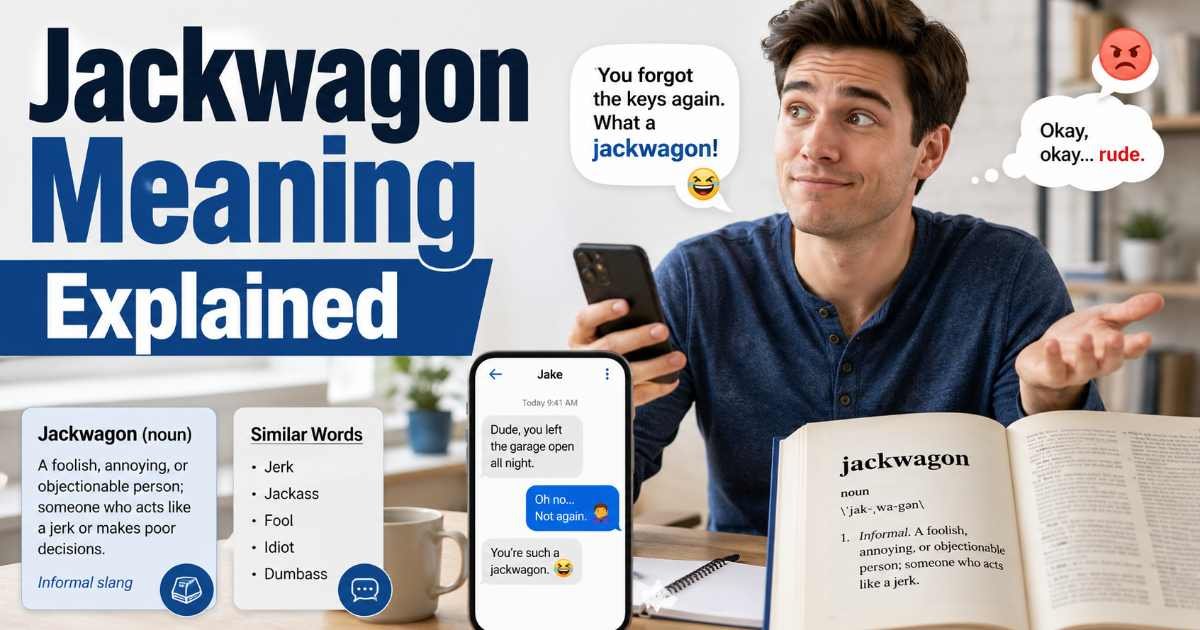
Jackwagon is an informal American slang insult for a person who acts foolish, annoying, incompetent, or generally obnoxious. It usually means something close to jerk, jackass, or fool, but it often carries a more humorous and less harsh tone. Wiktionary lists it as a US slang and derogatory noun meaning an objectionable person, jerk, or jackass.
The word is most appropriate in casual conversation, joking exchanges, memes, and informal online communication. It does not have a formal or technical meaning, and its exact intensity depends on the speaker, situation, and relationship between the people involved.
Introduction
People often search for jackwagon after seeing it in a conversation, meme, television show, social media post, or older commercial. The word sounds unusual enough to make readers wonder whether it has a hidden meaning, whether it is a regional expression, or whether it simply means another familiar insult.
In everyday American English, jackwagon usually describes someone who behaves foolishly, makes an irritating decision, causes unnecessary problems, or acts like a jerk. It can be genuinely insulting, but speakers also use it playfully when they want a humorous alternative to a stronger insult.
The word also became especially recognizable through a 2010 GEICO commercial featuring actor R. Lee Ermey as a drill sergeant acting as a therapist. The character called his patient a jackwagon, which helped bring the unusual slang term to a wider audience.
This guide explains what jackwagon means, how people use it, how strong the insult is, where the word may have come from, and how it compares with similar terms.
What Does Jackwagon Mean?
Jackwagon generally means a foolish, annoying, incompetent, or objectionable person. It functions as a noun and usually describes someone’s behavior rather than identifying a specific type of person.
For example, if someone ignores clear instructions and creates a problem for everyone else, another person might jokingly call them a jackwagon. The word expresses irritation while adding a deliberately silly quality to the insult.
The term can therefore cover several related ideas:
- A person who behaves foolishly
- Someone who makes a stupid mistake
- An irritating or inconsiderate person
- A person acting like a jerk
- Someone whose behavior seems ridiculous or incompetent
Dictionaries and slang references generally treat jackwagon as informal and derogatory.
The important point is that jackwagon describes a person negatively. It does not normally refer to an actual wagon in modern everyday usage.
Jackwagon Meaning in Simple Terms
The easiest way to understand jackwagon is to think of it as a humorous insult.
| Term | Meaning | Tone | Example |
|---|---|---|---|
| Jackwagon | Foolish or annoying person | Humorous, insulting | That jackwagon forgot the keys again. |
| Jerk | Unpleasant or inconsiderate person | Mild to moderate | He was acting like a jerk. |
| Jackass | Foolish or obnoxious person | Stronger | Do not be a jackass. |
| Fool | Person lacking good judgment | Mild | I felt like a fool after that mistake. |
| Idiot | Very foolish person | Strong | That was an idiot move. |
Jackwagon often feels more playful than idiot or jackass because the word itself sounds deliberately ridiculous.
Is Jackwagon a Bad Word?
Jackwagon is an insult, so it can be considered rude or disrespectful. However, it is generally less harsh than many common profanity based insults.
The tone depends heavily on context. A friend might say, “You jackwagon,” after someone makes a silly mistake, and everyone may understand it as teasing. The same word from an angry stranger can sound genuinely hostile.
It is therefore better described as mild to moderate slang with an insulting meaning, rather than as completely harmless language.
In a workplace, classroom, customer service interaction, or formal writing, alternatives such as “careless,” “inconsiderate,” or “unprofessional” usually communicate the problem more appropriately.
Why Do People Say Jackwagon?
People use jackwagon when they want to criticize someone’s behavior without necessarily using a more explicit insult.
The word can make an accusation sound humorous. Someone might use it after a friend makes an obviously bad decision, a driver behaves inconsiderately, or a coworker creates a needless problem.
For example:
- “You jackwagon, you left the freezer open.”
- “That jackwagon parked across two spaces.”
- “I forgot my own password. What a jackwagon move.”
- “Who hired this jackwagon to fix the printer?”
The meaning comes from the situation. In each example, the speaker criticizes foolish or irritating behavior.
How Jackwagon Became Popular
The exact origin of jackwagon is not firmly established. Some online explanations propose different theories involving wagon terminology, older American slang, or humorous combinations of words. However, those explanations should not be presented as established etymology because reliable references do not provide a definitive origin. Wiktionary specifically lists the etymology as incomplete.
One well documented moment in the word’s public visibility came from a 2010 GEICO advertisement. R. Lee Ermey played a former drill sergeant working as a therapist and used jackwagon while criticizing his fictional patient. The advertisement was widely discussed, and later references to the commercial helped preserve the word in popular culture.
That commercial does not necessarily prove that the word originated with GEICO. It shows that the advertisement helped expose the term to a broad modern audience.
Jackwagon and the GEICO Commercial
The GEICO commercial is one reason many people recognize the word even if they rarely use it themselves.
The advertisement featured R. Lee Ermey, whose public image already strongly connected him with military drill instructor roles. The joke came from placing that aggressive personality in a therapist’s office. Instead of offering gentle counseling, the character responded to the patient with drill instructor style criticism and called him a jackwagon.
The commercial became memorable because the unusual word matched the exaggerated personality of the character.
If someone says they remember jackwagon from an old GEICO advertisement, they are likely referring to this commercial.
How to Use Jackwagon in a Sentence
Jackwagon works best in informal speech where the speaker understands that the word is an insult.
Here are some natural examples:
Example 1
“That jackwagon left his shopping cart in the middle of the parking lot.”
Here, the speaker is annoyed by someone’s inconsiderate behavior.
Example 2
“Move your alarm clock, you jackwagon.”
This could sound playful if two friends are joking with each other.
Example 3
“I locked myself out of the house again. I’m such a jackwagon.”
Here, the speaker uses the word against themselves for humorous self criticism.
Example 4
“Some jackwagon spilled coffee all over the office printer.”
The speaker expresses frustration about an unidentified person.
Example 5
“Don’t be a jackwagon. Just read the instructions.”
This uses the term as a mild reprimand.
Can Jackwagon Be Used as a Joke?
Yes. Humor is one of the most common reasons people choose jackwagon instead of a more direct insult.
The unusual combination of “jack” and “wagon” gives the word a comic quality. That makes it useful when someone wants to sound annoyed without making the insult extremely serious.
For example, a parent might jokingly tell an older child, “You forgot to take the trash out again, you little jackwagon.”
The same sentence can feel very different if delivered aggressively. The relationship and tone matter more than the word alone.
Jackwagon on Social Media and in Texting
Online, jackwagon can appear in comments, memes, posts, gaming conversations, and text messages. People may use it when reacting to someone’s ridiculous decision or frustrating behavior.
A typical text might look like this:
“Who left the front door open? What a jackwagon.”
Another example could be:
“Bro, you really bought that without checking the price? Jackwagon.”
Social media also encourages creative insults that sound funny rather than intensely offensive. Jackwagon fits that style because it communicates criticism while sounding somewhat absurd.
It can also work as a self directed joke:
“I drove to the store and forgot my wallet. Certified jackwagon behavior.”
Is Jackwagon the Same as Jackass?
Jackwagon and jackass have similar meanings, but they are not identical in tone.
Jackass is a much older and more widely established English insult. It can refer to someone who behaves foolishly, stubbornly, or obnoxiously. Jackwagon generally feels more playful and less direct.
Someone might choose jackwagon when they want the meaning of jackass but prefer a sillier expression.
| Word | General Meaning | Typical Tone | Formal Use |
| Jackwagon | Foolish or annoying person | Playful insult | No |
| Jackass | Foolish or obnoxious person | Stronger insult | No |
| Jerk | Unpleasant person | Mild insult | Rare |
| Fool | Person with poor judgment | Mild | Sometimes |
| Idiot | Very foolish person | Strong insult | No |
The best choice depends on the situation and the relationship between the speakers.
Jackwagon vs. Jerk
Jerk is usually broader and more common.
Calling someone a jerk often focuses on their unpleasant or inconsiderate behavior. Calling someone a jackwagon can suggest that the person is being foolish, ridiculous, incompetent, or annoying.
For example, someone who deliberately cuts in line might be called a jerk. Someone who tries to assemble furniture without reading the instructions and creates a huge mess might be called a jackwagon.
There is considerable overlap, so context determines the exact shade of meaning.
Is Jackwagon a Formal Word?
No. Jackwagon is informal slang.
It would generally sound out of place in:
- Academic papers
- Business reports
- Professional emails
- Legal documents
- Formal applications
- Official complaints
If a professional document needs to describe poor behavior, a precise description works better. Instead of writing “the employee acted like a jackwagon,” a professional writer could explain exactly what happened and why the behavior caused a problem.
Common Situations Where People Use Jackwagon
The word can fit many casual situations involving frustration or humor.
Common examples include:
- Someone making an obviously bad decision
- A friend forgetting something important
- A driver behaving inconsiderately
- Someone creating unnecessary work
- A person ignoring simple instructions
- Someone behaving foolishly online
- A coworker making a careless mistake
- Self criticism after doing something silly
The word usually describes behavior, so it works best when the listener can understand what prompted the insult.
Common Mistakes About Jackwagon
One common mistake is assuming that jackwagon has one confirmed historical origin. The term’s exact etymology remains unclear, and some popular explanations circulate without strong evidence.
Another mistake is treating jackwagon as completely harmless. Although it often sounds funny, it remains a derogatory term. The recipient may not appreciate it, especially in a serious argument.
People also sometimes assume that the GEICO commercial created the word. The advertisement clearly helped popularize the term in modern popular culture, but available dictionary information does not establish GEICO as its origin.
Finally, do not use jackwagon in formal writing simply because it sounds less offensive than stronger insults. Informal slang remains informal slang.
Is Jackwagon Offensive?
Jackwagon can be offensive because it directly labels someone negatively. However, its unusual and humorous sound often makes it feel less severe than stronger insults.
A useful way to judge it is to consider three things:
- Who is being addressed?
- What is the speaker’s tone?
- Is the setting casual or professional?
Among close friends, it may function as playful teasing. Between strangers, coworkers, or people already in conflict, it can easily sound disrespectful.
Conclusion
Jackwagon is an informal American slang insult for someone who behaves foolishly, annoyingly, incompetently, or obnoxiously. It overlaps with words such as jerk and jackass, but its unusual sound often gives it a more humorous edge.
The term became especially recognizable through a 2010 GEICO commercial featuring R. Lee Ermey, although that appearance does not establish the commercial as the word’s origin. The exact etymology remains uncertain.
The simplest way to remember the meaning is this: a jackwagon is someone acting like a foolish or irritating person, usually in a way that invites criticism or a joke. Use it casually, understand that it is still an insult, and avoid it in formal or professional communication.
Frequently Asked Questions About Jackwagon
What does jackwagon mean?
Jackwagon means a foolish, annoying, incompetent, or objectionable person. It is informal slang and usually works as a humorous insult similar to jerk or jackass.
Is jackwagon a swear word?
Jackwagon is generally treated as slang and a derogatory insult rather than a traditional profanity. It can still be rude, so context matters.
Is jackwagon the same as jackass?
The meanings overlap, but jackwagon usually sounds more playful and humorous. Jackass is more established and can sound harsher.
Where did the word jackwagon come from?
Its exact origin remains uncertain. Some informal sources offer theories about wagon terminology, but reliable dictionary information does not establish one definitive etymology.
Why is jackwagon associated with GEICO?
A 2010 GEICO commercial featured R. Lee Ermey as a drill sergeant acting as a therapist. His character called the fictional patient a jackwagon, helping make the unusual slang term more recognizable.
Can jackwagon describe a woman?
Yes. Modern slang use does not require the person being described to be male. The word generally refers to someone whose behavior seems foolish, annoying, or objectionable.
Can someone use jackwagon playfully?
Yes. Friends and family members may use it jokingly when someone makes a silly mistake. The relationship and tone determine whether the word feels playful or insulting.
Is jackwagon appropriate at work?
Usually not. Even though it may sound humorous, it remains an insult. In professional settings, it is better to describe the specific behavior or problem instead.