
Quick Answer
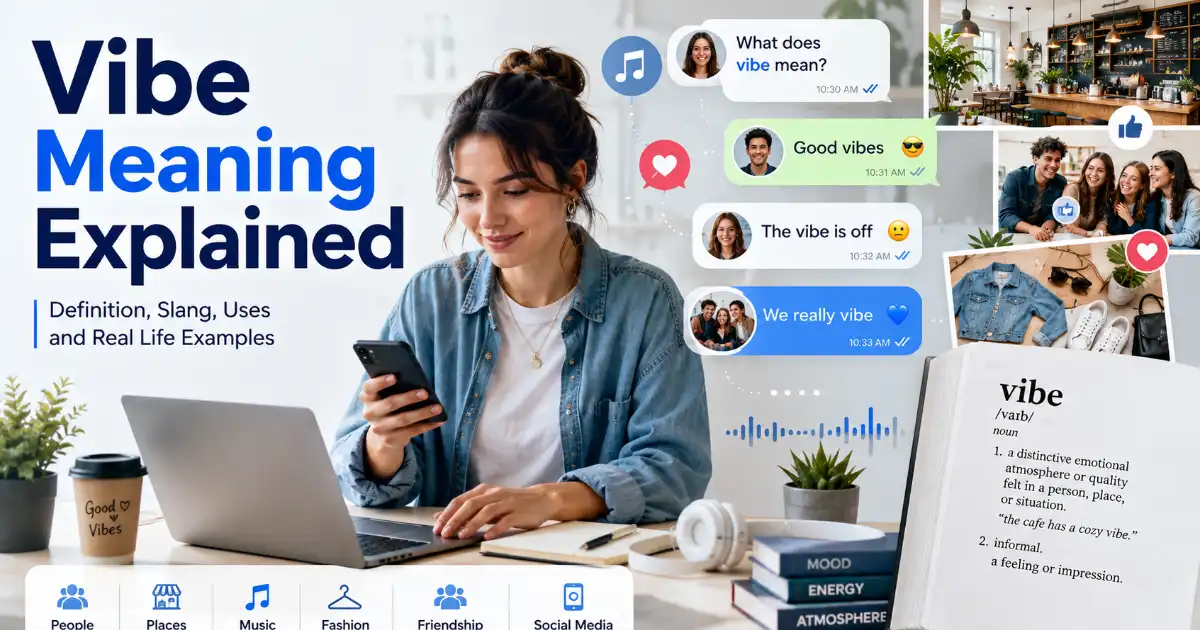
Vibe means the overall feeling, mood, atmosphere, or energy that a person, place, situation, song, outfit, or experience gives you. If someone says, “This place has a good vibe,” they mean the atmosphere feels pleasant or appealing. If someone says, “I’m getting a weird vibe,” they mean something feels unusual or uncomfortable.
In casual conversation, vibe can also describe compatibility, such as “We really vibe,” meaning two people connect naturally. The word can function as both a noun and a verb in modern English.
Introduction
People use the word vibe constantly in conversations, text messages, social media posts, music discussions, dating conversations, and everyday situations. Someone might describe a restaurant as having a cozy vibe, say that a song is a summer vibe, or tell a friend that they are not getting a good vibe from someone. Although the word looks simple, its meaning can change slightly depending on the context.
The basic idea remains the same. A vibe describes the feeling or overall impression that something creates. It can involve mood, atmosphere, personality, style, energy, or compatibility. Unlike a precise description, vibe often captures an impression that feels difficult to explain with one specific word.
This guide explains what vibe means, how people use it in texting and social media, what good vibes and bad vibes mean, how vibe works as a verb, and how it differs from words such as mood, energy, atmosphere, and aura. The goal is to make the word easy to understand and use naturally.
| Meaning | Where It Is Used | Simple Explanation | Example |
|---|---|---|---|
| Feeling or atmosphere | Places and situations | The feeling something creates | This cafe has a cozy vibe |
| Personal energy | People | The impression someone gives | She has a friendly vibe |
| Mood or style | Music, fashion, media | The overall character or feeling | This song has a relaxing vibe |
| Compatibility | Relationships and friendships | A natural sense of connection | We really vibe |
| Relaxed enjoyment | Casual conversation | Spending time comfortably | We were just vibing |
What Does Vibe Mean?
The most common meaning of vibe is a distinctive feeling or quality that someone senses from a person, place, object, situation, or experience. It is an informal word, and people often use it when a simple description such as happy, calm, strange, stylish, or uncomfortable does not fully capture the experience.
For example, imagine walking into a small coffee shop with warm lighting, quiet music, comfortable chairs, and people reading books. Someone might say, “This place has such a cozy vibe.” They are describing the combined feeling created by the environment.
The same idea applies to people. If someone says, “He gives off a friendly vibe,” they are describing the impression they get from his behavior, appearance, communication style, or presence.
Vibe does not always mean something positive. People can talk about a good vibe, bad vibe, weird vibe, chill vibe, awkward vibe, romantic vibe, professional vibe, or chaotic vibe. The word itself stays neutral. The words around it usually tell you whether the feeling is positive, negative, or somewhere in between.
Where Did the Word Vibe Come From?

The word vibe developed as a shortened form of vibration. Dictionaries trace the modern informal noun to the 1960s, while the verb developed later. The modern meaning connects the idea of vibration with a feeling, atmosphere, or quality that people sense.
Over time, vibe became a flexible part of everyday English. People began using it to describe music, places, personalities, relationships, fashion, entertainment, and social situations.
Today, you do not need to be talking about music or spirituality to use the word. It works naturally in ordinary conversation.
For example:
“I like the vibe here.”
“That outfit has a cool vibe.”
“She gives off a confident vibe.”
“I was not feeling the vibe at the party.”
These examples all use the same basic idea while describing different experiences.
What Does Vibe Mean in Texting?
In texting, vibe usually means the feeling, mood, or energy that someone or something gives you. The meaning depends heavily on the surrounding words and the conversation.
If someone texts, “I love this vibe,” they probably mean they enjoy the mood or atmosphere of whatever they are discussing.
If someone says, “The vibe is off,” they mean something feels wrong, uncomfortable, unusual, or different from what they expected.
If someone says, “We vibe,” they usually mean they get along naturally or share a comfortable connection.
The word works especially well in texting because it communicates a broad emotional impression without requiring a long explanation.
Examples in Text Messages
Friend: How was the new restaurant?
Reply: The food was good, but the vibe was kind of weird.
Here, vibe describes the overall atmosphere.
Friend: Do you like this playlist?
Reply: Yeah, it is such a chill vibe.
Here, vibe describes the feeling created by the music.
Friend: How was your first date?
Reply: We really vibed.
Here, the verb means they connected naturally.
What Does Vibe Mean on Social Media?
On social media, vibe often describes the mood, aesthetic, or emotional feeling associated with a photo, video, song, outfit, location, or moment.
A person might post a picture from a beach and caption it “summer vibes.” Someone else might post a photo of a quiet room with a book and call it a “cozy vibe.”
Social media also makes the word useful as a quick reaction. Instead of explaining exactly why they like a post, users may simply say:
“This is a vibe.”
“That outfit is a whole vibe.”
“Such good vibes.”
“I love this vibe.”
In these examples, vibe communicates approval or emotional connection. The exact meaning comes from the content being discussed.
What Does Good Vibes Mean?
Good vibes means positive, pleasant, comfortable, or uplifting feelings.
Someone might say, “This party has good vibes,” when the atmosphere feels friendly and enjoyable.
The phrase can also describe a person. Saying “She gives good vibes” usually means the person seems pleasant, welcoming, positive, or easy to be around.
Examples include:
“Everyone at the event was giving good vibes.”
“This playlist is all good vibes.”
“I always get good vibes from that neighborhood.”
Good vibes can describe a specific moment or a general impression.
What Does Bad Vibes Mean?
Bad vibes refers to an uncomfortable, negative, unpleasant, or concerning feeling.
For example:
“I got bad vibes from that conversation.”
“The meeting had bad vibes today.”
“That place gives me bad vibes.”
The phrase does not automatically prove that something is wrong. It describes someone’s impression or feeling. A person can experience bad vibes because of the atmosphere, communication, tension, uncertainty, or personal reaction.
That distinction matters. A vibe is an impression, not objective evidence.
What Does It Mean to Vibe With Someone?
To vibe with someone means to connect with them naturally and feel comfortable around them. It can describe friendship, dating, teamwork, family relationships, or casual social interactions. Cambridge also defines the verb as liking someone or something and feeling comfortable and happy with them.
For example:
“I really vibe with my new coworkers.”
“We talked for hours because we just vibed.”
“I do not think we vibe.”
The expression usually focuses on compatibility rather than a specific shared interest.
Two people can vibe even when they have different personalities. The important part is that the interaction feels natural.
What Does Vibing Mean?
Vibing is the present participle of the informal verb vibe. In everyday speech, it can mean relaxing, enjoying a moment, listening to music, spending time comfortably, or connecting well with someone.
For example:
“I am just vibing at home.”
“We were vibing to music all night.”
“They were sitting outside and vibing.”
In these sentences, vibing often suggests a relaxed state without a strict plan.
The word can also describe compatibility:
“I have been vibing with my new classmates.”
Here, it means the interactions feel comfortable and natural.
Common Ways People Use Vibe
The flexibility of vibe makes it useful in many everyday situations. Here are some of the most common uses.
Describing a Place
People use vibe to describe the atmosphere of restaurants, stores, homes, offices, neighborhoods, concerts, and other locations.
“This restaurant has a relaxed vibe.”
“The hotel has a modern vibe.”
“The office feels like a creative vibe.”
Describing a Person
Vibe can describe the impression someone gives other people.
“He has a laid back vibe.”
“She gives off a confident vibe.”
“They have a really friendly vibe.”
The description does not necessarily identify one specific personality trait. It describes the overall impression.
Describing Music
Music frequently gets described through vibe because songs can create complicated emotional experiences.
“This song has a nostalgic vibe.”
“That playlist has a late night vibe.”
“I love the vibe of this album.”
Describing Clothing and Style
Vibe can also describe an outfit or aesthetic.
“That jacket gives the whole outfit a vintage vibe.”
“Her style has a minimalist vibe.”
“This room has a cozy vibe.”
Describing Situations
People can use vibe to describe conversations, events, dates, meetings, or social experiences.
“The conversation had a strange vibe.”
“The meeting felt tense.”
“The party had a fun vibe.”
Vibe vs Mood vs Energy
These words overlap, but they are not exactly the same.
| Term | Meaning | Best Use | Example |
|---|---|---|---|
| Vibe | Overall feeling or impression | People, places, situations, style | This place has a relaxed vibe |
| Mood | Emotional state or atmosphere | Feelings and situations | I am in a good mood |
| Energy | Perceived liveliness or presence | People and situations | She has positive energy |
| Atmosphere | Character of a surrounding environment | Places and events | The atmosphere felt peaceful |
| Aura | Distinctive impression surrounding someone or something | People and personal presence | He has a mysterious aura |
Vibe is often the most casual and flexible of these words. It can describe both a specific atmosphere and a broad personal impression.
Vibe vs Aura
Vibe and aura can sound similar because both describe an impression associated with someone or something.
However, vibe usually refers to the overall feeling a person experiences. Aura can sound more personal or mysterious and often focuses on the presence someone seems to carry.
For example:
“She has a welcoming vibe.”
“He has a mysterious aura.”
In casual conversation, people sometimes use the two words interchangeably. The difference usually comes from tone rather than a strict rule.
Common Vibe Phrases and Their Meanings
Several expressions appear frequently in everyday speech.
That Is a Vibe
“That is a vibe” usually means something feels appealing, relatable, enjoyable, or aesthetically pleasing.
Example:
“Reading a book by the window while it rains? That is a vibe.”
The Vibe Is Off
“The vibe is off” means something feels unusual, uncomfortable, or not quite right.
Example:
“Everyone is being quiet today. The vibe is off.”
Good Vibes
Good vibes means positive or pleasant feelings.
Example:
“This playlist is giving good vibes.”
Bad Vibes
Bad vibes means negative or uncomfortable feelings.
Example:
“I got bad vibes from the situation.”
Vibe Check
A vibe check is an informal way of assessing someone’s mood, behavior, attitude, or overall energy. It can be serious, playful, or humorous depending on context.
Example:
“Quick vibe check. How is everyone doing?”
Just Vibing
“Just vibing” usually means relaxing, enjoying the moment, or spending time without worrying about a particular task.
Example:
“I am just vibing with some music tonight.”
How to Use Vibe Naturally
Using vibe naturally does not require complicated rules. Think of it as a flexible word for an overall feeling or impression.
Use vibe when you want to describe the character of something without giving a highly specific explanation.
For example, instead of saying:
“The restaurant has warm lighting, quiet music, comfortable furniture, and a relaxed atmosphere.”
A casual speaker might simply say:
“The restaurant has a really cozy vibe.”
Both sentences communicate a similar idea, but the second sounds more natural in casual conversation.
You can also add descriptive words before vibe:
“chill vibe”
“cozy vibe”
“romantic vibe”
“professional vibe”
“retro vibe”
“positive vibe”
“weird vibe”
“summer vibe”
These combinations make the intended feeling clearer.
Common Mistakes When Using Vibe
Understanding the word becomes easier when you avoid a few common mistakes.
Assuming Vibe Always Means Something Positive
Vibe can be positive, negative, or neutral. A good vibe is positive, but a bad vibe or weird vibe clearly is not.
Treating Vibe as Proof
A vibe describes an impression. It does not automatically prove that a person, place, or situation is good or bad.
For example, someone might say, “I got a weird vibe from him.” That describes their personal impression. It does not establish a fact about the person.
Confusing Vibe With Mood
Mood usually focuses on an emotional state, while vibe often describes the broader feeling created by a person, place, situation, or experience.
Assuming Vibe Only Describes People
Vibe can describe almost anything that creates a recognizable feeling. Restaurants, songs, outfits, rooms, conversations, parties, neighborhoods, and social media posts can all have a vibe.
Using Vibe in Formal Writing Without Considering Tone
Vibe is informal. It works well in conversations, blogs, social media, marketing, and casual writing. In highly formal writing, words such as atmosphere, character, impression, or tone may fit better.
Conclusion
The word vibe describes an overall feeling, mood, atmosphere, or impression. It can describe a person, place, song, outfit, conversation, event, or situation. In casual texting and social media, people often use it to communicate an emotional reaction quickly.
The meaning changes slightly with context. A good vibe suggests something positive, a bad vibe suggests discomfort, and saying two people vibe usually means they connect naturally. Expressions such as “that is a vibe,” “the vibe is off,” “good vibes,” and “just vibing” all build on the same basic idea.
The easiest way to remember vibe is to think of it as the feeling something gives you. It is an informal and highly flexible word that fits naturally into modern everyday English.
Frequently Asked Questions About Vibe
What does vibe mean in simple words?
Vibe means the overall feeling, mood, atmosphere, or energy that someone or something gives you.
Is vibe slang?
Vibe is an informal word that developed from vibration and became common in everyday speech. It now appears in both casual conversation and broader modern English.
What does it mean when someone says you have a good vibe?
It usually means you create a pleasant, friendly, comfortable, or positive impression.
What does vibe mean in texting?
In texting, vibe usually means the feeling or energy associated with a person, message, situation, place, song, or experience.
What does it mean to vibe with someone?
To vibe with someone means to connect naturally and feel comfortable with them. It often suggests compatibility or easy communication.
What does bad vibe mean?
A bad vibe means an uncomfortable, negative, unpleasant, or concerning impression.
What does just vibing mean?
Just vibing usually means relaxing, enjoying the moment, listening to music, hanging out, or going with the flow.
Can vibe describe a place?
Yes. People commonly use vibe to describe the atmosphere or overall character of places such as restaurants, homes, stores, offices, and neighborhoods.