
Quick Answer
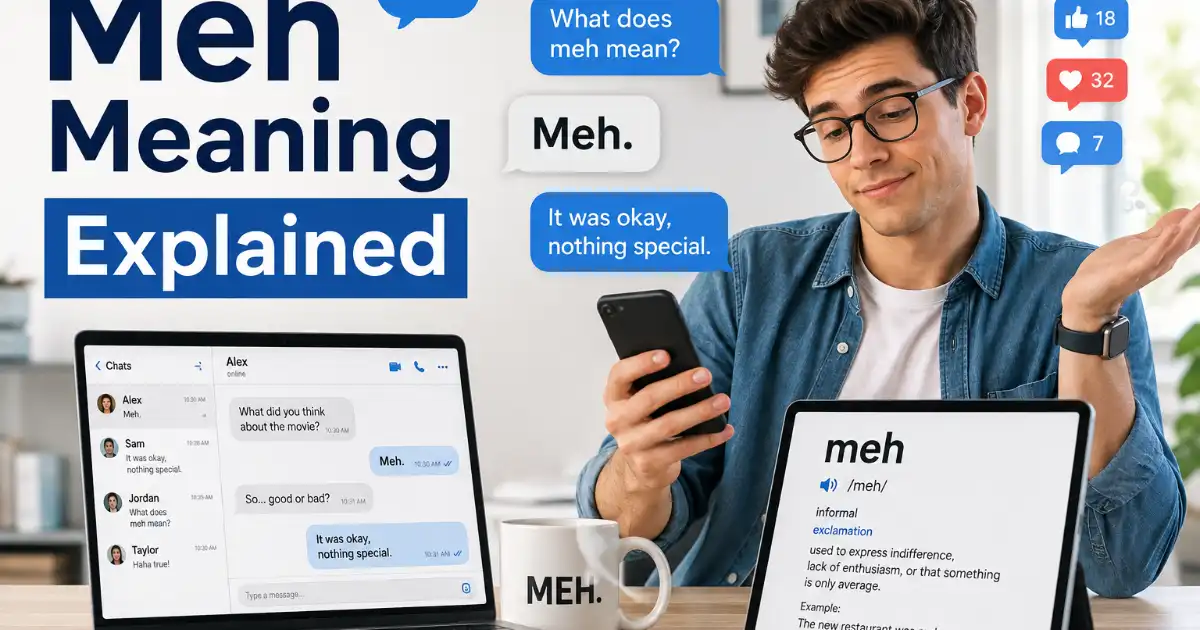
Meh is an informal expression that shows indifference, mild disappointment, or a lack of excitement. It often means something like I do not really care, it is okay but nothing special, or I am not impressed. People commonly use meh in texting, social media, casual conversations, and everyday speech. The tone can range from neutral to slightly dismissive depending on context.
Introduction
The word meh is short, casual, and surprisingly expressive. Someone might respond with meh when a movie was acceptable but forgettable, when a restaurant did not impress them, or when they simply do not have a strong opinion about a particular topic. Unlike words such as terrible or amazing, meh usually sits somewhere in the middle.
People often search for the meaning of meh because it appears frequently in texts, comments, memes, social media posts, and online conversations. Its informal style makes it especially common when people want to express an attitude without writing a long explanation.
A simple meh can communicate boredom, indifference, disappointment, or a feeling that something was just average.
Understanding the context matters because meh does not always mean exactly the same thing. A person saying meh about dinner may mean the food was fine but not memorable. Someone replying meh to a suggestion may show that they are not particularly interested.
This guide explains the meaning of meh, how people use it, examples from everyday situations, similar expressions, common mistakes, and the difference between meh and stronger negative words.
What Does Meh Mean?
Meh means that someone feels indifferent, unimpressed, or only mildly interested in something. It usually communicates a lack of enthusiasm rather than strong dislike.
For example, if someone asks, Did you like the movie? and the answer is meh, the speaker probably did not hate the movie. They simply did not think it was particularly good or memorable.
The expression can communicate several closely related ideas:
- Something is just okay.
- Something does not create much excitement.
- Someone does not have a strong opinion.
- An experience feels ordinary or disappointing.
- A person does not care very much about the subject.
Meh often works as an emotional reaction rather than a formal description. It can appear by itself in a conversation or inside a longer sentence.
For example:
Meh. I expected more from the movie.
Here, meh expresses mild disappointment.
Another example is:
The new restaurant was pretty meh.
In this sentence, meh describes the restaurant as average or unimpressive.
The word usually sounds casual. It fits conversations with friends, family, classmates, coworkers in informal settings, and online communities. It generally does not belong in formal business writing, academic papers, professional reports, or other situations that require polished language.
Meh Meaning in Different Contexts
The meaning of meh can shift slightly depending on the situation. The basic idea remains the same, but the emotional tone can change.
| Meaning | Where It Is Used | Simple Explanation | Example |
|---|---|---|---|
| Indifference | Texting and conversation | No strong feelings | Meh, I do not really care |
| Mediocre | Reviews and opinions | Average or unimpressive | The food was meh |
| Mild disappointment | Movies and entertainment | Not as good as expected | The ending was meh |
| Lack of excitement | Plans and activities | Not very interested | Meh, I might go |
| Dismissive reaction | Online conversations | Not impressed | Meh, that argument is weak |
Context usually makes the intended meaning clear. A person responding with meh to a weekend plan may simply feel uninterested. Someone describing a product as meh is more likely saying that the product feels average.
How People Use Meh in Everyday Conversation

People use meh in several ways because it can describe both a feeling and an opinion.
One common use is as a standalone response:
How was your weekend?
Meh. Nothing special.
Here, meh suggests that the weekend was neither especially good nor especially bad.
People can also use it to describe something:
That new show is kind of meh.
This usually means the show is acceptable but not impressive.
Another common pattern appears when someone asks for an opinion:
What do you think of the new design?
Meh. I liked the old one better.
In this case, meh communicates a mild negative opinion without sounding extremely harsh.
The expression can also soften a response. Saying something was meh may sound less aggressive than calling it awful, terrible, or worthless.
Meh Examples in Texting
Text messages often favor short expressions, which makes meh especially useful. It can communicate an entire attitude with only three letters.
Here are some natural examples:
Friend: Want to watch that new movie tonight?
Reply: Meh, maybe tomorrow.
Friend: Did you like the concert?
Reply: Meh. It was okay.
Friend: Are you excited about the new update?
Reply: Honestly, meh.
Friend: Should we order from that place again?
Reply: Meh, I would try somewhere else.
Friend: How was the exam?
Reply: Meh. Not terrible, not great.
The tone depends heavily on punctuation and surrounding words. Meh. can sound more dismissive than meh, maybe. Adding words such as honestly, kind of, or pretty can also change the emotional strength.
Meh Examples on Social Media
On social media, meh often appears in comments, captions, reactions, and memes. Users may use it when discussing movies, music, food, fashion, products, trends, or online debates.
For example:
Everyone is obsessed with this trend, but meh.
This communicates that the speaker does not share the excitement.
Another example is:
The trailer looked good, but the actual movie was meh.
Here, meh means disappointing or average.
Social media users may also use the expression humorously. Someone might post a picture of an elaborate meal and caption it with meh as a joke. The meaning then depends on the surrounding content and the relationship between the people involved.
Is Meh Positive, Negative, or Neutral?
Meh is usually neutral to mildly negative. It rarely communicates strong enthusiasm.
If someone says:
The movie was amazing.
That is clearly positive.
If someone says:
The movie was terrible.
That is strongly negative.
If someone says:
The movie was meh.
The speaker probably means the movie was average, forgettable, or not worth much excitement.
The word can also express genuine indifference. For example:
I am meh about going out tonight.
This does not necessarily mean the person dislikes going out. It means they do not feel strongly enough to be excited about it.
Meh vs Okay
Meh and okay can look similar, but they often carry different attitudes.
Okay usually sounds more neutral and polite. It can mean something is acceptable.
Meh often adds an element of indifference or disappointment.
| Term | Meaning | Tone | Example |
|---|---|---|---|
| Meh | Not exciting or impressive | Indifferent | The movie was meh |
| Okay | Acceptable or satisfactory | Neutral | The movie was okay |
| Fine | Acceptable | Neutral | The movie was fine |
| Average | Around the middle | Matter of fact | The movie was average |
| Boring | Lacking interest | Negative | The movie was boring |
| Terrible | Very poor | Strongly negative | The movie was terrible |
Someone who says okay may have enjoyed something reasonably well. Someone who says meh usually wants to communicate weaker enthusiasm.
Meh vs Whatever
Whatever can express indifference, but it often carries a different attitude.
Meh usually focuses on a lack of excitement or interest. Whatever can suggest that the speaker does not care about the issue or does not want to argue about it.
For example:
Do you want pizza or burgers?
Meh, either is fine.
This expresses low preference.
Compare that with:
I think we should take the earlier train.
Whatever.
The second response can sound irritated, dismissive, or argumentative.
Because of this difference, meh often sounds lighter and less confrontational than whatever.
Meh vs Boring
Meh does not necessarily mean boring.
Something can be meh because it is average, predictable, disappointing, or simply not the speaker’s taste. Boring specifically suggests that something fails to hold attention or interest.
For example:
The movie was meh.
This could mean the movie was average.
The movie was boring.
This directly says the movie failed to maintain interest.
A person can even describe an exciting activity as meh if they personally do not care about it. That makes meh more subjective than boring.
When Should Someone Use Meh?
Meh works best in relaxed, informal communication. It fits situations where the speaker wants to express a mild reaction without sounding overly serious.
Good situations include:
- Texting friends
- Casual conversations
- Social media comments
- Online discussions
- Informal reviews
- Personal messages
- Memes and humorous posts
- Conversations about entertainment
It works particularly well when a person wants to avoid exaggerating their reaction.
For example:
I tried the new coffee shop. Meh. I probably would not go again.
The response feels casual and honest without sounding unnecessarily harsh.
When Should Someone Avoid Using Meh?
Because meh is highly informal, it does not fit every situation.
Avoid using it in formal academic writing, professional reports, formal customer communications, legal documents, and serious workplace correspondence unless the context specifically calls for casual language.
Instead of:
The results were meh.
A professional report could say:
The results were average and did not meet expectations.
Instead of:
The presentation was meh.
A workplace review could say:
The presentation was acceptable but could be more engaging.
The more formal alternatives communicate the same general idea while providing greater precision.
Why Does Meh Sound So Casual?
Part of the appeal of meh comes from its simplicity. It does not require a detailed explanation of an emotion. A speaker can use it when something does not deserve a strong reaction.
That makes meh useful in everyday communication. It can signal a shrugging attitude through language.
For example:
Are you upset about the change?
Meh. I will get used to it.
The speaker is not necessarily happy about the change, but they also do not consider it important enough to become upset.
This flexible emotional range helps explain why meh appears so often in informal conversations and online communication.
Common Mistakes When Using Meh
People sometimes misunderstand meh because it can express several related attitudes.
Mistake 1: Assuming Meh Means Terrible
Meh usually does not mean something is terrible. It more often means average, unimpressive, or not worth much excitement.
Calling a bad movie meh can actually make the criticism sound softer.
Mistake 2: Treating Meh as Formal English
Meh is informal. It works naturally in casual conversation but may look out of place in professional or academic writing.
Mistake 3: Assuming Meh Always Means Indifference
Context matters. Meh can describe a mediocre experience, mild disappointment, or a lack of enthusiasm.
Mistake 4: Ignoring Tone
A standalone Meh. may sound more dismissive than Meh, I guess. The surrounding words, punctuation, and relationship between speakers can affect the meaning.
Mistake 5: Confusing Meh With Whatever
Both can communicate low interest, but whatever can sound more dismissive or irritated. Meh usually has a softer, more indifferent tone.
Is Meh Considered Slang?
Yes. Meh is generally treated as an informal slang or colloquial expression. It appears frequently in casual speech and online communication.
Although many English speakers understand it immediately, it still has a distinctly informal feel. Its meaning depends more on tone and context than many traditional descriptive words.
That makes it especially common in texting, social media, online forums, memes, and casual conversations.
Can Meh Be Used as an Adjective?
In informal English, people sometimes use meh as a descriptive word.
For example:
The whole experience was pretty meh.
Here, meh describes the experience as ordinary, disappointing, or unimpressive.
People may also use phrases such as:
The food was kind of meh.
The ending felt meh.
This usage is informal but widely understandable in casual communication.
Is Meh Rude?
Meh is not automatically rude, but it can sound dismissive. The effect depends on the situation and the person receiving the response.
If a friend asks whether you want chocolate or vanilla and you answer meh, it may simply show that you have no preference.
However, if someone excitedly tells you about an important achievement and you respond with meh, the reaction could feel disrespectful or insensitive.
The key issue is emotional context. Meh works well when a low reaction is appropriate. It can hurt someone’s feelings when they expect genuine enthusiasm or support.
Conclusion
Meh is a casual expression that usually communicates indifference, mild disappointment, or a lack of enthusiasm. It can describe something that feels average, unimpressive, or simply not exciting enough to deserve a strong reaction.
The exact meaning depends on context. In texting, meh may mean I do not really care. In a review, it may mean something was only average. In social media conversations, it can provide a short and sometimes humorous reaction.
The most important thing to remember is that meh is informal and usually softer than strongly negative words such as terrible or awful. It works best when a relaxed, conversational tone fits the situation.
FAQs About Meh
What does meh mean in texting?
In texting, meh usually means the person feels indifferent, unimpressed, or only mildly interested. It can also mean something was okay but not especially good.
Does meh mean I do not care?
Sometimes. Meh can communicate that someone does not care strongly about a subject, but it can also mean something feels average or disappointing.
Is meh a negative word?
Meh usually has a mildly negative or indifferent tone. It does not normally express strong dislike.
What is another word for meh?
Depending on context, alternatives include average, okay, ordinary, unimpressive, indifferent, uninteresting, or whatever. The best replacement depends on the intended tone.
Can meh be used in a sentence?
Yes. For example: The new restaurant was meh, so I would rather try somewhere else next time.
Is meh professional language?
Meh is informal and usually does not belong in formal professional or academic writing. Words such as average, acceptable, or unimpressive may work better in formal contexts.
Why do people say meh?
People use meh when they want to express a weak reaction without giving a long explanation. It can communicate indifference, mild disappointment, or a lack of enthusiasm quickly.
Does meh always mean boring?
No. Meh can mean average or unimpressive, but something does not have to be boring to receive a meh reaction. Personal preference and expectations also affect how people use the expression.