
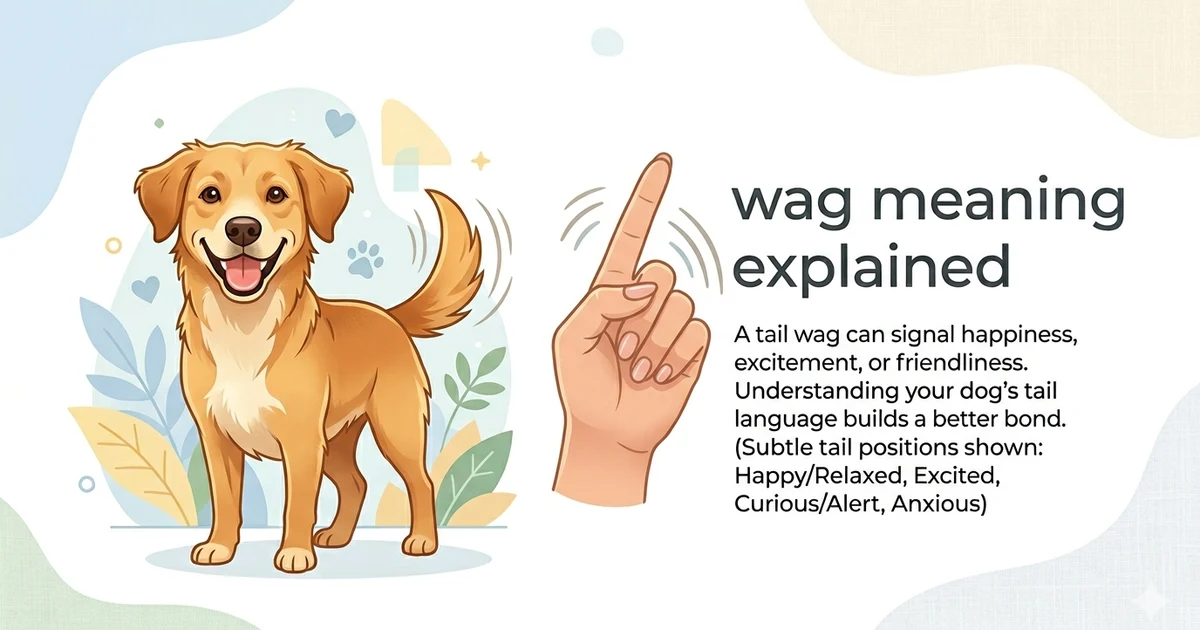
Quick Answer
Wag is a flexible English word with multiple meanings depending on context. Most commonly, it refers to the quick side to side movement of something, especially a dog’s tail when it is happy or excited. It can also describe the action of moving a finger or head for emphasis, or be used as a slang term in sports culture referring to wives and girlfriends of athletes. The correct meaning depends on how and where it is used in conversation or writing.
In simple terms, wag can describe a physical movement, a gesture, or a modern slang identity term, making it a word with both everyday and cultural meanings.
Introduction
The word wag appears simple at first, but it carries several meanings that often confuse readers, especially when seen in different contexts like conversations, social media, or sports news. Some people search for wag after hearing it in relation to a dog, while others encounter it in slang discussions or lifestyle content.
Understanding wag is useful because it shows up in daily English, storytelling, animal behavior descriptions, and modern internet culture. Without context, the word can easily be misunderstood, which is why many learners look it up to clarify its meaning.
In this guide, you will learn the full meaning of wag, how it is used in different situations, real life examples, and common mistakes people make when interpreting it. By the end, you will clearly understand how to recognize the correct meaning based on context and use it naturally in your own communication.
Meaning or Definition of Wag
The word wag is a versatile English term that changes meaning depending on how it is used in a sentence. It is commonly used as both a verb and a noun. The most widely recognized meaning in everyday English refers to a repeated side to side movement. This is often seen in animals, especially dogs, when they move their tails quickly to show happiness, excitement, or curiosity.
For example, when a dog sees its owner, it may wag its tail energetically. In this case, wag is a verb describing the action of moving something repeatedly from side to side.
Wag can also describe human gestures. A person might wag their finger to show warning, disagreement, or emphasis during a conversation. Similarly, someone might wag their head slightly to indicate disapproval or humor.
Another less common but culturally important meaning appears in modern slang, especially in sports and entertainment discussions. In this context, WAG refers to wives and girlfriends of famous athletes. It is used in media coverage and celebrity culture rather than everyday conversation.
Because wag has multiple meanings, understanding the context is essential. The surrounding words and situation usually make it clear whether it refers to movement, gesture, or slang identity.
In summary, wag can mean:
A physical side to side movement
A gesture made with a hand or head
A slang term used in sports culture
Each meaning is valid, but the intended meaning always depends on usage.
Comparison of Different Meanings of Wag
Understanding wag becomes easier when you compare its meanings side by side. The table below shows how context changes the interpretation of the word.
| Meaning | Where It Is Used | Simple Explanation | Example |
|---|---|---|---|
| Tail movement | Everyday speech, animal behavior | Moving side to side, usually showing emotion | The dog wag its tail when it sees food |
| Gesture wag | Conversations, storytelling | Moving finger or head for emphasis | She wag her finger while explaining the rule |
| Slang WAG | Sports media, celebrity culture | Refers to wives and girlfriends of athletes | The WAG attended the football match |
| General motion | Writing, descriptions | Any repeated side to side movement | The flag wag in the wind |
This comparison shows that wag is not limited to one meaning. Instead, it adapts based on context, making it important to read the full sentence carefully.
Practical Usage of Wag in Everyday English
Wag is commonly used in both spoken and written English. In everyday life, you will mostly hear it in relation to animals, especially dogs. Pet owners often use the word to describe their dog’s behavior, such as excitement or friendliness.
In writing, wag is also used in storytelling to create visual imagery. Authors use it to describe movement in a simple and relatable way. For example, instead of saying a dog is happy, a writer might say its tail wag shows excitement.
In conversations, wag can also appear when describing human gestures. A wagging finger often signals warning or instruction, while a wagging head might express disagreement or disbelief.
In modern culture, especially online or in sports media, wag is used differently as a slang term. In this case, it is not about movement but about people associated with athletes. However, this meaning is less common in everyday personal conversation.
Overall, wag is a practical word that helps describe movement, emotion, and cultural references in a simple way.
Examples of Wag in Sentences
Here are some clear examples to show how wag is used in different contexts:
The dog begins to wag its tail when it hears its owner’s voice.
She wag her finger at the child for not listening.
The cat watched the moving toy but did not wag its tail like a dog.
He gave a small wag of his head to show he disagreed.
Fans noticed the athlete’s partner, often described in media using the slang wag context.
The flag continued to wag in the strong wind outside the building.
These examples show how the meaning of wag changes depending on the subject and situation.
Common Use Cases of Wag
Wag appears in several common situations in English communication. Understanding these use cases helps you identify the meaning quickly.
Pet behavior descriptions are the most common use, especially with dogs. A wagging tail is widely recognized as a sign of friendliness or excitement.
Body language descriptions also use wag, particularly when describing finger or head movements during speech.
In storytelling and creative writing, wag is used to make scenes more vivid and expressive.
In media and sports culture, wag appears as a slang reference to relationships connected to athletes.
In informal conversation, people often use wag to quickly describe motion without using more complex words.
Similar Terms and Related Phrases
The meaning of wag overlaps with several other English words that describe movement or gestures. Understanding these related terms helps avoid confusion.
| Term | Meaning | Best Use | Example |
|---|---|---|---|
| Shake | Quick movement back and forth | Physical motion or greeting | He shake his head |
| Swing | Smooth back and forth motion | Objects or arms | The door swing open |
| Wave | Hand movement or motion in air | Greeting or signaling | She wave at her friend |
| Flick | Quick small movement | Light motion or gesture | He flick the switch |
| Nod | Up and down head movement | Agreement or approval | She nod in agreement |
These related words help show how wag fits into a broader group of movement based verbs.
Common Mistakes When Understanding Wag
One common mistake is assuming wag only refers to dogs. While this is the most familiar meaning, wag also applies to human gestures and slang contexts.
Another mistake is confusing wag with similar movement words like shake or wave. Although they describe motion, wag specifically refers to side to side movement.
People also sometimes misunderstand the slang WAG meaning. It is not a general term for all women in sports but specifically refers to partners of athletes in media culture.
A further mistake is ignoring context. Since wag has multiple meanings, reading the full sentence is important before deciding what it means.
Lastly, learners sometimes overuse wag in writing when more precise words would be clearer. Choosing the right synonym based on context improves clarity.
Conclusion
The word wag is simple on the surface but rich in meaning when used in real communication. It can describe a dog’s happy tail movement, a human gesture, or even a modern slang term in sports culture. Understanding the context is the key to using it correctly.
By learning its different meanings, examples, and common uses, you can confidently interpret wag in conversations, writing, and media content. Whether you encounter it in storytelling, daily speech, or online discussions, wag always reflects movement or association depending on the situation.
FAQs About Wag
What does wag mean in simple English
Wag usually means a side to side movement, especially a dog moving its tail when happy or excited.
Is wag only used for dogs
No, wag can also describe human gestures like moving a finger or head, and it is sometimes used as slang in sports culture.
What does it mean when someone wags a finger
It usually means they are warning, correcting, or emphasizing something during a conversation.
What is the slang meaning of wag
In slang, WAG refers to wives and girlfriends of famous athletes, often seen in sports media.
Is wag a positive or negative word
It is usually neutral or positive when describing animals, but tone depends on context when used for gestures or slang.
Can wag be used in formal writing
Yes, especially when describing movement or behavior, but slang usage is usually informal.
What is the difference between wag and shake
Wag is a side to side motion, while shake can be any rapid movement in different directions.