
Quick Answer
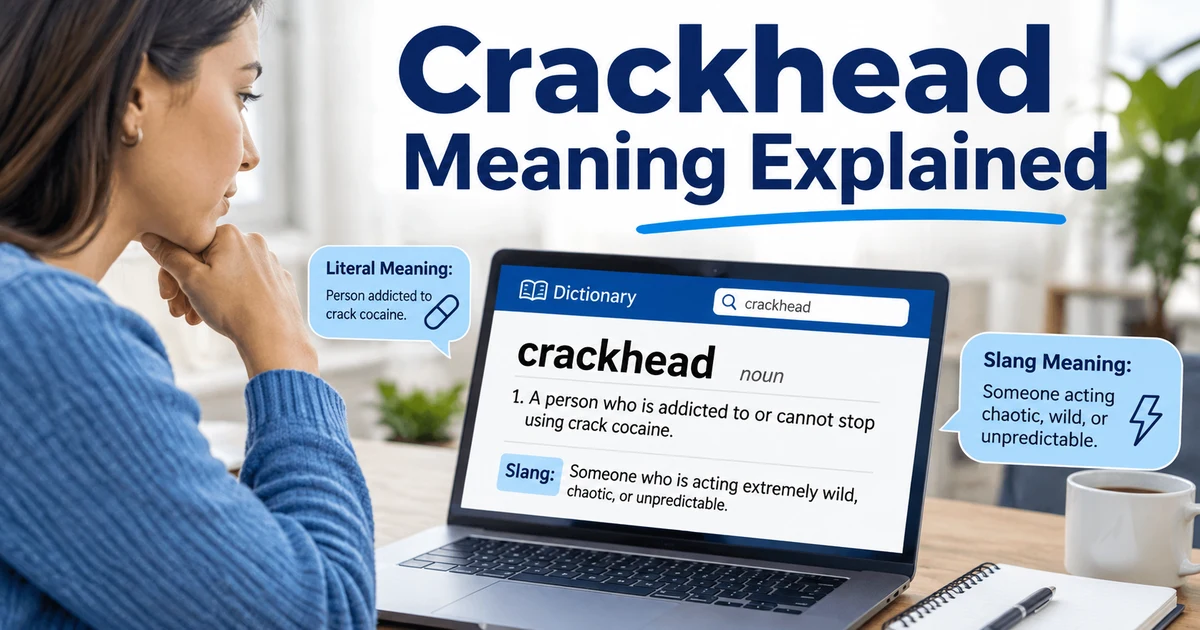
Crackhead is a slang term traditionally used to describe a person who is addicted to or heavily dependent on crack cocaine. Cambridge Dictionary defines it as a person who cannot stop using crack, making the term closely connected with substance addiction.
In casual conversation and online slang, people sometimes use crackhead more loosely to describe someone who behaves in an extremely wild, chaotic, impulsive, or bizarre way. In that figurative use, the speaker may not be referring to actual drug use. However, the word remains insulting and can stigmatize people affected by addiction, so it is best used carefully.
Introduction
People often search for crackhead because they see the word in texts, memes, social media comments, movies, music, or everyday conversations and want to know what the speaker actually means. The answer depends partly on context. The original and most literal meaning relates to crack cocaine addiction, while modern informal speech sometimes uses the word as an exaggerated insult for someone acting unusually chaotic or unpredictable.
Understanding that distinction matters because calling someone a crackhead can carry a much stronger meaning than simply saying that the person is acting silly. In a serious conversation, the word can suggest drug addiction even when the speaker only intends to describe strange behavior.
This guide explains the definition, slang meaning, tone, examples, related terms, common misunderstandings, and situations where the word may cause offense. It also explains why describing a person’s behavior directly can often communicate the intended idea more accurately.
What Does Crackhead Mean?
The primary meaning of crackhead refers to a person who is addicted to or cannot stop using crack cocaine. The term is slang and has a strongly negative or derogatory tone.
Crack is a form of cocaine. The National Institute on Drug Abuse describes cocaine as a powerfully addictive stimulant, and its educational material identifies crack as a form of cocaine.
The word combines crack, referring to crack cocaine, with head, a slang element that appears in other terms describing people associated with a particular substance or activity.
In everyday speech, however, people sometimes use crackhead without making a literal claim about drug use. Someone might call a friend a crackhead after the friend makes an extremely strange joke, stays awake doing an unnecessary project all night, or behaves in an unusually chaotic way.
That figurative use does not change the word’s original meaning. It simply shows how slang can develop broader meanings in casual conversation.
Crackhead Meaning at a Glance
| Meaning | Where It Is Used | Simple Explanation | Example |
|---|---|---|---|
| Literal meaning | Drug related discussions | A person addicted to crack cocaine | The article discussed the effects of addiction on crack users. |
| Insult | Casual conversation | A derogatory label suggesting someone is acting strangely | He called his friend a crackhead after the bizarre prank. |
| Figurative slang | Social media and texting | Someone acting extremely chaotic or unpredictable | That was some crackhead energy. |
| Humorous exaggeration | Friends and memes | A joking description of unusual behavior | We had a crackhead idea for the party. |
The literal meaning carries a serious connection to addiction. The figurative meaning usually depends heavily on tone and context.
Why Do People Say Crackhead in Casual Conversation?
People sometimes use crackhead as an exaggerated way to describe behavior that seems chaotic, reckless, ridiculous, energetic, or unpredictable. The speaker may have no information about the other person’s actual drug use.
For example, someone might say, “You are such a crackhead,” after a friend suddenly decides to rearrange an entire apartment at 2 a.m. In that context, the speaker may simply mean that the friend is acting unusually wild.
Social media has also helped broaden the informal use of words associated with extreme behavior. Phrases such as crackhead energy can describe bizarre humor, impulsive decisions, unusual creativity, or chaotic behavior.
Even so, context does not automatically make the word harmless. A person who hears it may understand the literal drug related meaning and feel insulted.
Is Crackhead a Slang Word?
Yes. Crackhead is a slang noun. Its primary dictionary meaning specifically connects it with crack cocaine addiction.
The word generally belongs to informal speech rather than professional or respectful language. It can appear in:
- Text messages
- Social media posts
- Memes
- Movies and television
- Music
- Casual conversations
- Insults and arguments
It does not belong in most professional, academic, medical, or formal settings. In serious discussions about addiction, more precise language such as person with a substance use disorder may communicate the situation more respectfully.
Crackhead as a Figurative Insult
The figurative meaning usually describes someone as extremely strange, reckless, chaotic, or unpredictable.
For example:
“Why did you decide to paint the entire kitchen at midnight? You’re acting like a crackhead.”
Here, the speaker may not be making a factual claim about drug use. The speaker is exaggerating the person’s unusual behavior.
Another example might appear online:
“This is some crackhead energy.”
This phrase often describes something that feels chaotic, ridiculous, impulsive, or unexpectedly funny.
The important point is that the figurative use still borrows its force from the word’s connection to drug addiction. That is why some readers may consider the expression offensive even when the speaker intends it as a joke.
Common Examples of Crackhead in Conversation
The following examples show different contexts without assuming that the person actually uses drugs.
Literal context
“His family was concerned about his crack addiction.”
In a literal discussion, the speaker is talking about substance use rather than making a joke.
Figurative context
“She showed up at 6 a.m. with a completely redesigned living room. Total crackhead behavior.”
Here, the speaker is describing unusual and chaotic behavior.
Social media context
“That video has serious crackhead energy.”
The phrase usually means that the video feels chaotic, bizarre, or wildly unpredictable.
Friendly joking context
“You’re a crackhead for agreeing to run a marathon without training.”
The speaker may simply mean that the decision seems extreme or reckless.
The relationship between the speakers matters. A word that one group treats as playful can sound deeply offensive to someone outside that group.
What Does Crackhead Energy Mean?
Crackhead energy is an informal internet and social media expression for extremely chaotic, impulsive, strange, or unpredictable behavior.
Someone might use it when a person:
- Makes an unexpectedly bizarre decision
- Has unusually intense energy
- Creates an absurd plan
- Acts spontaneously
- Makes a strange joke
- Does something that seems completely irrational
For example:
“She brought a karaoke machine to a quiet study session. That is crackhead energy.”
The sentence does not necessarily claim that the person uses crack cocaine. It uses the word figuratively to emphasize how unusual the behavior seems.
Still, people should understand that the expression comes from a stigmatizing drug related term. A phrase such as chaotic energy, wild energy, or unpredictable behavior can often express the same idea without the drug reference.
Crackhead vs. Crack Addict
These terms overlap, but they do not carry the same tone.
| Term | Meaning | Tone | Example |
| Crackhead | Slang term for a person associated with crack addiction | Derogatory | The word can sound insulting. |
| Crack addict | Person addicted to crack cocaine | Clinical or direct but still potentially stigmatizing | The report discussed crack addiction. |
| Person with a substance use disorder | Person experiencing a substance use disorder | More respectful and person focused | The clinic supports people with substance use disorders. |
| Crack cocaine user | Person who uses crack cocaine | Descriptive | The study examined crack cocaine users. |
In healthcare, journalism, education, and other serious contexts, person first language often provides a clearer and less stigmatizing option.
Is Crackhead Offensive?
It can be. The word has a derogatory association with drug addiction, and many people use it as an insult.
Whether someone considers the figurative version offensive depends on the situation, relationship, tone, and audience. Friends sometimes use the word jokingly with one another, while the same word from a stranger, coworker, teacher, or supervisor can sound hostile.
The safest approach is to avoid using crackhead as a label for another person unless there is a clear reason to discuss the term itself.
If the goal is to describe unusual behavior, more precise alternatives include:
- Chaotic
- Wild
- Unpredictable
- Impulsive
- Reckless
- Absurd
- Over the top
- Energetic
- Out of control
These alternatives communicate the behavior without implying drug addiction.
Crackhead vs. Crazy or Chaotic
People sometimes use crackhead, crazy, and chaotic to describe similar behavior, but they are not interchangeable.
Crackhead carries a specific drug related association and can also function as an insult.
Crazy can describe something surprising or extreme in casual speech, but it can also stigmatize mental health conditions when used carelessly.
Chaotic focuses more directly on disorder, unpredictability, or confusion without making a claim about substance use or mental health.
For example, instead of saying, “He is a crackhead,” someone could say, “He is acting incredibly chaotic today.” The second sentence explains the behavior without labeling the person.
Common Use Cases on Social Media
The figurative version appears most often in informal online settings.
Memes
Memes may use crackhead to exaggerate bizarre situations or ridiculous decisions.
TikTok and short videos
Creators and commenters may describe unusual behavior as crackhead energy or crackhead behavior.
Texting
Friends may use the word jokingly when someone does something impulsive or extreme.
Gaming communities
Players may sometimes use the term for an opponent or teammate who makes unpredictable decisions.
The meaning usually becomes clear from surrounding content. If someone discusses addiction, treatment, or drug use, the literal meaning becomes much more likely.
How Context Changes the Meaning
Context is the easiest way to determine what crackhead means in a particular sentence.
| Situation | Likely Meaning | What to Consider |
| Addiction discussion | Literal drug related meaning | The speaker may be discussing substance dependence. |
| Medical or educational article | Literal meaning | The term may appear as a slang definition. |
| Meme | Usually figurative | It may describe chaotic or bizarre behavior. |
| Text between friends | Often figurative | Tone and relationship matter. |
| Argument | Usually an insult | The speaker may be deliberately offensive. |
| Social media caption | Often exaggerated slang | Look at the surrounding content. |
| Workplace conversation | Potentially insulting | A neutral alternative is usually better. |
When the surrounding conversation provides no clues, assume the word can carry its literal meaning and avoid treating it as harmless slang.
Common Mistakes When Using Crackhead
One common mistake involves assuming that the word always means someone who behaves strangely. Its primary dictionary meaning remains connected to crack cocaine addiction.
Another mistake involves treating the word as a medical diagnosis. Crackhead is slang, not a clinical diagnosis or professional description of a person’s condition.
People also sometimes assume that unusual behavior proves drug use. It does not. Someone acting energetic, confused, reckless, or unpredictable could have many explanations, and an observer should not diagnose substance use based on behavior alone.
A final mistake involves using the word casually in professional communication. Even when the speaker intends humor, the term can sound judgmental or discriminatory.
Is Crackhead the Same as Cokehead?
No. The terms refer to different but related slang concepts.
A crackhead traditionally refers to someone associated with crack cocaine addiction. A cokehead refers to someone who uses or is addicted to cocaine more generally. Cambridge Dictionary defines cokehead as someone who uses or is addicted to cocaine.
Crack is a form of cocaine, but the slang terms should not automatically be treated as identical. The surrounding context determines which substance the speaker means.
What Is a More Respectful Alternative?
When discussing a real person and a genuine addiction problem, use language that describes the situation without reducing the person to a label.
Depending on the context, alternatives can include:
- Person with a substance use disorder
- Person experiencing cocaine addiction
- Person who uses crack cocaine
- Person receiving treatment for cocaine use disorder
For casual behavior, describe the behavior itself. Chaotic, impulsive, reckless, wild, or unpredictable may communicate the intended meaning more accurately.
This distinction matters because a person’s behavior and a person’s identity are not the same thing.
Does Crackhead Always Refer to Drug Use?
No. In modern informal speech, the word can have a figurative meaning. Someone may use it to describe behavior that seems bizarre, chaotic, or extreme without making a literal claim about drug use.
However, the literal meaning remains important. Cambridge Dictionary specifically defines the term around a person who cannot stop using crack.
Therefore, context matters. A sentence about addiction almost certainly uses the literal meaning, while a meme about a friend doing something ridiculous may use the figurative meaning.
Conclusion
The word crackhead has a clear original meaning: it is slang for a person associated with crack cocaine addiction. In casual internet and everyday speech, people also use it figuratively to describe someone or something that seems extremely chaotic, bizarre, impulsive, or unpredictable.
The most important distinction is context. A conversation about addiction may use the literal meaning, while a meme or text message may use the figurative one. Because the word can stigmatize people who experience addiction, it is usually better to describe behavior directly or use respectful, person focused language when discussing substance use.
Understanding both meanings helps readers interpret crackhead correctly without automatically assuming that every casual use refers to actual drug use.
Frequently Asked Questions About Crackhead
What does crackhead mean in slang?
In slang, crackhead traditionally refers to a person addicted to crack cocaine. In casual internet speech, people may also use it figuratively for someone behaving in a very chaotic, bizarre, or unpredictable way.
Is crackhead a bad word?
It is generally considered an offensive or derogatory slang term when used to label another person. Its connection to drug addiction gives it a harsh tone, even when someone intends it as a joke.
What does crackhead energy mean?
Crackhead energy is informal slang for extremely chaotic, impulsive, bizarre, or unpredictable behavior. It usually appears in jokes, memes, texting, and social media.
Can crackhead be used as a joke?
People sometimes use it jokingly among friends, but that does not make the word universally acceptable. The listener, setting, and relationship can change how the expression is received.
Is crackhead a medical term?
No. Crackhead is slang, not a medical diagnosis. Healthcare professionals generally use more precise terms when discussing substance use and addiction.
What is the difference between crackhead and cokehead?
A crackhead traditionally refers to someone associated with crack cocaine addiction, while cokehead refers more broadly to someone who uses or is addicted to cocaine.
What should someone say instead of crackhead?
If the goal is to describe strange behavior, terms such as chaotic, wild, impulsive, or unpredictable may work better. If discussing addiction, person focused language provides a more respectful description.
Does acting like a crackhead prove someone uses drugs?
No. Unusual or chaotic behavior does not prove that someone uses drugs. Avoid making assumptions about a person’s substance use based only on appearance or behavior.