
Quick Answer
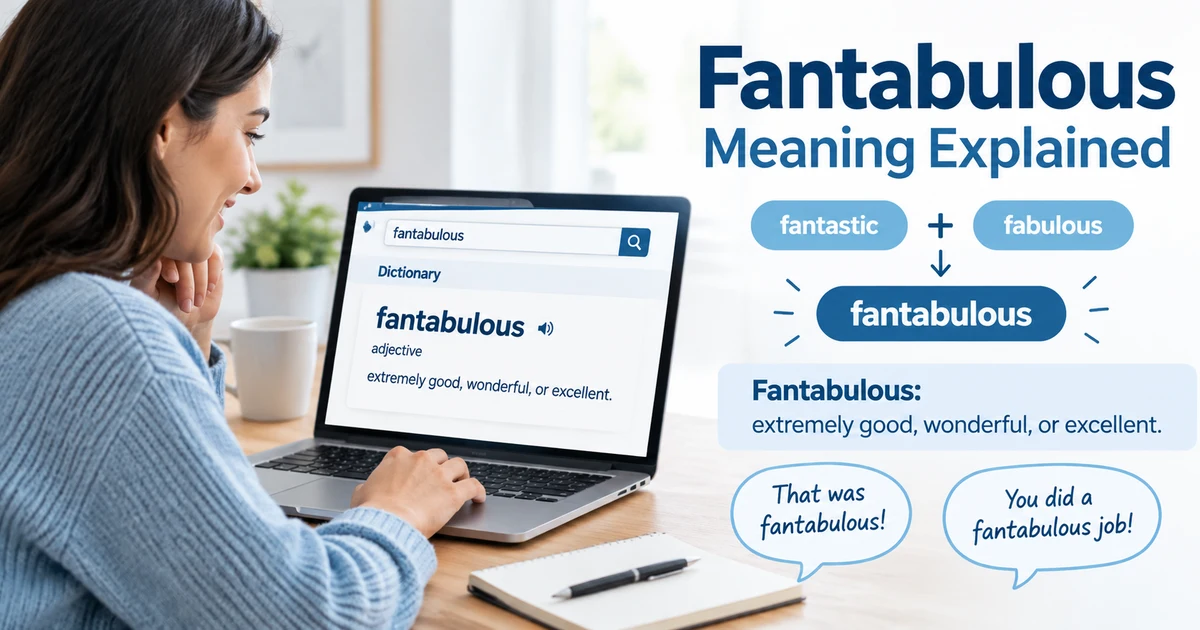
Fantabulous means extremely good, wonderful, impressive, or excellent. It is an informal slang adjective created by blending fantastic and fabulous. People use it when ordinary words such as great or excellent do not feel enthusiastic enough. The word usually carries a playful, cheerful, exaggerated tone.
For example, “We had a fantabulous time at the concert” means the concert was exceptionally enjoyable. Dictionaries classify the word as slang or informal, so it works best in casual conversation, texts, social media posts, friendly messages, and playful writing rather than formal business or academic writing.
Introduction
People often search for fantabulous because the word sounds familiar while also looking unusual. It resembles both fantastic and fabulous, which makes its meaning fairly easy to guess, but its tone and proper usage can still cause confusion. Someone may encounter it in a text message, social media caption, book, advertisement, or casual conversation and wonder whether it is a real English word or simply a playful invention.
Fantabulous is a real informal English word. It describes something exceptionally good, wonderful, or desirable. Its appeal comes from combining two positive words into one exaggerated expression. Historical sources trace the blend to the late 1950s, while modern dictionaries continue to list it as an informal or slang adjective.
This guide explains the fantabulous meaning, where the word comes from, how to pronounce and use it, what it means in different contexts, and how it compares with words such as fantastic, fabulous, amazing, and excellent. It also includes natural examples so readers can recognize when the word sounds appropriate.
What Does Fantabulous Mean?
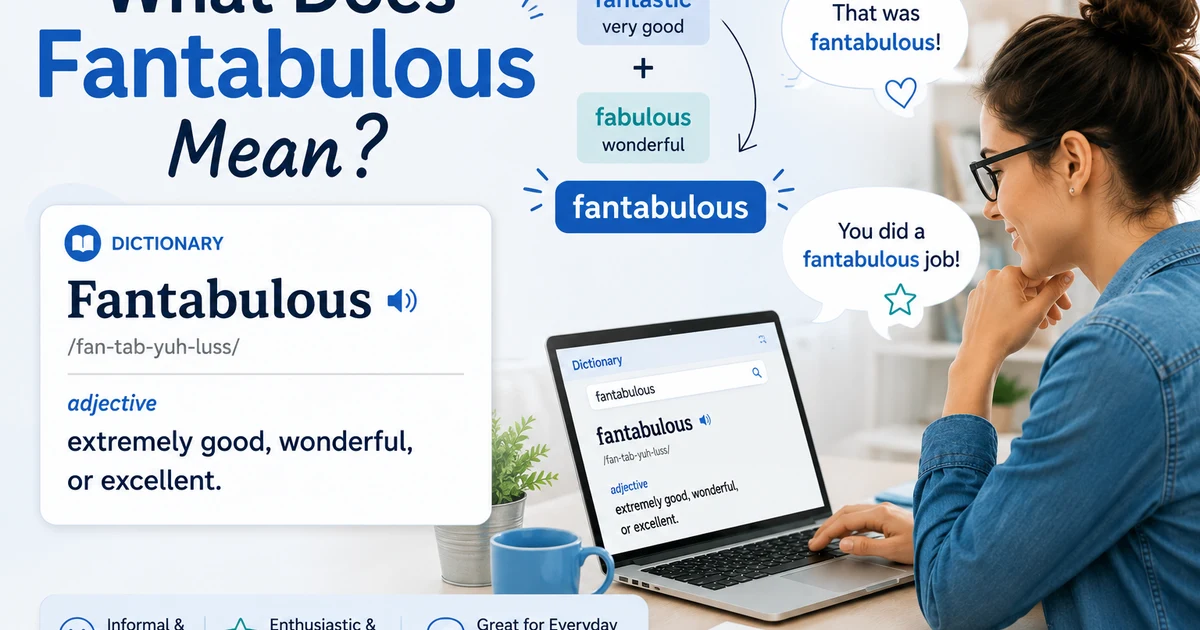
Fantabulous means extremely good, excellent, wonderful, or remarkably impressive. It works as an adjective, so it describes a person, thing, experience, result, event, or situation.
The word combines fantastic and fabulous. Both source words already express strong approval, so their combination creates an intentionally enthusiastic expression. Collins defines the American English form as slang meaning remarkably good, while Dictionary.com describes it as extremely fine or desirable, excellent, or wonderful.
For example:
The food at that new restaurant was fantabulous.
This sentence means the food was exceptionally good.
Another example is:
You did a fantabulous job on the presentation.
Here, fantabulous adds extra enthusiasm to the compliment.
The word does not normally describe something merely acceptable or average. It suggests strong positive feelings, although speakers can also use it sarcastically when the situation is actually disappointing.
Fantabulous Meaning in Simple Terms
The easiest way to understand fantabulous is to think of it as a playful way to say really fantastic and fabulous.
| Term | Meaning | Tone | Example |
|---|---|---|---|
| Fantabulous | Extremely good or wonderful | Playful and enthusiastic | The party was fantabulous. |
| Fantastic | Very good or impressive | Positive and common | The movie was fantastic. |
| Fabulous | Extremely good or attractive | Positive and expressive | She looked fabulous. |
| Amazing | Very impressive or surprising | Strong and common | The performance was amazing. |
| Excellent | Extremely good or high quality | More neutral and professional | The service was excellent. |
Fantabulous stands out because it sounds more playful than excellent and more unusual than fantastic or fabulous.
Is Fantabulous a Real Word?
Yes. Fantabulous is a recognized English word, although it remains informal and somewhat playful rather than standard formal vocabulary.
Dictionary sources list it as slang or informal English. Its documented origin comes from combining fantastic and fabulous. Etymology sources date the blend to 1957, while Dictionary.com gives a first recorded period of 1955 to 1960.
That means a person can correctly use fantabulous in an informal sentence. However, being a real word does not mean it fits every situation.
For example, this sounds natural:
That was a fantabulous weekend!
A formal report would usually sound better with:
The conference was highly successful.
The difference comes from register rather than correctness.
Where Did the Word Fantabulous Come From?
Fantabulous comes from a blend of fantastic and fabulous. This type of word formation combines parts of existing words to create a new expression.
Historical references place the word in use around the late 1950s. Etymonline specifically dates fantabulous to 1957 and describes it as a creative merger of fantastic and fabulous. Dictionary.com places its first recorded use around 1955 to 1960.
The construction makes intuitive sense:
fantastic + fabulous = fantabulous
The word has remained recognizable because both original words already communicate strong praise.
How Do You Pronounce Fantabulous?
Fantabulous is commonly pronounced approximately like:
fan TAB yuh luss
The pronunciation can vary slightly between speakers and English varieties. Collins gives American pronunciations close to fan TAB yuh luss and fan TAB yuh luhss.
The main stress falls around the tab portion of the word.
A simple way to practice it is to divide the word into parts:
fan + tab + u + lous
It should sound energetic and natural rather than overly formal.
How Is Fantabulous Used in Conversation?
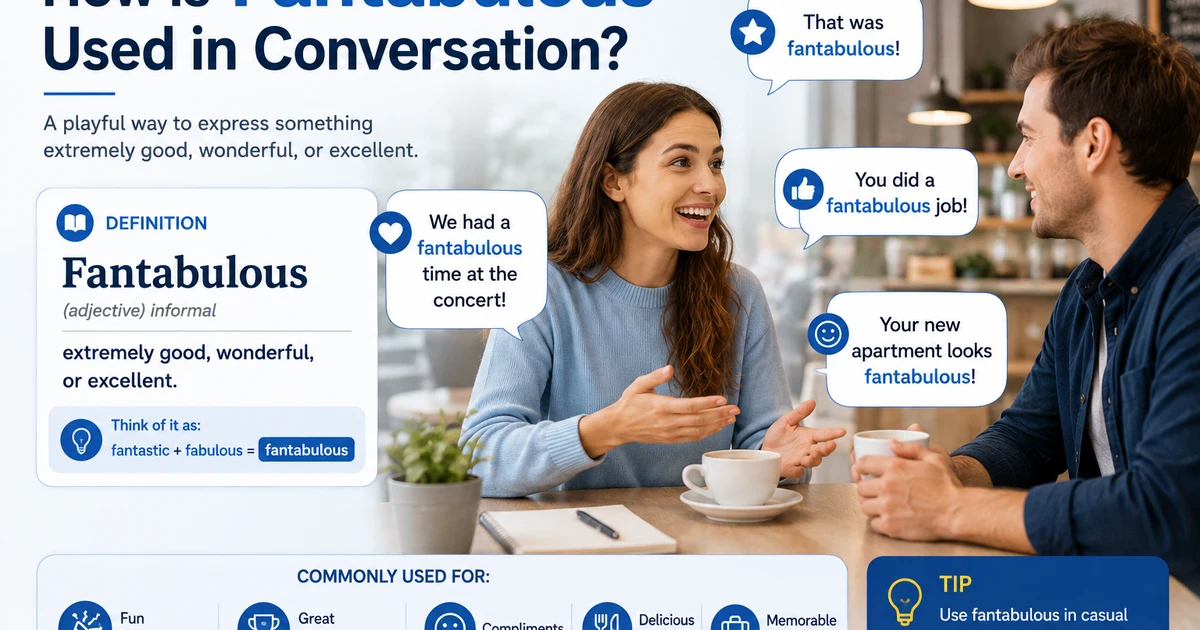
People generally use fantabulous when they want to express strong approval in a fun or exaggerated way.
It can describe:
- A great meal
- An enjoyable vacation
- A successful project
- A beautiful outfit
- An exciting concert
- A memorable party
- A positive result
- A friend’s achievement
- A particularly enjoyable day
For example:
Your new apartment looks fantabulous.
We had a fantabulous time at the beach.
That was a fantabulous idea.
She gave a fantabulous performance.
The word adds personality to the sentence. In many situations, simply saying great would communicate the basic idea, but fantabulous makes the praise sound more playful.
Fantabulous Examples in Everyday Sentences
The best way to understand this slang adjective is to see how it works in natural sentences.
Talking About an Experience
We had a fantabulous time on our road trip.
This means the trip was extremely enjoyable.
Complimenting Someone
You look fantabulous tonight.
This means the person looks exceptionally good.
Praising Food
That homemade pizza was absolutely fantabulous.
The speaker thinks the pizza was exceptionally delicious or enjoyable.
Praising Work
You did a fantabulous job on the presentation.
This gives someone a very enthusiastic compliment.
Talking About an Event
The concert was fantabulous from beginning to end.
The speaker found the entire concert excellent.
Talking About Good News
I got the job! Today is fantabulous!
Here, the word expresses excitement about a positive event.
Fantabulous in Texting and Social Media
Fantabulous can work especially well in casual digital communication because texting and social media often encourage expressive language.
A person might post:
What a fantabulous weekend!
Or send a friend:
That sounds fantabulous. Count me in!
The word can also work in captions:
Fantabulous food, great friends, and an even better night.
Its playful sound makes it suitable for enthusiastic posts, celebratory messages, and humorous captions.
However, it is not necessarily modern internet slang. The word has been around since the 1950s, so someone using it today is often choosing it for its cheerful or humorous tone rather than using a newly created online expression.
Can Fantabulous Describe a Person?
Yes. Fantabulous can describe a person when the speaker wants to praise that person’s qualities, appearance, talent, performance, or overall presence.
For example:
She is a fantabulous teacher.
This means the teacher is exceptionally good.
Another example:
You have been a fantabulous friend.
This expresses strong appreciation for the person’s friendship.
The word can also describe someone’s performance:
He gave a fantabulous presentation.
In each case, context tells the reader exactly what makes the person or their performance outstanding.
Can Fantabulous Be Used Sarcastically?
Yes. Although fantabulous normally expresses strong praise, speakers can use it sarcastically.
For example, imagine someone waits two hours for a delayed flight and says:
Well, this is a fantabulous way to spend the afternoon.
The speaker probably does not mean that the situation is wonderful. Instead, the exaggerated positive word highlights how frustrating the situation actually is.
Sarcasm depends heavily on tone and context. Written messages can make sarcasm harder to recognize, so using fantabulous sarcastically may confuse someone who does not know the speaker’s sense of humor.
Is Fantabulous Formal or Informal?
Fantabulous is informal. Dictionaries classify it as slang or informal English.
It fits casual situations such as:
- Conversations with friends
- Text messages
- Social media
- Personal emails
- Casual reviews
- Playful captions
- Humorous writing
It usually does not fit formal documents such as:
- Academic papers
- Legal documents
- Professional reports
- Formal business proposals
- Official applications
In formal writing, words such as excellent, outstanding, highly successful, or exceptional usually communicate the idea more appropriately.
Fantabulous vs Fantastic
Fantastic is more common and more neutral than fantabulous.
Both words can mean extremely good or impressive, but their tone differs.
The movie was fantastic.
This sounds completely natural in almost any casual conversation.
The movie was fantabulous.
This sounds more playful, enthusiastic, or deliberately expressive.
Fantastic also works more comfortably in professional communication. Fantabulous has a stronger sense of personality and informality.
Fantabulous vs Fabulous
Fantabulous and fabulous have very similar meanings, but they do not sound exactly the same.
Fabulous is an established everyday adjective that can describe something wonderful, attractive, or impressive.
That dress looks fabulous.
Fantabulous adds a playful exaggeration:
That dress looks fantabulous!
The second sentence sounds more energetic and whimsical.
Both can express strong approval, but fantabulous intentionally draws attention to the speaker’s enthusiasm.
Fantabulous vs Amazing
Amazing is one of the most common alternatives.
The view was amazing.
This sentence sounds natural and contemporary.
The view was fantabulous.
This sentence feels more playful and expressive.
Amazing can describe something impressive, surprising, or extraordinary. Fantabulous focuses more directly on enthusiastic approval.
Fantabulous vs Excellent
Excellent is much more neutral and professional.
The employee delivered an excellent presentation.
This sentence fits a workplace review.
The employee delivered a fantabulous presentation.
The second sentence sounds unusually casual and playful for a professional setting.
Both words communicate strong approval, but they serve different tones.
When Should Someone Use Fantabulous?
Fantabulous works best when the goal is to sound enthusiastic, friendly, playful, or slightly exaggerated.
Good situations include:
- Celebrating good news
- Complimenting a friend
- Describing an enjoyable experience
- Writing a playful social media caption
- Making an enthusiastic recommendation
- Adding humor to casual conversation
- Showing excitement in a text message
For example:
Your vacation photos look fantabulous!
That sounds friendly and enthusiastic.
A more formal alternative would be:
Your vacation photos are excellent.
The best choice depends on the relationship, setting, and desired tone.
When Should Someone Avoid Fantabulous?
Avoid fantabulous when the context requires formal, precise, or professional language.
For example, an academic paper might say:
The experiment produced excellent results.
Rather than:
The experiment produced fantabulous results.
The second version sounds playful and could undermine the formal tone.
The same principle applies to legal, medical, technical, and official communication. When clarity and professional tone matter more than personality, a standard adjective usually works better.
Common Mistakes With Fantabulous
Several misunderstandings can make the word sound unnatural.
Treating It as Formal Vocabulary
Fantabulous is recognized English, but it remains informal. It should not automatically replace excellent or outstanding in professional writing.
Assuming It Means Perfect
Fantabulous expresses strong approval, but it does not literally mean flawless or perfect.
The restaurant was fantabulous.
This means the restaurant was exceptionally good. It does not guarantee that every aspect of the experience was perfect.
Using It in Every Situation
The word has a distinctive playful tone. Repeating it too often can make writing feel exaggerated.
Assuming It Is New Internet Slang
Fantabulous may appear online, but the word dates back to the 1950s. Its internet use does not make it a newly invented social media term.
Missing Sarcasm
A sentence such as “What a fantabulous day” could be sincere or sarcastic. Context matters.
Is Fantabulous Positive or Negative?
Fantabulous is normally strongly positive.
It communicates approval, excitement, admiration, or pleasure.
For example:
The vacation was fantabulous.
The speaker enjoyed the vacation very much.
The word becomes negative only when someone deliberately uses it sarcastically or ironically.
For example:
Another canceled meeting. Fantabulous.
Here, the speaker probably means the opposite.
What Are the Best Synonyms for Fantabulous?
The best synonym depends on the intended tone.
Common alternatives include:
- Fantastic
- Fabulous
- Wonderful
- Excellent
- Amazing
- Outstanding
- Terrific
- Superb
- Marvelous
- Brilliant
- Exceptional
- Awesome
For a playful tone, fabulous, fantastic, and awesome may work well.
For a professional tone, excellent, outstanding, or exceptional usually fit better.
Is Fantabulous Appropriate for Children?
The word itself does not contain profanity or adult subject matter. It is simply an enthusiastic informal adjective.
Children may encounter it in books, conversations, games, or playful language. Adults can also use it when speaking with children because the word has a cheerful and exaggerated sound.
For example:
You did a fantabulous job cleaning your room!
The sentence simply offers enthusiastic praise.
Conclusion
Fantabulous means extremely good, wonderful, excellent, or impressive. It combines fantastic and fabulous to create a deliberately enthusiastic and playful adjective. The word has existed since the 1950s and remains recognizable in informal English today.
The most important thing to remember is tone. Fantabulous works well in friendly conversations, texts, social media, compliments, and humorous writing. It usually sounds too playful for formal academic or professional communication. When used in the right setting, it adds personality and extra enthusiasm to an otherwise ordinary compliment.
Frequently Asked Questions About Fantabulous
What does fantabulous mean?
Fantabulous means extremely good, wonderful, excellent, or impressive. It combines the words fantastic and fabulous and usually has a playful, enthusiastic tone.
Is fantabulous a real English word?
Yes. Dictionaries recognize fantabulous as an informal or slang adjective. Its documented origin comes from a blend of fantastic and fabulous.
Is fantabulous slang?
Yes. American English dictionaries commonly label fantabulous as slang or informal. It is appropriate mainly for casual and playful communication.
What is another word for fantabulous?
Depending on context, alternatives include fantastic, fabulous, amazing, wonderful, excellent, outstanding, superb, and terrific.
Can fantabulous be used sarcastically?
Yes. A speaker can use fantabulous sarcastically to emphasize disappointment or frustration. The intended meaning depends on context and tone.
Is fantabulous formal?
No. Fantabulous is informal and playful. Formal writing usually benefits from alternatives such as excellent, outstanding, or exceptional.
What is the origin of fantabulous?
Fantabulous is a blend of fantastic and fabulous. Historical sources date the word to the 1950s, with Etymonline specifically recording it from 1957.
Can someone use fantabulous in a text message?
Yes. Texting is one of the situations where its playful and enthusiastic tone can work naturally. For example, “That sounds fantabulous!” communicates strong excitement.