
Quick Answer
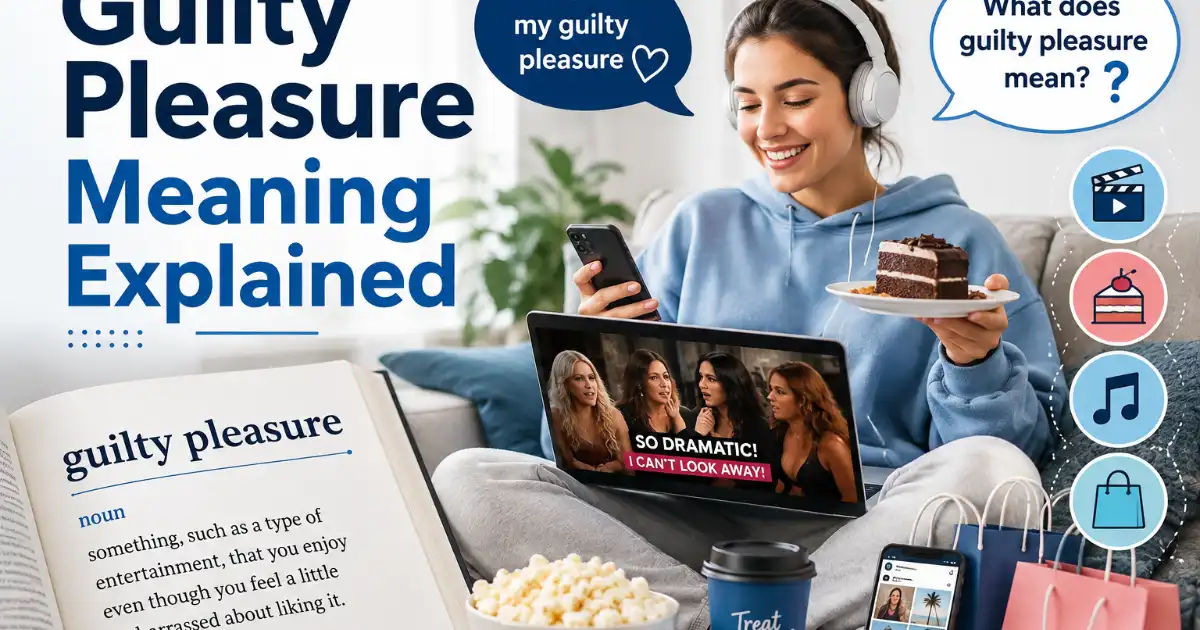
A guilty pleasure is something a person genuinely enjoys even though they feel slightly embarrassed about it or believe they should not enjoy it. It often describes entertainment, food, shopping, hobbies, or habits that people consider silly, unhealthy, low quality, or socially embarrassing.
For example, someone might say, “Reality TV is my guilty pleasure” when they enjoy watching it despite feeling that it is not especially sophisticated.
The phrase usually does not mean that the activity is actually wrong. The word guilty often describes the person’s self conscious feeling rather than real wrongdoing.
Introduction
People often use the phrase guilty pleasure when they want to admit that they enjoy something they might not proudly recommend to everyone. A person may love cheesy romantic movies, eat dessert late at night, listen to an old pop song repeatedly, scroll through celebrity news, or watch reality television while knowing that other people might judge the choice. The phrase gives them a playful way to acknowledge that contradiction.
The expression appears frequently in everyday conversations, social media posts, interviews, entertainment discussions, and casual texting. It can describe almost anything that provides enjoyment while carrying a small sense of embarrassment or self criticism.
Dictionaries define it around this combination of enjoyment and the feeling that the activity is not considered especially good or respectable.
Understanding guilty pleasure meaning helps explain why someone can openly enjoy something while also joking about feeling guilty for liking it. This guide explains the definition, common examples, usage, related expressions, and mistakes to avoid.
What Does Guilty Pleasure Mean?
A guilty pleasure is something enjoyable that a person feels somewhat embarrassed about enjoying or thinks they probably should not enjoy. The phrase does not necessarily describe something harmful or morally wrong. Instead, it often reflects a person’s perception that the activity seems embarrassing, childish, unhealthy, lowbrow, excessive, or unpopular.
For example, someone might normally prefer serious films but secretly love cheesy holiday movies. They could call those movies a guilty pleasure because they recognize that the movies may not match their usual taste.
The phrase can apply to food, entertainment, hobbies, shopping, music, television, internet content, and many other everyday activities. Cambridge Dictionary gives examples involving reality television, rich desserts, horror movies, and ice cream.
The important point is that the feeling of guilt often comes from social expectations or personal standards. A person might think, “I know this is not something I would normally admit to liking, but I enjoy it anyway.”
Is a Guilty Pleasure Actually Bad?
Not necessarily.
The word guilty does not automatically mean the activity causes harm or breaks a rule. In many everyday conversations, people use the phrase humorously.
Someone saying, “Chocolate cake is my guilty pleasure,” usually does not mean they believe eating cake makes them a bad person. They may simply mean they enjoy an indulgent treat even though they try not to eat it frequently.
The same idea applies to entertainment. Calling a television show a guilty pleasure often means the viewer finds it entertaining even if they do not consider it especially serious or prestigious.
Guilty Pleasure Meaning in Simple Terms
The easiest way to understand the phrase is:
A guilty pleasure is something you enjoy even though you feel a little embarrassed about liking it.
The two words create a contrast:
| Word | Meaning |
|---|---|
| Guilty | Feeling embarrassed, self conscious, or as if you should not be doing something |
| Pleasure | Something that gives enjoyment or satisfaction |
| Guilty pleasure | Something enjoyable that creates a small feeling of embarrassment or self criticism |
Oxford also defines “a guilty pleasure” as something a person enjoys even though they feel it is not really a good thing.
How Is Guilty Pleasure Used in Everyday Conversation?
People commonly use the phrase in a casual and often humorous way. It can appear as a noun phrase after verbs such as “is,” “be,” “have,” or “enjoy.”
For example:
- “Reality TV is my guilty pleasure.”
- “I have a guilty pleasure for cheesy romance movies.”
- “Late night snacks are one of my guilty pleasures.”
- “That song is definitely my guilty pleasure.”
- “She admitted that celebrity gossip is her guilty pleasure.”
- “His guilty pleasure is watching old cartoons.”
The phrase can also appear when someone asks another person about their preferences.
For example:
“What is your guilty pleasure?”
A natural response might be:
“Probably watching old sitcoms while eating ice cream.”
The question usually invites a playful confession rather than a serious admission.
Common Guilty Pleasure Examples
Guilty pleasures vary widely because people have different tastes and personal standards. One person’s embarrassing habit may be another person’s perfectly normal hobby.
Food and Drinks
Food provides some of the most common examples.
- Eating dessert before dinner
- Ordering fast food after cooking at home
- Eating chips while watching television
- Having a large slice of cake
- Eating ice cream directly from the container
- Ordering an overly sweet coffee
- Snacking late at night
A person might say, “French fries are my guilty pleasure,” simply because they are trying to eat more balanced meals but still love fries.
Movies and Television
Entertainment frequently becomes a guilty pleasure when someone considers it cheesy, predictable, dramatic, or intellectually lightweight.
Examples include:
- Reality television
- Romantic comedies
- Cheesy holiday movies
- Dramatic television series
- Old sitcoms
- Campy horror movies
- Celebrity reality shows
- Over the top action movies
Someone who normally watches documentaries might still enjoy a dramatic reality show and jokingly call it a guilty pleasure.
Music
Music can become a guilty pleasure when people feel embarrassed because the song seems outdated, overly sentimental, cheesy, or different from their normal taste.
Examples might include:
- An old pop hit
- A dramatic breakup song
- A catchy novelty song
- A song from childhood
- A cheesy dance track
- A song someone would not normally admit to liking
For example:
“I usually listen to rock, but that cheesy pop song is my guilty pleasure.”
Hobbies and Activities
A guilty pleasure does not have to involve food or entertainment.
It can include:
- Online shopping
- Watching cooking videos
- Reading celebrity news
- Playing casual mobile games
- Rewatching childhood shows
- Spending hours organizing a closet
- Looking through old photos
- Taking long baths
- Watching makeup or makeover videos
The key factor is not the activity itself. The key factor is the person’s attitude toward it.
What Makes Something a Guilty Pleasure?
Several factors can make an enjoyable activity feel like a guilty pleasure.
Social Judgment
A person may worry that other people will consider their taste strange or embarrassing.
For example, someone may love a television show that their friends constantly criticize. Calling it a guilty pleasure allows them to acknowledge that criticism while still enjoying the show.
Personal Standards
Sometimes the embarrassment comes from the person’s own expectations.
Someone who tries to eat healthy might call a large dessert a guilty pleasure. Someone who values productivity might jokingly describe spending an entire afternoon watching movies that way.
Nostalgia
Nostalgia can also play a role. People sometimes return to childhood games, old television programs, songs, or snacks even when those things no longer fit their current tastes.
The enjoyment comes partly from familiarity and memories.
Indulgence
Some guilty pleasures involve occasional indulgence. A person may usually follow a routine but make an exception because something feels especially enjoyable.
That does not automatically make the activity unhealthy or problematic.
Guilty Pleasure vs Regular Hobby
A regular hobby and a guilty pleasure can overlap, but they are not exactly the same.
| Term | Meaning | Best Use | Example |
|---|---|---|---|
| Guilty pleasure | Enjoyment mixed with slight embarrassment | Casual admissions | “Reality TV is my guilty pleasure.” |
| Hobby | An activity enjoyed regularly | Interests and free time | “Photography is my hobby.” |
| Pastime | Something done for enjoyment during free time | General leisure | “Reading is a relaxing pastime.” |
| Treat | Something enjoyable that feels special or indulgent | Food and experiences | “Ice cream is a weekend treat.” |
| Self indulgence | Allowing yourself something enjoyable, often excessively | More critical contexts | “The shopping spree felt like self indulgence.” |
A hobby does not require embarrassment. A guilty pleasure usually includes that extra feeling of “I probably should not admit how much I like this.”
Oxford defines a pastime as something enjoyed during free time, which makes it broader than the more self conscious idea behind guilty pleasure.
Guilty Pleasure vs Guilty Feeling
These ideas can sound similar, but they are different.
A guilty feeling usually comes from believing that someone has done something wrong or failed to do something they should have done. Guilt can involve a serious moral or personal concern.
A guilty pleasure, by contrast, often uses the word guilty playfully.
For example:
Guilty feeling:
“I feel guilty because I forgot my friend’s birthday.”
Guilty pleasure:
“Watching cheesy reality TV is my guilty pleasure.”
The first involves responsibility for an action. The second usually describes enjoyment mixed with mild embarrassment.
Why Do People Call Their Favorite Things Guilty Pleasures?
People use the phrase because it lets them express two feelings at once.
They can say:
“I know this is not exactly sophisticated, but I love it.”
That makes the phrase useful in casual conversation. It can also create humor and make people feel comfortable admitting unusual preferences.
In many cases, calling something a guilty pleasure is more about personality and social expectations than about the actual quality of the activity.
For example, one person may consider romance novels embarrassing while another person sees them as completely normal entertainment. The same activity can therefore be a guilty pleasure for one person and an ordinary favorite for another.
Can a Healthy Activity Be a Guilty Pleasure?
Yes.
The phrase does not require the activity to be unhealthy or objectively bad.
Someone might call gardening, watching documentaries, reading fantasy novels, or listening to classical music a guilty pleasure if they feel embarrassed about how much they enjoy it.
The phrase describes the person’s perception, not an objective rating of the activity.
This distinction matters because people sometimes assume that a guilty pleasure must involve junk food, excessive spending, or low quality entertainment. It does not.
Common Mistakes When Using Guilty Pleasure
Assuming It Means Something Wrong
A guilty pleasure does not normally mean an illegal, dangerous, or seriously harmful activity. In casual English, the phrase usually carries a light and humorous meaning.
Thinking Everyone Shares the Same Guilty Pleasures
People have different standards and tastes. What feels embarrassing to one person may seem completely ordinary to someone else.
Using It for Every Favorite Activity
Calling every hobby a guilty pleasure weakens the meaning. If someone proudly enjoys running, painting, or cooking without embarrassment, those activities are simply hobbies or interests.
Confusing Guilt With Shame
The phrase often involves mild embarrassment or self consciousness rather than serious moral guilt. The emotional tone usually depends on context.
Treating the Phrase as a Confession of Harm
A person saying “this is my guilty pleasure” usually does not need to be judged or corrected. The phrase often works as a playful admission.
How to Say Guilty Pleasure Naturally
Here are several natural sentence patterns:
“___ is my guilty pleasure.”
Example:
“Watching old sitcoms is my guilty pleasure.”
“I have a guilty pleasure for ___.”
Example:
“I have a guilty pleasure for cheesy romance movies.”
“One of my guilty pleasures is ___.”
Example:
“One of my guilty pleasures is ordering dessert after dinner.”
“I hate to admit it, but ___ is my guilty pleasure.”
Example:
“I hate to admit it, but celebrity gossip is my guilty pleasure.”
The first and third patterns are especially natural in everyday conversation.
Conclusion
The guilty pleasure meaning is simple: it describes something a person enjoys even though they feel slightly embarrassed, self conscious, or as if they should not enjoy it. The phrase usually has a playful tone rather than suggesting genuine wrongdoing.
Guilty pleasures can involve food, movies, television, music, hobbies, shopping, or almost any enjoyable activity. What matters most is the contrast between enjoyment and the feeling that the choice may not fit a person’s usual standards or image.
When someone calls something a guilty pleasure, the safest interpretation is usually that they are making a lighthearted admission about something they love. In other words, enjoying something does not automatically make it a bad choice.
FAQs About Guilty Pleasure
What is a guilty pleasure in simple words?
A guilty pleasure is something a person enjoys while feeling slightly embarrassed about liking it or thinking they should not enjoy it. The phrase often has a playful tone.
Is guilty pleasure a negative term?
Usually, it is mildly negative or self critical, but people often use it humorously. It does not necessarily mean that the activity is actually bad.
What is an example of a guilty pleasure?
Watching reality TV, eating an indulgent dessert, listening to a cheesy song, or rewatching an old television show can all be described as guilty pleasures.
Why is it called a guilty pleasure?
The word guilty suggests that the person feels they should not enjoy the activity, while pleasure describes the enjoyment they receive from it. The contrast creates the phrase.
Can a person have more than one guilty pleasure?
Yes. People can have several guilty pleasures involving food, entertainment, music, shopping, hobbies, or other activities.
Is a guilty pleasure the same as a hobby?
No. A hobby is an activity someone enjoys regularly. A guilty pleasure usually includes some feeling of embarrassment, indulgence, or self consciousness.
Can something serious be a guilty pleasure?
Yes, depending on context. The phrase can describe almost anything someone enjoys while feeling that the enjoyment is somewhat embarrassing or inappropriate. The meaning depends on why the person feels self conscious about it.
What does “my guilty pleasure” mean?
“My guilty pleasure” means something I personally enjoy even though I feel slightly embarrassed about enjoying it or think I should not enjoy it. For example, “Reality TV is my guilty pleasure” means the speaker enjoys reality TV despite some self conscious feeling about that preference.