
Quick Answer
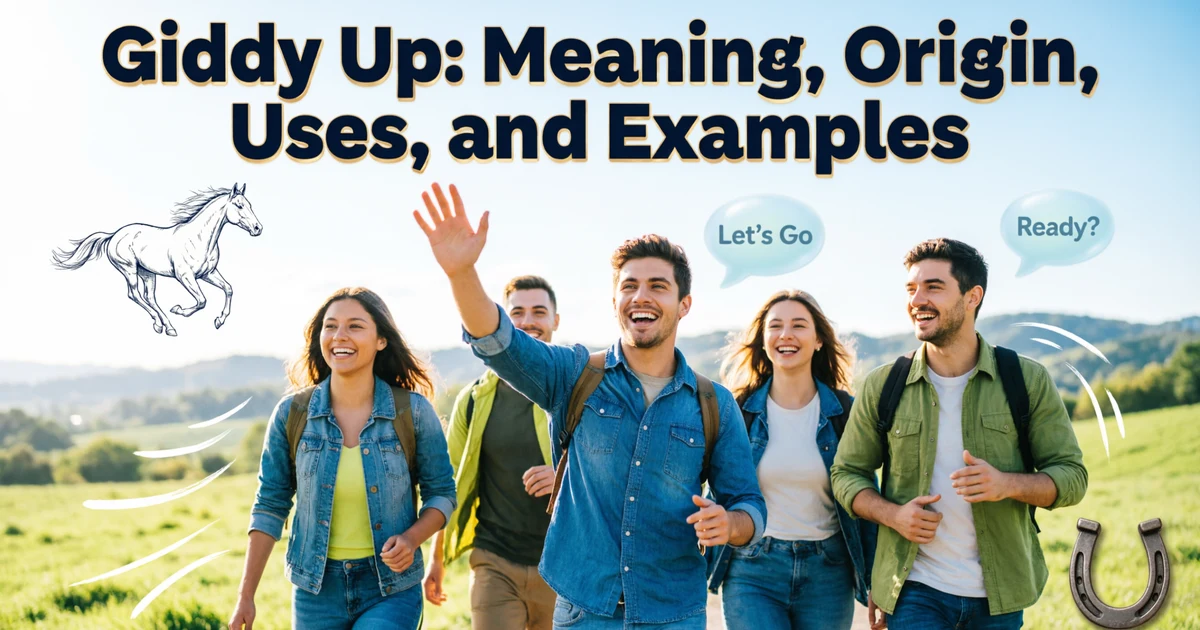
Giddy up is a common English phrase that originally came from horseback riding. Riders say it to encourage a horse to start moving or go faster. Today, people also use giddy up as a fun and energetic expression that means let’s go, get moving, or it’s time to take action.
Depending on the situation, it can sound playful, motivating, or enthusiastic. You may hear it in casual conversations, movies, country music, sports, business meetings, and social media posts where someone wants to encourage quick action or excitement.
Introduction
The phrase giddy up has been part of everyday English for generations, but its meaning has expanded far beyond horseback riding. While it still serves as a command to encourage a horse to move forward, it has become a popular expression that people use in many everyday situations.
Whether someone is motivating friends before a road trip, encouraging a team to start a project, or celebrating the beginning of an exciting event, giddy up often signals energy, enthusiasm, and readiness.
Many people search for the meaning of giddy up because they hear it in movies, television shows, country songs, sports commentary, or casual conversations. Others come across it in text messages, memes, or social media posts and wonder whether it has a special slang meaning. Although the phrase is simple, its meaning can change slightly depending on the context and the speaker’s tone.
This guide explains what giddy up means, where it came from, how it is used today, and when it is appropriate to say it. You will also learn the difference between its literal and figurative meanings, along with practical examples that make it easy to understand and use naturally in everyday conversation.
Giddy Up Meaning and Definition
At its core, giddy up is an encouraging command that tells someone or something to start moving or increase speed. The phrase first became popular among horse riders, who used it to urge a horse to walk, trot, or gallop. In that setting, it is a direct instruction intended to get the horse moving.
Over time, the phrase developed a broader figurative meaning. Today, people commonly use giddy up to motivate others, express excitement, or signal that it is time to begin an activity. Instead of referring to horses, it often encourages people to take action, hurry up, or approach a task with enthusiasm.
For example, if friends are taking too long to leave for a concert, one person might say, Giddy up, we’re going to miss the opening act. Here, the phrase simply means let’s get moving.
In a workplace setting, a manager might jokingly tell the team, Giddy up, everyone. We’ve got a busy morning ahead. In this case, the phrase creates a friendly and motivating atmosphere rather than sounding like a strict command.
The tone of giddy up is usually positive and lighthearted. It rarely sounds rude because it is often used with humor or encouragement. However, speaking it too forcefully or repeatedly could make it seem impatient, so the situation and tone of voice matter.
Besides encouraging action, giddy up can also express excitement about something that is about to happen. Someone who just received great news might smile and say, Giddy up. This is going to be fun. Here, the phrase communicates enthusiasm rather than giving a command.
Although the horseback meaning remains its original definition, the modern conversational use has become equally common in everyday English.
Meaning Comparison Table
| Meaning | Where It Is Used | Simple Explanation | Example |
|---|---|---|---|
| Horse riding command | Horseback riding and ranching | Tells a horse to move forward or go faster | Giddy up, let’s hit the trail. |
| Encouragement | Everyday conversation | Let’s get moving or start now | Giddy up, we’re running late. |
| Motivation | Work, sports, and teamwork | Encourages people to take action | Giddy up, it’s time to finish the project. |
| Excitement | Casual speech and social media | Shows enthusiasm about what is coming next | Giddy up. This weekend is going to be amazing. |
The Origin and History of Giddy Up
The expression giddy up has deep roots in horseback riding culture. For centuries, riders have used short spoken commands to communicate with horses. These commands needed to be simple, easy to remember, and easy for horses to recognize during work, travel, or recreation.
The exact origin of giddy up is difficult to trace because it developed gradually through spoken language rather than from a single historical event. Linguists generally believe the phrase evolved from older riding commands that encouraged horses to move forward. As horseback transportation became common in farming, ranching, and travel, expressions like giddy up spread throughout English speaking communities.
The phrase became especially recognizable in Western culture through cowboy traditions. Ranch workers, rodeo performers, and horseback riders frequently used giddy up while working with horses across large open landscapes. As Western stories, films, and television shows grew in popularity during the twentieth century, audiences around the world became familiar with the expression.
Eventually, people began using giddy up in everyday speech without any connection to horses. It evolved into a cheerful way of telling people to get started, move faster, or approach a task with energy. This figurative use continues to grow because it is easy to understand and adds a playful tone to conversations.
Today, the phrase appears in casual speech, motivational conversations, advertising, entertainment, sports commentary, and online communication. Even people who have never ridden a horse instantly recognize giddy up as a lively expression that encourages action.
Why People Say Giddy Up Today
Although the phrase started as a riding command, its modern popularity comes from its versatility. People enjoy using giddy up because it sounds energetic, friendly, and memorable. It motivates others without sounding overly serious or demanding.
Some of the most common reasons people say giddy up include:
- To encourage someone to start moving.
- To motivate a group before beginning a task.
- To express excitement about an upcoming event.
- To create a fun and positive atmosphere.
- To add humor to casual conversations.
- To signal that it is time to stop waiting and take action.
Because it carries an upbeat tone, giddy up fits naturally into conversations among friends, family members, coworkers, teammates, and even online communities. Instead of sounding formal, it makes communication feel more relaxed and encouraging.
In many situations, it serves the same purpose as phrases like let’s go, come on, get moving, or time to get started, but with a playful personality that reflects its colorful history.
Practical Uses of Giddy Up in Everyday Life

One reason giddy up has remained popular is its flexibility. While it started as a horseback riding command, people now use it in many everyday situations. The phrase usually encourages action, builds excitement, or adds a playful tone to a conversation.
Unlike formal expressions, giddy up feels casual and friendly. It works best with people who understand its humorous or encouraging nature. You will hear it among friends, family members, coworkers, coaches, and even on social media.
Here are some common situations where the phrase fits naturally.
Encouraging Someone to Get Moving
This is the most common modern use of giddy up. Instead of saying hurry up or let’s go, people often choose this phrase because it sounds more upbeat.
Examples:
- Giddy up, we’re going to be late for the movie.
- Giddy up, everyone is waiting for us.
- Giddy up, it’s time to leave.
Motivating a Team
Managers, coaches, and team leaders sometimes use the phrase to energize a group before starting work or an activity.
Examples:
- Giddy up, let’s finish this project today.
- Giddy up, team. We have a big game ahead.
- Giddy up, let’s make this our best week yet.
Expressing Excitement
Sometimes giddy up is not a command at all. Instead, it shows enthusiasm for something exciting.
Examples:
- Giddy up. Vacation starts tomorrow.
- Giddy up. The concert is finally here.
- Giddy up. This is going to be a great day.
Adding Humor to a Conversation
Many people use the phrase simply because it sounds fun. It often makes everyday conversations feel more relaxed.
Example:
Friend: Are you ready for the road trip?
You: Giddy up. I’ve been waiting all week.
Giddy Up in Texting and Social Media
Although giddy up has an old fashioned origin, it still appears regularly in digital conversations. People use it in texts, online chats, captions, and social media posts to express excitement or encourage quick action.
In online communication, the phrase usually means:
- Let’s go.
- Get moving.
- I’m excited.
- Time to begin.
- Let’s make it happen.
Text Message Examples
Friend: Ready for dinner?
You: Giddy up. I’ll be there in ten minutes.
Team Chat:
Giddy up, everyone. The meeting starts in five minutes.
Social Media Caption:
Weekend adventure starts now. Giddy up.
Gaming Chat:
Giddy up. Let’s win this match.
Unlike many internet slang terms, giddy up is easy for people of different ages to understand because it has been part of spoken English for many years.
Examples of Giddy Up in Everyday Conversation
Seeing the phrase in real conversations makes it easier to understand when it sounds natural.
Family
Mom: Everyone has their shoes on?
Dad: Great. Giddy up. Let’s head to the park.
Workplace
Manager: We have a busy afternoon.
Employee: Giddy up. Let’s get started.
School
Teacher: Your science projects are due today.
Student: Giddy up. Time for our presentation.
Friends
Friend One: The food truck just arrived.
Friend Two: Giddy up. I’m starving.
Sports
Coach: Stay focused and give your best effort.
Players: Giddy up.
Travel
We’re packed, the car is ready, and the hotel is booked. Giddy up. Vacation begins now.
Similar Words and Related Phrases
Several English expressions have meanings close to giddy up, but each has its own tone.
| Term | Meaning | Best Use | Example |
|---|---|---|---|
| Let’s go | Start moving or begin | Everyday conversations | Let’s go. The movie starts soon. |
| Come on | Encourage action | Casual speech | Come on. We don’t have much time. |
| Get moving | Begin immediately | Friendly or direct situations | Get moving or we’ll miss the bus. |
| Step on it | Move faster | Driving or urgent situations | Step on it. We’re running late. |
| Time to roll | Time to leave | Informal conversations | Time to roll. Everyone is ready. |
| Giddy up | Get moving with enthusiasm | Casual, playful conversations | Giddy up. Adventure awaits. |
Among these expressions, giddy up stands out because it adds personality and enthusiasm instead of simply giving a command.
Giddy Up Compared With Similar Expressions
Although several phrases encourage action, they are not always interchangeable.
Giddy Up vs Let’s Go
Let’s go is the most common expression and fits almost every situation.
Giddy up carries a lighter, more playful tone and often suggests excitement as well as action.
Giddy Up vs Hurry Up
Hurry up usually focuses on speed and can sound impatient.
Giddy up sounds friendlier and more encouraging.
Giddy Up vs Come On
Come on has many meanings. It can encourage someone, express disbelief, or even show frustration.
Giddy up almost always has a positive meaning connected with moving forward or starting something.
Common Mistakes People Make
Because giddy up has both literal and figurative meanings, people sometimes misunderstand how to use it.
Thinking It Only Refers to Horses
Many learners assume the phrase belongs only in horseback riding. While that is its original meaning, modern English speakers use it in many everyday situations.
Using It in Very Formal Settings
The phrase sounds casual and conversational. It usually does not belong in formal business presentations, legal documents, academic writing, or professional reports.
Instead of saying:
Giddy up. Let’s begin today’s financial review.
A more formal alternative would be:
Let’s begin today’s financial review.
Confusing It With Being Giddy
The adjective giddy means feeling dizzy, overly excited, or lightheaded.
Giddy up is completely different. It is an expression that encourages movement or action.
Using It Too Often
Because the phrase is memorable, repeating it several times in one conversation may sound unnatural. Use it occasionally for the greatest impact.
Assuming It Is Rude
Most people understand giddy up as playful encouragement. However, tone matters. If spoken sharply or sarcastically, it could sound impatient. In normal conversation, though, it is generally friendly and lighthearted.
Conclusion
Giddy up began as a horseback riding command, but today it is a lively and encouraging phrase used in everyday conversation. Whether someone wants to motivate a team, tell friends it is time to leave, or simply express excitement about what comes next, the phrase communicates energy and enthusiasm in a friendly way.
Understanding both its original meaning and its modern conversational use helps you recognize it in movies, country music, social media, and daily speech. When used naturally and in the right setting, giddy up adds a fun, upbeat touch to communication without sounding forced. If you are looking for a casual way to say let’s go or get moving, giddy up is a timeless expression that still feels fresh today.
Frequently Asked Questions
What does giddy up mean?
Giddy up originally meant telling a horse to start moving or go faster. Today, it is commonly used as a cheerful expression that means let’s go, get moving, or it’s time to begin. The phrase often conveys excitement, motivation, or encouragement.
Is giddy up considered slang?
Not exactly. Giddy up is better described as an informal expression or phrase rather than modern slang. It has been part of English for many years and is widely understood by people of different ages.
Can you use giddy up in a text message?
Yes. Many people use giddy up in texts, group chats, and social media to show enthusiasm or encourage action.
Example:
- Giddy up. The tickets are booked.
- Giddy up. Let’s meet at 7.
Is giddy up polite?
Yes. In most situations, giddy up sounds friendly and playful. It is rarely considered offensive. However, because it is informal, it is best suited for conversations with friends, family, coworkers, or teammates rather than formal business or academic writing.
Where did the phrase giddy up come from?
The phrase comes from horseback riding, where riders used it to encourage a horse to move forward. Over time, it became a popular expression in everyday English through cowboy culture, Western films, and casual conversation.
What is another way to say giddy up?
Depending on the situation, you could use:
- Let’s go
- Get moving
- Come on
- Time to roll
- Let’s get started
- Step on it
- Off we go
Each alternative has a slightly different tone, but all can encourage action.
Can giddy up be used at work?
Yes, if the workplace culture is casual. Team leaders or coworkers may jokingly say giddy up to motivate everyone before starting a task. It is best avoided in formal presentations, official reports, or professional emails.